Van Cleef & Arpels at the neck
Van Cleef & Arpels likes the neck. Motifs lie a few millimeters off the skin, so a blouse can close over them. The house thinks in flat, repeating shapes — sequins, leaves, a four-leaf outline — and then lets those shapes rest in the hollow at the base of the throat.
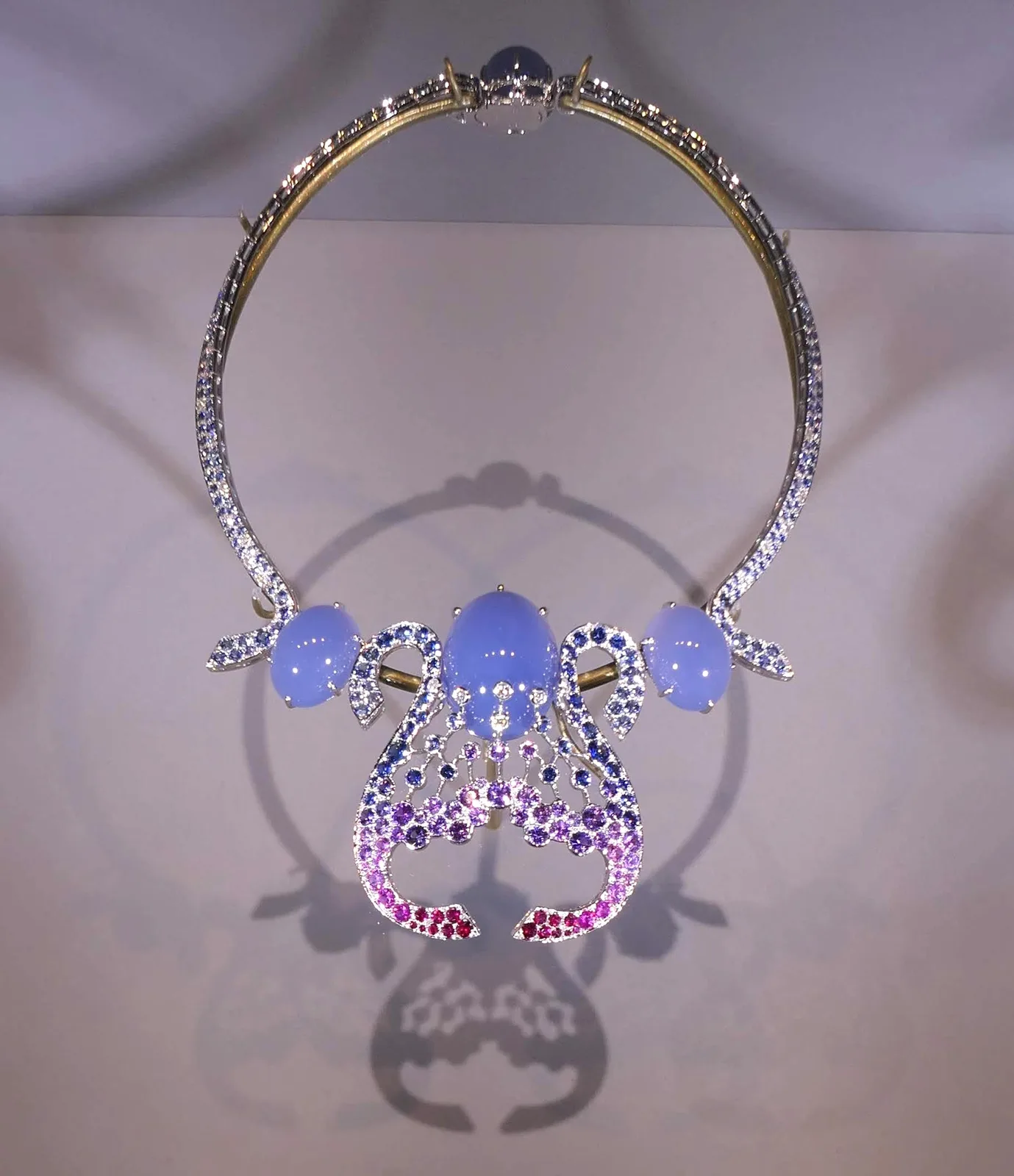
Amenta is a rigid gold torque that becomes a diamond-set neck ring, then a pendant of lavender chalcedony cabochons over a wash of sapphire into ruby. It would rest high, closer to jewelry that is also architecture. The shadow it throws on a museum wall is part of the drawing.
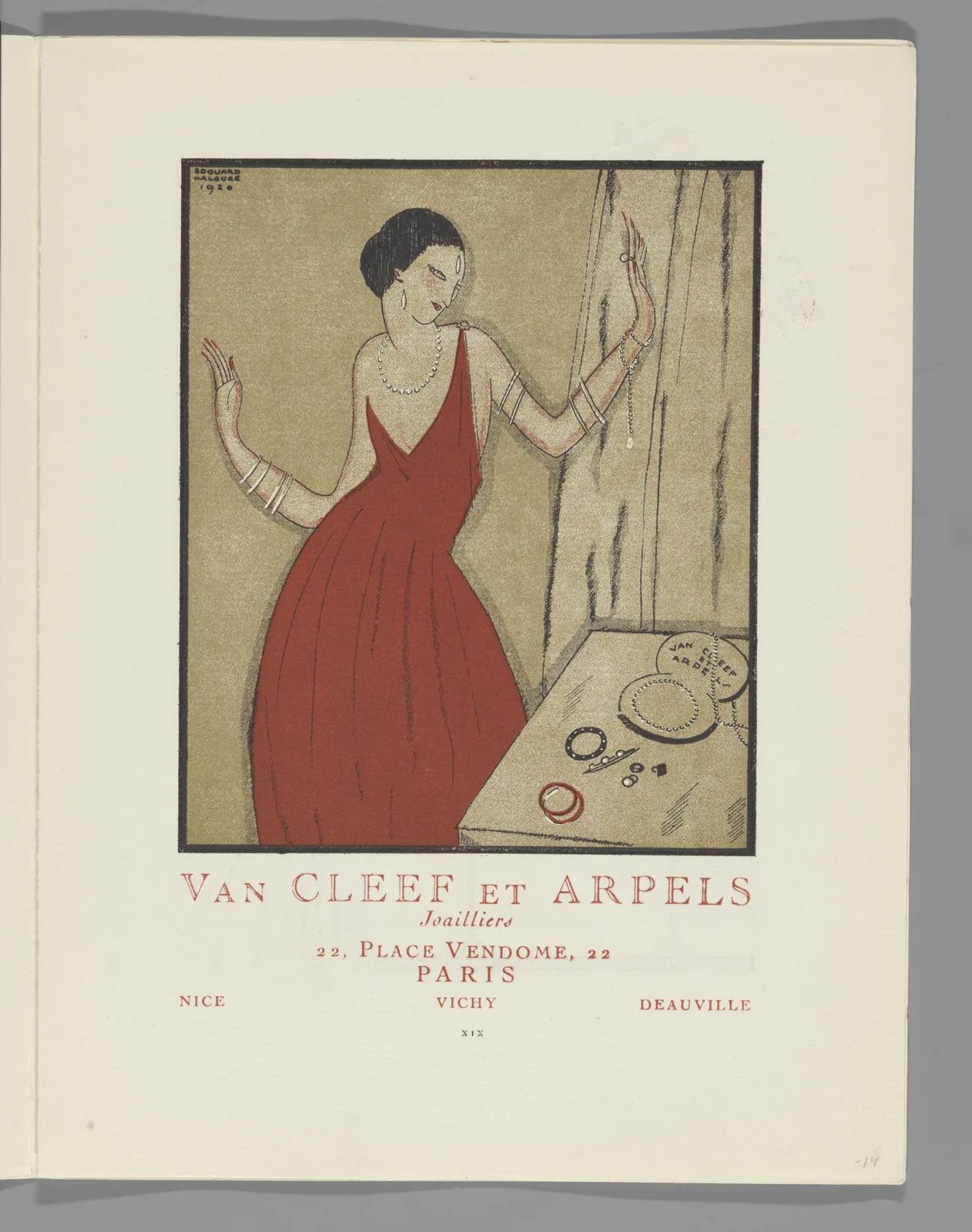
The 1920 Bon Ton plate is the house drawing the neck before the stone is set: a jeweled figure, a collar that is also a costume. You see how the line was meant to sit — close, theatrical, made for the throat.
A collar, then a garden
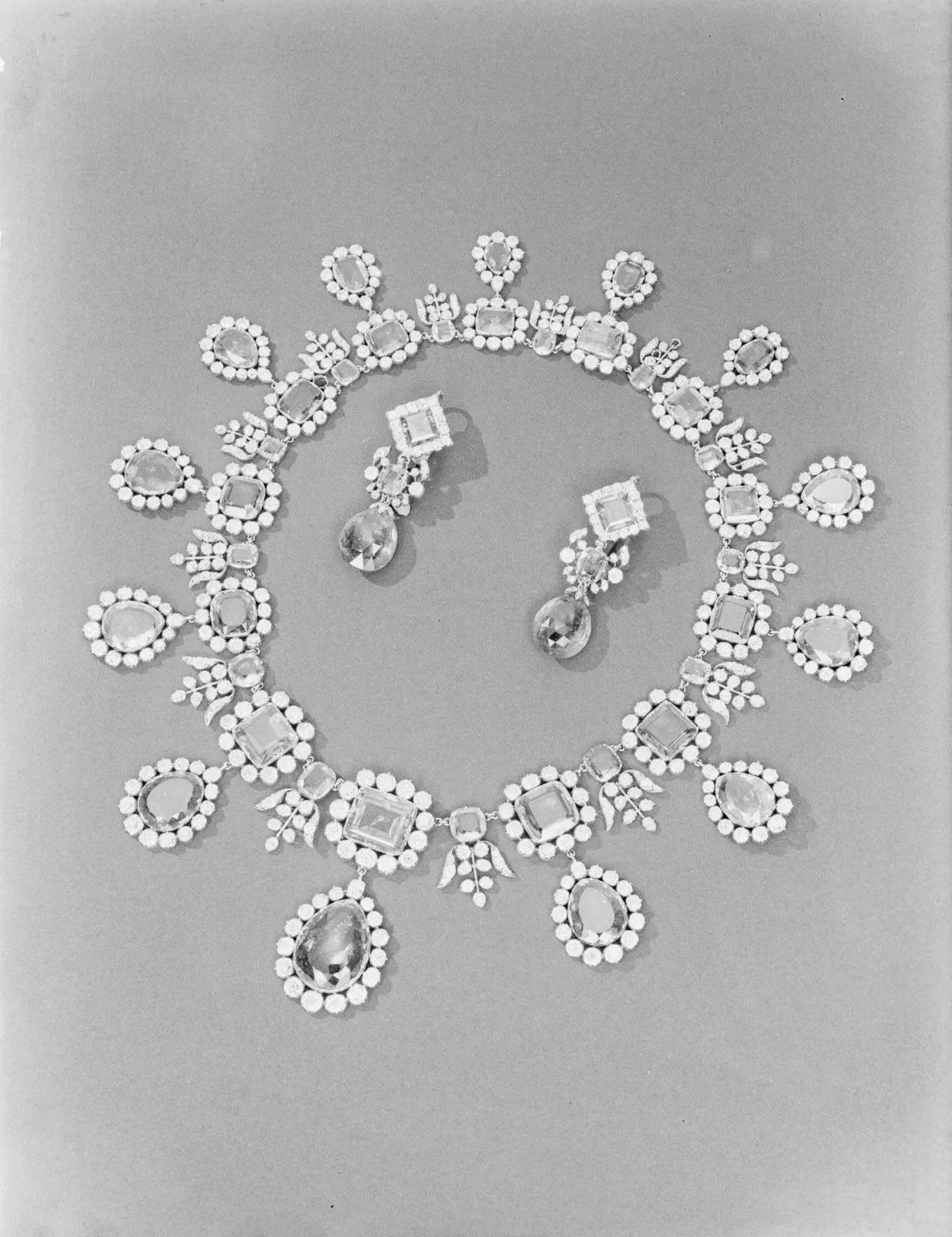
Willem van de Poll’s stills keep the formal suite: a diamond collar with pear drops, earrings that repeat the drop. Those necklaces would sit lower than a sequin line, the drops moving at the top of the dress.
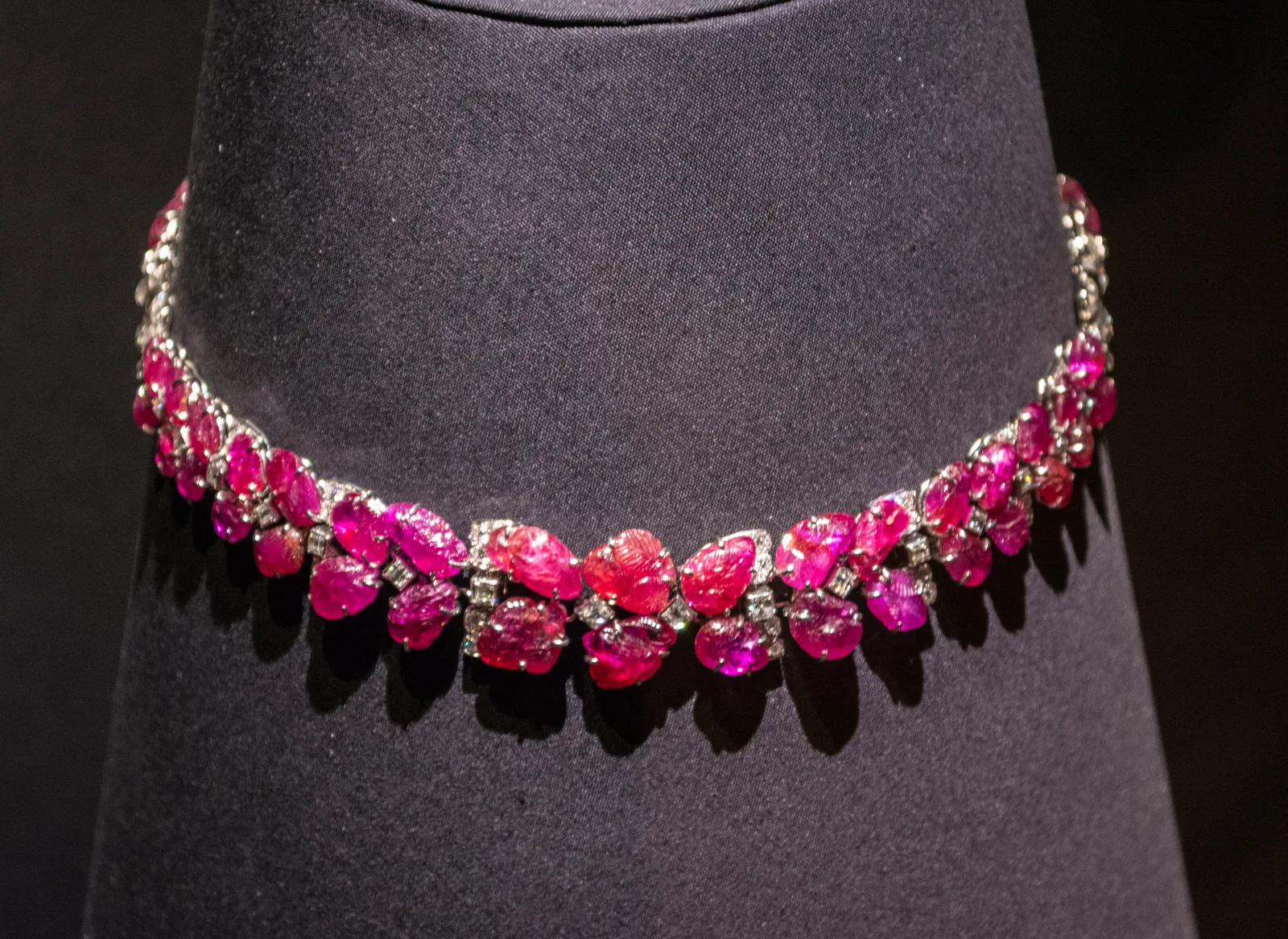
The Jazz Age ruby collar is warm against the throat. Carved pink stones, diamond points, a dark bust so the color can glow. Evening weight. You would feel it when you swallow, the way a velvet ribbon is felt, and the carved leaves would catch candlelight rather than daylight. The diamond drops would move when you spoke — the older Van Cleef neck, a line that still knows how to breathe.
Same house, same attention to the neck — whether the motif is a chalcedony, a leaf, or a four-leaf outline that lies flat enough to disappear under linen.
Educational only · Not jewelry, insurance, or legal advice