Tutti Frutti, a garden of fruit
Tutti Frutti is a garden of fruit. Cartier made the carved stone a house icon: leaves, berries, melons in hardstone, color the lapidary has already named. You do not meet a bracelet line. You meet fruit. A carved emerald as a small orchard. A jade plaque as a leaf you can hang. A pair of jeweled crescents that read as a harvest at the ear. The house gave that garden a name. The sit is older — carved color, worn as jewels.
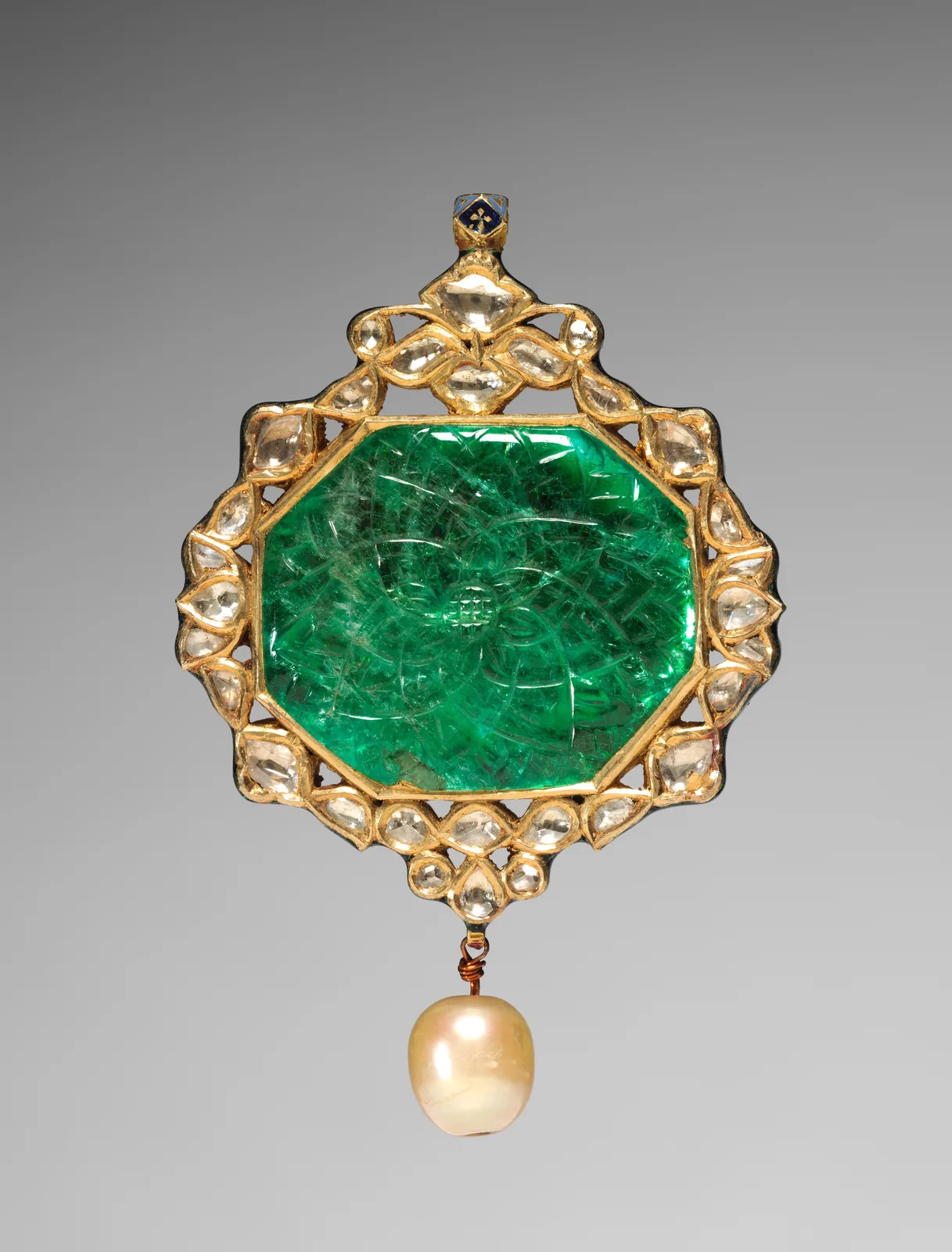
A Jaipur pendant is the sit in one stone. An octagon of emerald, the face already carved as a flower — petals the hardstone still holds — then a scallop of diamonds, a pearl as the small fruit underneath. You would feel a green garden before you named a court. Not a smooth cabochon waiting for light. A carved stone, a leaf-and-blossom temperament, worn as a jewel. That is what Tutti Frutti still protects: color the lapidary has already turned into fruit.
The temperament is the carving. A faceted emerald would have been a lantern. This one is a garden you can almost take between finger and thumb.
A jade that is a leaf, then a pair that hangs as a harvest
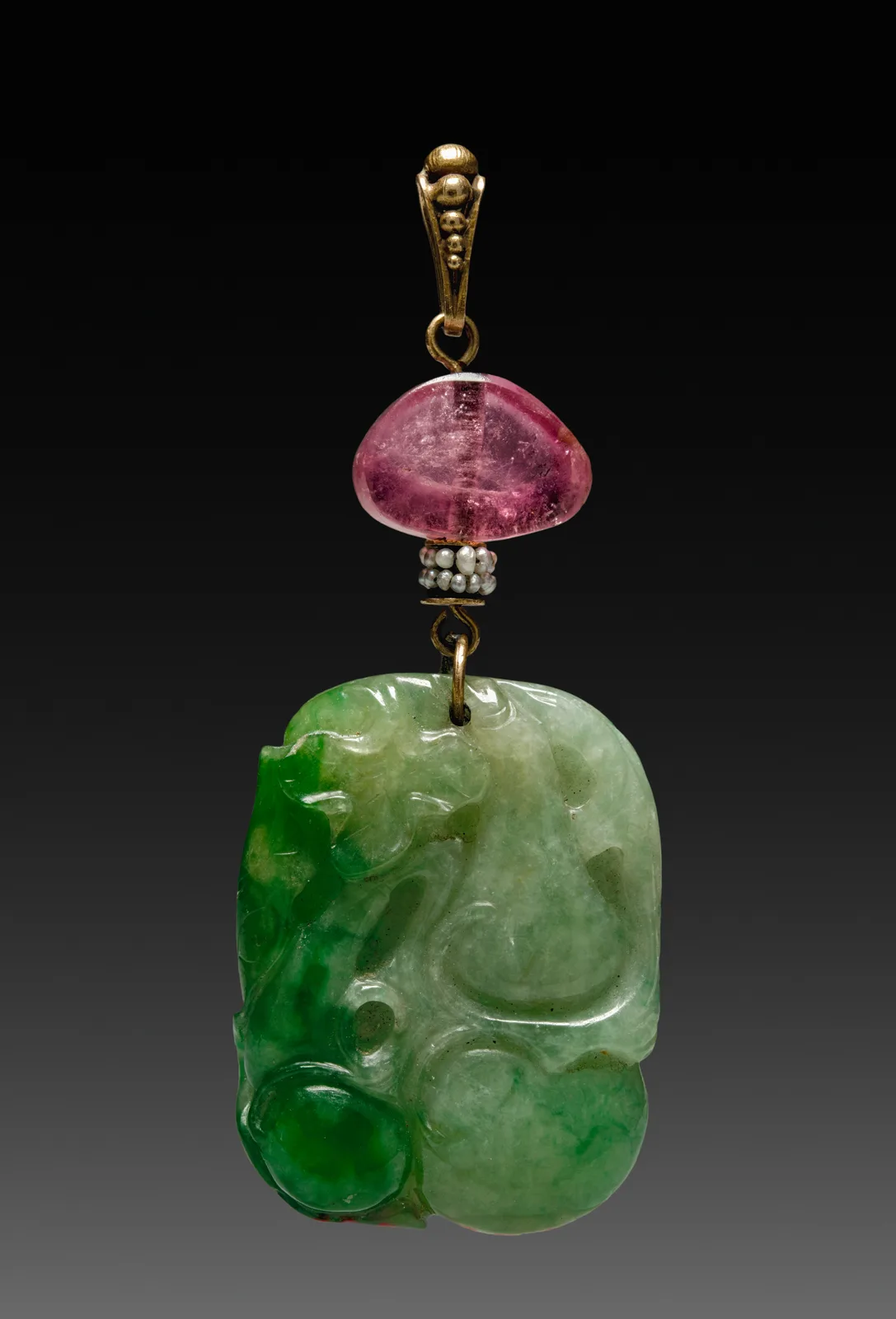
A Qing pendant keeps the garden as a plaque. Carved jade, clouds and leaves already in the hardstone, a rose-quartz bead as a small berry, pearls as the quiet pause between. You would meet the green carving before you met the gold. The jade is the fruit. The pink is the next fruit. Tutti Frutti does that work in emerald, ruby, and sapphire: carved color, hung as a harvest, each stone a plot in the same garden.
A pair from Delhi finishes the thought as a garden you wear twice. Crescents of gilt silver, emeralds and rubies set close, pearls as a fringe that would move like leaves. You would feel a small orchard at each ear — green, red, a pale berry of pearl — before you named a city. Not a cuff around the bone. Fruit as pendants. The house name is later. The sit is a garden of carved color — leaves and berries in hardstone, already on the body.
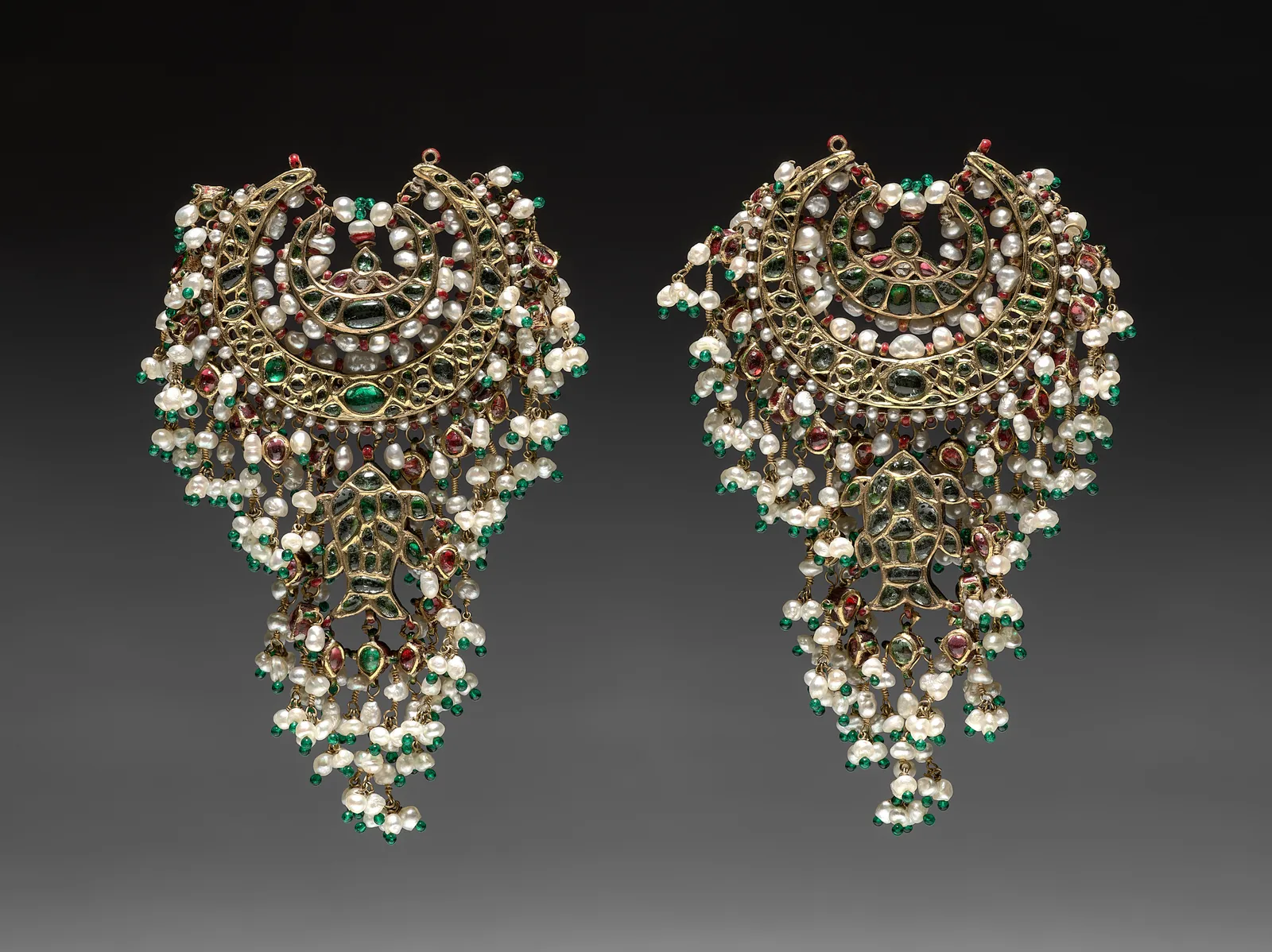
That is the icon. The house gathered carved fruit into a Paris name. The sit remains a garden worn as jewels — a carved emerald, a jade leaf, a pair that hangs as a harvest.
Educational only · Not jewelry, insurance, or legal advice