Tudor, a shield at twelve
Tudor puts a shield at twelve, and the hour agrees to live beneath it. A small coat of arms, worn as jewelry: you meet the shield before you meet the time. A Rolex keeps a crown at the top of the dial, a coronet the house has already signed. A Constellation keeps a star, held by claws around the case. A Calatrava keeps a circle and lets the circle dress, the dial plain enough that the round is the jewel. A Monaco keeps a square and lets the square race. A Nautilus keeps a porthole. A Day-Date keeps a day you can read in a window. Tudor opens where a shield has agreed to sit at twelve, and the rest of the face is what that shield is willing to oversee.
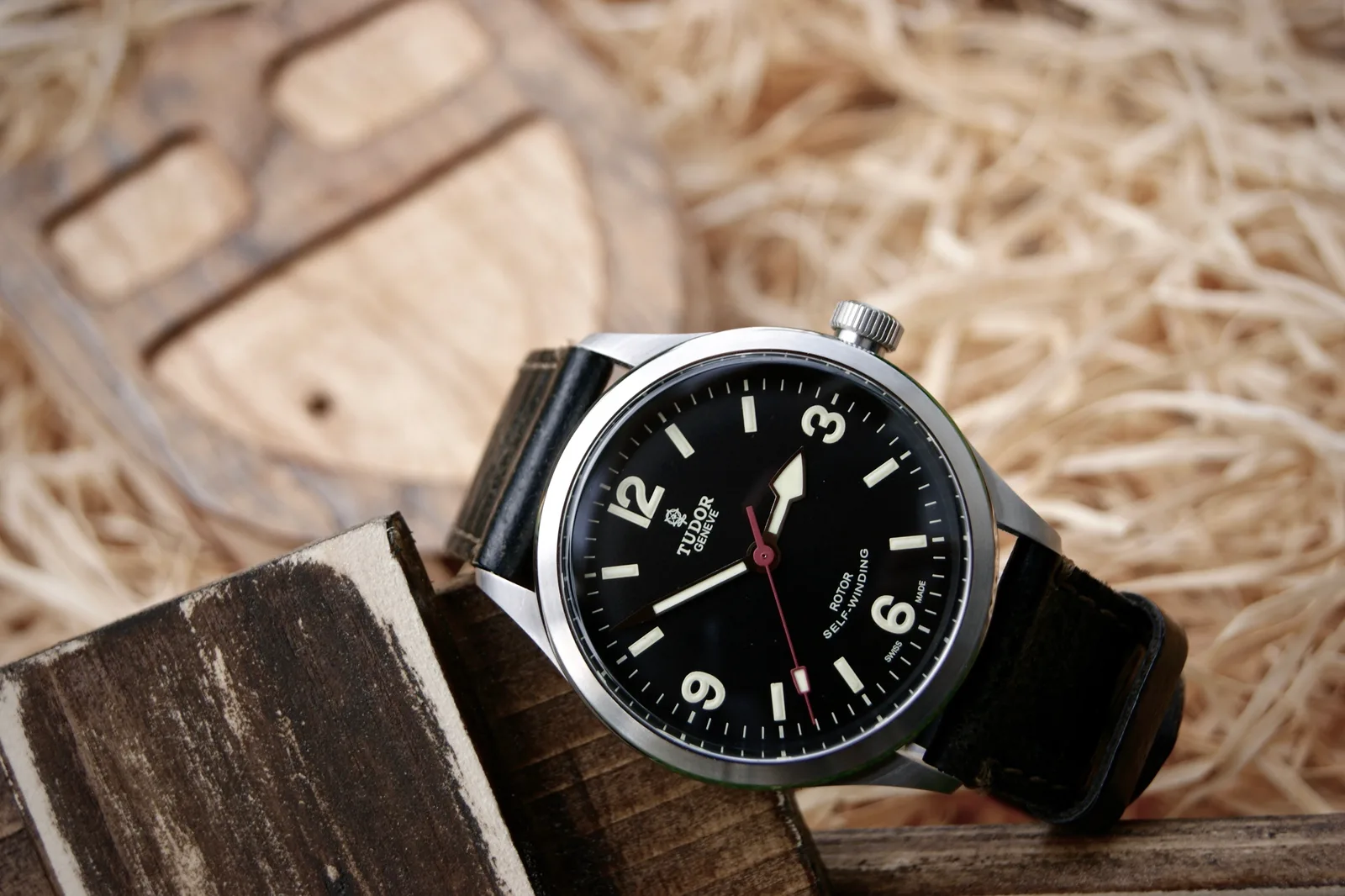
A field under the shield
A Tudor Heritage Ranger keeps the meeting as a field watch on a white ground. Applied Arabic numerals, a luminous triangle at twelve, the shield set just beneath it, snowflake hands, a date at three, the case round and off the wrist. You would feel the shield before you asked for a reference. The numerals are a map. The shield is the signature on the map. A crown in that place would have belonged to another house. A star around the bezel would have made the case the ornament. Here the ornament is small, heraldic, and already enough. The hour can be simple because the top of the face has done the signing.
The white ground only makes the geometry easier to read. Circle, numerals, a shield the size of a marker. You would cover the hands with a look and still have the arms left over. That is the icon’s scale. A sign you can wear, rather than a portrait spread across the dial. The Ranger spends it on a field: black, clear, a watch that reads as a jewel because twelve has already introduced the house. The snowflake hands are broad and legible. They point. The shield names. The two habits belong together, and the shield is the one you meet first.
A chronograph that still signs
A Tudor Heritage Chronograph spends the same shield on a busier face. A light dial, dark registers, snowflake hands, a date, pushers along the flank. The shield remains at twelve, small against the chronograph’s architecture, and it holds its place. You would meet that coat of arms before you asked which calibre. The registers are the count. The shield is the house. A racing square would have asked the whole case to become the geometry. This one keeps a round case and lets a heraldic mark do a work the outline has left alone.

Off the wrist, on a pale ground, the watch still reads as a jewel. The subdials sit where a dress watch would have left the face quiet. The shield sits where another house would have put a crown, or left twelve as a bar. Tudor puts the arms there and lets the chronograph proceed underneath. You would feel that order before you counted a register. First the shield. Then the hour the shield has agreed to time.
The case is the round the Ranger already taught, and the dial is a contrast of cream and black. None of that replaces the mark at twelve. A porthole would have rounded the bezel into a window. A day window would have asked you to read a word. This face asks you to recognize a shield, and then to read the time it is keeping. The pushers are the chronograph’s small hardware on the flank. They belong to the count. The jewel, when you step back, is still the coat of arms at the top, steady while the registers do their smaller work. A square that races would have made the case the fact. Here the case stays a circle, and the fact stays a shield.
A reserve, and the shield above it
A Tudor North Flag spends the shield on a dial that also tells how much spring is left. A power-reserve sector, applied markers, a date, the shield again at twelve, the case off the wrist on a white ground. You would meet the arms before you asked what the sector measures. The reserve is a second fact. The shield is the first. A dress circle would have left this dial plainer, the hour alone inside the round. A slide rule would have wrapped the bezel in scales. Here the extra instrument sits inside the hour, and the coat of arms still has the top of the face.
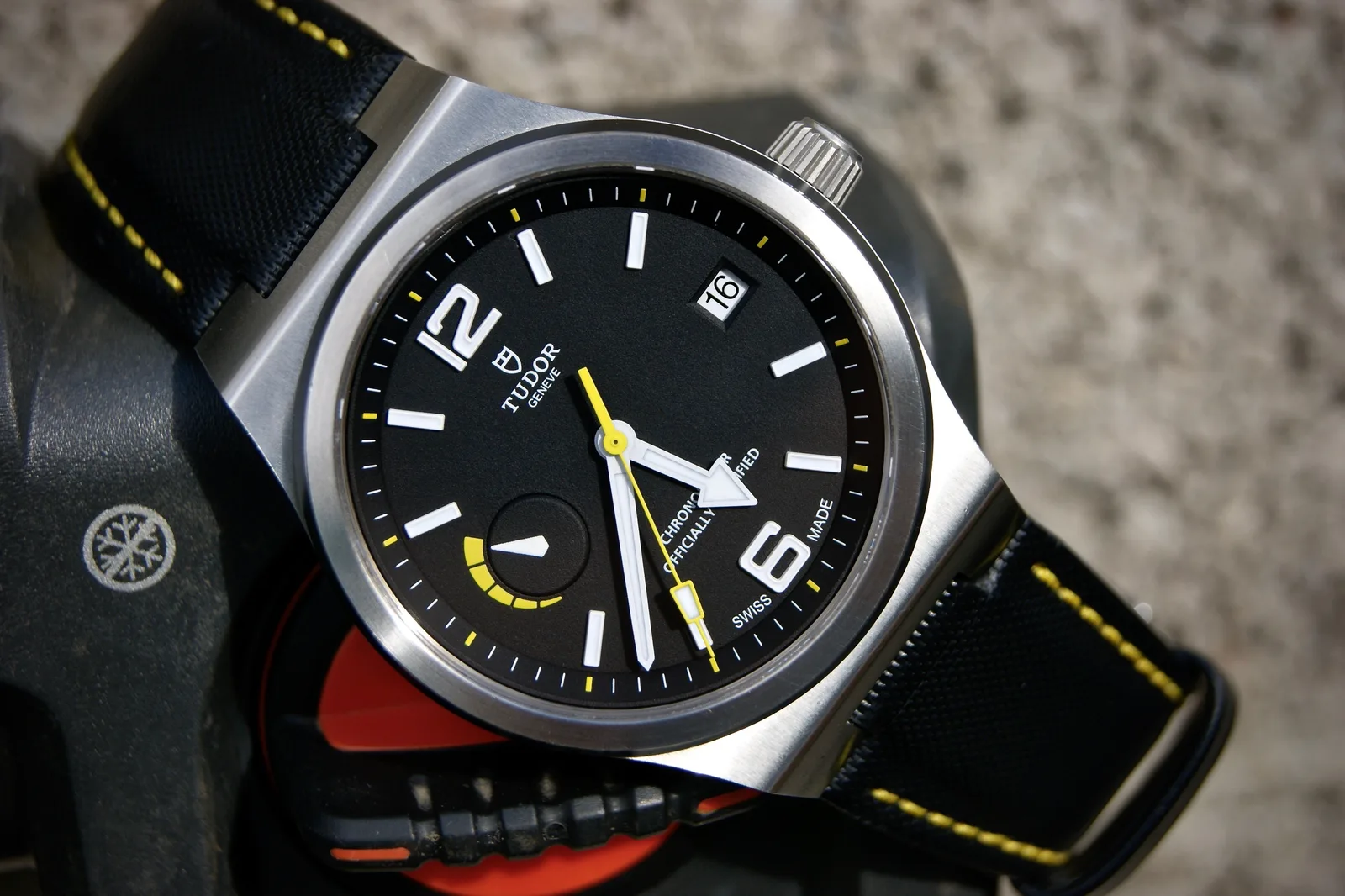
Three watches, one mark. The Ranger gives the shield a field of numerals. The chronograph gives it a pair of registers and a lighter ground. The North Flag gives it a reserve and a quieter set of sticks. The shield does not change its job. It signs. You would turn from one white ground to the next and the family would still hold: a round case, a mark at twelve, an hour that agrees to be worn as jewelry because the dial has already introduced itself.
A crown would still be a crown. A star would still be a star. A racing square would still be a square. A day you can read would still be a window. Tudor keeps the shield, and the shield keeps the twelve.
That is the icon. Tudor, a shield at twelve. The Ranger, a field the arms can oversee. The Heritage Chronograph, the same sign on a busier face. The North Flag, a reserve beneath the same small coat of arms — a dial you meet as a heraldic jewel.
Educational only · Not jewelry, insurance, or legal advice