The Zip, a necklace that closes
The Zip is a necklace that learned to close. Van Cleef & Arpels, Renée Puissant, a zip fastener made as a jewel — a line of gold teeth, a tassel as the pull, open at the collar or shut into a bracelet. The house kept that mechanism as a house icon. You feel the close first. The jewel is the zipper. There is no free house still to set beside the name. The sit is older than the patent: a necklace that is a line, a line that agrees to shut.
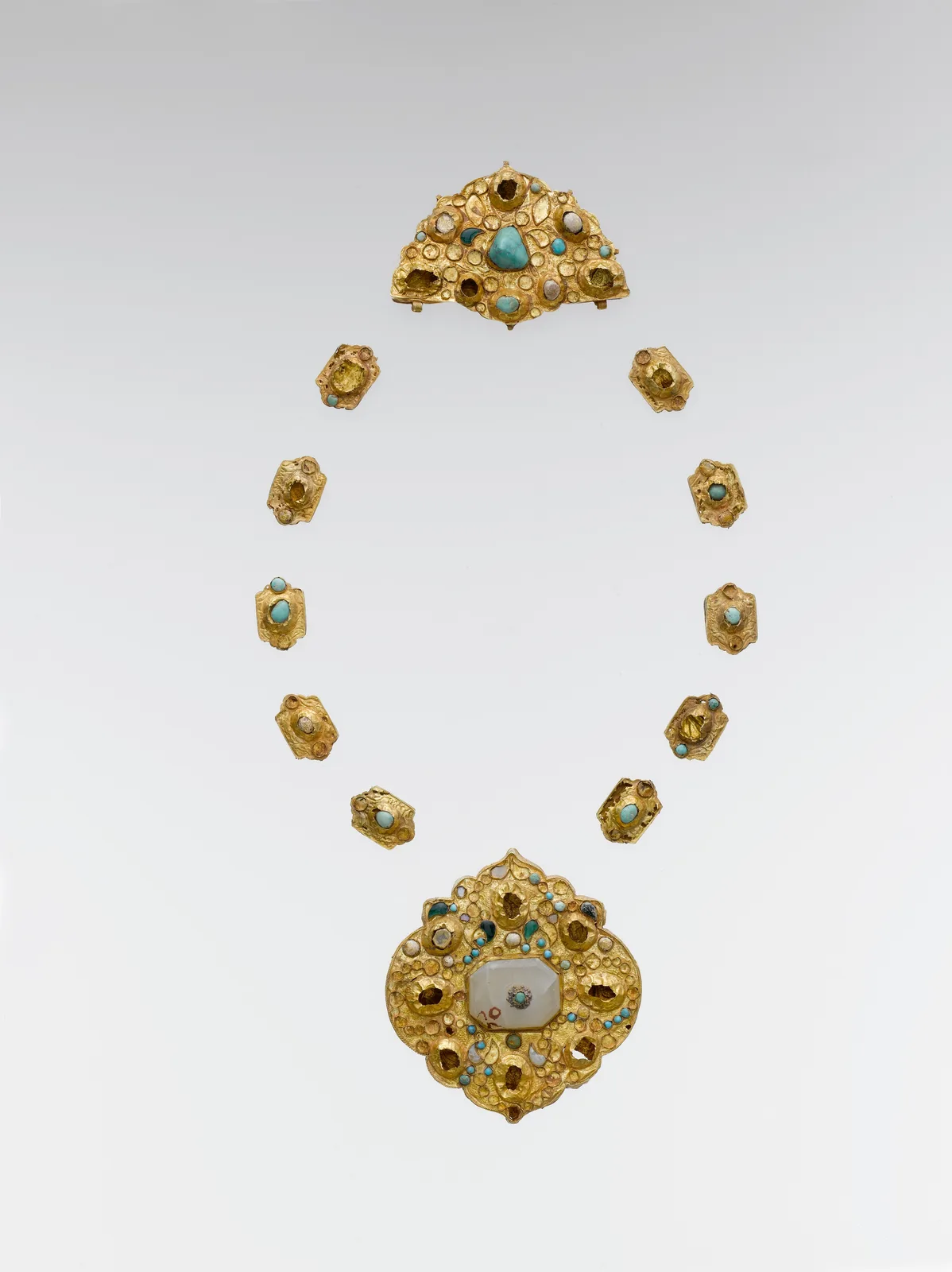
A line of gold elements is the sit in one object. A medallion, a half-moon that would meet it, cartouches as the small teeth of the same sentence — plaques that belong in a row around the neck. You would feel a necklace made of pieces that close against one another before you named a court. Not a single rigid hoop. A line that comes apart and comes back. That is what the Zip still protects: a collar whose grammar is the join, hardware worn as jewelry, a close you can see.
The temperament is the meeting edge. An open chain would have hidden the decision. The Zip writes that decision as teeth — a motif that is also the hold.
A strap that is the line, then a clasp that is the close
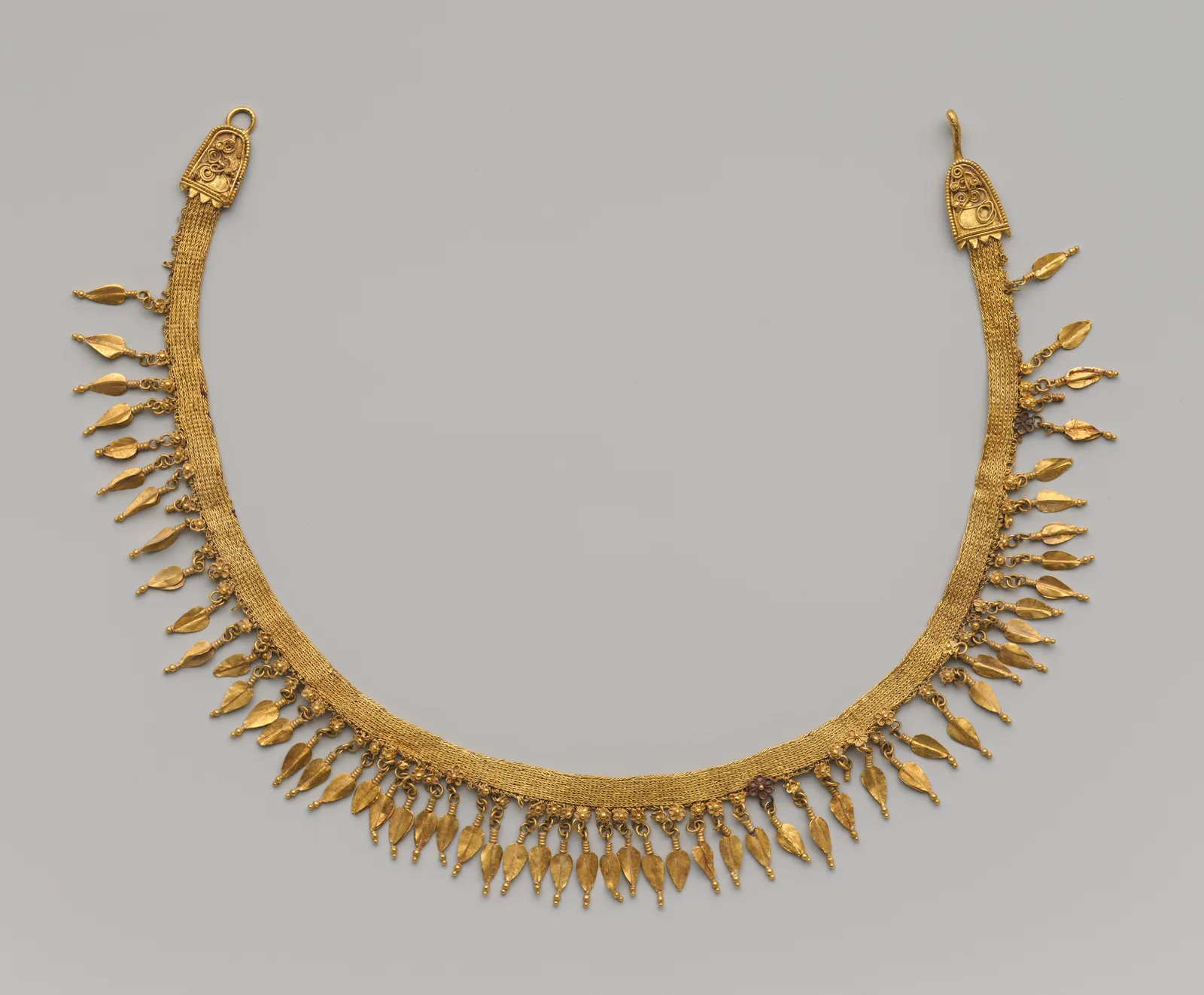
A Greek strap keeps the same sit as a tape you can almost zip. Woven gold, a flexible line, beechnuts as the small weights along the edge. You would meet a ribbon of metal before you met a pendant. The necklace is the strap. It opens around the neck and lies as one decision. The Zip does that work with teeth: a tape of gold that is already the jewel, a line you can run a fingertip along.
A Hellenistic necklace finishes the thought as a close you can name. Stones and granulated gold, then a clasp framed in banded agate — the catch worn as architecture, two lynx mouths keeping the garnets. You would feel the finish of the line before you felt a moonstone. The fastener is not an afterthought under the hair. It is the event. The house name is later. The sit is a necklace that closes — a line of elements, a strap, a clasp, already at the collar.
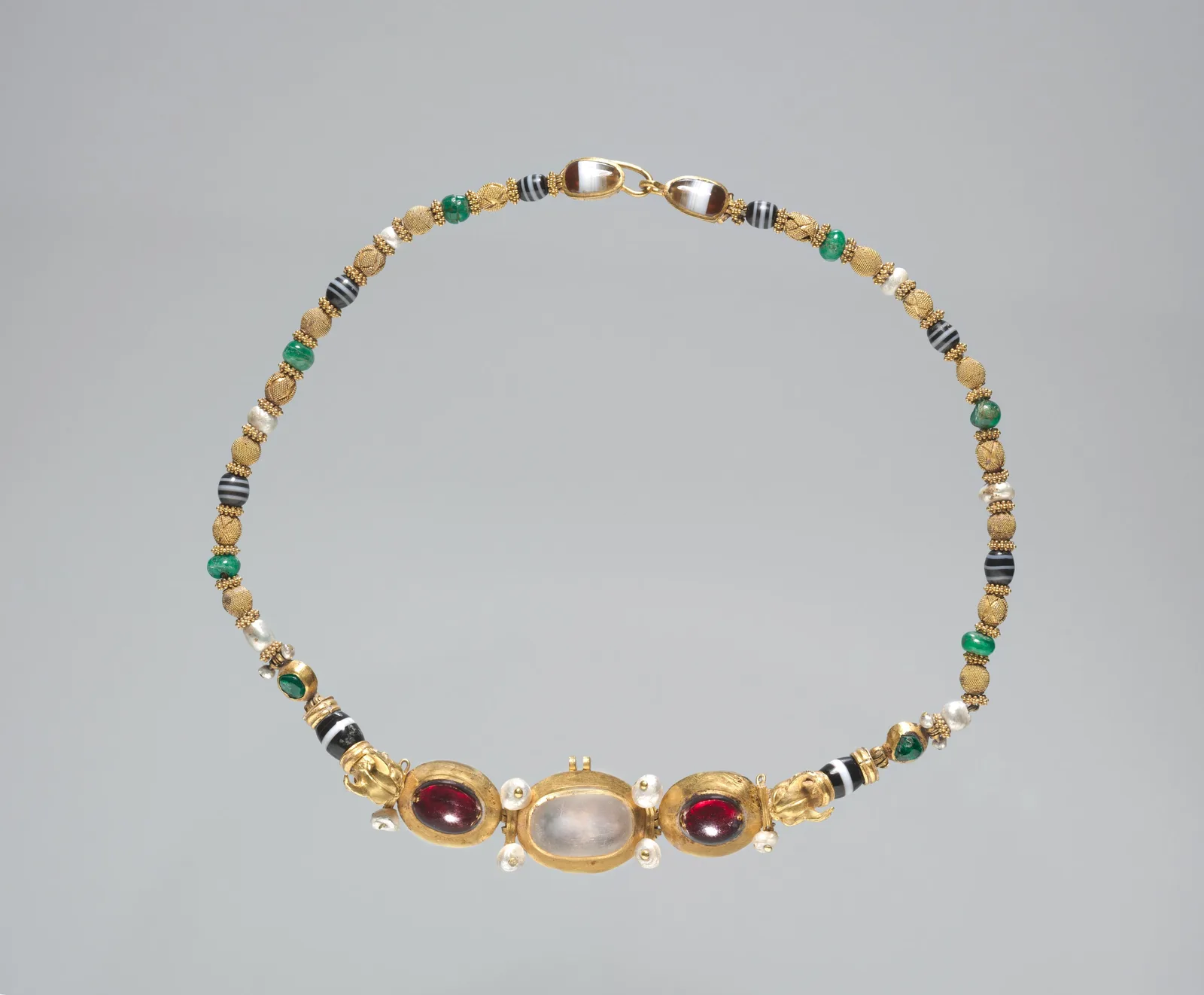
That is the icon. The house gave a working zipper a Paris name and a tassel as folklore. The sit remains a necklace that closes — a line that opens, a join you can see, a catch worn as the jewel.
Educational only · Not jewelry, insurance, or legal advice