The Trinity, three rings that turn
The Trinity is three rings that learned to turn. Louis Cartier, 1924: yellow, rose, and white gold — or platinum for the pale band — three hoops that stay three and roll against each other on the finger. You feel the roll first. The jewel is the motion. The house gave that temperament a name. The sit is older than the name.
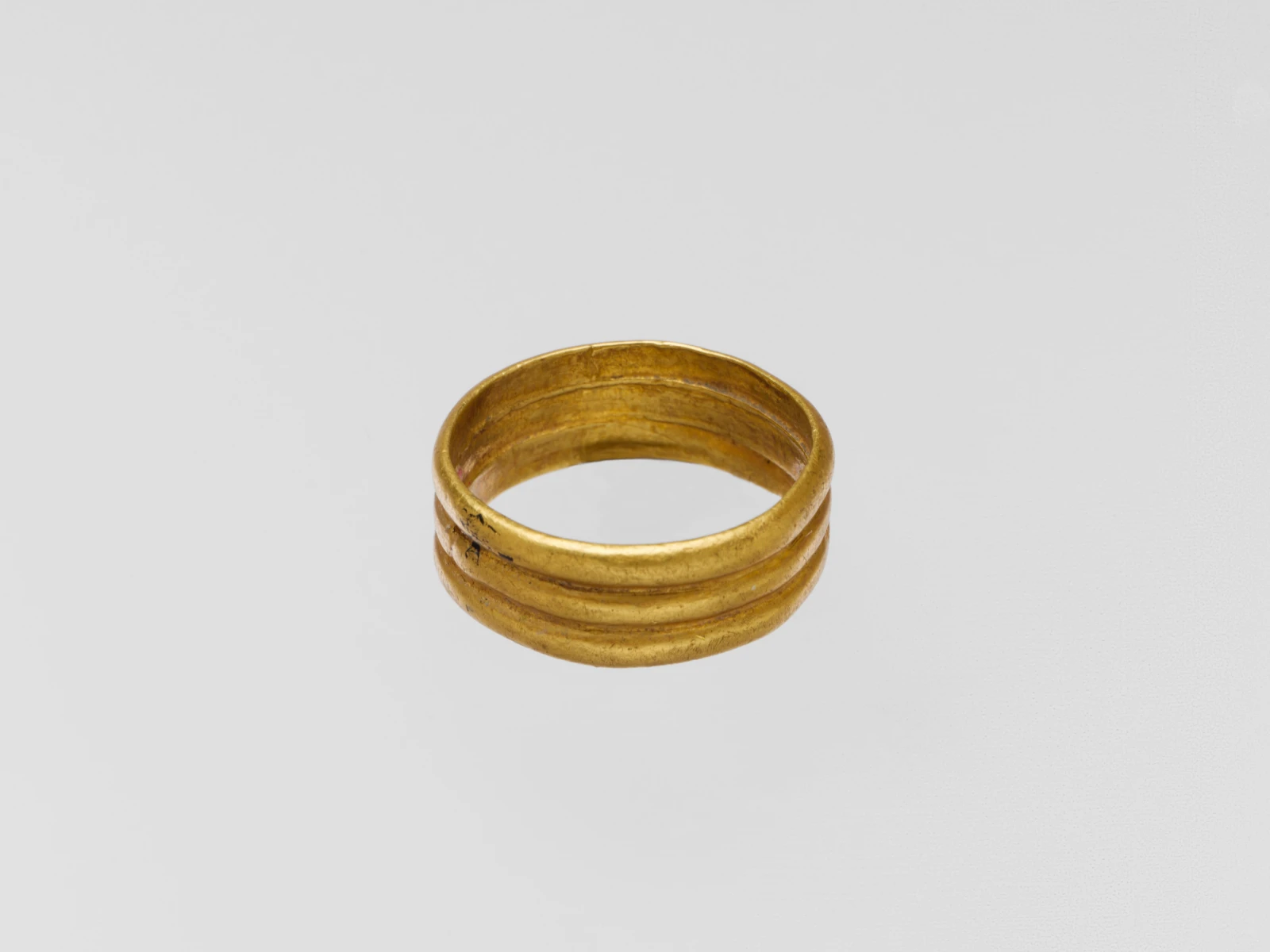
A Geometric gold ring is the sit in one object. Three rounded ribs, two shallow grooves, one hoop. You would feel a triple line before you counted a dynasty. The bands do not come apart. They have already agreed to be one width. Run a fingertip around the circle and the count stays: three, three, three. That is what the Trinity still protects: three temperatures of metal worn as a single thought — except Cartier left them free to move. Here the three are fused. The appetite is the same. Gold treated as ribs, a hoop you can read with a fingertip.
The temperament is the count that does not become a single smooth band. A plain hoop would have hidden the decision. The grooves are the sentence. Trinity keeps that sentence and adds the roll. Yellow, rose, white — three that stay three, already turning.
Then a hoop that turns
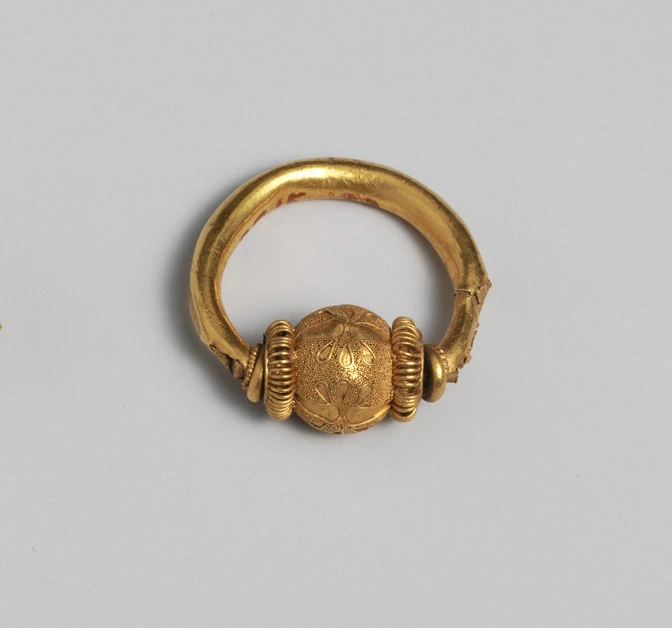
An Etruscan gold ring finishes the thought as motion. A thick hoop, two collars of coiled wire, and between them a granulated bead — floral, sandy, already meant to turn on the gold. You would feel the hoop first, then the click of a sphere that revolves. Not three metals. One hoop that has already learned to roll. That is the other half of the icon: not only three, but turn. A Trinity on the hand keeps both — three ribs of color, a hoop that moves.
You would wear that bead as a decision in motion. The sphere is the part that turns. The hoop is the part that stays. Cartier’s three bands do the same work in metal alone: yellow, rose, white, rolling, already on the finger. The house name is later. The sit is the gold agreeing to move.
That is the icon. The house gave three rolling rings a Paris name. The sit remains a triple you can feel, and a hoop that turns.
Educational only · Not jewelry, insurance, or legal advice