The Serpenti, a coil on the wrist
The Serpenti is not a mascot stuck on a chain. It is a coil. Bulgari made that sit a house name — Tubogas scales, a head that meets a tail, a bracelet that is already the animal — but the appetite is older than Rome’s Via Condotti. A snake on the wrist wants to be one continuous line. You feel the circle first. The creature is the jewelry, not a charm hanging from it.
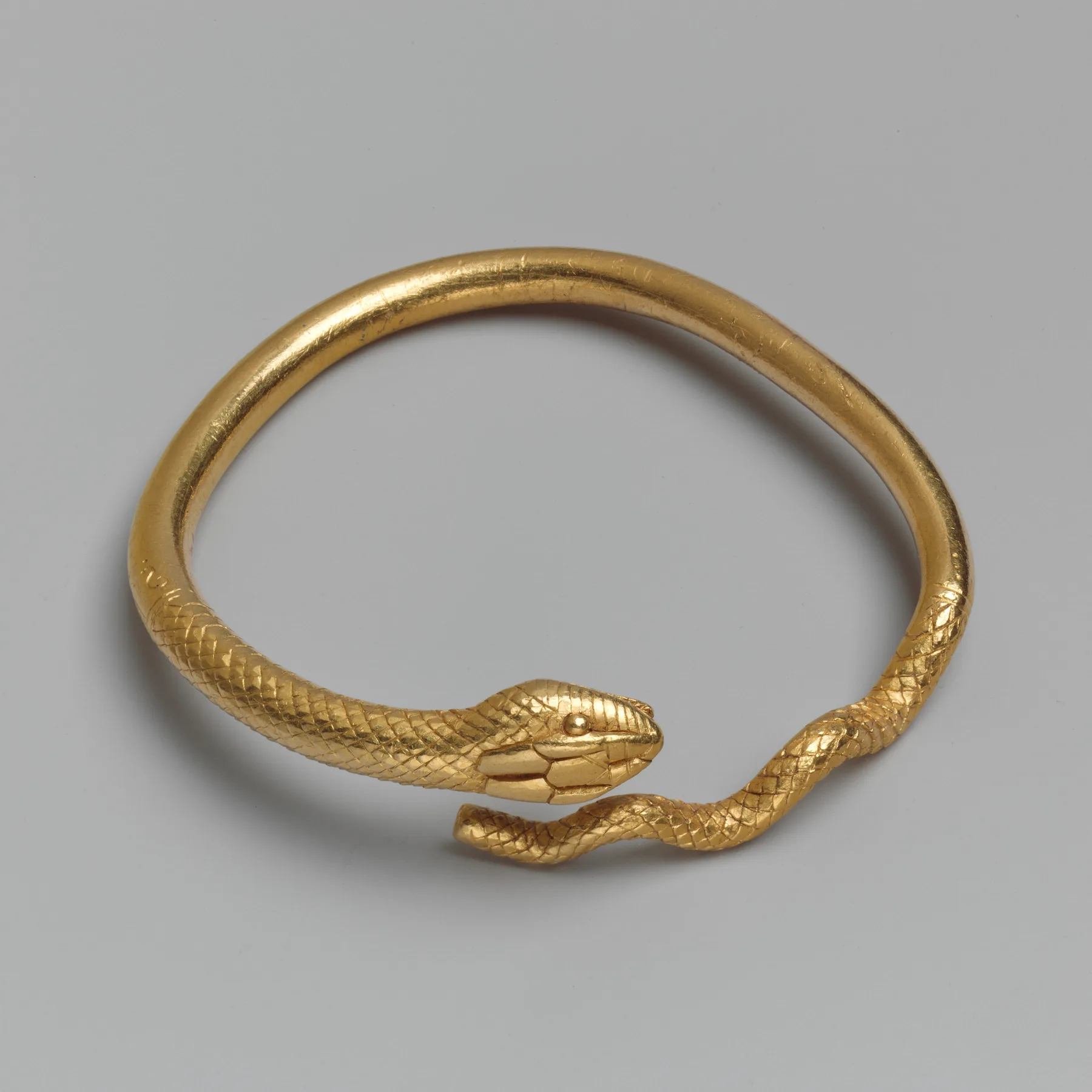
A Ptolemaic gold snake is the sit in one object. A smooth yellow hoop, a head with small eyes and a short field of scales, a tail that tapers and waves as it almost meets the jaw. You would feel warm metal as a closed thought before you named a reptile. No hinge story. No separate watch face. The bracelet is the body. That is what Bulgari’s Serpenti still protects: the coil as the whole jewel, already settled on the bone.
Heads that meet, then a silver line
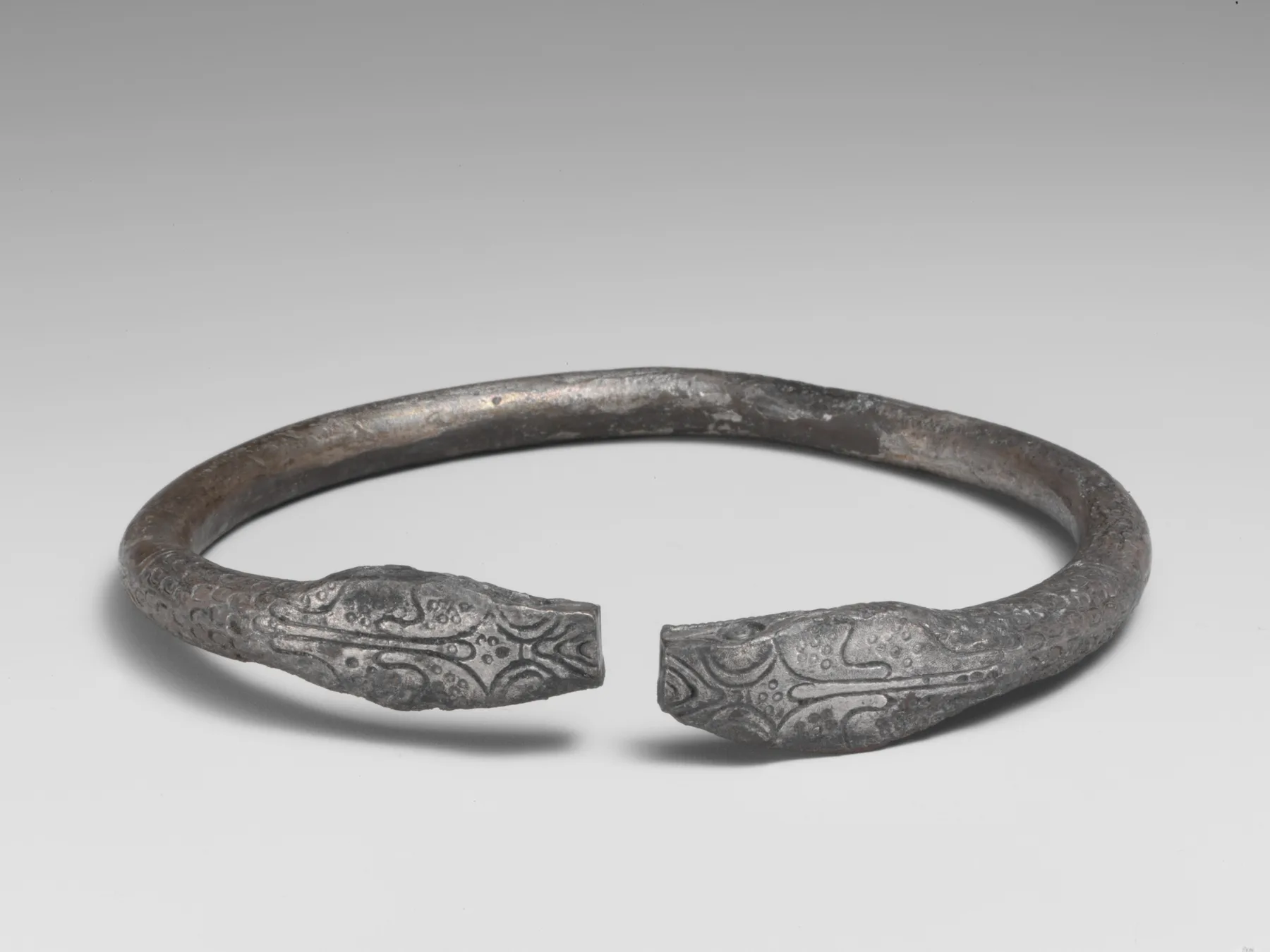
A Greek silver cuff makes the coil as a conversation of heads. Two terminals, engraved and stippled, scale marks fading into a smooth rod. The opening is the pause. You would feel cool silver arcs and then the faces — not dangling, not stacked. The animal is the architecture of the cuff. Serpenti keeps that temperament when enamel bands or diamond pavé run the length of a Tubogas: the snake is the structure you wear, not a figurine applied later.
A Roman silver snake softens the same idea into a single dark line. Two simplified heads bypass each other, eyes as small pits, necks hatched with diagonal marks, the hoop thick and quiet. You would meet a weight that has already chosen its circle. No enamel story required. The coil is enough.
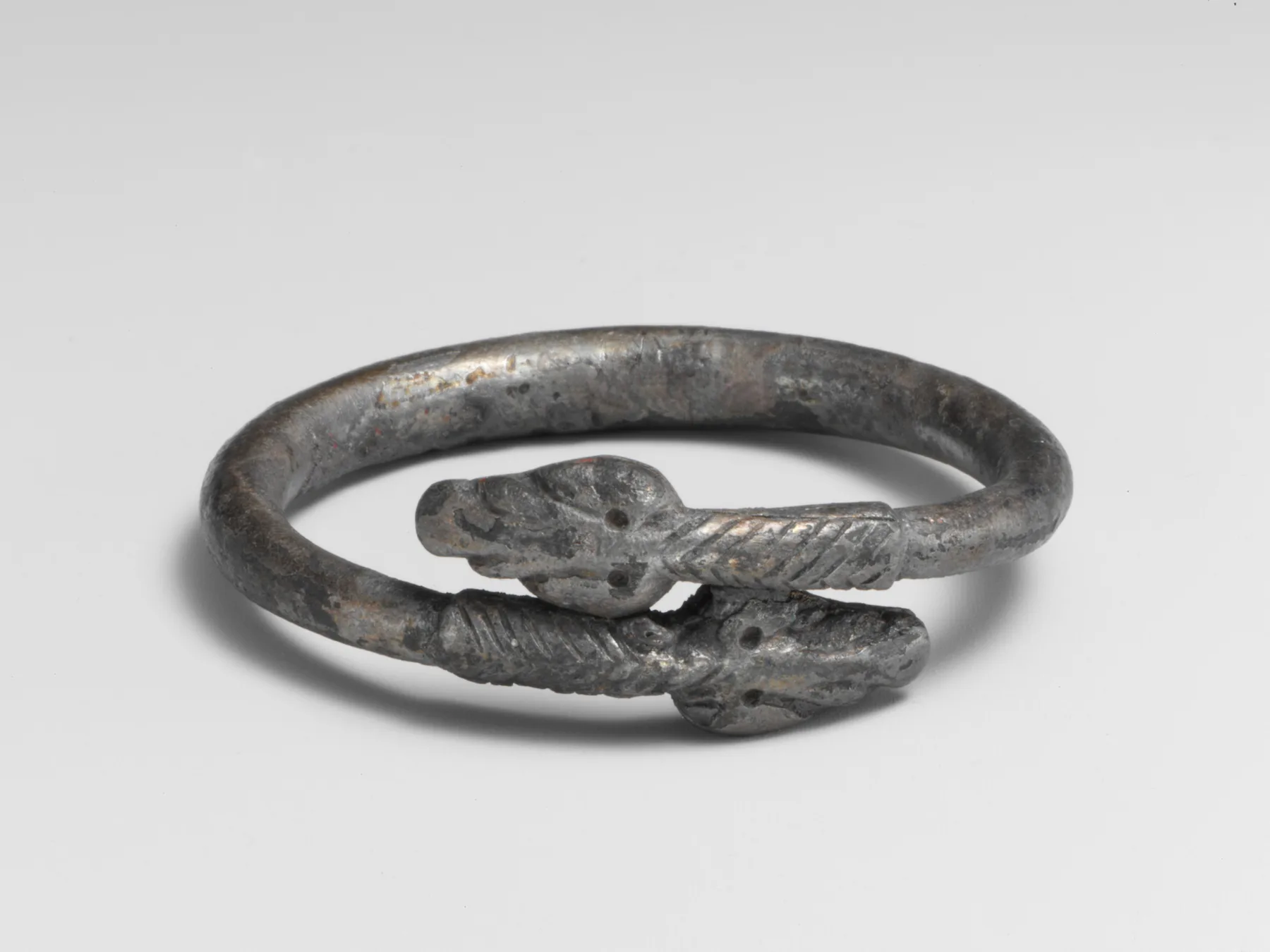
That is the icon. Bulgari gave the coil a modern name and a Roman house. The sit remains the same: a snake that has already wrapped the wrist, one continuous jewelry, a body that does not need to chase.
Educational only · Not jewelry, insurance, or legal advice