The Love, an oval that locks
The Love is an oval that learned to lock. Aldo Cipullo, New York, 1969: a rigid bracelet that closes, screws as the motif, a circle that does not pretend it was always open. Cartier kept that lock as a house icon. You feel the close first. The jewel is the catch. The house gave that temperament a name. The sit is older than the name.
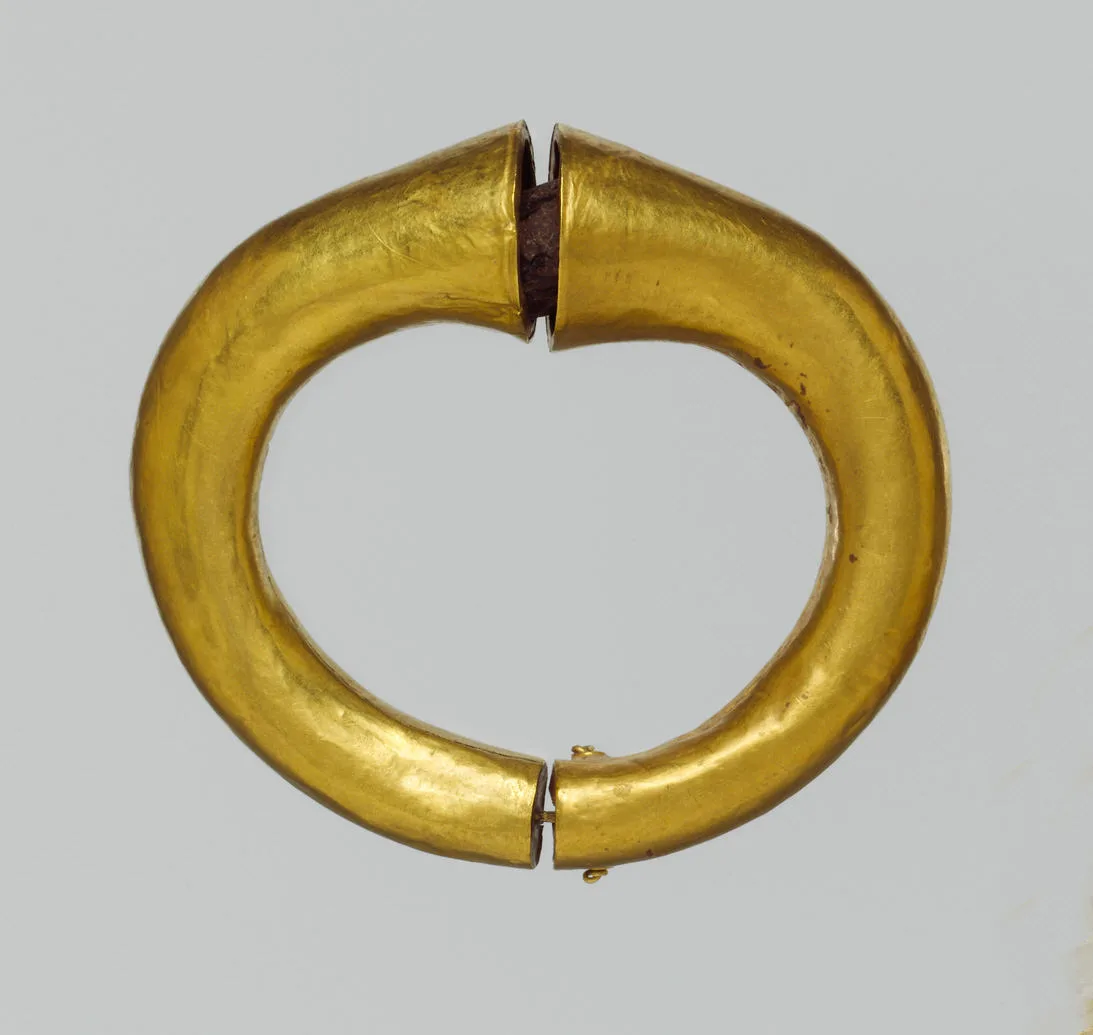
A gold armlet from Sirkap is the sit in one object. A tubular oval, two halves, a hinge with its little rivets, a joint where the circle agrees to close. You would feel a rigid gold room for the wrist before you named a city. No charm. No open gap left as a sentence. The bracelet is the lock. That is what Cipullo still protects: an oval that has already decided to shut, hardware worn as jewelry, a close you can see.
The temperament is the closed line. An open hoop would have hidden the decision. The hinge is the grammar. Love keeps that grammar and writes it as screws — a motif that is also the hold.
A pin that is the front, then a clasp that is the jewel
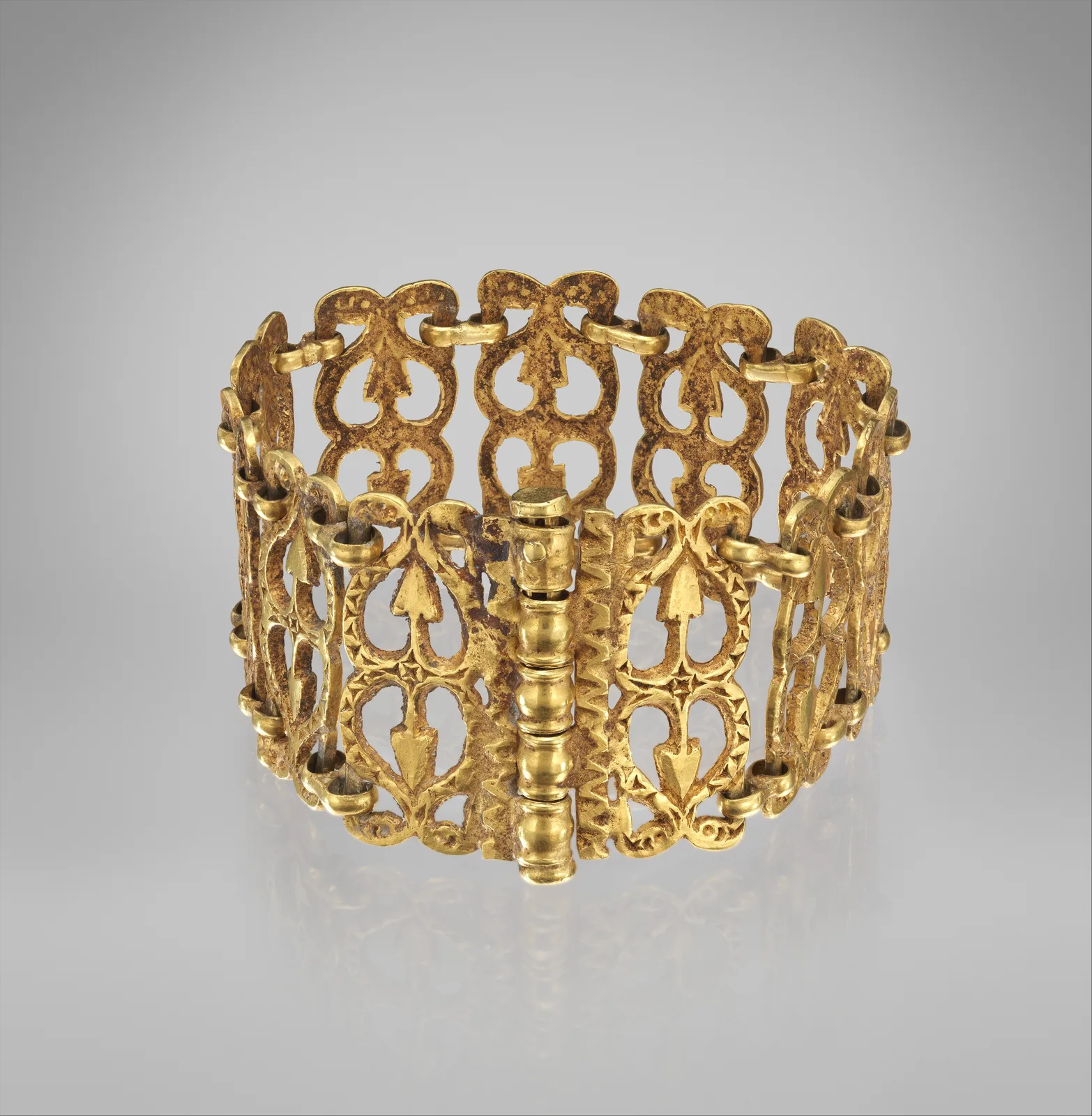
A Byzantine gold bracelet from the Pantalica treasure makes the lock the face of the jewel. Panels of pierced ivy, a rigid oval, and at the front a stack of gold barrels with a pin through them — the close worn as a vertical sentence. You would meet that pin before you met a leaf. The fastener is not hidden at the underside. It is the motif. Love does the same work with screws: the hardware stays visible, a close you can count.
An armlet found at Gurgan finishes the thought as a clasp that has become the jewel. A thick twisted hoop, then two plates meeting in a hinge, four granulated lobes, a pin you can still name. You would feel the lock as a small architecture before you felt the ring of gold. The oval is the hold. The clasp is the event. The house name is later. The sit is gold that closes — a rigid line, a visible catch, already on the bone.
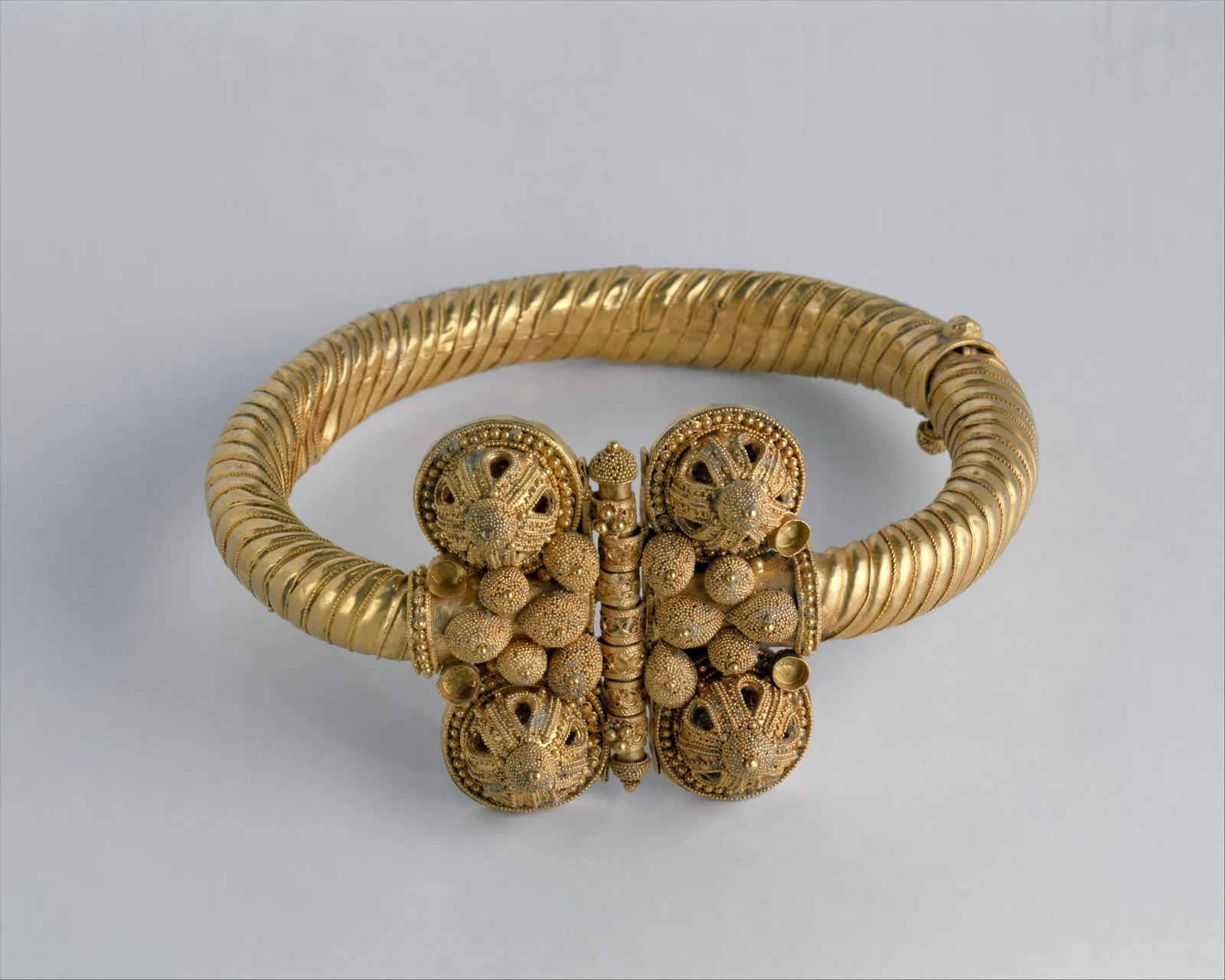
That is the icon. The house gave a locking oval a modern name and a screwdriver as folklore. The sit remains a rigid circle that closes — a hinge, a pin, a clasp worn as the jewel.
Educational only · Not jewelry, insurance, or legal advice