Tangente, a Bauhaus face that sits
NOMOS Glashütte Tangente keeps the hour on a Bauhaus face that sits. A round dial, a slender case, a quiet set of markers, and a field left open on purpose. The Carrera opens on a tachymeter, a racing dial that counts. The Portugieser opens on a minute track that circles, a railroad of minutes as the whole personality of the dial. A Calatrava is a thin circle dressed for the evening. A Constellation is a star that sits, claws on the bezel and a medallion for an observatory. A Reverso is a face that flips. An Explorer is a black field that climbs. The Tangente opens on the open field. The jewel is how completely a dial can sit and still tell the hour.
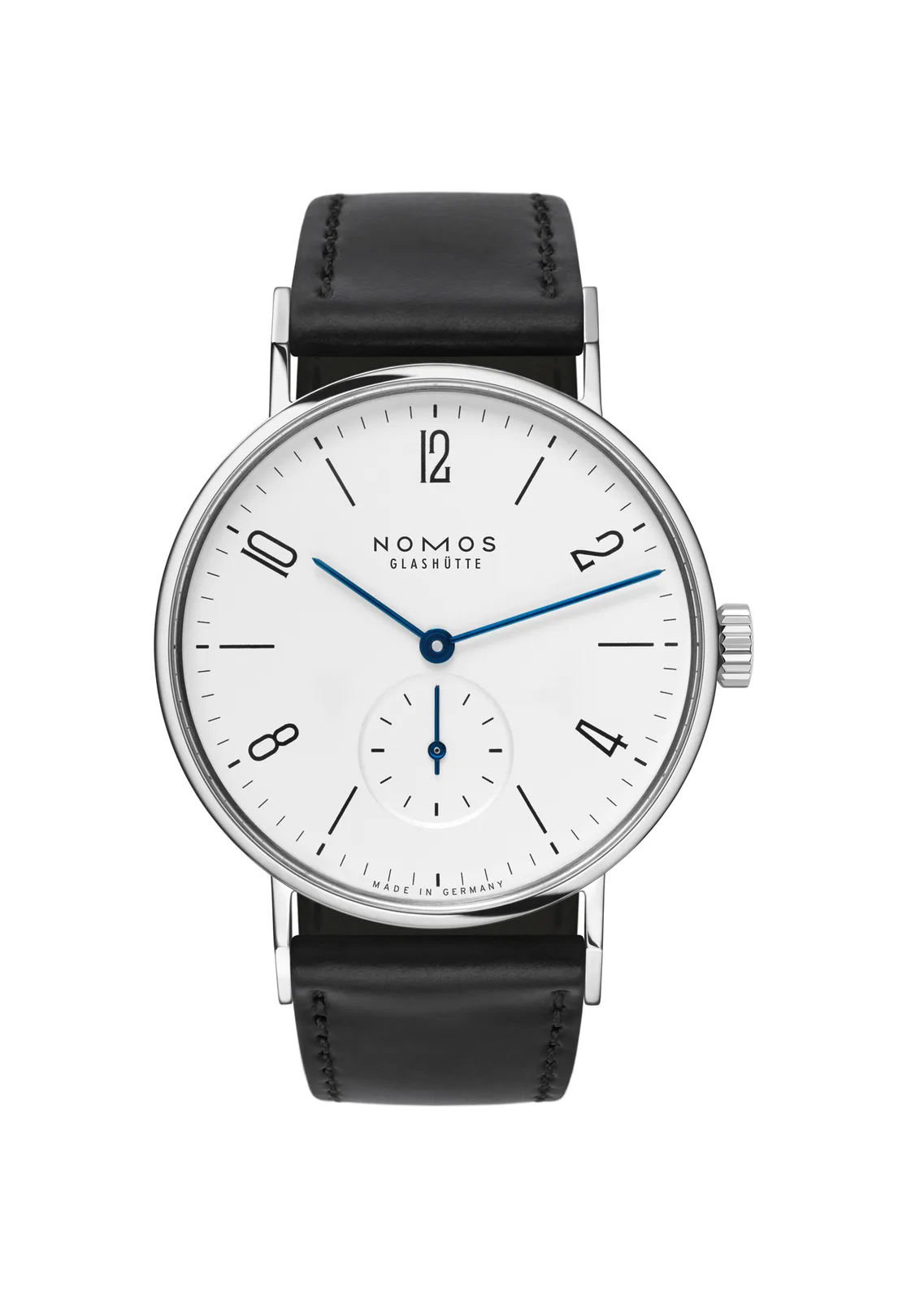
Numerals, and a field left open
A Tangente, off the wrist, on a white ground. The dial is white. Arabic numerals, a fine minute track, the hands, and a small seconds at six — a tiny circle that belongs to the drawing rather than a register asking to be the subject. The name sits where a name belongs. The case is so slender the lugs seem to continue the circle. No scale of speeds. No slide rule. You meet the face before you meet a function. Take the name away and the dial still says the same thing: a circle drawn until the hour is the event.
The lugs and the strap stay with the case in the plate, and nothing in the plate is a wrist. The pleasure is how finished the face is before any cuff arrives. Steel does the work of a line. The dial does the work of a jewel’s ground, white, and ruled only as much as a Bauhaus drawing asks. Between twelve and six the field stays open enough that the small seconds can sit at the bottom and still leave the dial quiet. That openness is the manners. A racing bezel would have put a count on the ring. Here the ring agrees to be thin, and the count is left to the hands.
A deck-watch dial would have enlarged the minute track until the track was the sentence. This track is a hairline, there so the minutes have a home, content to stay a line. The subject is the sit: a face worn as jewelry because the drawing has already decided to be quiet. The numerals are enough. The rest of the dial is air the eye can rest in, which is a strange luxury in a round of metal, and the one this watch offers.
A neomatik, the same quiet
A Tangente neomatik spends the idea with the automatic inside and the small seconds left off. Off the wrist, on a white ground, a white dial, stick markers, two hands, the case still a circle you take in at a glance. The field runs unbroken through six. The name stays small. You would know it as a Tangente from the slender ring and from how much of the dial is left alone. The caliber changed. The manners did not.
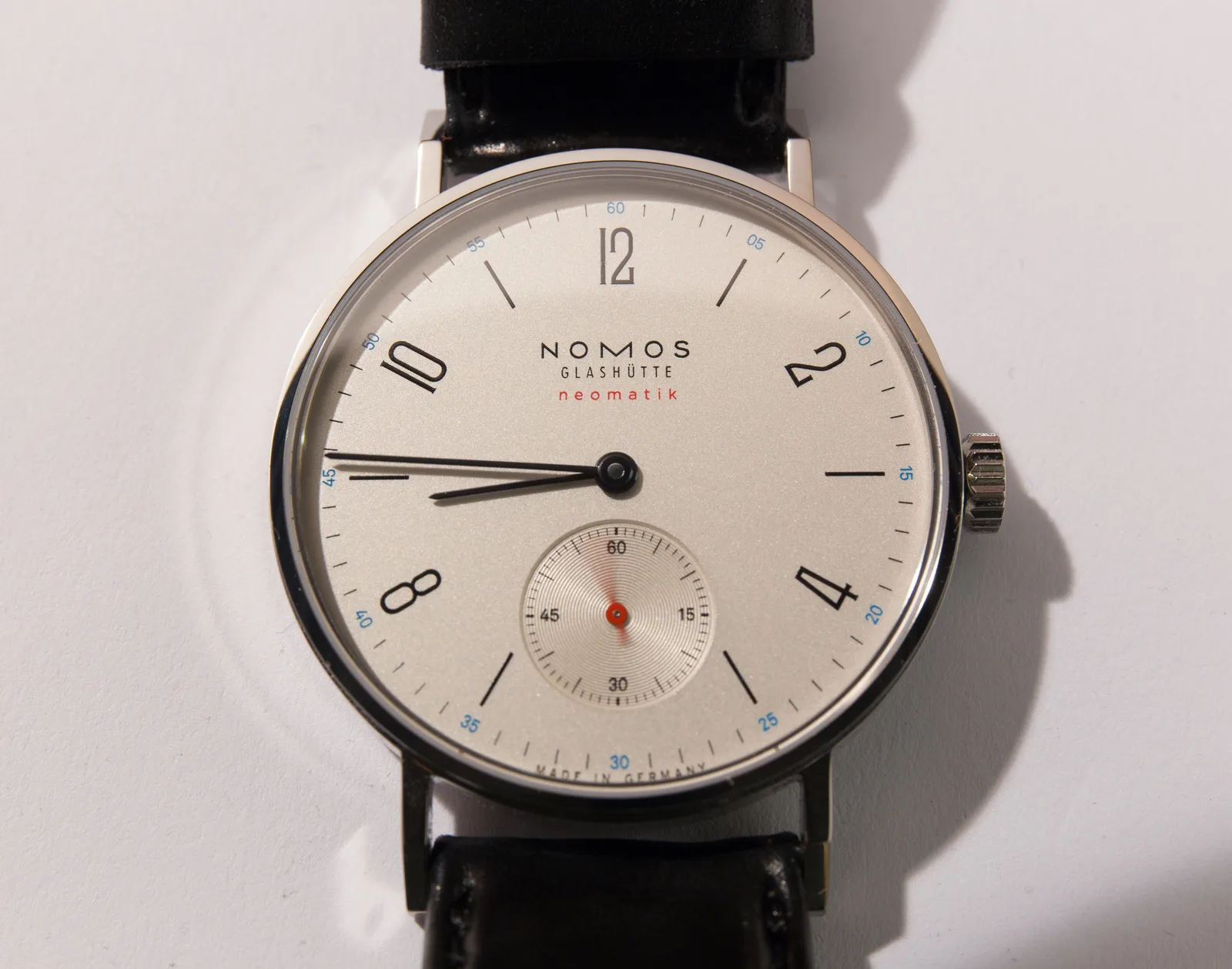
The neomatik is the same drawing with the tiny seconds circle omitted, so the white ground runs from twelve through six without a second clock. Two hands are the whole event. Steel still frames the dial as a line. Nothing in the still is a cuff or an evening. The watch is simply sitting, which is the whole argument of the icon: a Bauhaus face is jewelry when it is allowed to sit.
Hold the two plates together in the mind. The classic gives the numerals their voice, and lets a small seconds keep the bottom of the dial. The neomatik lets both the numerals and that tiny circle go, sticks in their place, the automatic carried in a case that stays slim, the dial still a field. A dress circle from another house would have thinned the bezel and kept a different century’s manners. This circle thins toward a drawing. The century it keeps is the one that trusted a few lines.
Forty-one millimeters, still a drawing
A Tangente neomatik 41 Update keeps that quieter face a little larger. Off the wrist, the dial still white, the markers sticks rather than the classic’s numerals, the seconds still left off, the case a wider circle and still a drawing. Forty-one millimeters is only a wider ring. The jewel does not grow busier because the circle grew. The hour is still told by a face that sits, the hands long, the field still the larger fact.
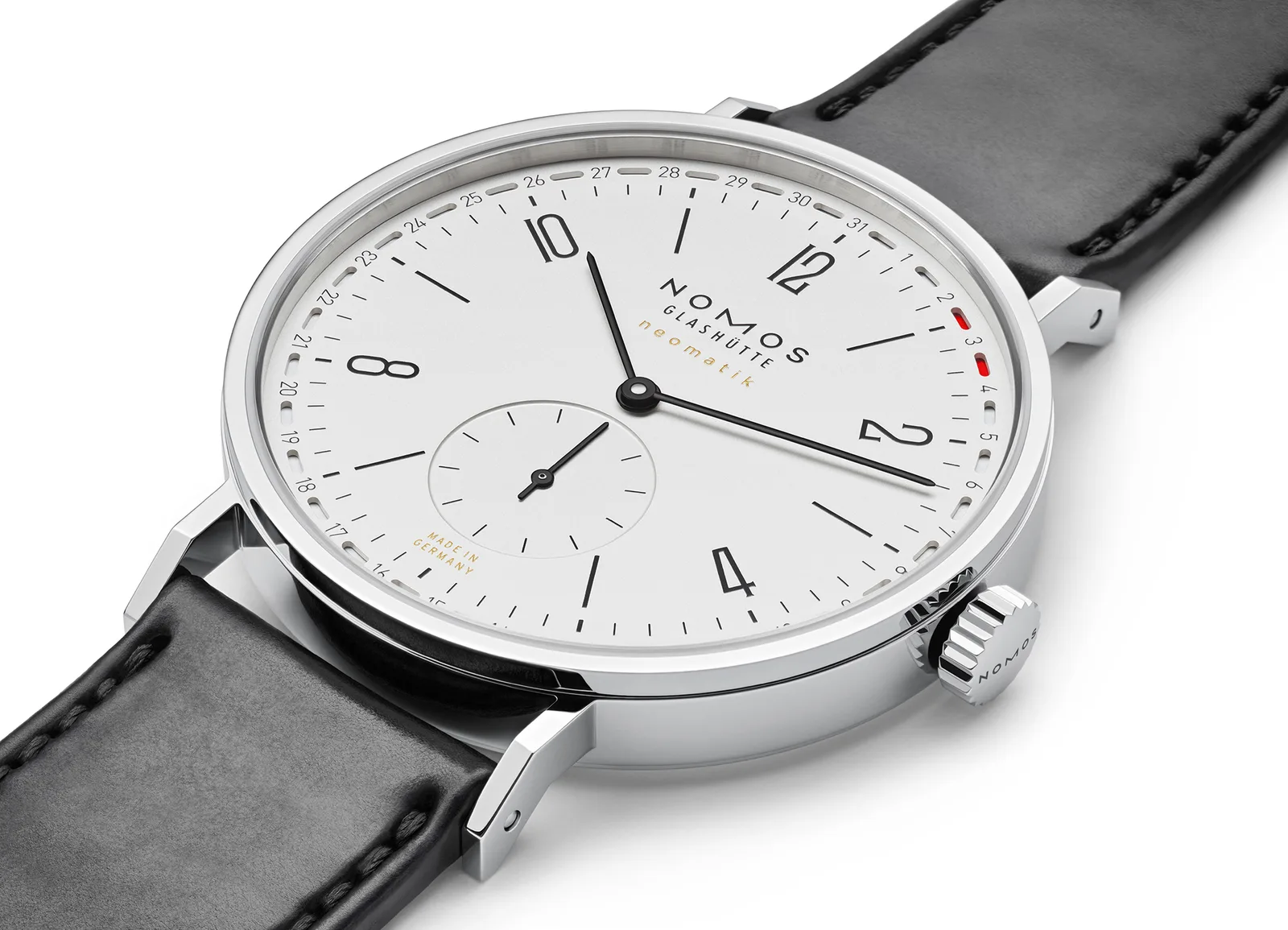
A star on a bezel would have made the grip the first fact. A flipping case would have made the reverse the surprise. A black climbing dial would have made the field a night. A tachymeter would have made the ring a count. This watch puts a quiet drawing on the dial and lets that drawing be the luxury. The slender case is the mount. The dial is the stone. Wider, it is still a stone, still white, still willing to be looked at for the space between the markers.
Three stills, one face. The classic Tangente lets the numerals and the open field be the whole jewel. The neomatik lets the same quiet carry an automatic, the face still sitting. The 41 Update lets the circle widen and leaves the dial a drawing. A tachymeter can count. A minute railroad can circle. A dress circle can be thin. A star can sit in claws. A face can flip. A black dial can climb. On a Tangente, the hour is kept by a Bauhaus face that sits.
That is the icon. Tangente, a Bauhaus face that sits. A classic dial, a neomatik, and a wider update — the open field, already the first thing you meet.
Educational only · Not jewelry, insurance, or legal advice