Spessartine as a mandarin fire
Spessartine is this season’s mandarin fire. A red garnet keeps a warm wine, a body that has already decided to be red. Citrine keeps a gold light, transparent and yellow, a pane content to glow. Carnelian keeps an opaque orange, a skin. Amber keeps a resin, the warmth of a sap that hardened. Demantoid, another garnet, arrives as green sparks, small and many. Spessartine arrives as orange. The bright stones took the trade name mandarin. The color is citrus. The fire is what this garnet is willing to show when the orange is allowed to be the whole fact.
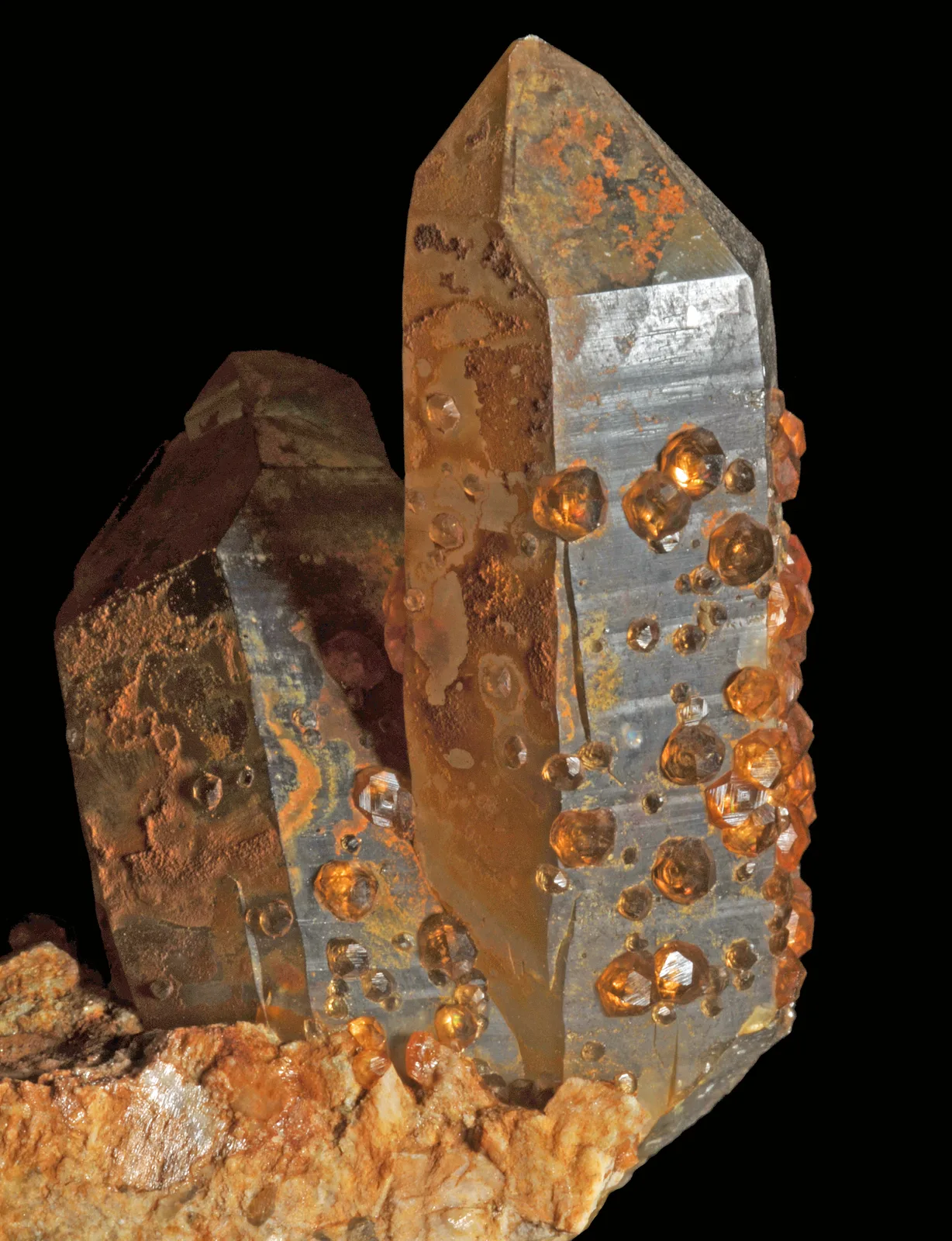
Orange on a dark quartz
A group from the Wushan mine, at Tongbei in Fujian, keeps the fire as crystals on smoky quartz. The quartz is brown and quiet, a smoke with its own manners, the chair. The garnets are the sentence. Bright orange, many faces, a cluster that looks nearly cut before a wheel has asked. You would meet the citrus before you asked the locality.
A red garnet of the same habit would have sat as wine. These sit as fruit. The faces catch, and the orange spends itself in small planes, which is why a crystal this willing can stand for the jewel the season wants: a warm body, a fire you can see in the rough. The quartz underneath only holds the chair still.
Autumn has room for that orange. The warm months already know citrine, amber, carnelian, and the red garnets. Spessartine sits beside them as the citrus, a colored-stone pick when the palette wants a fire that stays orange. The name the trade also uses, spessartite, is the same mineral. Mandarin is the bright chair of it. The Fujian group is that chair, already a handful of lights.
A museum orange beside a blue
An aquamarine and a spessartine from the Shigar Valley, in the mineralogy gallery of the National Museum of Natural History in Paris, spend the same orange with a neighbor. The blue is a water, pale, a crystal that has agreed to be aquamarine. The orange crystals sit with it, sharp, a mandarin in the same case. You would meet both. The orange would still be the one that burns.
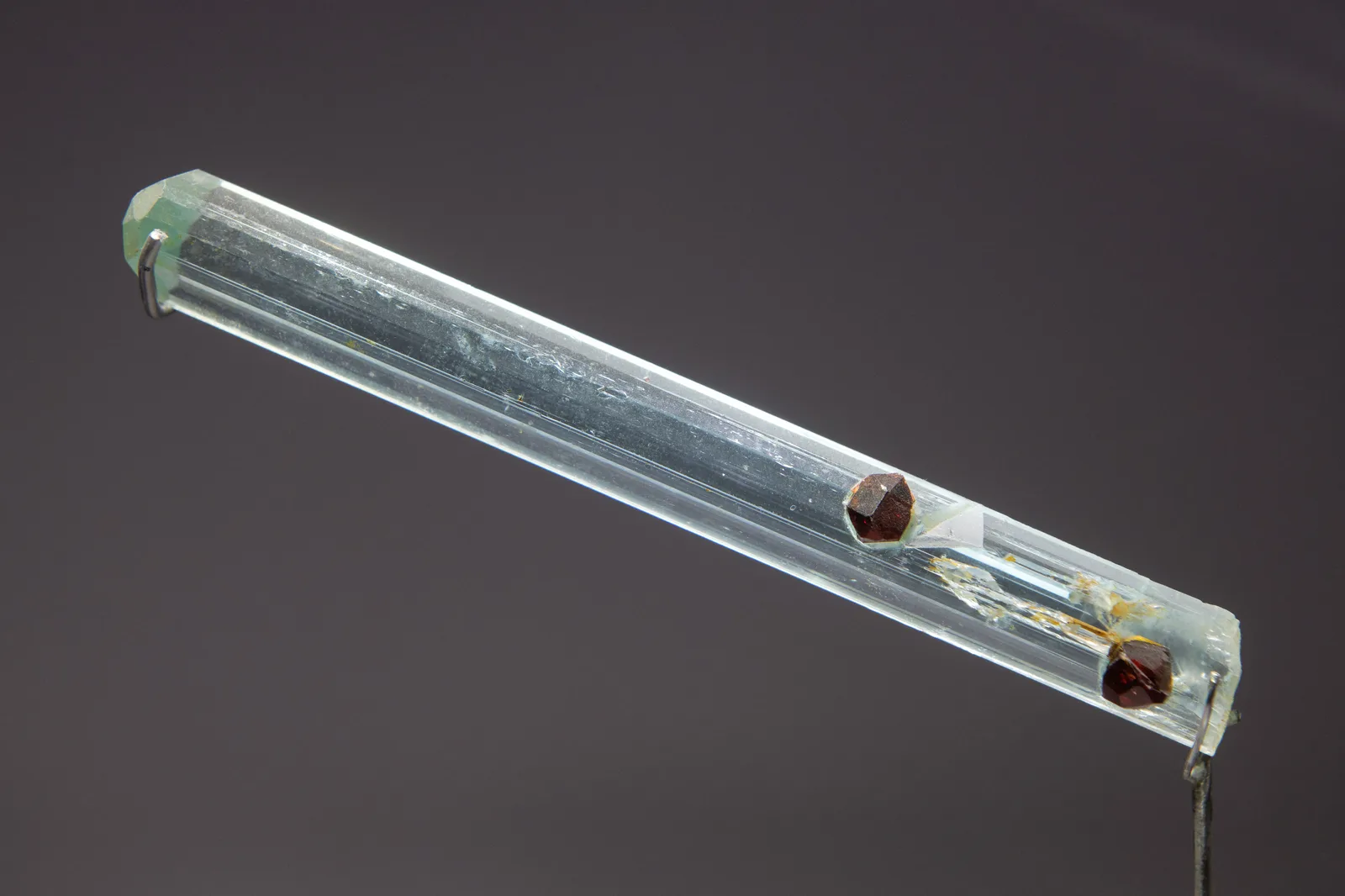
An aquamarine alone would have been a cool blue water, another sit. Here the blue is the neighbor. The spessartine keeps a warm fire next to a cool one, and the case lets the disagreement be a pleasure. That is a way the season can wear the stone: an orange that can share a setting and remain the warm fact in the room. The blue does not lend its manners. The orange does not borrow them.
Two grounds, one species. The Fujian group gives the fire a dark quartz to sit on. The Paris case gives it a blue neighbor and a museum light. Both are orange before they are jewelry, which is the appetite of a gem that can be this bright while it is still a crystal. A wheel, when it comes, only spends a color the mineral already had.
Orange in a silver book
Muscovite with spessartine, from Pakistan, on display at the Natural History Museum of Los Angeles County, keeps the fire inside a silver book. Sheets of mica, stacked and shining, and in them a warm orange garnet, deeper than the Fujian cluster, still citrus rather than wine. You would meet the mica’s light and then the color inside it. The garnet is the mineral’s own. It grew there.
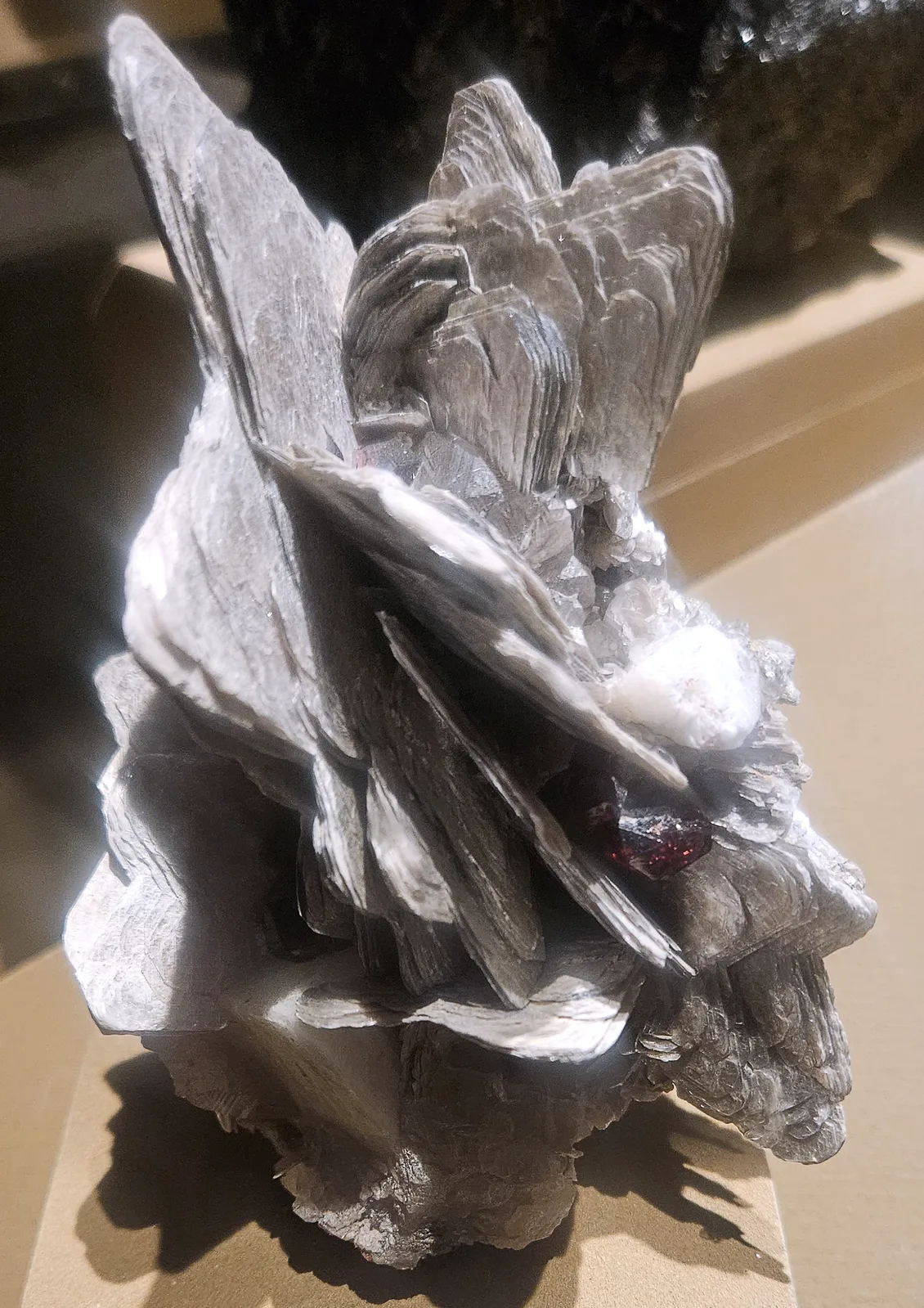
A citrine in this vitrine would have given a gold light, clear and yellow. A carnelian would have given an opaque skin, a warm orange with no crystal faces. An amber would have given a resin. A demantoid would have given green sparks, a scatter. This is the same orange, held in silver pages, a deeper chair of the fire with a book around it. The mica is the setting the earth made. The garnet is the stone.
Three stills, one orange. The Fujian crystals let the fire be a cluster on smoke. The Paris case lets it sit beside a blue and stay warm. The Los Angeles mica lets it be a fruit in a silver book. A red garnet can still be worn as wine. A demantoid can still be worn as green sparks. This season’s garnet is the one that arrives as citrus.
That is the sit. Spessartine as a mandarin fire. An orange body, bright enough in the crystal to look already like a jewel, worn when the months want a warm fire that stays a mandarin.
Educational only · Not jewelry, insurance, or legal advice