Speedmaster, a chronograph that moons
Omega Speedmaster is a chronograph that learned to moon. Three registers, a tachymeter on the bezel, a professional case that can leave the wrist and still read as jewelry. The geometry arrives before the house name. A Daytona is the other chronograph — three counters, a tachymeter, a sit of its own. A Datejust begins at a fluted round and a window for the day. A Nautilus begins at a porthole, the softened octagon. The Speedmaster begins where a moon chronograph begins: the counters, then the scale.
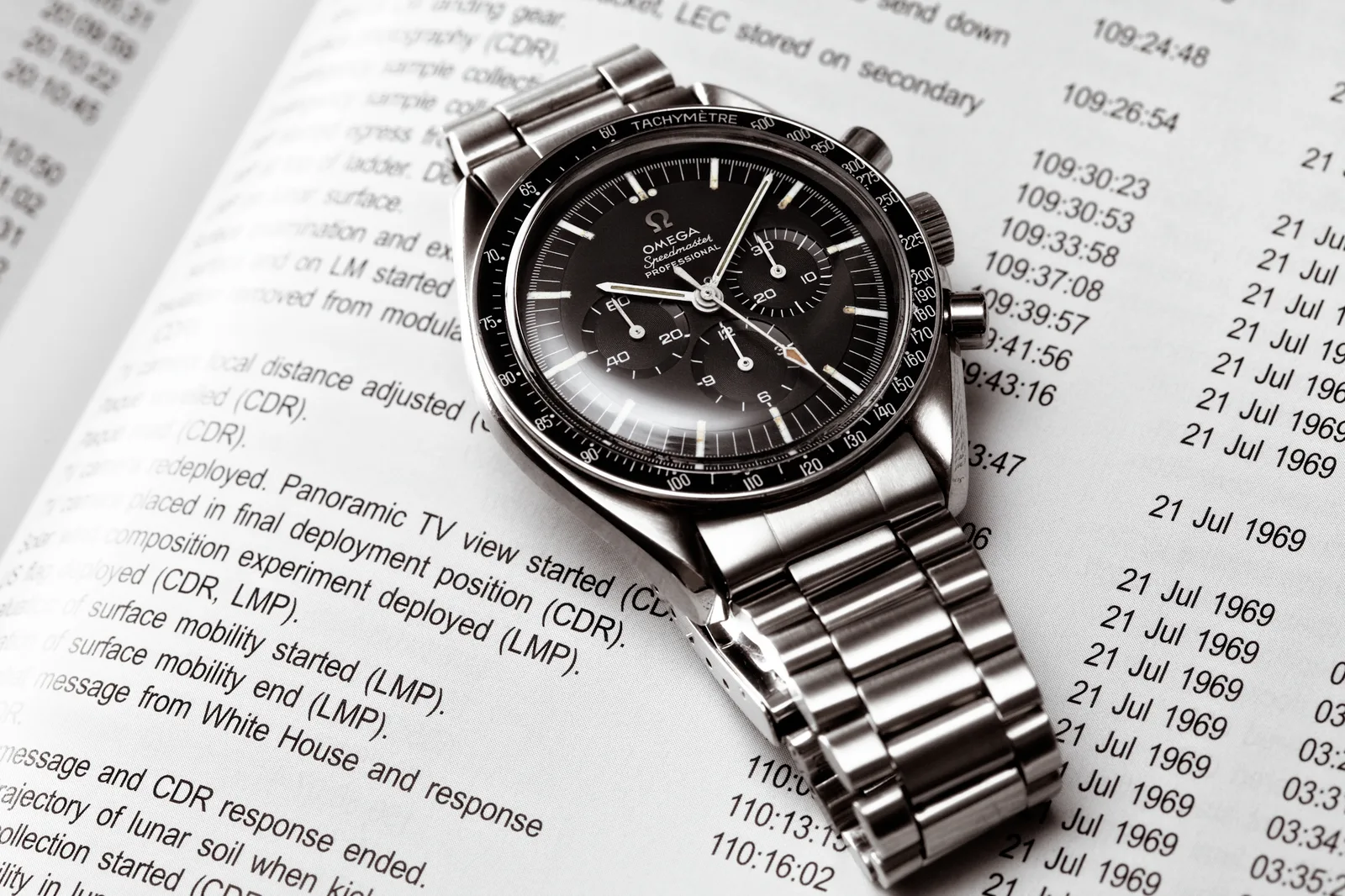
A steel Speedmaster, reference 145.012-67, is the meeting in one face. Three registers, a tachymeter on the rim, a bracelet continuing the case, the dial already a professional sentence. This is the reference that went to the moon — caliber 321, a layout the cuff can recognize with the watch in the hand. You would feel those three circles before you named a flight. A fluted round would have opened on a gold edge. A porthole would have opened on a softened octagon. This face opens on the counters, then on the rim that can time a speed.
Off the wrist, the case still explains itself. The pushers have a place on the flank. The bezel has a scale it is willing to keep. Function has already been arranged as jewelry, and the serial can wait.
A later professional face keeps the same appetite on a darker ground. Black dial, three registers still clear, the tachymeter still the sentence on the bezel, the bracelet still belonging to the case. You would meet that professional layout before you asked which year the hands were set to. The moon reference and the professional case are one grammar in two lights.
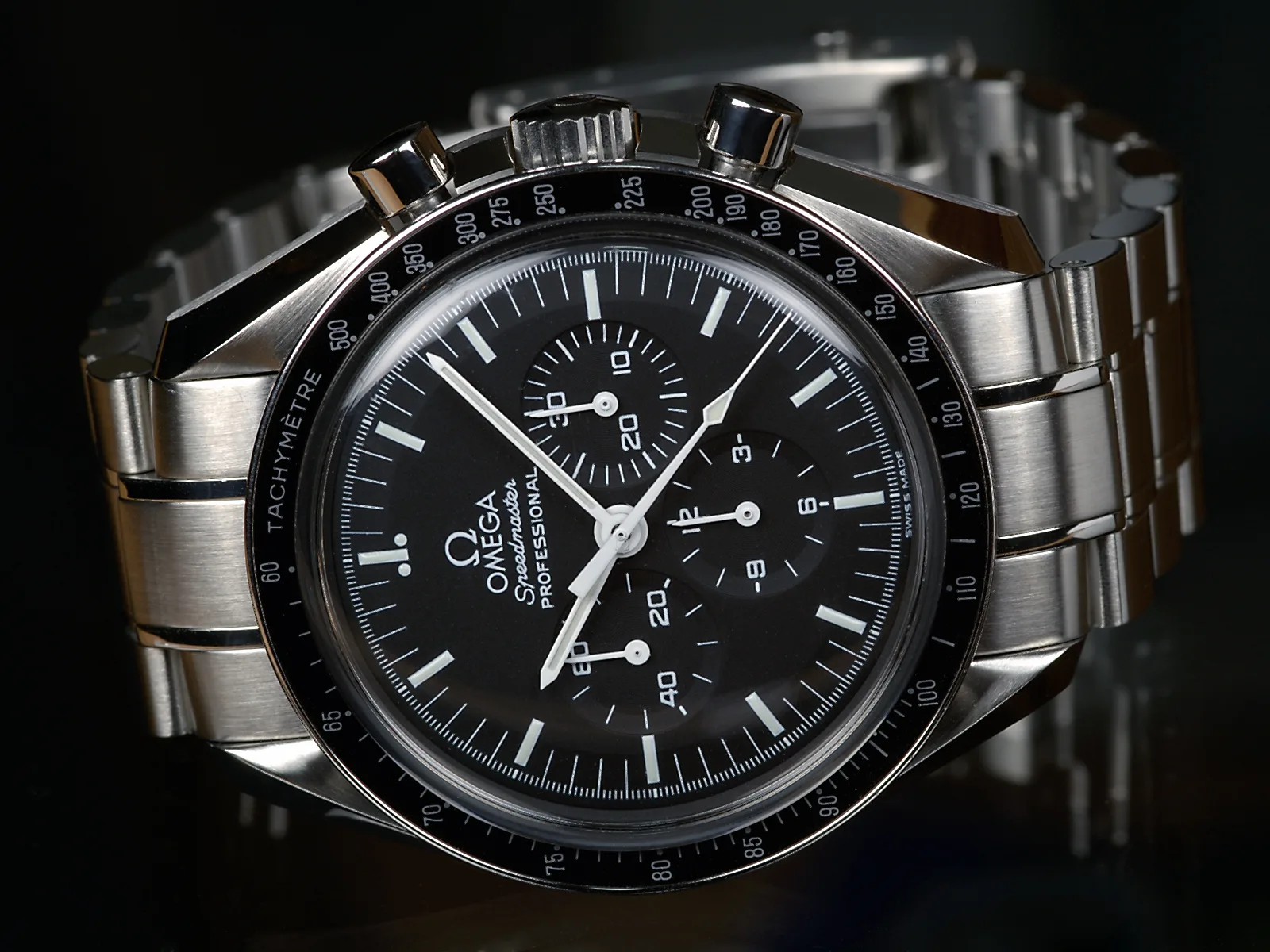
A bracelet can be swapped. The three registers stay. One of these faces left with a flight. The other stayed a professional instrument on a dark ground. Both of them introduce themselves as the same chronograph.
The same chronograph in gold
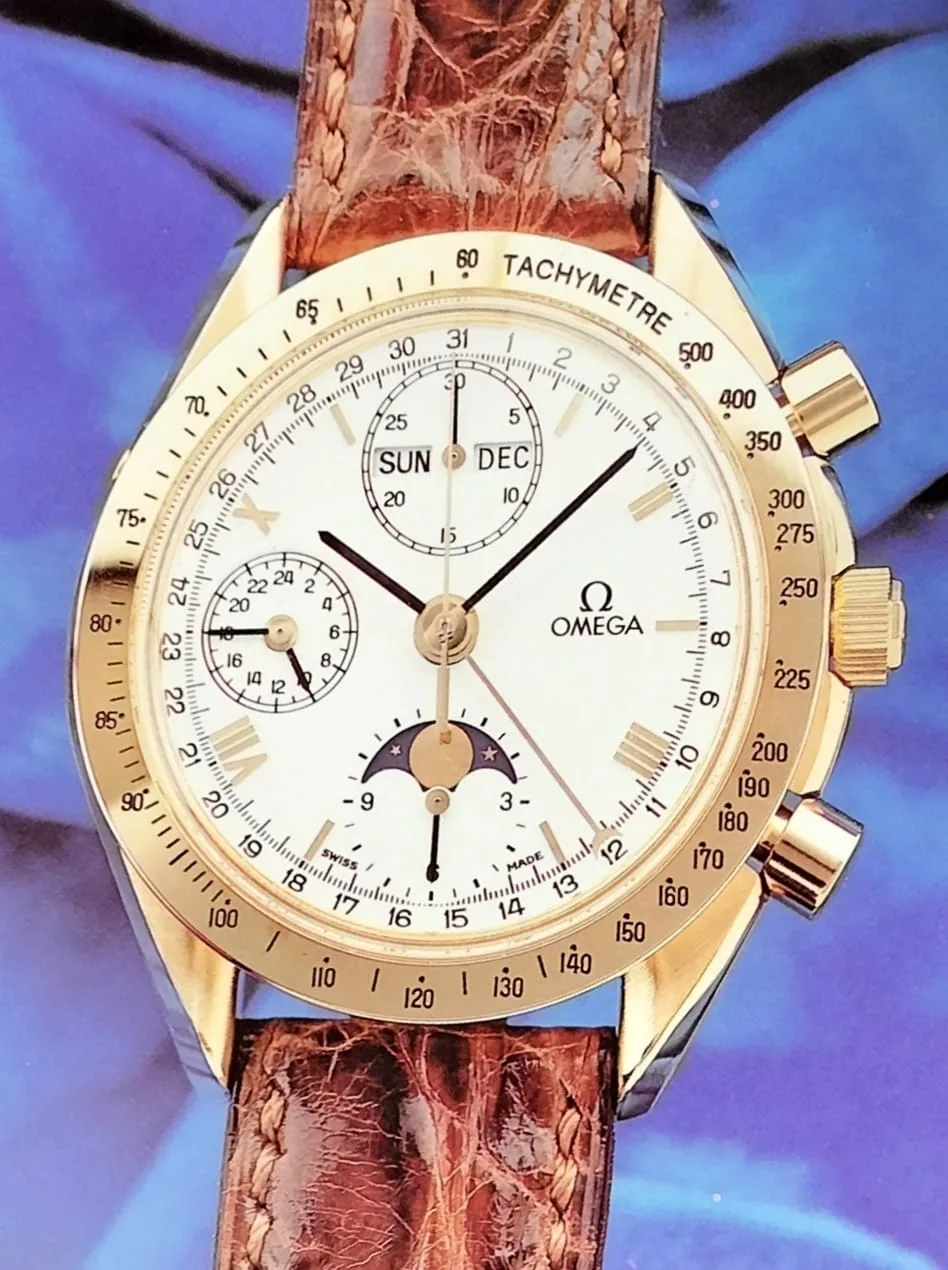
A yellow-gold Speedmaster keeps the appetite with a warmer metal and a full calendar sharing the dial. The chronograph is still the sentence you meet. Gold is only a richer chair. A day or a month can take a window. The registers and the tachymeter remain the reason the case exists.
A rim that still counts
Gold arrives first as color, then gives way to the counters. A date can take a small window and still leave the chronograph in charge. A Daytona would have offered its own three circles and its own house. A fluted bezel would have offered a ring of cuts. A porthole would have offered a window with softened corners. This gold case offers the moon chronograph — registers, a scale, a professional body — and lets the calendar sit inside that sentence.
Off the wrist, nothing has to be worn for the face to read. Three circles. A scale on the rim. A case that learned a moon and kept the lesson in metal.
That is the icon. Speedmaster, a chronograph that moons. The pre-moon reference. The professional face. The same grammar in gold — three registers, a tachymeter bezel, a case you meet before the name.
Educational only · Not jewelry, insurance, or legal advice