The sautoir, a long line
A sautoir is a necklace that has somewhere to go. Not a collar that stays at the bone. A long line, a drop that finds the sternum, a weight you notice when you sit down. The length is the jewel.
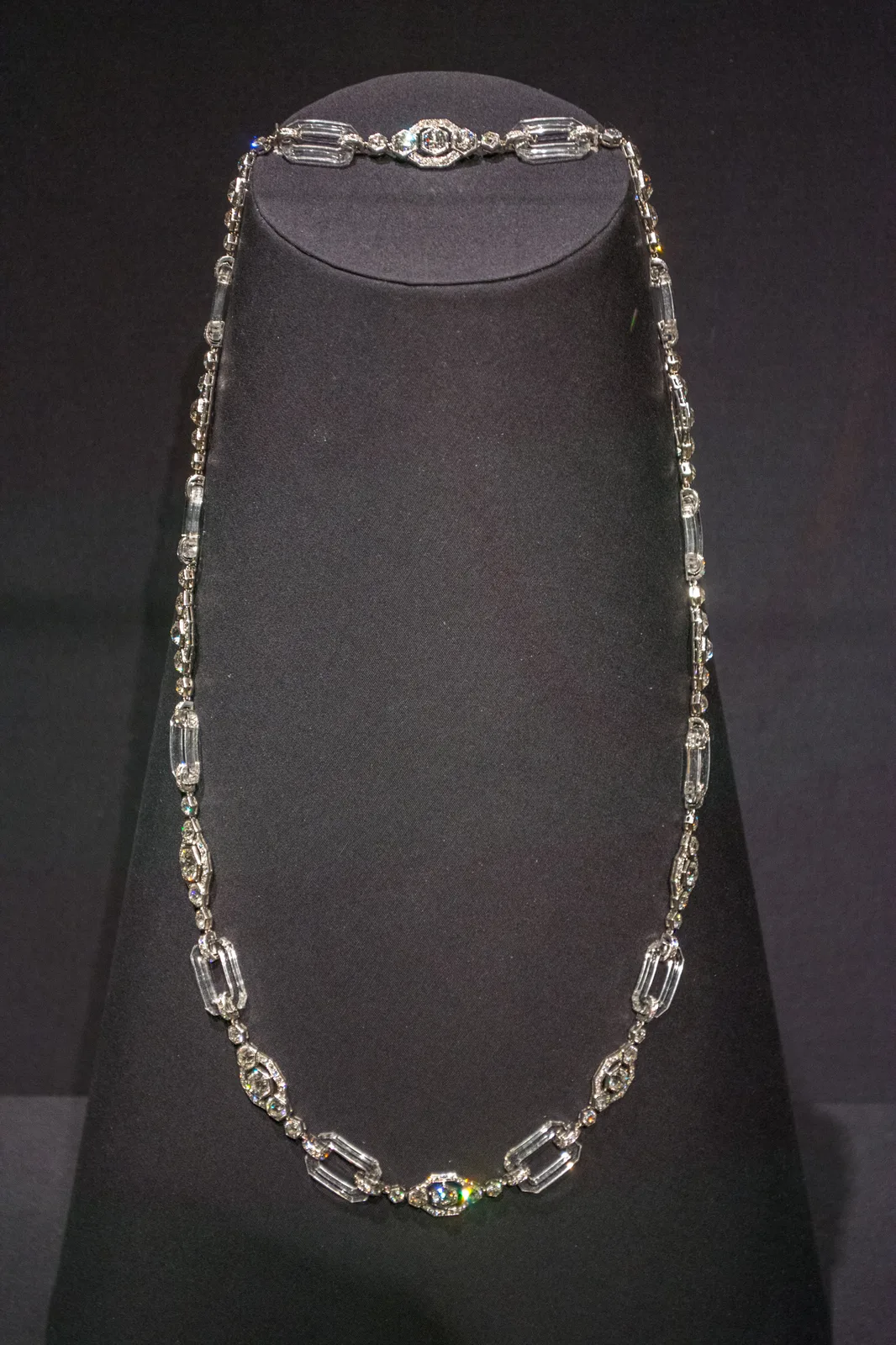
Chaumet, early twenties: carved rock-crystal links, diamond spacers, a long loop of cool light. Worn long, it hangs past the blouse. Doubled, it becomes a shorter conversation. The crystal is the air in the line — you see through it, then the diamond knot that punctuates. A column, not a bib. The sit is vertical. Gravity is already in the design.
A pearl that takes the distance
Tiffany’s version is the same journey with a different ending. A fine chain, diamond stations, forty inches of travel, and a pearl that arrives at the bottom like a decision. The pearl is what the length was for. A small, warm stop after a long, quiet path. George F. Kunz sold this one; Henry Walters bought it. The chain is almost nothing. The pearl is almost everything.
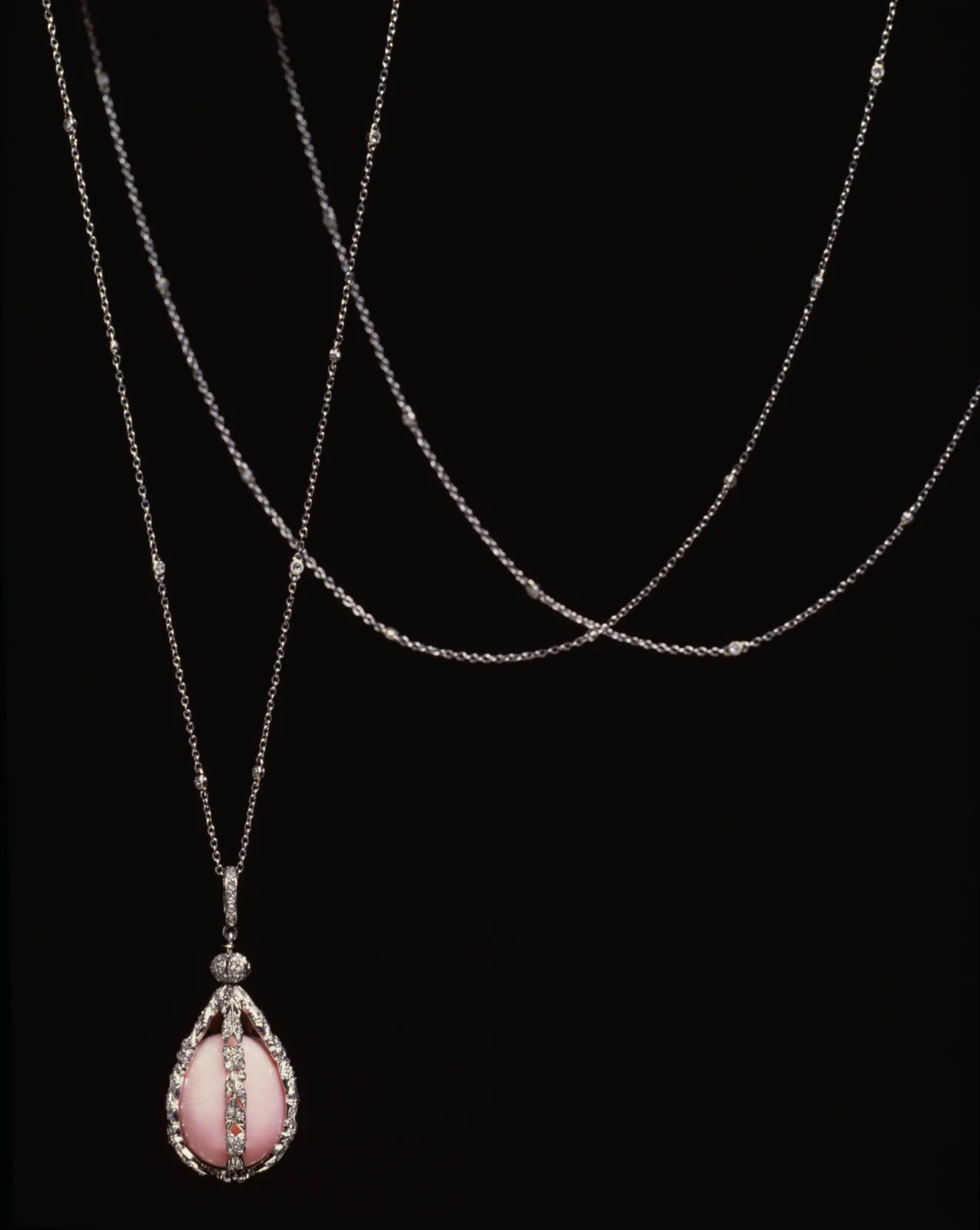
You would feel a thin line, then a single weight against the cloth — a drop, not a cluster. The sautoir does not decorate the throat. It draws a line down the body and asks the last stone to finish the sentence.
An opal at the end of gold
Marcus & Co. lets the chain be gold cord, many strands, and the drop a black opal in an iris of enamel. The length is still the argument. You feel the slide of the strands before you meet the stone. A dark fire, leaves around it. Gravity as the setting.
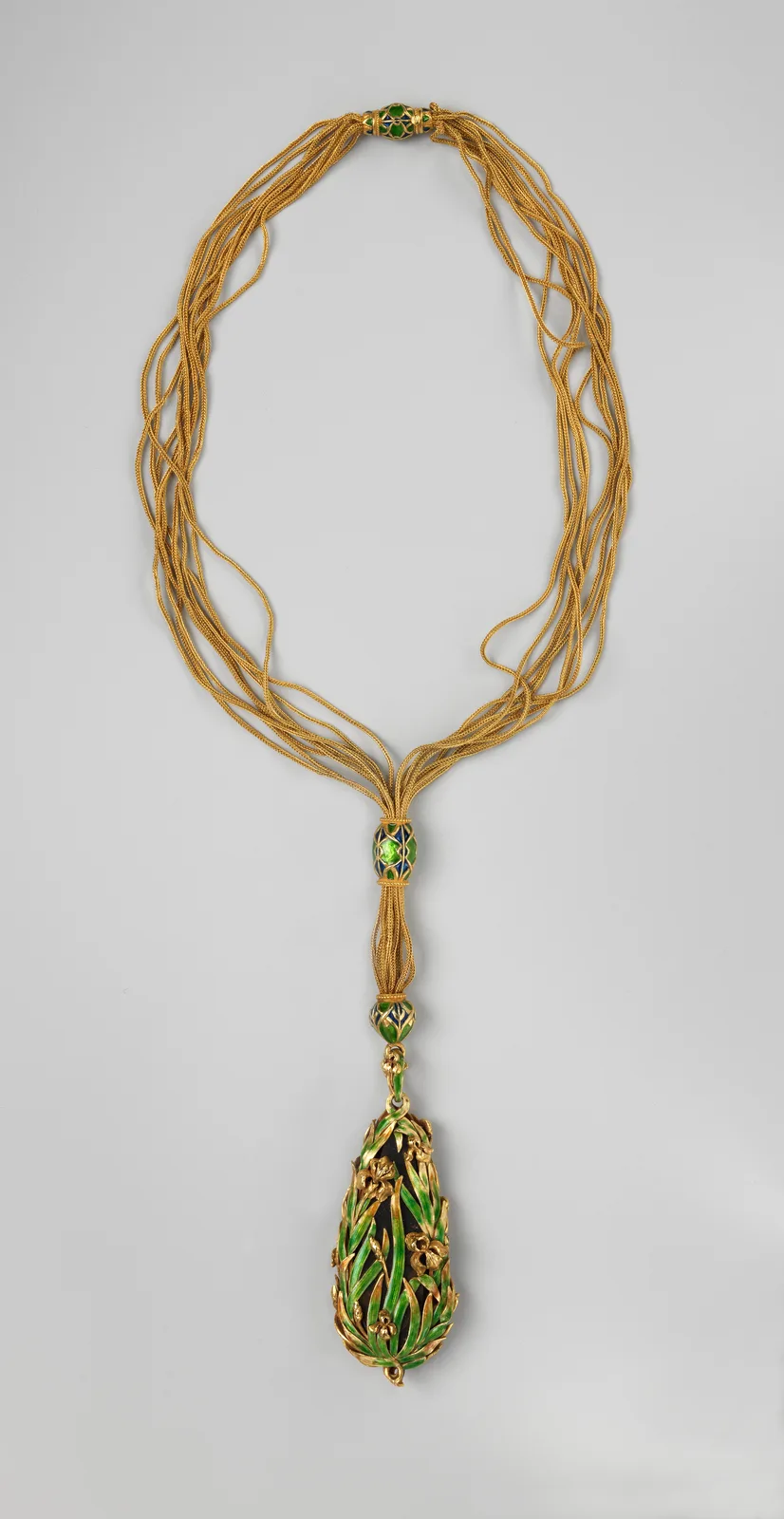
A sautoir is a necklace that already knows how far it has to fall. Collar, rivière, sautoir: three distances. This one chose the longest, and put the jewel at the end of the walk.
Educational only · Not jewelry, insurance, or legal advice