Rubellite as a saturated pink
Rubellite is this season’s saturated pink. Pink tourmaline, under the name the redder stones have kept, cut so the color sits as a pane: vivid, faceted, willing to travel from a clear rose into a pink that keeps company with ruby. Rose quartz holds a milky cloud, a haze that glows and stays closed. Morganite holds a soft pink light, clear and pale, a gentle field you can see across. Kunzite holds a lilac-pink pane, soft, often left large, a window with a violet in it. Rubellite holds a saturation. The pink is decided. You look through the facets and the color is already a jewel.
A pane, cut
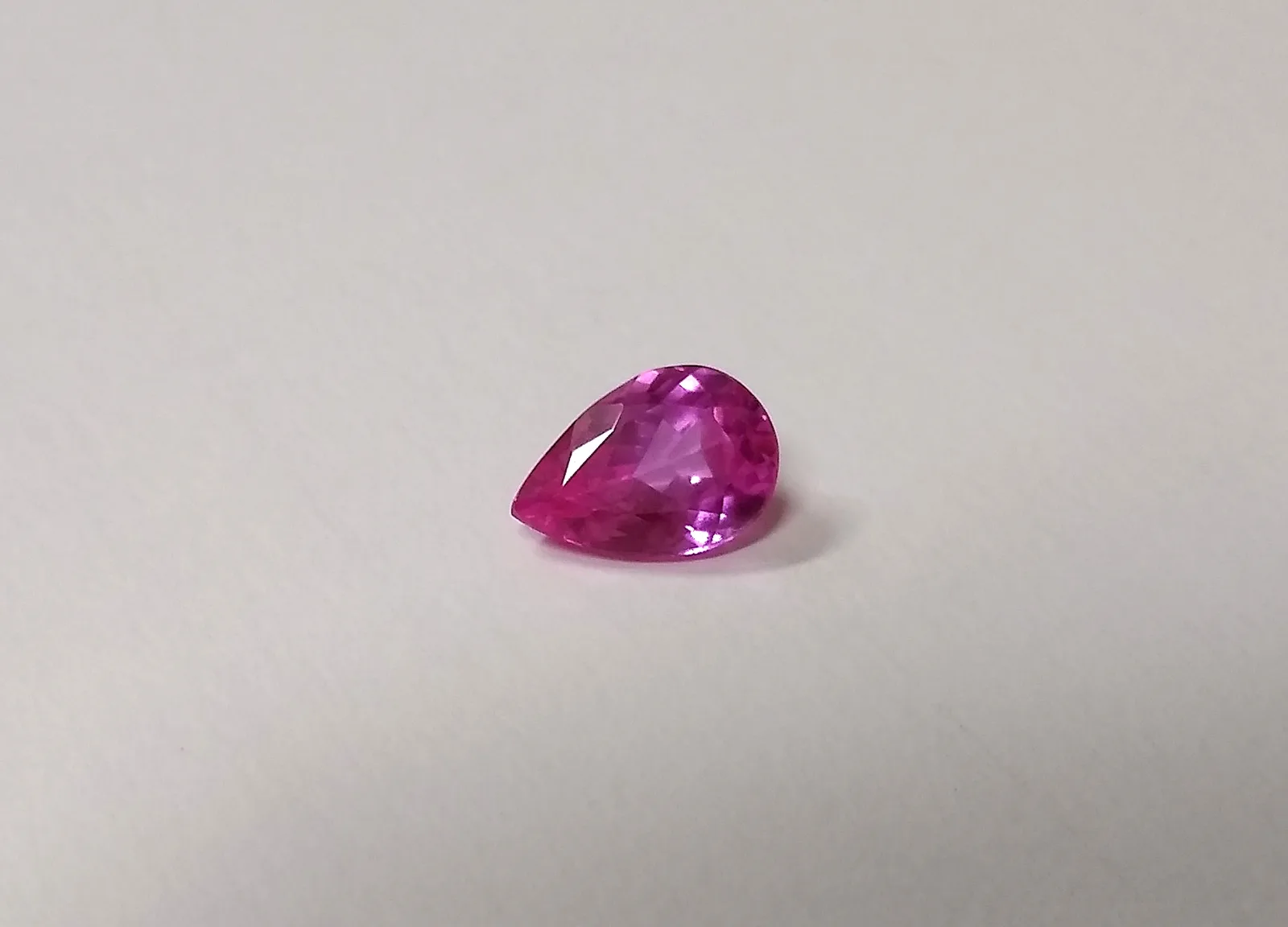
A Brazilian rubellite, thirteen millimeters by nine, keeps the season as one oval. Facets across the face, a saturated pink that holds to the edge, the stone on a pale ground so the hue can be read before any setting arrives. You would meet that pink before you asked for a mine. Rose quartz of the same outline would still be a cloud, the light stopping in the body. Morganite would still be a soft light, clearer and quieter. Kunzite would lean lilac and ask to be larger so the pane could breathe. This oval spends the color as a window. The facets are how the pink agrees to be worn: a face, a saturation that can sit beside ruby and keep its own name.
The light breaks on the planes and comes back still pink. That is the work a facet does with this stone. The color was already in the crystal. The cut gives it a table you can set. Soft-pink jewelry this season has its clouds and its pale lights. Rubellite is the chair for the pink that wants to be vivid. You would cover the millimeter with a look and still have the hue left over: a pane, saturated, ready for a prong.
A body of the same pink
A pendant in the Victoria and Albert Museum spends the color as a figure. Austro-Hungarian, about 1850 to 1900, enamelled gold, the mermaid’s torso a pink tourmaline — the body of the creature is the stone. Diamonds, rubies, and baroque pearls finish the tails and the drops. You would meet that pink body before you named the myth. The mermaid is the drawing. The tourmaline is the color the drawing was willing to be. The drops can be ruby and pearl. The saturated pink is the person.
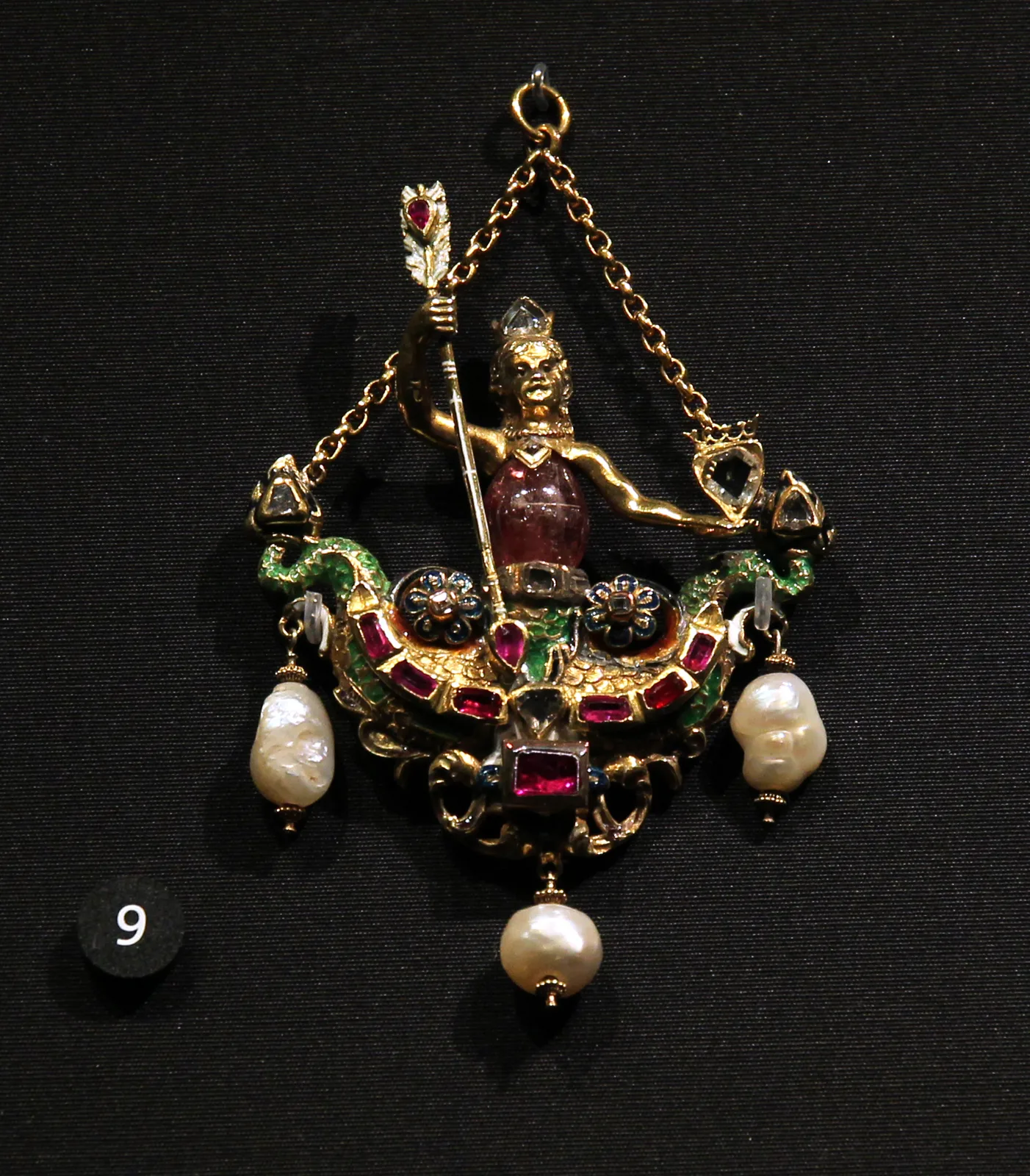
The torso is the lesson once a setting has arrived. A pane does not have to stay an unset oval to be the season’s pink. Here the pink is a body, and the body is the center. The enamel and the gold keep a figure around it. The tourmaline keeps the hue. You would feel that order before you asked which room in the museum. A mermaid whose flesh is the stone. Morganite in that place would have lightened the body into a soft field. Kunzite would have cooled it toward lilac. This stays at rubellite’s temperature: pink that has agreed to be vivid, vivid enough to be a person.
The mount only agrees to a direction the stone already has. Light sits in the torso and comes back as color, the enamel doing the scales, the pearls and the rubies doing the finish below. You would read the pendant from the pink outward. That is how a saturated pink learns to be worn when it is not the only material in the room. The tails can be busy. The body stays simple. A color, once, at the heart of the jewel.
Another oval, closer to ruby
A second rubellite, 1.63 carats, from Brazil, spends the same appetite closer to red. An oval with a softer cushion in the outline, the pink deep enough that a first glance can think of ruby and a second glance gives the stone back to tourmaline. You would meet that depth before you asked for the weight. The stone is modest. The color is not. Saturation does not wait on a large body. Rose quartz likes mass, so the cloud has room to glow. This pane holds its pink in a carat and a half.
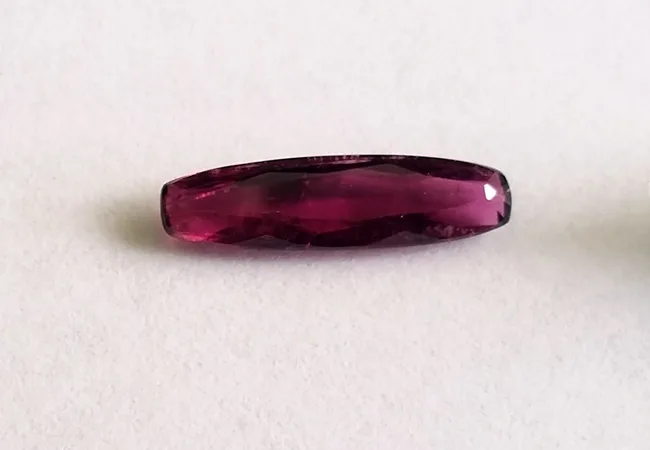
The two ovals are different stones and different pinks. One reads as a clear saturated rose. One reads further toward ruby. Both are rubellite, both faceted, both a window rather than a haze. The season’s saturated pink lives in that travel: from a pink you can name at once to a pink that keeps company with red. A setting, when a jewel needs one, only has to hold a direction the stone has already chosen. The smaller oval shows how little surface the color requires. The larger one shows how calmly a pane can sit when the pink is sure of itself.
The color, before the facet
A rubellite from Pala, California, in the mineral gallery of the National Museum of Natural History in Paris, keeps the pink as a crystal in its rock. Vivid pink prisms in a pale matrix, the color already decided before a lapidary has cut a table. You would meet that pink before you asked which case. The crystal is not yet a pane. It is the reason a pane can be this saturated. The hue is in the tourmaline itself, a guest of the rock that will later be the guest of a setting.
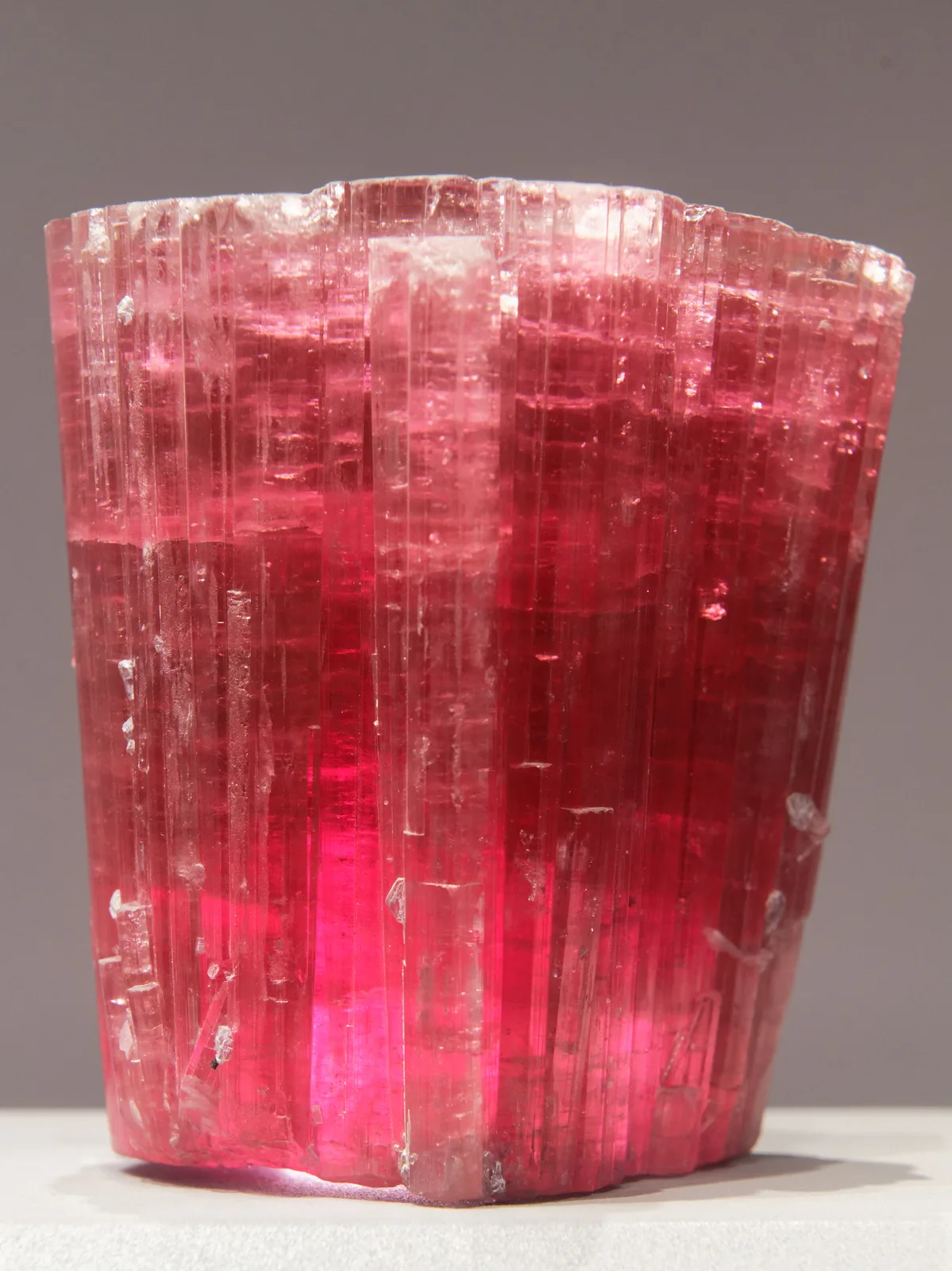
Hold a faceted oval beside this specimen and the family is immediate. The same pink, one of them still in the rock, one of them already a jewel. Rose quartz, left rough, would still have been a cloud. Kunzite, left rough, would still have been preparing a lilac window. This crystal is preparing a saturated pane. The mermaid shows the pink once it has agreed to be a body. The two ovals show it once it has learned a face. Pala shows it before either, vivid, and content to be the color.
That is the season sit. Rubellite as a saturated pink. An oval that keeps the pane. A mermaid whose body is the stone. A smaller stone that travels toward ruby. A crystal from Pala that was already the pink — worn, when it is jewelry, as a faceted window rather than as a cloud.
Educational only · Not jewelry, insurance, or legal advice