Royal Oak, an octagon on the cuff
Audemars Piguet Royal Oak is an octagon that learned to sit on the cuff. Eight sides, screws along the bezel, a tapisserie the light can catch, a bracelet that continues the case instead of stopping at the lugs. You meet that octagon first. The house name arrives after the shape. A Tank is a rectangle that lies and stays put. A Santos is one square. A Reverso begins when the face turns. A Datejust begins at a fluted rim. The Royal Oak begins at the eight-sided bezel.
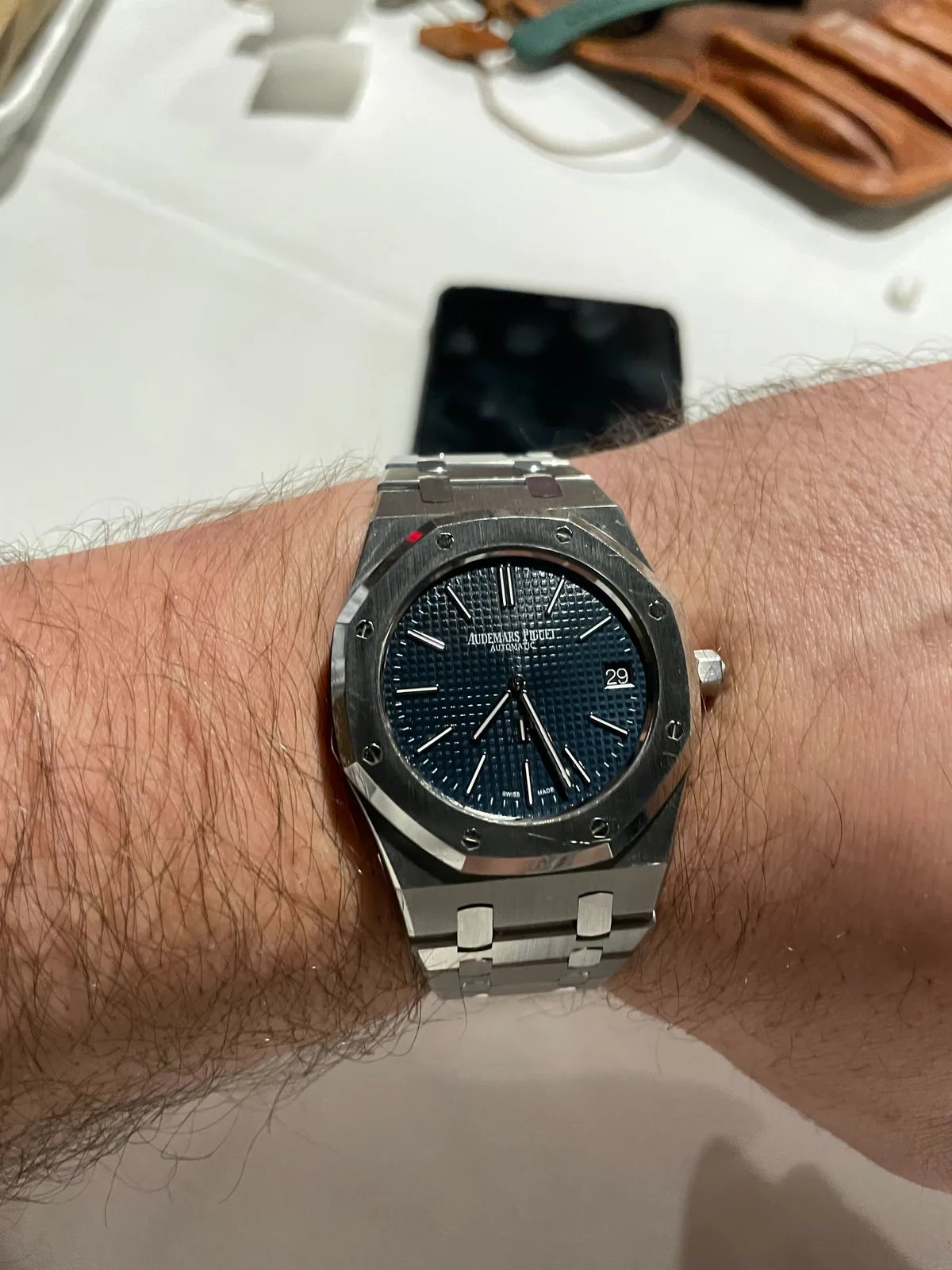
A steel Royal Oak, reference 15202, is the meeting in one octagon. A blue dial with a tapisserie grain, screws you can count on the bezel, the bracelet already part of the case. You would feel those eight sides before you named a decade. The dial is a field the shape has agreed to hold. The screws are the sentence, written in metal, a bezel that does not pretend to be a smooth rim.
The pleasure is the outline. A circle would have asked you to start at a flange and read inward. This watch asks you to count sides. Eight, then the screws, then the grain of the dial, then the hour.
The same octagon in gold, then the caliber it keeps
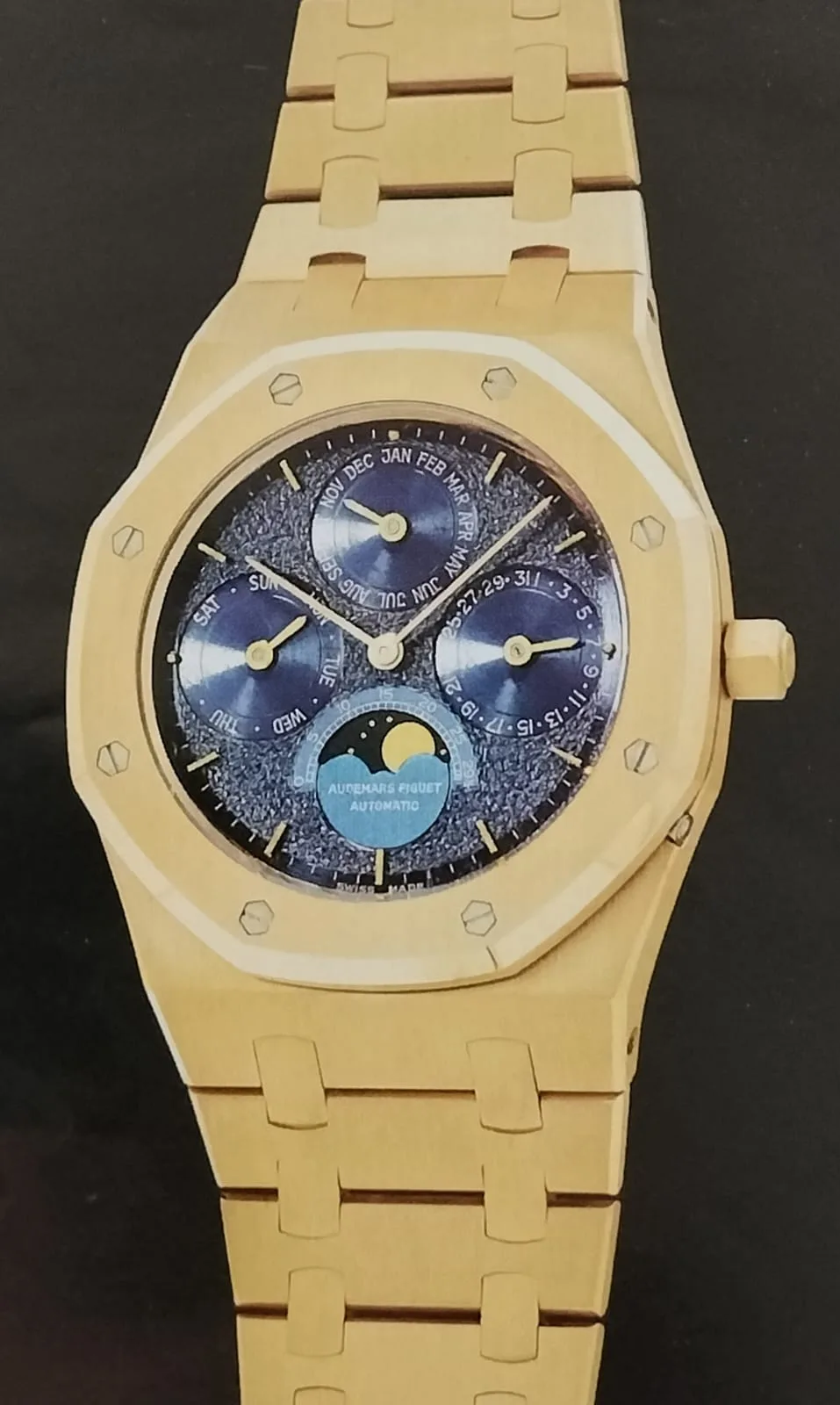
A gold Royal Oak from the middle of the 1990s keeps the same eight sides and adds a perpetual calendar on a dark dial. The octagon does not step aside for the calendar. You would meet the bezel and the screws before you read a month. The gold is only a warmer chair for the same sentence. A fluted rim would have started the introduction at a coin-edge. Here the introduction is still the shape.
You would hold that gold case and understand the appetite before you understood a year. Eight sides, a bracelet that belongs to the case, a dial that can carry more than the hour without changing the outline. The modern octagon does that work in steel, in gold, in a two-tone the wrist already knows. The first fact stays the bezel.
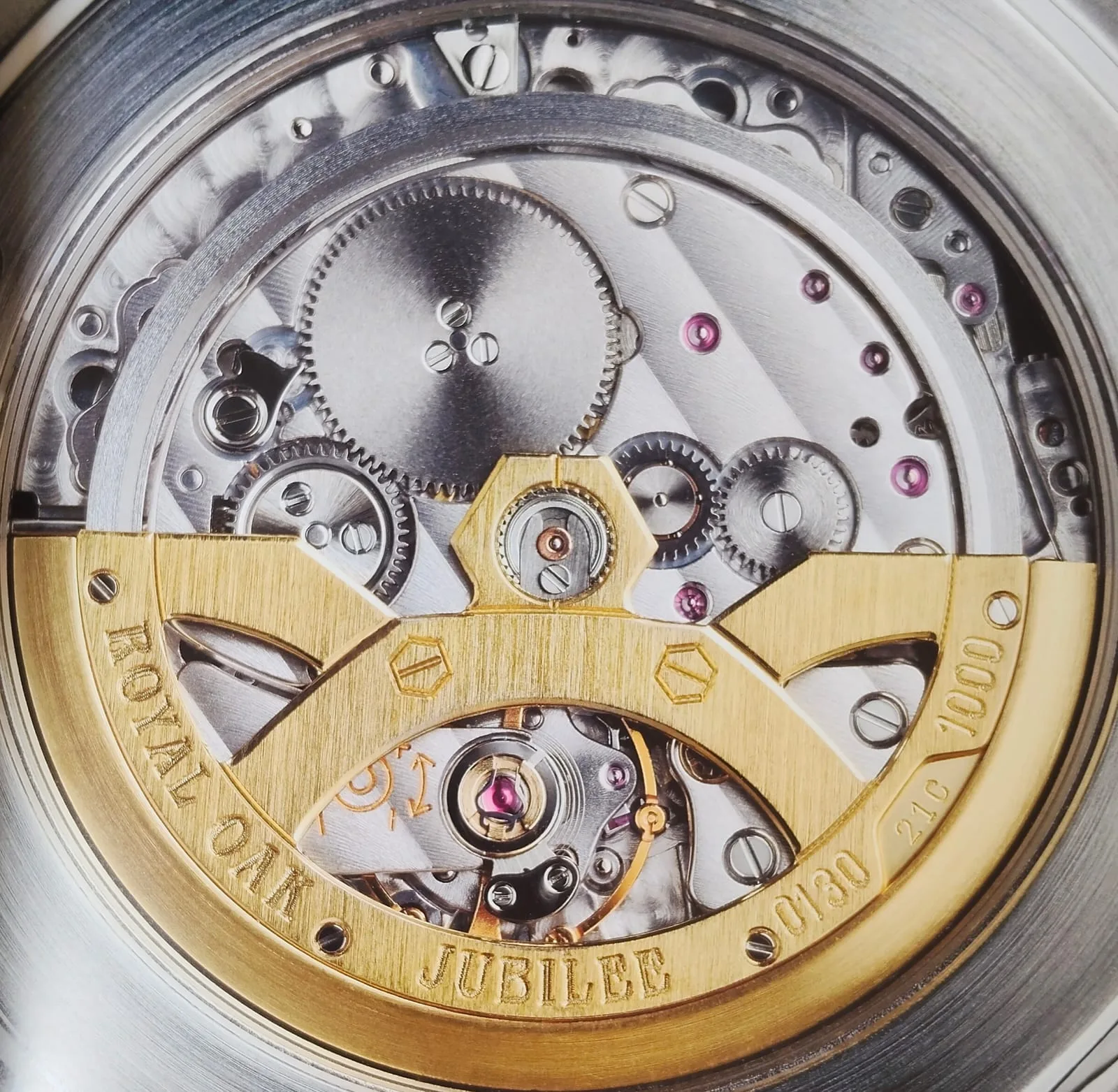
The caliber is the other meeting, and it is a different watch. A 2121, its gold rotor marked for the twentieth year of the Royal Oak, fitted to a reference 14802 of 1992. You would see the engine the octagon has agreed to keep — a rotor, a mass, the quiet machinery — and still know the shape was the introduction. The face you wear is the eight sides. The movement is what those sides protect.
That is the icon. The house gave an octagon a name in Le Brassus. The sit remains the eight sides you meet first — screws on the bezel, a bracelet that continues the case, a dial the shape has already agreed to hold.
Educational only · Not jewelry, insurance, or legal advice