Rose quartz as a soft pink cloud
A milky pink that glows, rather than a window you look through. Rose quartz is the soft pink in play among this season’s colored stones — a translucent haze, a cloud of rose held in the body of the quartz. Morganite holds a soft pink light, clear and faceted, a pane you can see across. Kunzite holds a soft pink pane, lilac and transparent, often left large so the color reads as a window. Rose quartz holds a cloud. The pink is diffuse. The light enters and comes back as a glow, not as a spark broken off a facet. It is at home in a cabochon, in a bead, in a carving: forms that keep the haze whole, and that let the season’s soft-pink tones sit as weather rather than as a transparent field.
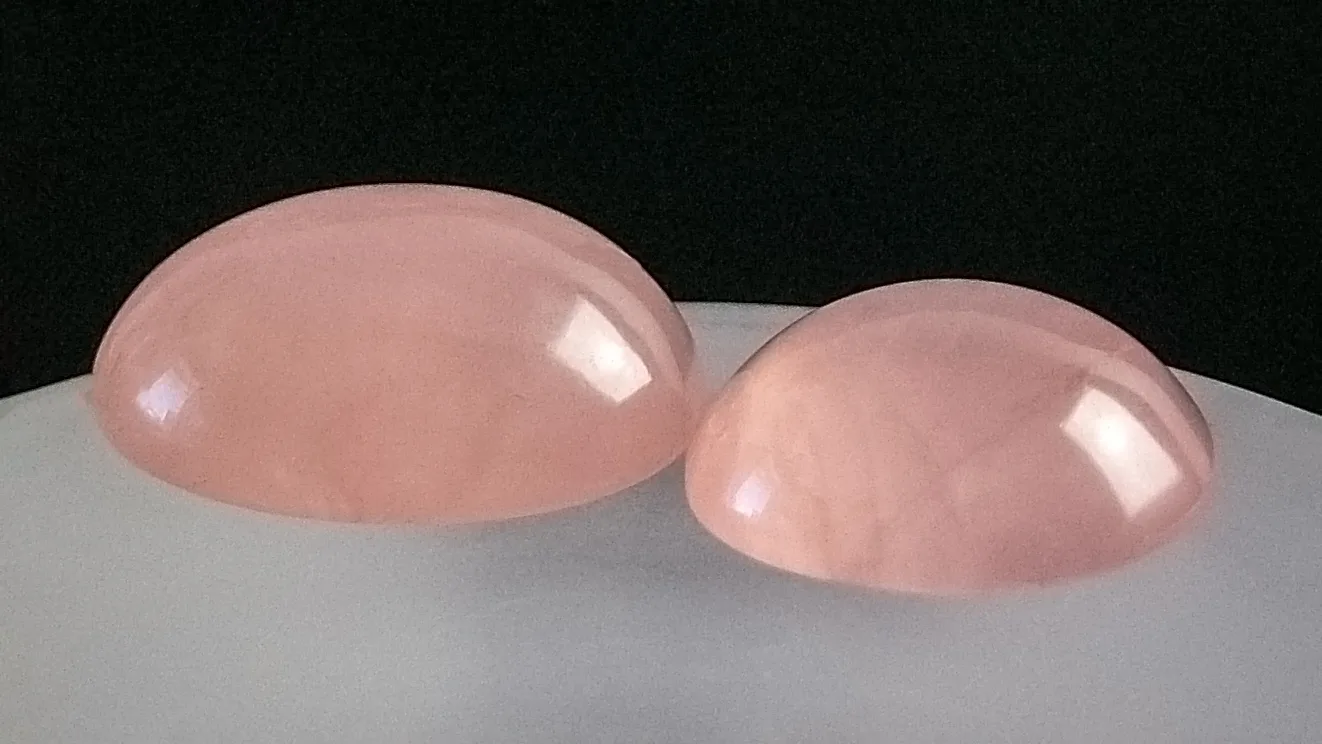
Domes that keep the haze
Two rose quartz cabochons keep the cloud as jewelry. Oval domes, one a deeper rose and one a paler milk, the light sitting in the stone rather than breaking across a table. You would feel that softness before you asked for a carat. A faceted morganite of the same outline would have given a pane of pink light, clear to the pavilion. A faceted kunzite would have given a lilac window, the color readable straight through. These domes give a glow. The cabochon is how the cloud agrees to be set: a smooth face, a haze held in a curve, no pavilion asked to throw.
The glass under them only makes the diffusion easier to see. The pink does not snap into a sparkle at the edge. It stays a weather inside the dome, brighter where the stone is thinner, quieter where the mass is thick. Soft-pink tones are moving through colored-stone jewelry this season, and a cabochon spends that palette as a cloud you can mount. The hue can lean toward a blush or toward a fuller rose. The first fact stays the same. A color that diffuses. A stone that shines from within. You look at the dome and the pink is already a cloud.
The mineral, already a cloud
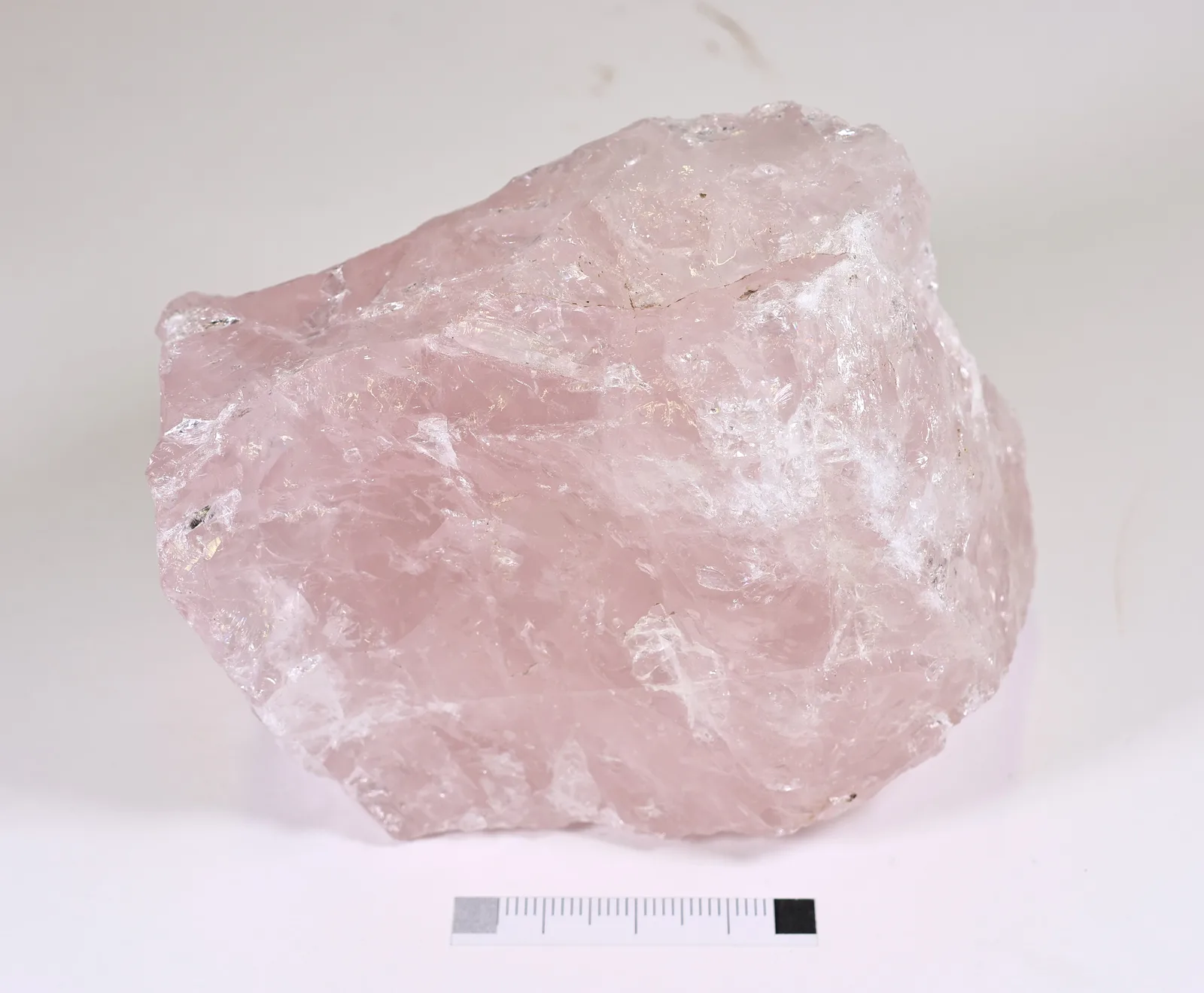
A piece of rose quartz from Madagascar keeps the appetite as a rough. Milky pink through the body, translucent along the thinner edges, a fracture here and there, the color already a haze before any lapidary has touched it. You would meet that cloud before you asked which mine. The crystal is not a pane. It is a mass of pink that has agreed to glow. Morganite, left rough, would still be preparing a clear light. Kunzite, left rough, would still be preparing a window. This specimen spends the mineral as weather: soft, pink, content to be seen into only so far.
The scale beside it is a quiet measure. The cloud does not need to be large to be the cloud, and it does not need to be small. What it needs is the diffusion. Hold the idea of a faceted pink up to this mass and the difference is immediate. One would open. This one mists. The glow is in the quartz itself, a scattering through the body, which is why a polished face gives light back as a bloom rather than as a point. The season’s stone, in this chair, begins here. A rough that is already the jewel’s weather. The cabochons show the cloud once it has learned a dome. This piece shows it before the dome, paler in places, still rose, still unwilling to become a window.
A strand of the same haze
A necklace of rose quartz beads spends the cloud as a line. Each bead is a small mass of the same milk, round enough to be strung, polished enough to glow, the pink even from one to the next. You would read the strand the way you would read a row of quiet spheres: close, continuous, a color that does not need a facet to be worn. The beads do not sparkle down the row. They bloom. The row is the jewel.
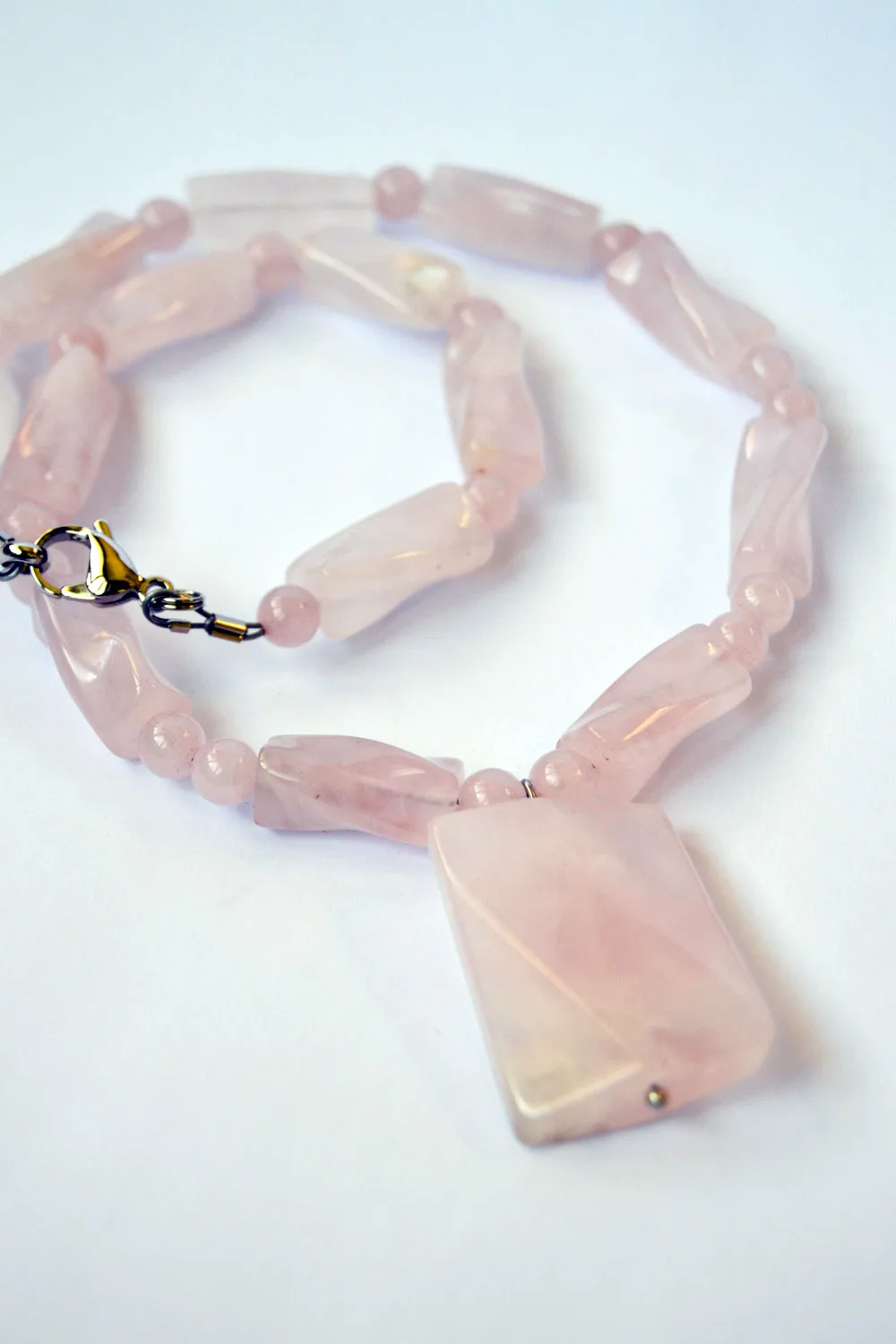
The strand is the mineral repeated until it becomes an ornament. A cabochon is one dome, set. A bead is the dome closed all the way around, then asked to keep company. You would meet the pink before you asked which clasp. Morganite cut into the same rounds would still have been a light, clear at the center of each bead. Kunzite would still have been a pane, lilac and see-through. These beads are a haze that learned to be strung. Soft-pink jewelry this season has room for that repetition: a line of clouds, worn as a single color, the glow adding bead to bead. The polish is enough. Where a facet would have cut the haze into sparks, the curve keeps it together. A dome, a bead, and — when a carver takes the same mass — a shape the cloud can inhabit without becoming glass.
A carving that keeps the pink
A Qing censer in the Nanjing Museum spends the cloud as a carved thing. Dragon-headed, dated 1736 to 1795, the body a pale translucent pink, the stone worked until the haze has a head, a neck, a use. You would meet that pink before you named the dynasty. The carving does not clarify the quartz into a pane. It gives the cloud a silhouette. Light still stops softly inside the walls. The dragon is rose quartz that has agreed to be an object and has kept its weather. A morganite of this size would have tended toward a clear pink light. A kunzite would have tended toward a pane. This one stays a haze that has been given a form.
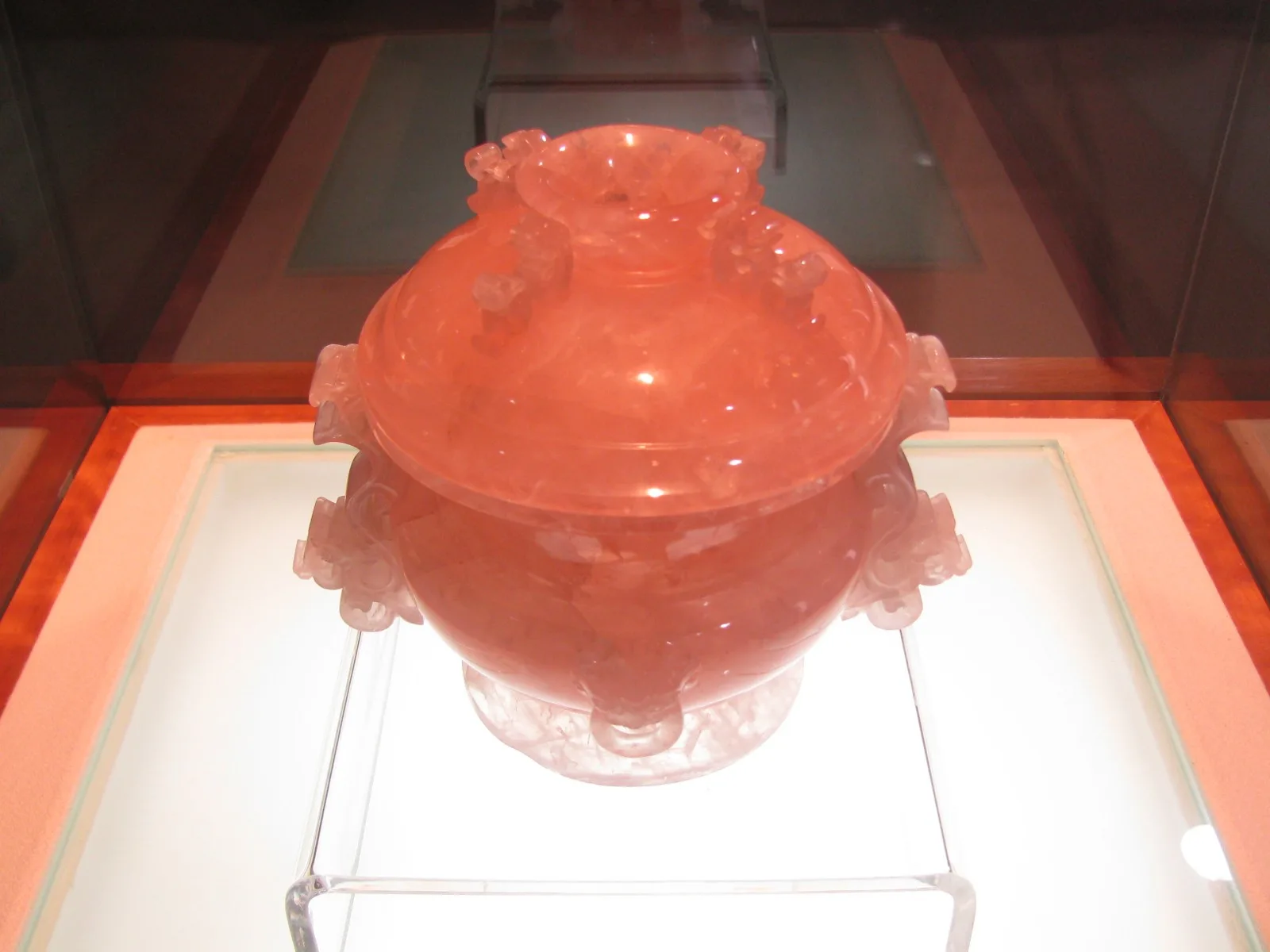
The mount, when a jewel needs one, only agrees to hold a direction the stone already has. The glow stays in the quartz. A light that has already decided to be morganite is a different sit. A pane that has already decided to be kunzite is a different sit. This one is a soft pink cloud.
That is the season sit. Rose quartz as a soft pink cloud. Two cabochons that keep the haze in a dome. A Madagascar rough that is already the weather. A strand of beads that repeats it. A Qing censer that lets the same pink be carved — worn, when it is jewelry, as a glow rather than as a window.
Educational only · Not jewelry, insurance, or legal advice