Rose des Vents, a wind rose that turns
Rose des Vents is a wind rose that learned to turn. Victoire de Castellane wrote a compass as jewelry for Dior Joaillerie — a rose of points that can flip between a gem face and a star face, already one thought on the cloth. You meet the rose first. The house name arrives after the points. There is no free house still to set beside the name. The sit is older than the logo: a wind rose that has already agreed to turn.
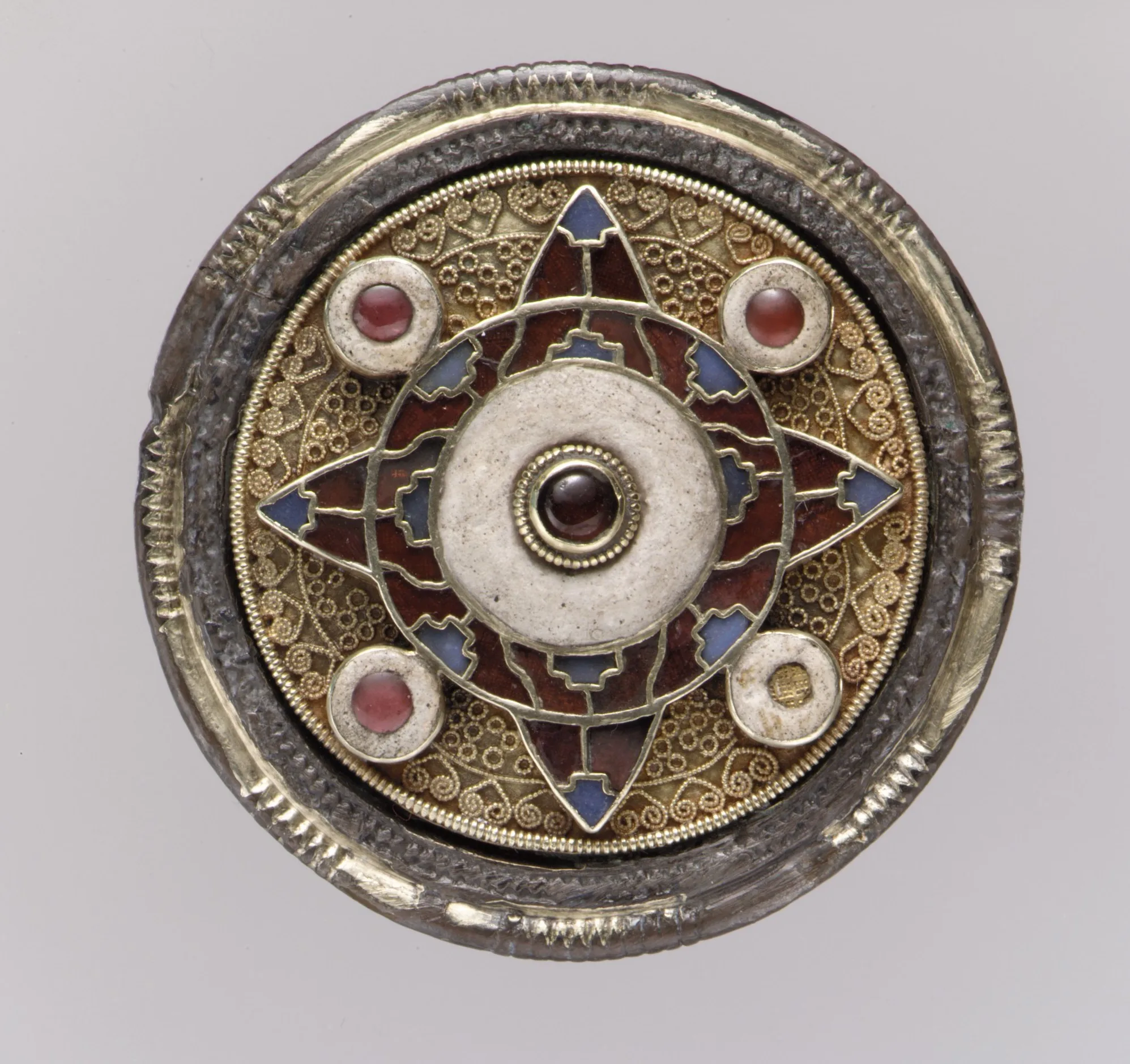
An Anglo-Saxon disk brooch is the sit in one rose. A circle of gold, a star already drawn, points you can count, a center that holds. You would feel those compass points before you named a century. Not a flower that floats. Not a quatrefoil that lies flat. Gold that has already been written as a wind rose — a disk you can read, a star worn as the jewel. That is what Rose des Vents still protects: a rose you meet as points, a compass worn as the hold.
The temperament is the rose that can turn. A fixed star would have hidden the second face. A plain disk would have been another grammar. The turning rose is the sentence. Rose des Vents keeps that sentence as a wind rose.
A star that holds a face, then a gold rose already written
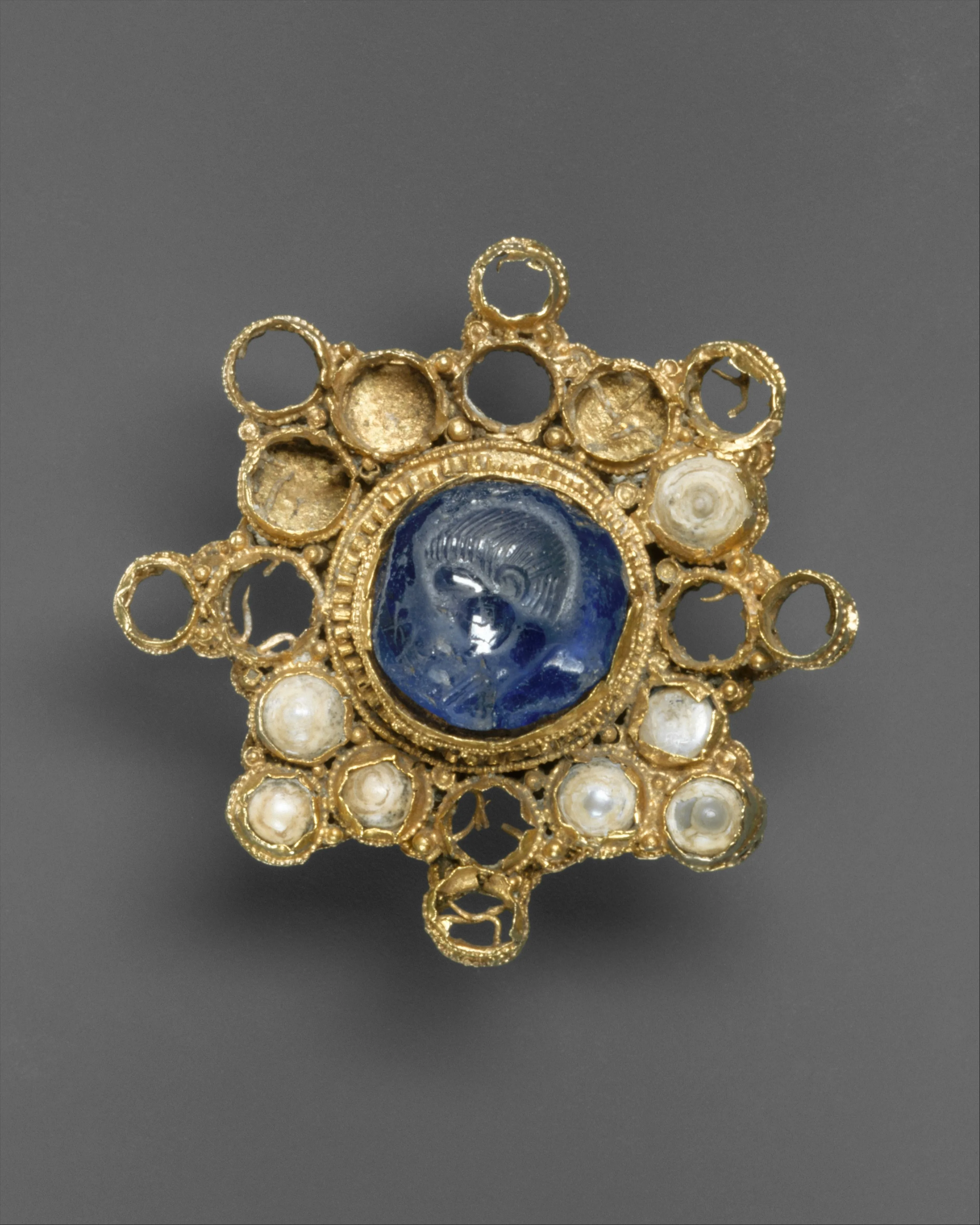
An Ottonian gold brooch keeps the same appetite as a quieter rose. A star of gold, a blue sapphire as the center, pearls as the pauses, gold loops as the points. You would meet that star before you counted a setting. The grammar is the rose. Rose des Vents writes it as a modern sit — a gem face and a star face, the same hold: gold that has agreed to be a wind rose, a jewel you feel as points that can turn.
An Ottonian gold star finishes the thought as a rose already written in gold. Six points, a pale enamel heart, glass and pearls as small hours along the rim. You would feel that compass before you named a court. The gold has already agreed to sit as a star. The house name is later. The sit remains a wind rose that turns — a disk of points, a sapphire in a star, then gold as a rose worn as one compass.
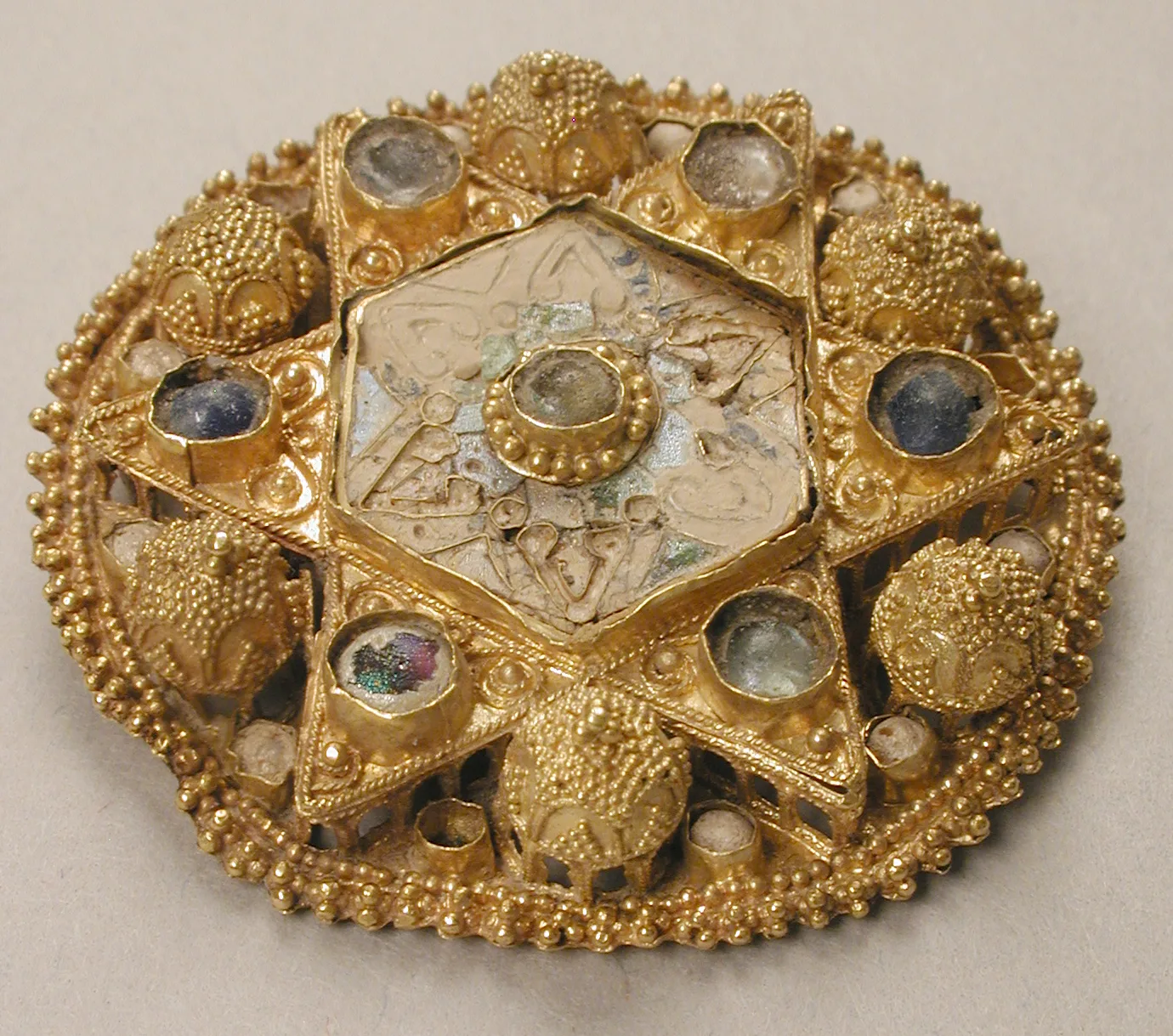
That is the icon. The house gave a turning wind rose a French name. The sit remains a rose you meet first — gold already written as a compass that turns.
Educational only · Not jewelry, insurance, or legal advice