The Rolex Datejust, from the bezel in
You do not read a Datejust first. Light hits the fluted bezel — a ring of gold cuts — and only then does the dial settle. Rolex drew that circle in 1945 for a bracelet that would carry a date. The pleasure is the order of noticing: metal, chain, then the small window.
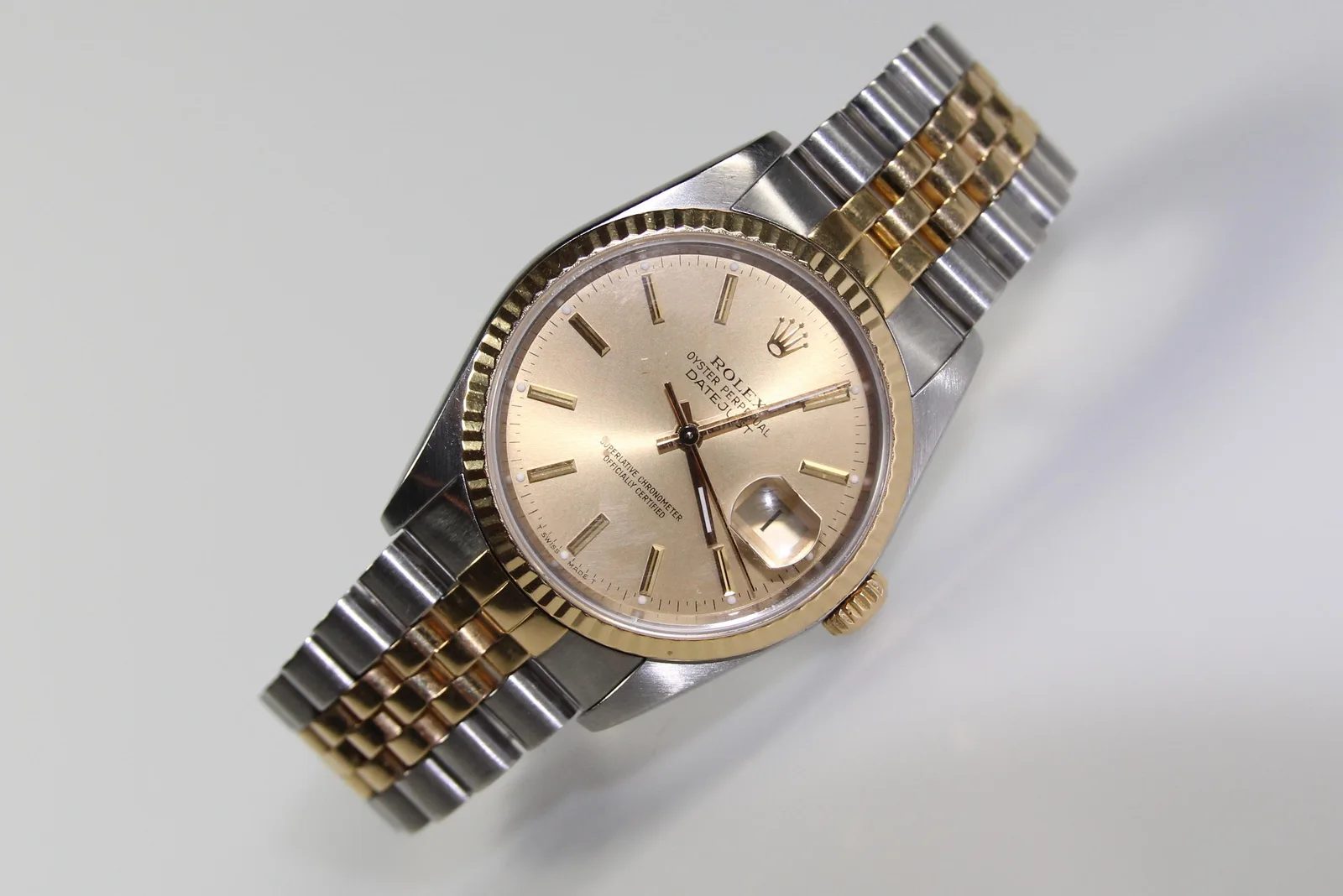
Rolesor is the jewelry mix: steel that stays cool, yellow gold that warms the rim and the center links. On a champagne dial the fluting throws a second, finer light. The cyclops sits over the date like a cabochon — a lens set in the crystal, not a tool. The crown is a small gold drum at three.
Five links, then a window
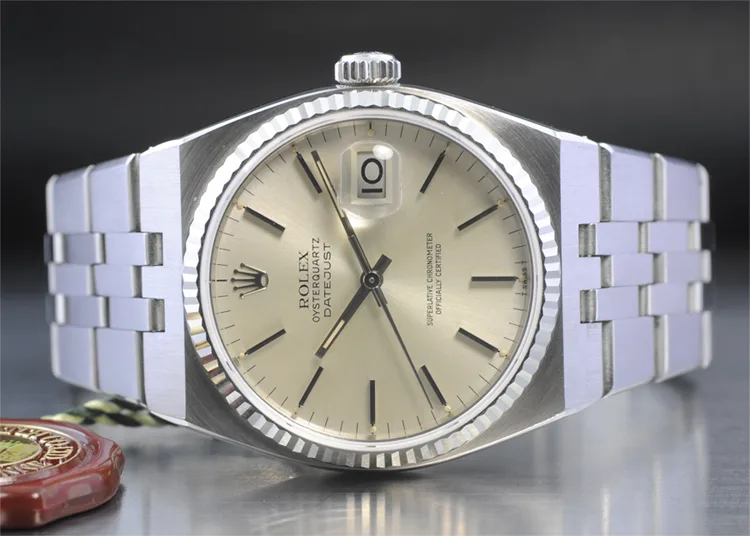
The Jubilee is the piece you actually wear. Five-piece links, polished centers, a clasp that lies flat on the inner wrist. It is a bracelet that happens to carry a watch head. An Oysterquartz Datejust keeps the flute and the date and cools the drawing: a champagne field, black sticks, the same window under glass.
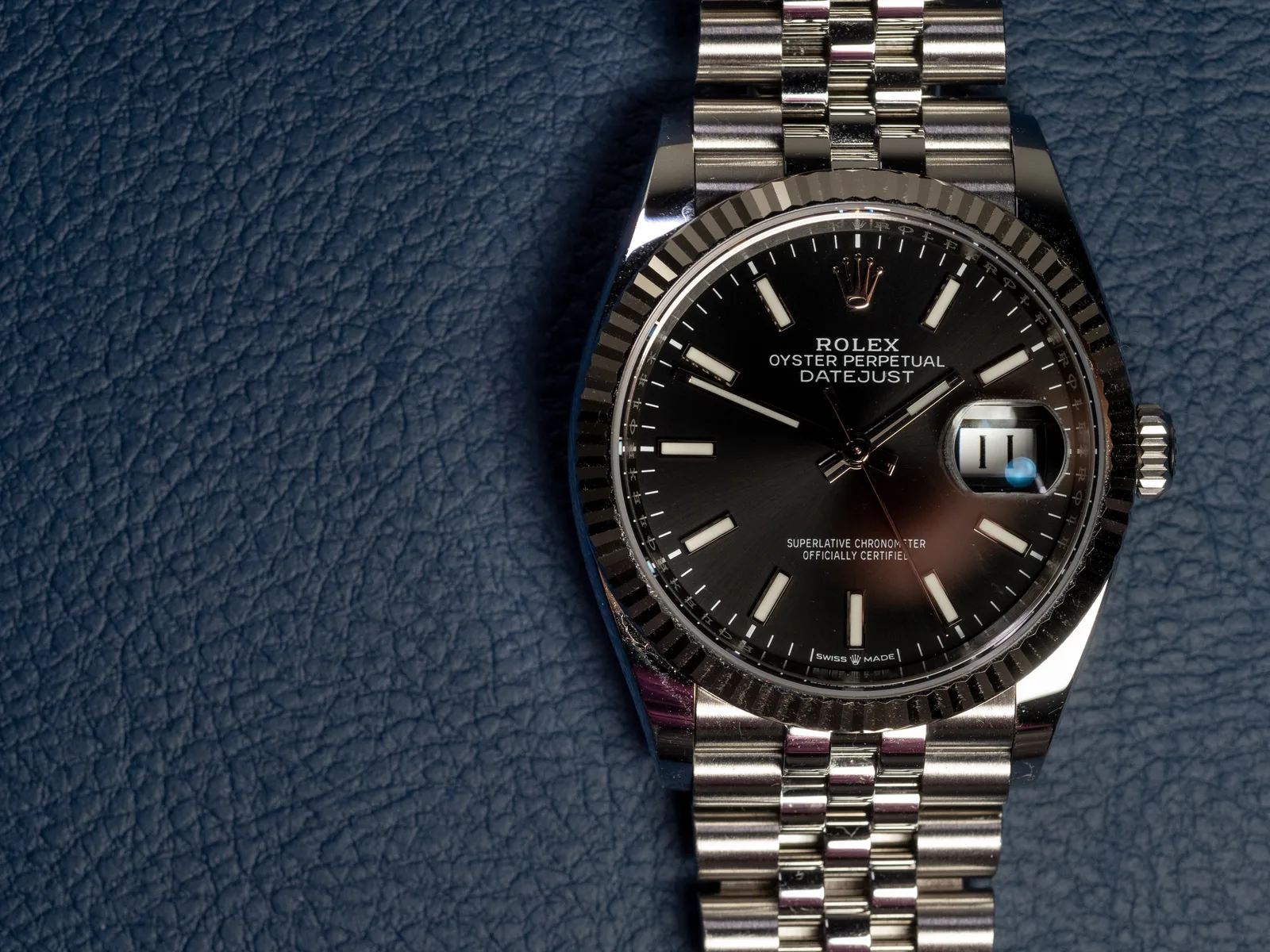
Steel on steel cools the same jewelry: a black sunburst, a white-gold flute, the five-link walk around the bone. The bezel still does the jewelry work — a bright ring that the sleeve has to clear.
A Datejust in its cushion is the house saying the face is a jewel too. The fluted ring, the Jubilee, the small aperture. The date window is the last thing you see, and the reason for the name. A number in a gold frame, changed while you are looking at something else. That is the Datejust as jewelry: a bracelet that catches, a bezel that flashes, and a small aperture that keeps its own quiet calendar.
Educational only · Not jewelry, insurance, or legal advice