Rock crystal as a clear light
The months have been a color season, and the clear stone is the one that answers them by having no hue to spend. Smoky quartz keeps a brown and lets you look through the smoke. Rose quartz keeps a pink and holds it as a cloud. Citrine keeps a warm gold of quartz and lets the gold be the weather. Rock crystal keeps the quartz and lets the color go. What you meet is the light going through, and the gold or the cut that gives that light a drawing. Yellow gold is back in the room this fall, and a clear stone is what lets the gold show its line. You read the window before you ask the stone to be a pigment.
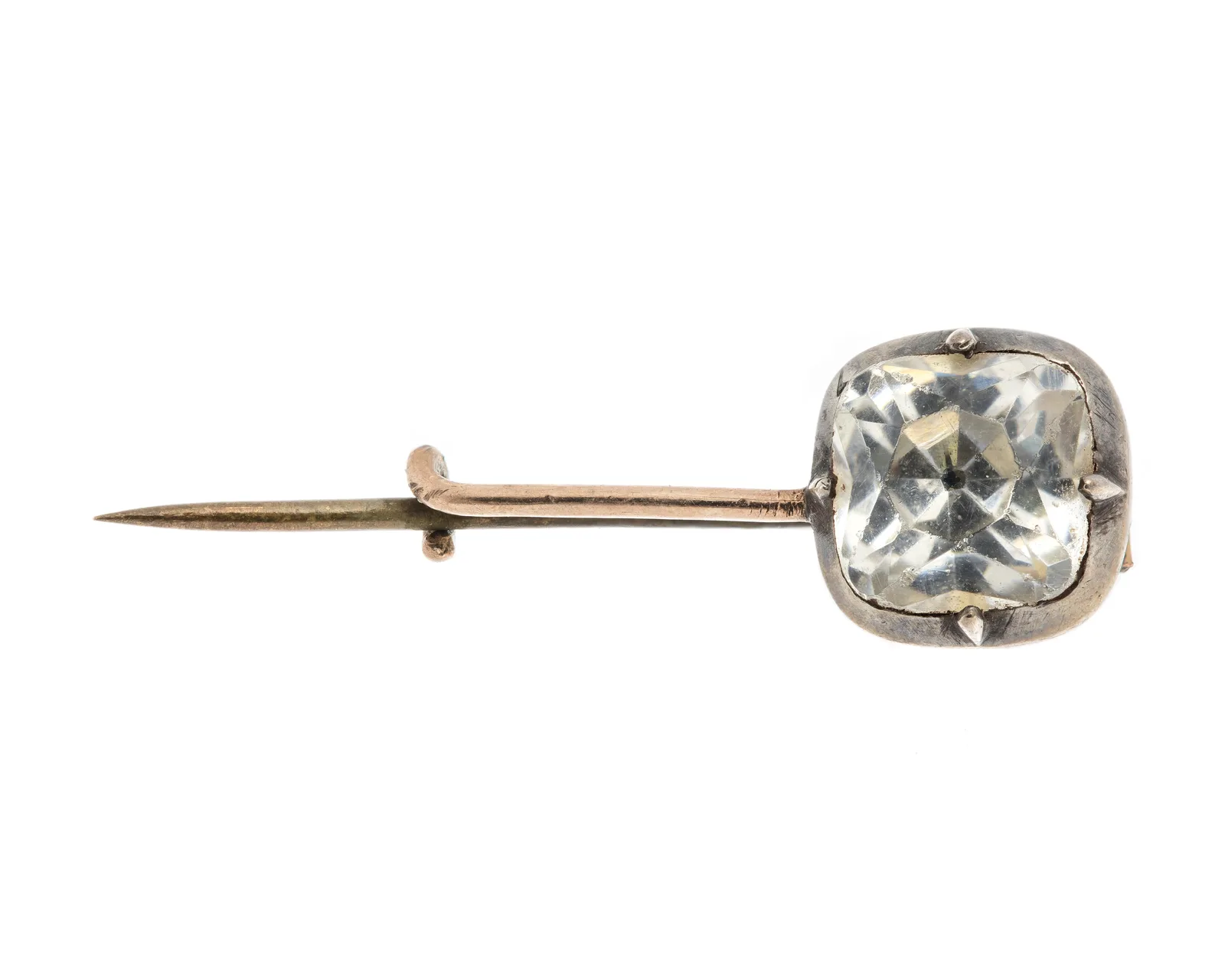
A center you look through
One brooch, at the Hallwylska museet, keeps the lesson as a window. Gold, an oval of rock crystal in the middle, scrolls and small leaves worked around it until the metal reads as a wreath. The crystal is not a colored pane. Daylight goes in, and the gold around it becomes the sentence. A smoky quartz of this outline would have given the center a brown. A rose quartz would have given it a blush. A citrine would have warmed the whole face toward honey. This center stays clear, and the clear is the point. You would know the brooch from across a cloth by the brightness in the middle, a little room of light with a gold shore.
The size is a brooch’s ordinary size. Nothing in the still is a hand. The stone is fastened already, and the fastening is the gold’s work, a bezel and a wreath, so the crystal can sit and be looked through. A foil under a paler stone can lend a hue. Here the hue, if you want one, is the gold you see around the rim, and through the crystal when the light is kind. The crystal itself does not have to pretend. It is quartz that grew without a color worth naming, and the jeweler’s answer was to draw on it.
The care is ordinary and worth saying once. Rock crystal is quartz, hard enough for a jewel, and still a stone that chips when a thin edge meets a sink. The leaves of gold are the height. A cloth is enough. A harsh buff asks a wreath to become a shine and a window to become a scratch. The brooch wants its own soft place. The crystal wants you to remember that you are keeping a piece of light, and light shows every mark.
Drops that take the turn of the head
A pair of earrings spends the same clear stone as a fall. Gilt silver, the eighteenth century, Hallwylska museet. Each earring begins in a small cluster and ends in faceted drops of rock crystal, so the bottom of the jewel is a flash rather than a color. A colored drop would spend a hue when the head turns. These spend the room. The facet takes whatever light is already there and gives it back as a spark, and the spark has no loyalty to blue or green or gold. It is the light you were standing in.
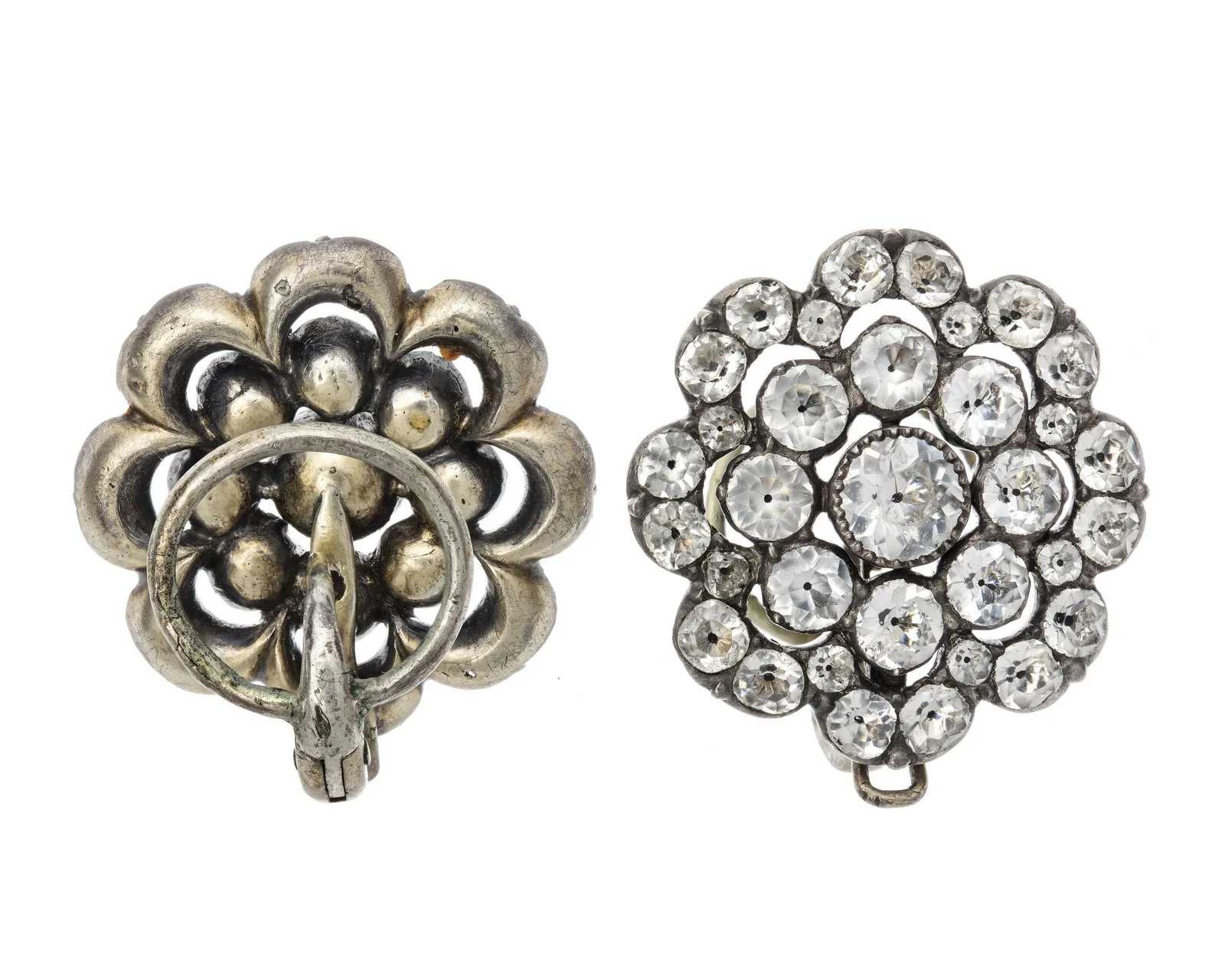
This is a different object from the brooch. The brooch let you look into a center the gold had framed. The earrings let the crystal leave the ear and move. Two earrings, and neither is a second angle of the wreath. The form traveled from a still window to a drop that answers a turn. Gilt silver is a quieter metal than the brooch’s yellow gold, and the quiet suits a stone with nothing of its own to shout. You would still name the pair from the clear drops, before you asked which decade had set the clusters.
Daylight is the kindness. A darker cloth this fall does not have to argue with them. It gives the sparks a chair. The gilt wants a soft cloth and a dry hand, and the drops want not to knock a table when they are off the ear. Rock crystal at the end of a short chain is a small weight with a hard edge. Store the pair where the drops are not asked to grind against each other. The movement you want is the movement the goldsmith hung there, a turn of the head, not a fold in a box.
A hoop cut from the stone
A ring spends the crystal as the whole jewel. Nineteenth century, Hallwylska museet, kept as a friendship ring. The hoop is rock crystal. A small carving sits at the face, a bow of the same material, so the ornament and the band are one body. A gold ring with a crystal center would have let the metal do the wearing and the stone do the shining. This one asks the stone to do both. You are wearing the material.
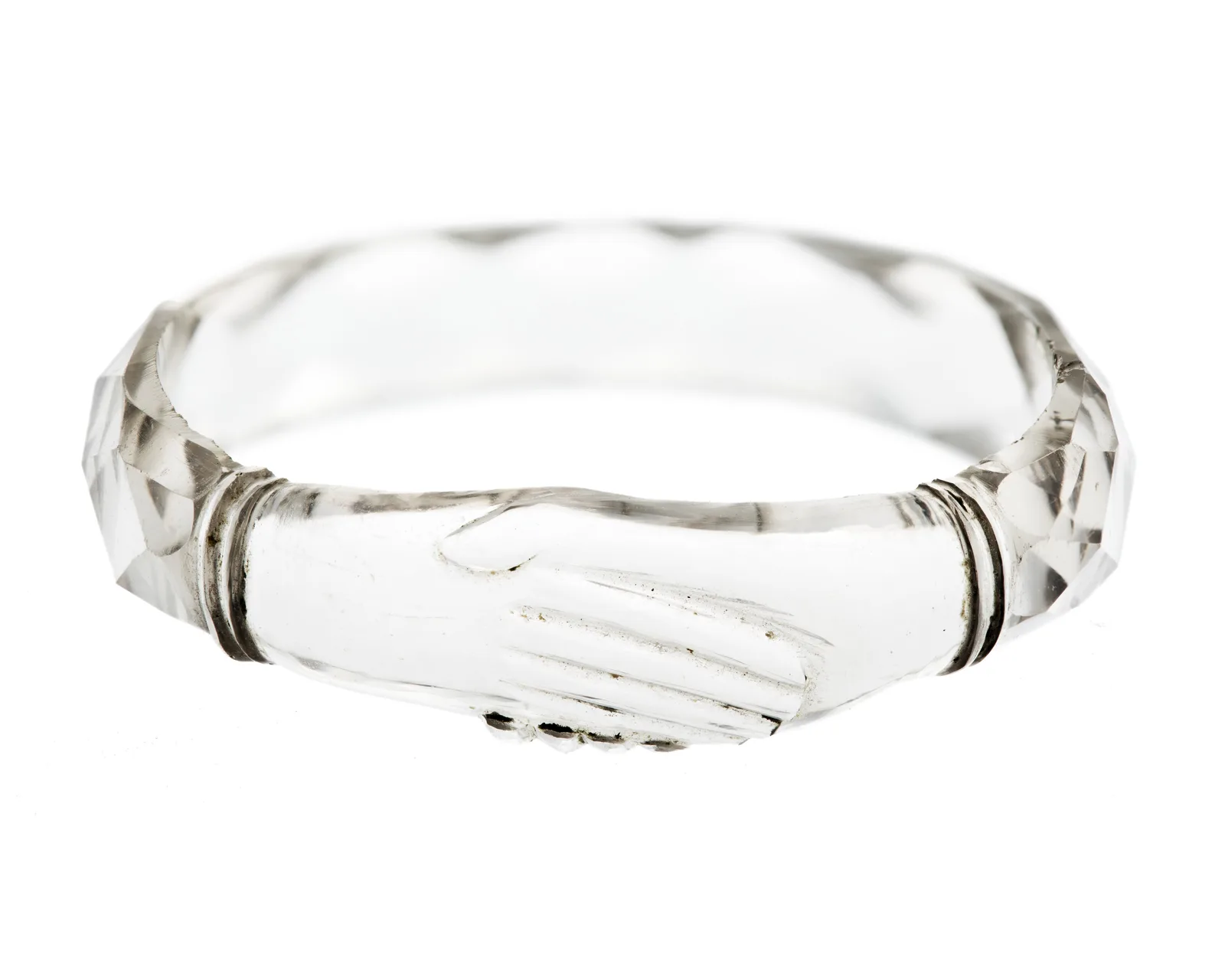
The brooch was a window in a wreath. The earrings were drops that take a turn. The ring is the clear stone asked to be the circle on the finger, with a little carved courtesy at the top where a colored gem would have sat and posed. You would know it from across a cloth by the absence of a hue and by the fact of the hoop: light in a circle, a bow you can find with a fingertip, no pavilion of color underneath. A smoky ring of this outline would have been a brown circle. A citrine would have been a honey one. This circle stays a piece of daylight that someone carved.
The care follows the material, and it is stricter here because there is no metal to take the knock. Quartz will scratch quartz, and a diamond in the same box will scratch it sooner. A separate pouch is the whole of the modern kindness, plus the refusal to run it under a hot tap as if it were a gold band. The carving is the height. Leave the bow its edges. The hoop is clear, so a chip is a small white story you will see every time you look through it.
Three objects, one light. The brooch lets rock crystal be a center the gold can draw around, a window with a wreath. The earrings let it be a pair of drops, a flash that belongs to the room and not to a pigment. The ring lets the crystal be the hoop itself, a friendship circle cut from the stone, the bow included. Smoky quartz can still be the brown you look through. Rose quartz can still be the cloud. Citrine can still be the warm gold. This fall’s quartz is the one that keeps no hue at all, and lets the light, the gold, and the cut do the rest.
That is the sit. Rock crystal as a clear light. The stone grew without a color. The jewel is what you can see through.
Educational only · Not jewelry, insurance, or legal advice