Rhodochrosite as a rose manganese light
Rhodochrosite is this season’s rose manganese light. Rose quartz keeps a cloud, pink and milky, a quartz content to stay soft. Morganite keeps a pink pane of beryl, a water with a blush. Kunzite keeps a pink pane too, a spodumene, longer in the crystal and willing to go lilac. Rubellite keeps a saturated pink, a tourmaline that has decided to be vivid. Ruby keeps a scarlet pane. Spinel keeps a cool red. Carnelian keeps an opaque orange, a skin. Rhodochrosite arrives as manganese carbonate. The rose is the mineral’s own body. Pink, then pink-red, a light that can be a band or a cluster of faces, the faces blocky or drawn out to a point.
Faces the mineral already cut
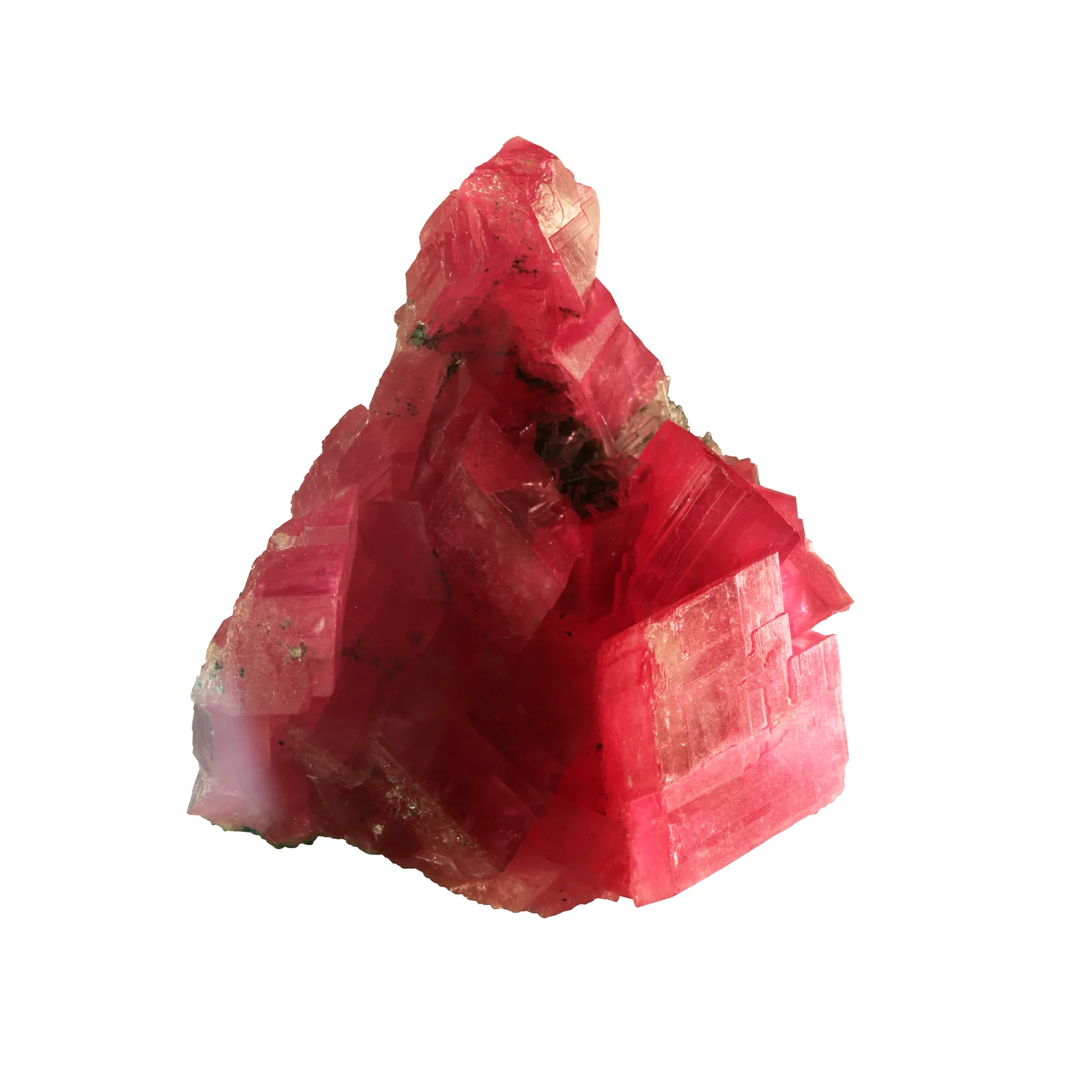
A group from the Sweet Home Mine, in Colorado, keeps the rose as crystals on quartz. The Cantonal Museum of Geology in Lausanne holds it as MCG 90161. The quartz is the chair, pale and quiet. The rhodochrosite is the sentence: rhombs, many of them, rose-red, each face already a plane. You meet the color as a handful of lights before you ask the mine.
A ruby of this size would have asked to be a pane, one scarlet window. These are a cluster. The carbonate grew its own geometry, and the rose spends itself across those faces, which is why a crystal this willing can stand for the jewel the season wants. The pink is not a stain on another mineral. It is manganese, in the carbonate, willing to be bright. The quartz underneath only holds the chair still.
Autumn has room for that rose. The warm months already know carnelian’s orange skin, the red of ruby and spinel, the softer pinks of quartz and beryl and spodumene. Rhodochrosite sits beside them as the carbonate, a colored-stone pick when the palette wants a pink that is also a little red, and that red is still a rose. The trade sometimes says Inca rose for the banded stone. The Colorado group is the other chair: faces, already a jewel’s habit, still in the rough.
A rose laid down in bands
A polished slice from the Capillitas district, in Catamarca, Argentina, spends the same mineral as a soft field. Stalactites, cut and polished, in the mineralogy gallery of the National Museum of Natural History in Paris. Concentric bands, pale pink into a deeper rose, a weather of carbonate rather than a single crystal’s flash. You would meet the bands before you named a locality. The light is in the layers.
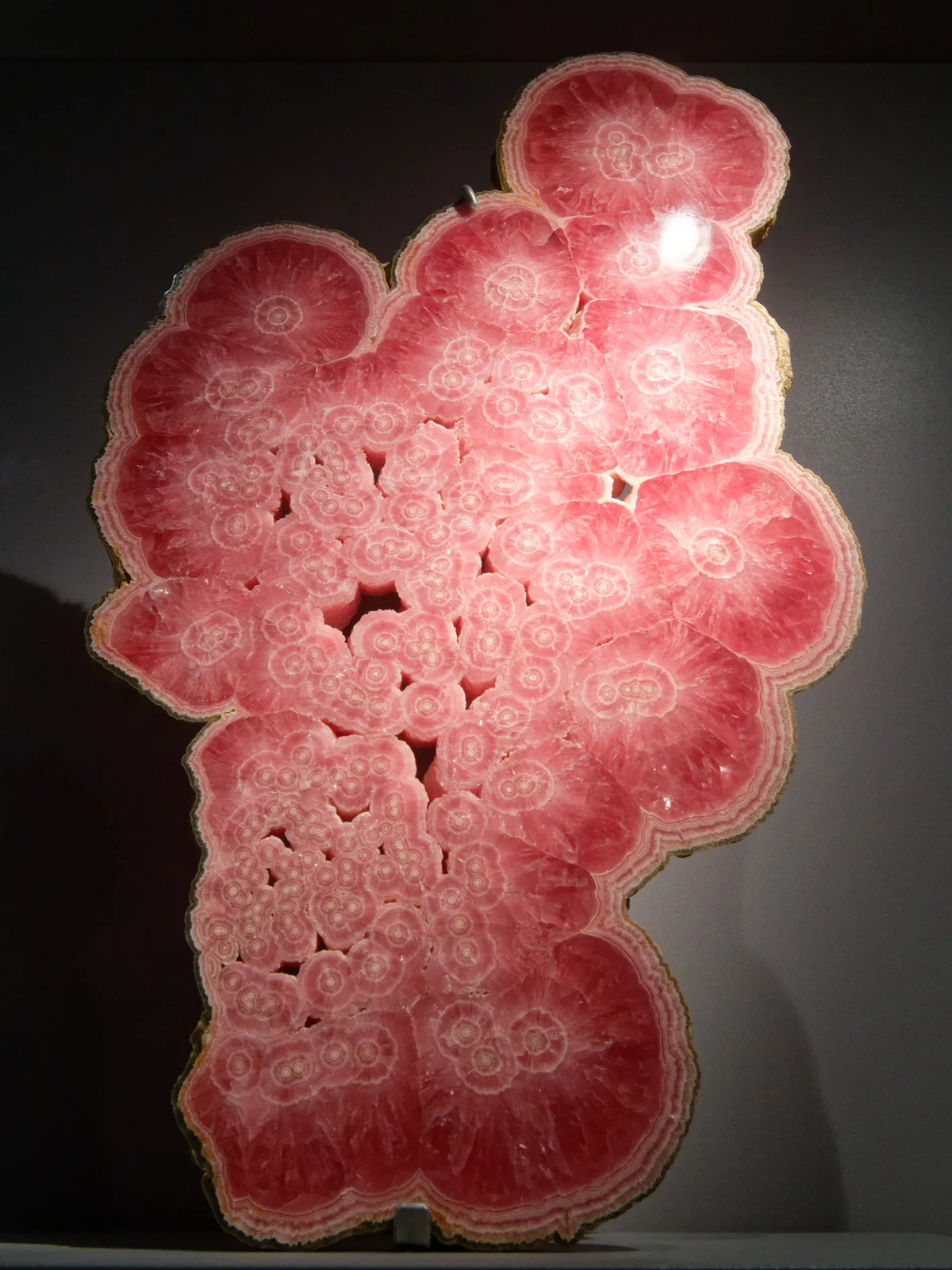
Rose quartz in this vitrine would have given a cloud, milky and even, one soft pink with no bands to count. Morganite would have given a transparent pane, a beryl blush. This is opaque in the way a carbonate can be opaque, and still luminous, because the bands are different depths of the same rose. A cabochon cut from such a slice keeps that weather. The Paris piece lets you see the weather before the wheel: circles of pink, a stalactite’s memory, the manganese laid down as a rhythm.
The Colorado cluster gave the rose a pale quartz and a set of blocky faces. Capillitas gives it a field. Both are the carbonate. One is willing to be crystals. One is willing to be bands, a softer chair of the same light, the pink you mean when the season asks for rose and not for scarlet.
Points, and the rose still
A small group from Peru spends the same carbonate as points. Scalenohedra, the faces drawn out, a hotter pink-red than the Colorado rhombs, on a dark matrix, about four centimeters across. You meet the points before you ask the size. The color is willing to be vivid here, and it is still a rose. A garnet would have gone to wine. Carnelian would have stayed an orange skin.
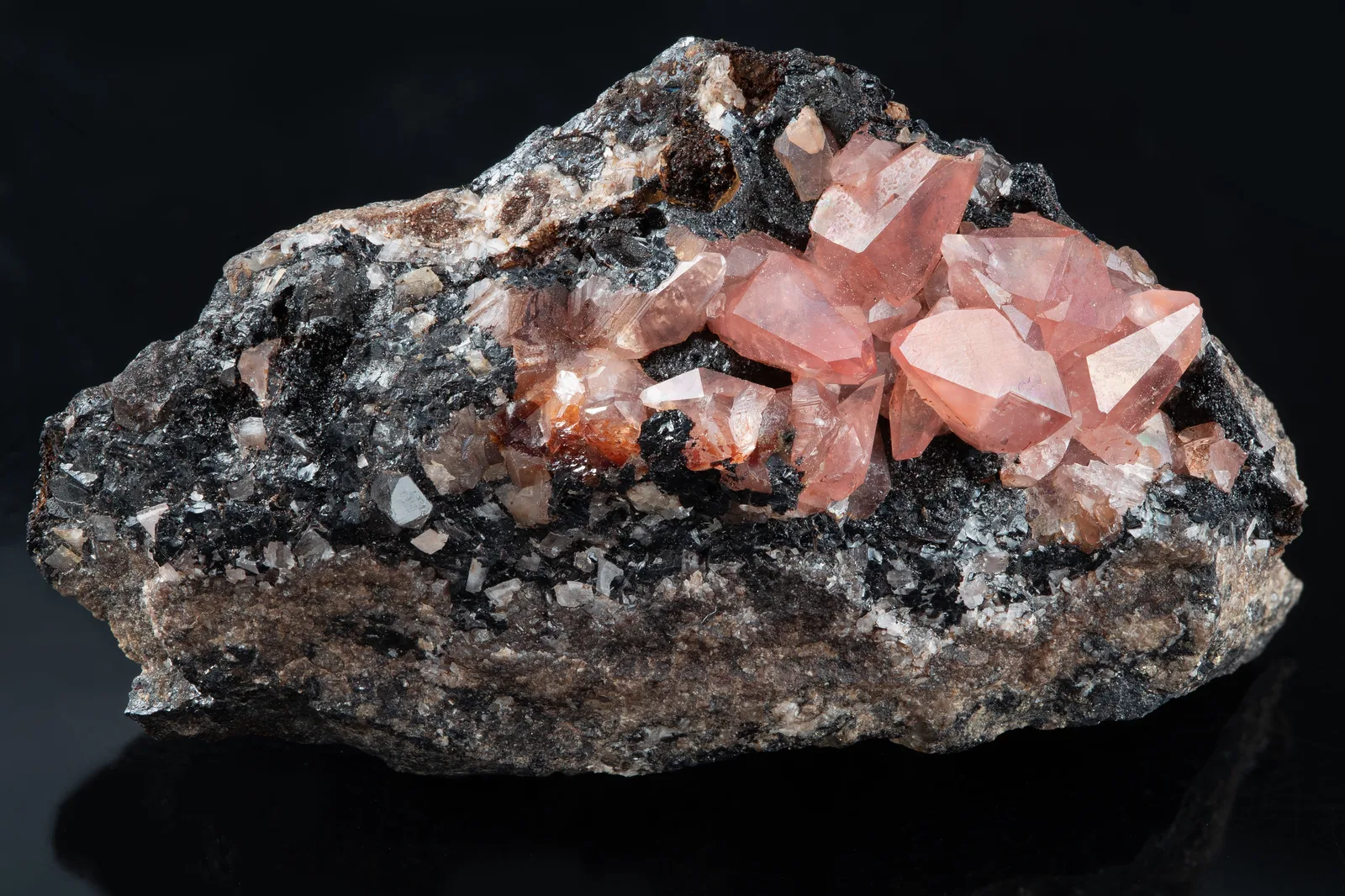
A ruby in this scale would have asked to be one scarlet pane. A rubellite would have been a saturated tourmaline, vivid by another mineral’s habit. A spinel would have cooled the red. A carnelian would have stayed closed and orange. These points are manganese carbonate agreeing to be bright, the rose pushed toward red and still recognizable as the pink of the Capillitas bands and the Colorado faces. The habit changed. The light did not leave the carbonate.
Three stills, one rose. The Sweet Home group lets the light be blocky faces on quartz, a cluster that already looks cut. Capillitas lets it be bands, a soft field of the same mineral. Peru lets it be points, a hotter pink-red, still the carbonate. A cloud of rose quartz can still be worn as a cloud. A beryl pink can still be worn as a pane. This season’s pink is the one that arrives as manganese carbonate.
That is the sit. Rhodochrosite as a rose manganese light. A rose body, banded or faced or drawn out to a point, worn when the months want a pink that is willing to be a little red.
Educational only · Not jewelry, insurance, or legal advice