Quatre, a four that stacks
Quatre is four that learned to stack. Boucheron wrote a ring as four bands that sit as one — a grooved line, a plain, a paved frost, a dark band, already a single width on the finger. You meet the four first. The house name arrives after the stack. There is no free house still to set beside the name. The sit is older than the logo: bands that have already agreed to be one hoop.
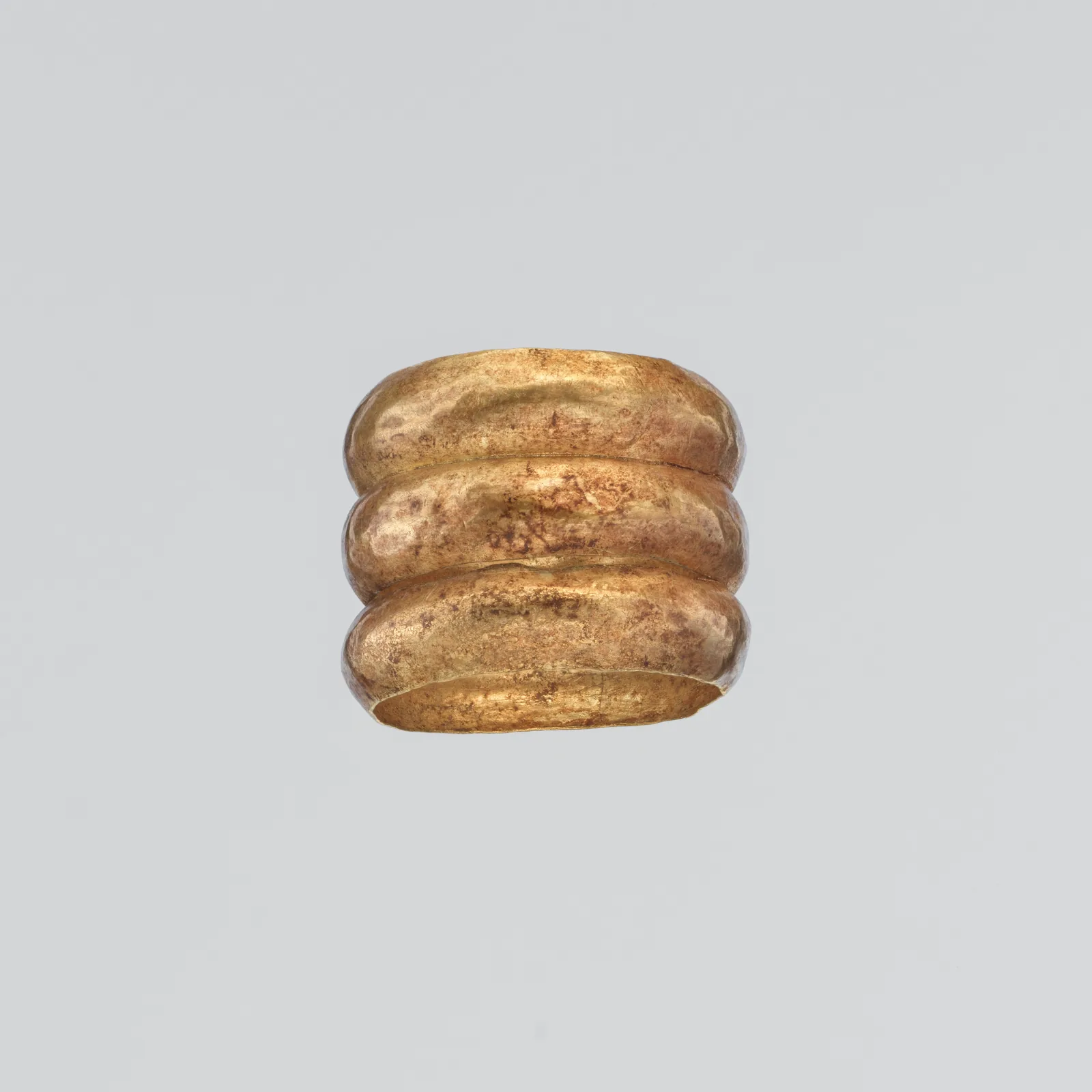
A Cypriot gold ring is the sit in one stack. Three rounded bands, joined, already a single thought. You would feel the count before you named a tomb. Not a smooth hoop that hides the decision. Gold that has already stacked — three as one sit, a width you can read with a fingertip. That is what Quatre still protects: a four you meet as a stack, bands worn as one jewel.
The temperament is the count that does not flatten. A plain band would have hidden the layers. The stack is the sentence. Quatre keeps that sentence as four.
A shorter stack, then two hoops that sit as one face
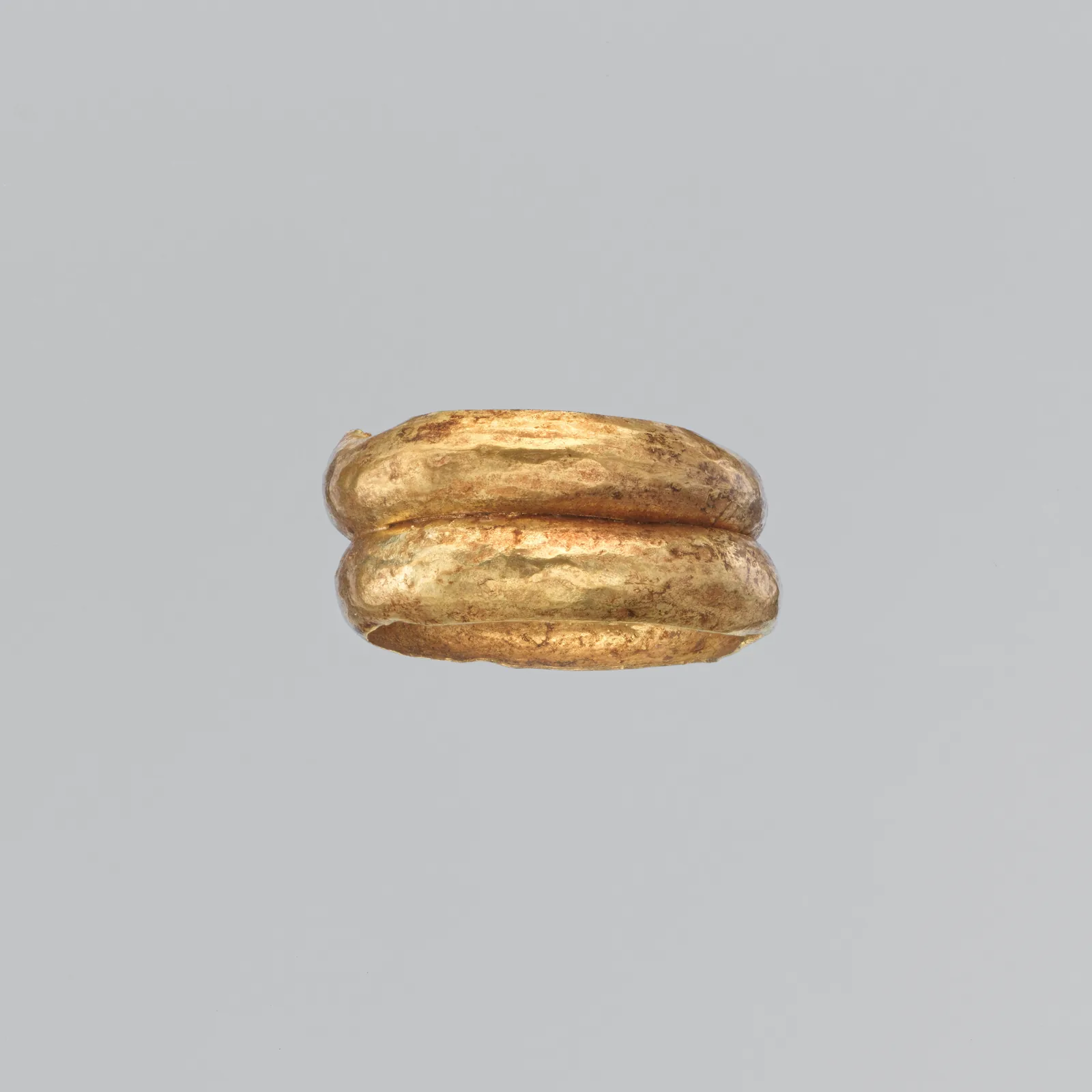
A second Cypriot gold ring keeps the same appetite as a shorter stack. Two bands, joined, already one hoop. You would meet those two before you counted a dynasty. The grammar is the join. Quatre writes it as four — more layers, the same sit: bands that have agreed to stack, a jewel you feel as a width.
A Southern German gimmel finishes the thought as two hoops that become one face. Rubies as a paired line, an emerald as the lower band, enamel as a quiet weather on the gold. You would meet that stacked bezel before you named a wedding. The two have already agreed to sit as one. The house name is later. The sit remains a stack — three, two, then two that lock as a face, already the four you can wear.
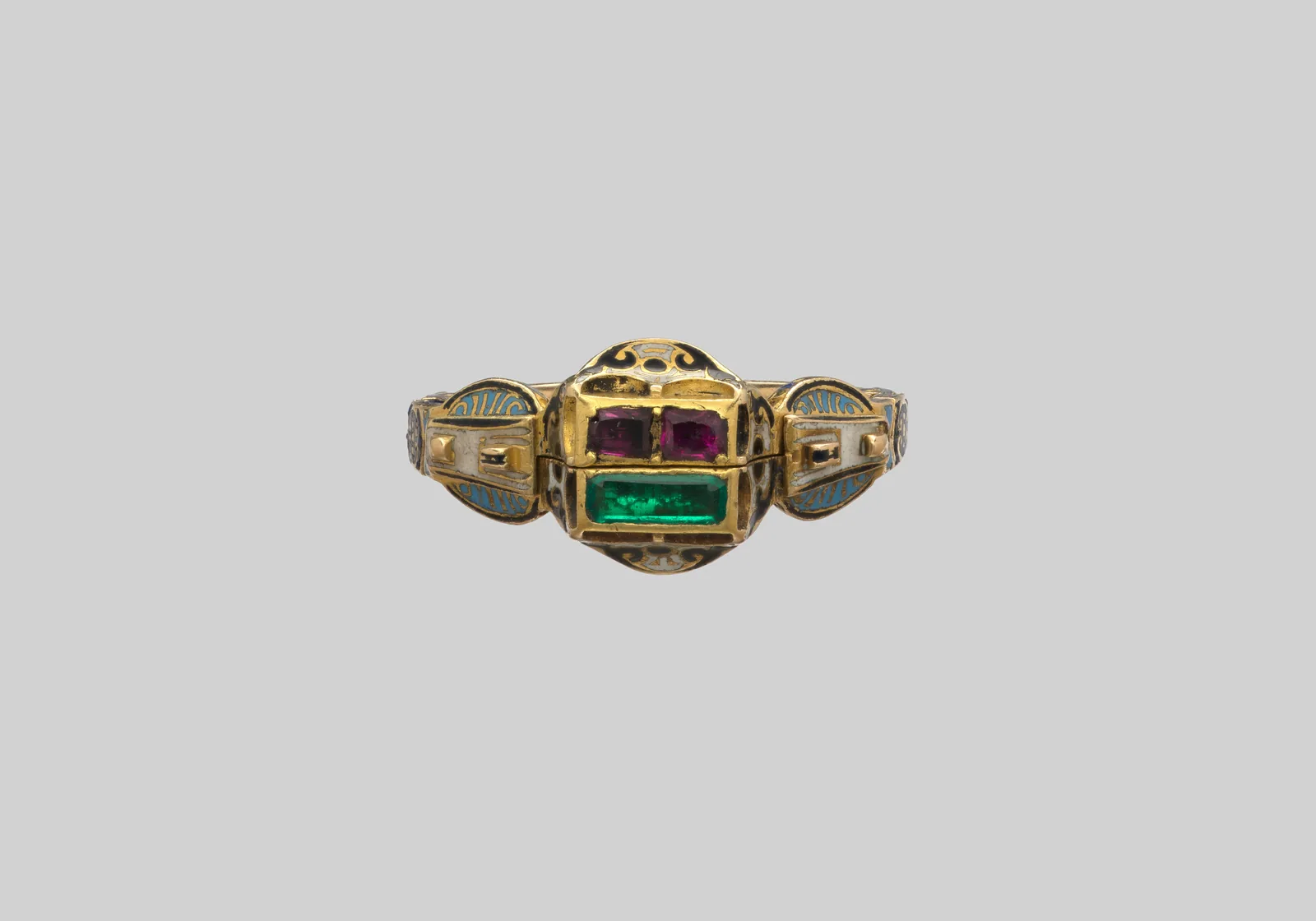
That is the icon. The house gave four stacked bands a Paris name. The sit remains a four you meet first — a stack that is already one sit.
Educational only · Not jewelry, insurance, or legal advice