Portugieser, a minute track that circles
IWC Portugieser keeps the hour on a dial that reads like a deck watch. Arabic numerals, large and black, and a minute track that circles the whole face, a railroad of small marks. A Calatrava dresses by thinning the circle until the watch is almost a drawing. A Reverso dresses by giving the hour a second face to turn. A Submariner opens on a bezel you can grip and turn. The Portugieser opens on the track. The case can be steel or gold. The hands can be leaves. A date may sit at three, a small seconds at six. The minute track is how the hour stays clear, and the track is the jewel.
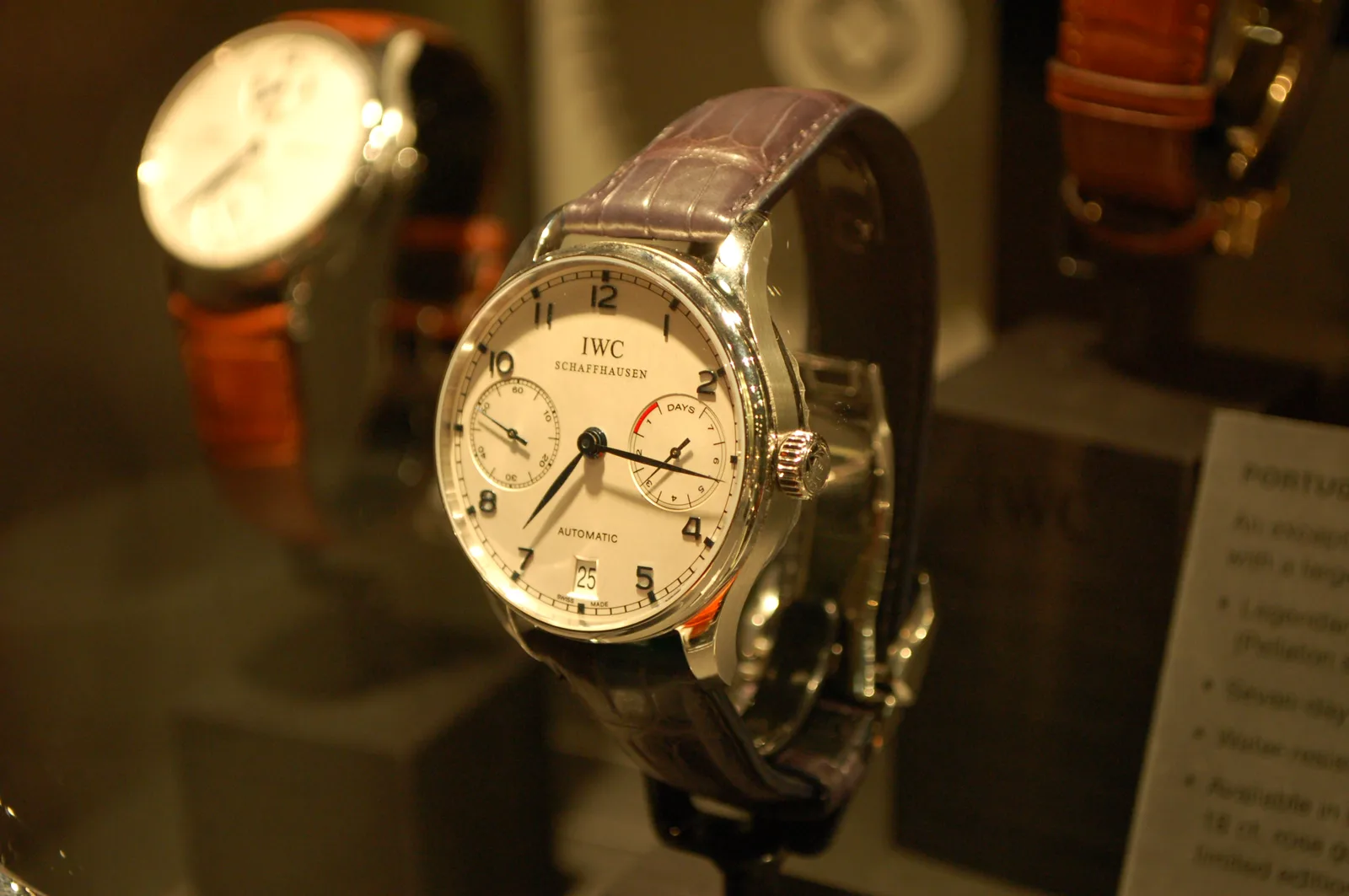
An automatic, and the track
A Portuguese Automatic keeps the meeting as a whole watch, off the wrist, on a white ground. A steel case, a white dial, black Arabic numerals, leaf hands, a small seconds toward six, a date toward three, a brown strap left quiet under the lugs. You meet the track before you finish the name. The house writes its name under twelve. The numerals are the furniture. The track is the architecture, a ring of minutes that makes the large face feel measured.
A thin dress circle would have asked the eye to admire an absence. This dial asks the eye to read. The leaves of the hands cross a field that has already been ruled. Cover the name and the numerals still name the idea: a marine chronometer’s face, brought to a wrist and left large enough to be seen as jewelry. The strap stays under the case. Nothing in the still asks a cuff to finish the sentence. White dial, black figures, a railroad of minutes. That is the scale of the icon.
Steel, and gold, the same face
A row of Portuguese models spends the same dial four times, off the wrist, on the same white ground. Two in steel, one in rose gold, one in yellow gold. Some keep a date. Some leave the three o’clock numeral in place. The tracks agree. The Arabic figures agree. The leaf hands agree. You would know them as one family from across a table, which is what an icon is for. The metal changes. The dial keeps its job.
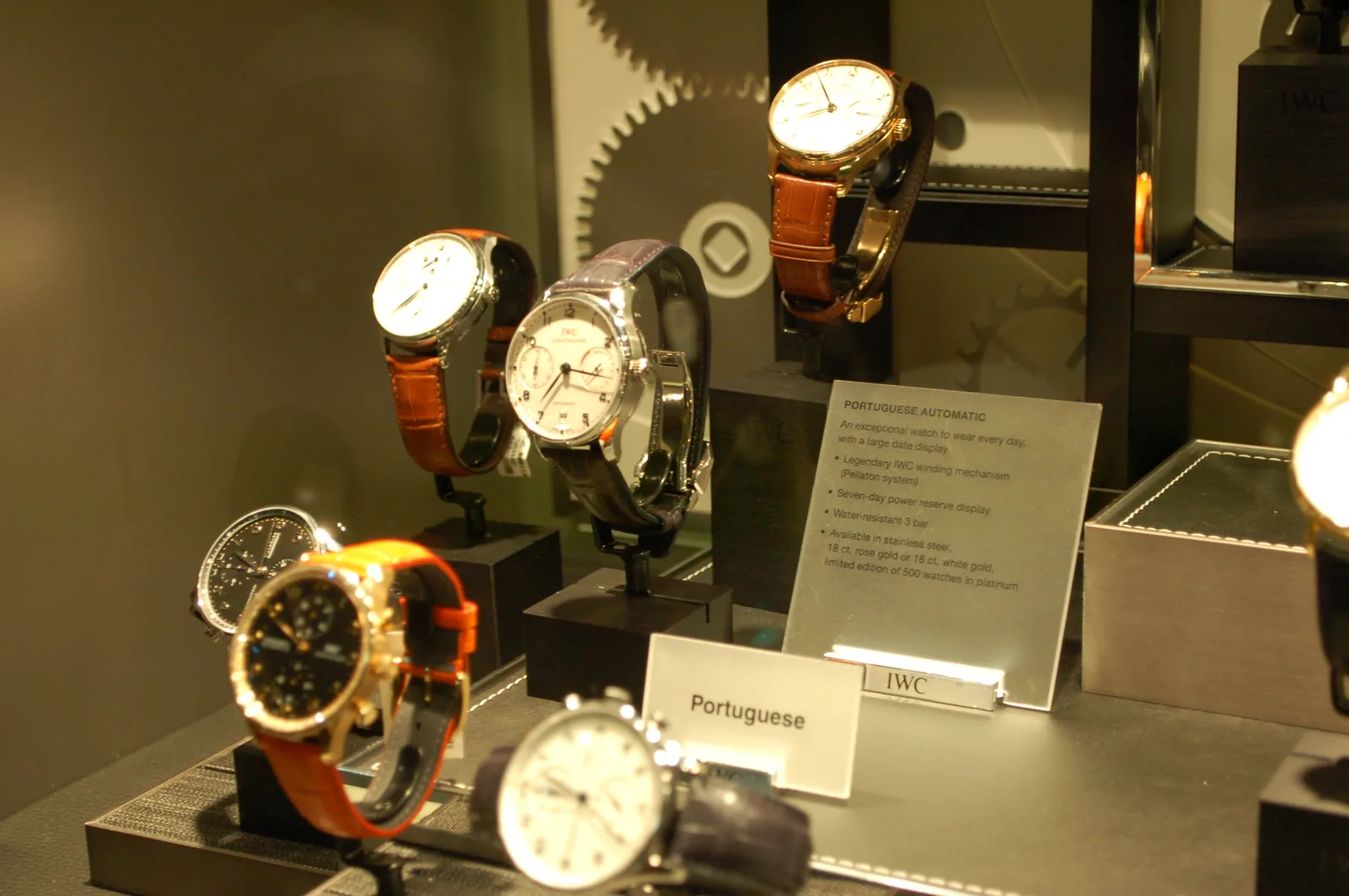
A gold case on a Cellini is the jewel, and the dial lives inside it. Here the gold is a frame the dial is willing to wear. Rose or yellow, the track is still dark on white, the numerals still the first fact. Steel does the same work, and the dial stays the subject. Four watches, one drawing. The row is the proof that the Portugieser is a face before it is a metal.
The dial, closer
Closer, the track is a line of small marks and the numerals are drawn as the point. A Portuguese dial, off the wrist, the face filling the frame. Leaf hands. The minute marks sit with the numerals, a railroad you could follow with a pin. The house name stays where a name belongs, under twelve, and it does not compete with the figures. The pleasure is how much of the dial is given to reading the minute, and how calm that reading stays.
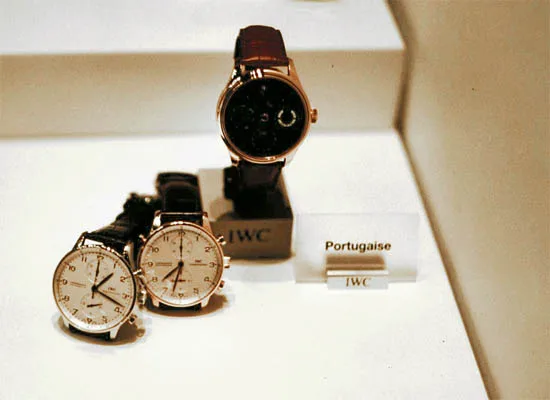
A turning bezel would have put the minutes on a ring you grip. This watch puts them on the dial and leaves them still. The leaves of the hands are what cross that ruling. Between twelve and six the field is open enough to be a jewel’s ground, white, and still ordered enough that the eye knows where it is. That is the manners of a watch that is also a piece of drawing.
Three stills, one track. The automatic lets the dial be a whole watch, steel, a date, a small seconds, a brown strap at rest. The row lets the same face be steel and rose and yellow, a family. The close dial lets the railroad be the thing you actually see. A thin circle can dress by becoming almost a line. A second face can dress by turning. A bezel can dress by being a grip. On a Portugieser, the hour is kept by a minute track that circles.
That is the icon. Portugieser, a minute track that circles. An automatic on a white ground, a row of the same dial in steel and gold, and the face up close — the track, already the first thing you meet.
Educational only · Not jewelry, insurance, or legal advice