Piaget, color as the material
The first thing the wrist meets is not an hour. It is a face of material — a field of diamonds, a slab of gold, a slice of stone cut thin enough to lie on the pulse. Piaget has always built the watch that way: the cuff sits as jewelry. Time is what happens underneath.
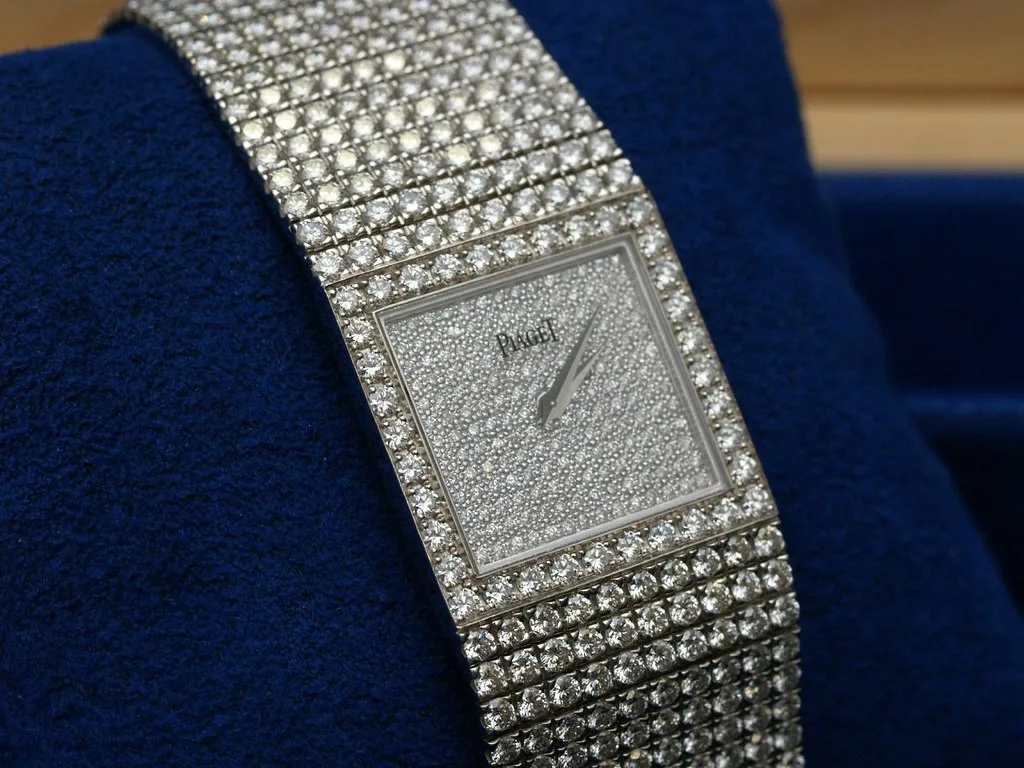
A square of pavé, a bracelet of the same light. You would feel the width before you read the hands — a single sculptural band, cool and glittering, the kind of cuff that does not want a stack. The dial is not a window. It is more of the same stone, continued. That is the Piaget sit: jewelry first, a watch because the house knows how to hide one inside a jewel.
Gold as a color, then the air for a stone
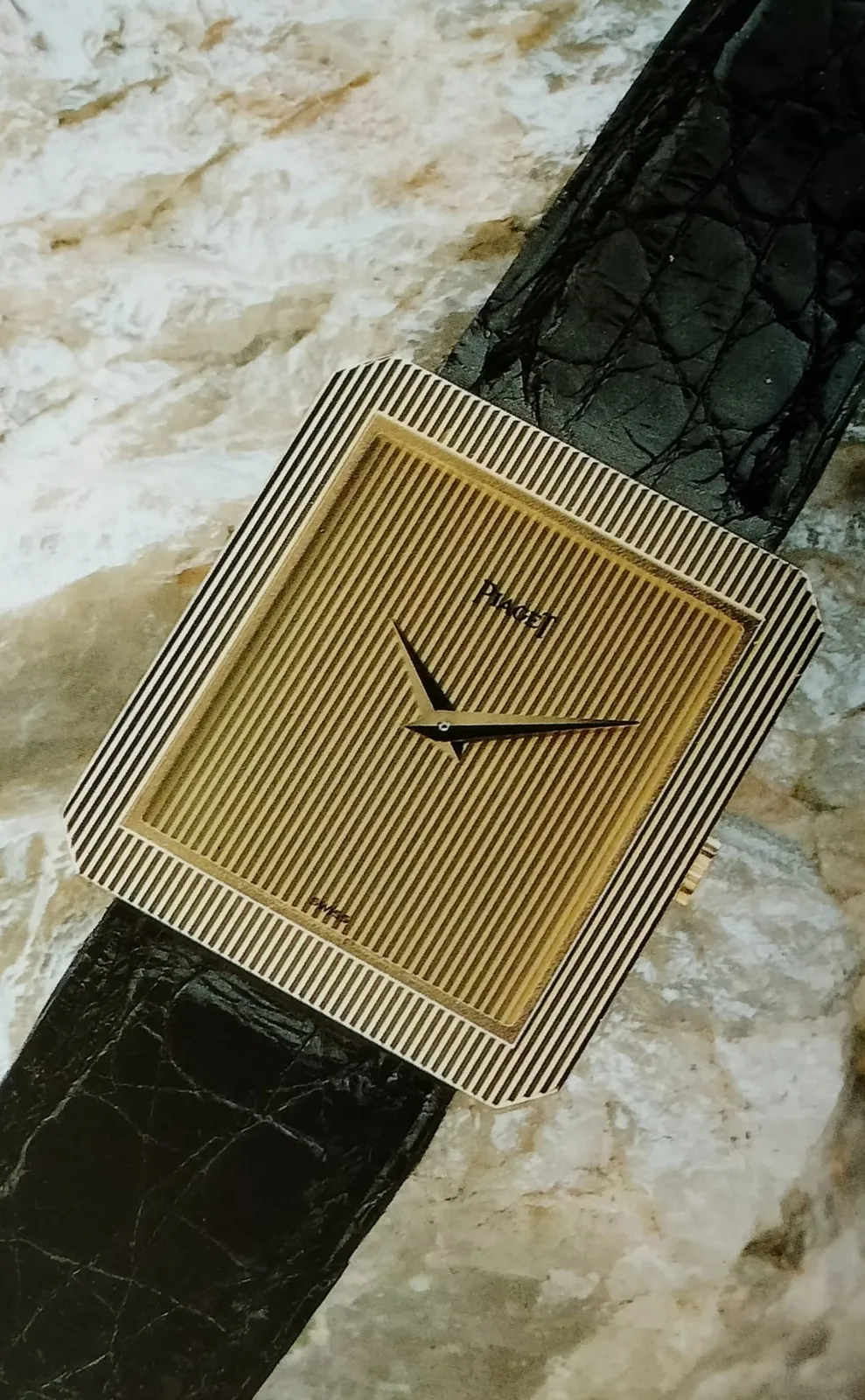
Gold can be the material too. Ribbed, godroned, one temperature from bezel into dial — no numeral, no other color, just metal behaving like cloth. This season’s high jewelry is asking gold to speak as a hue again. The Classe already knew how: a square of yellow that would sit on the cuff the way a hardstone would, a single note. You would feel the ribbing before you looked for a hand — gold as a textile, warm, one temperature all the way in.
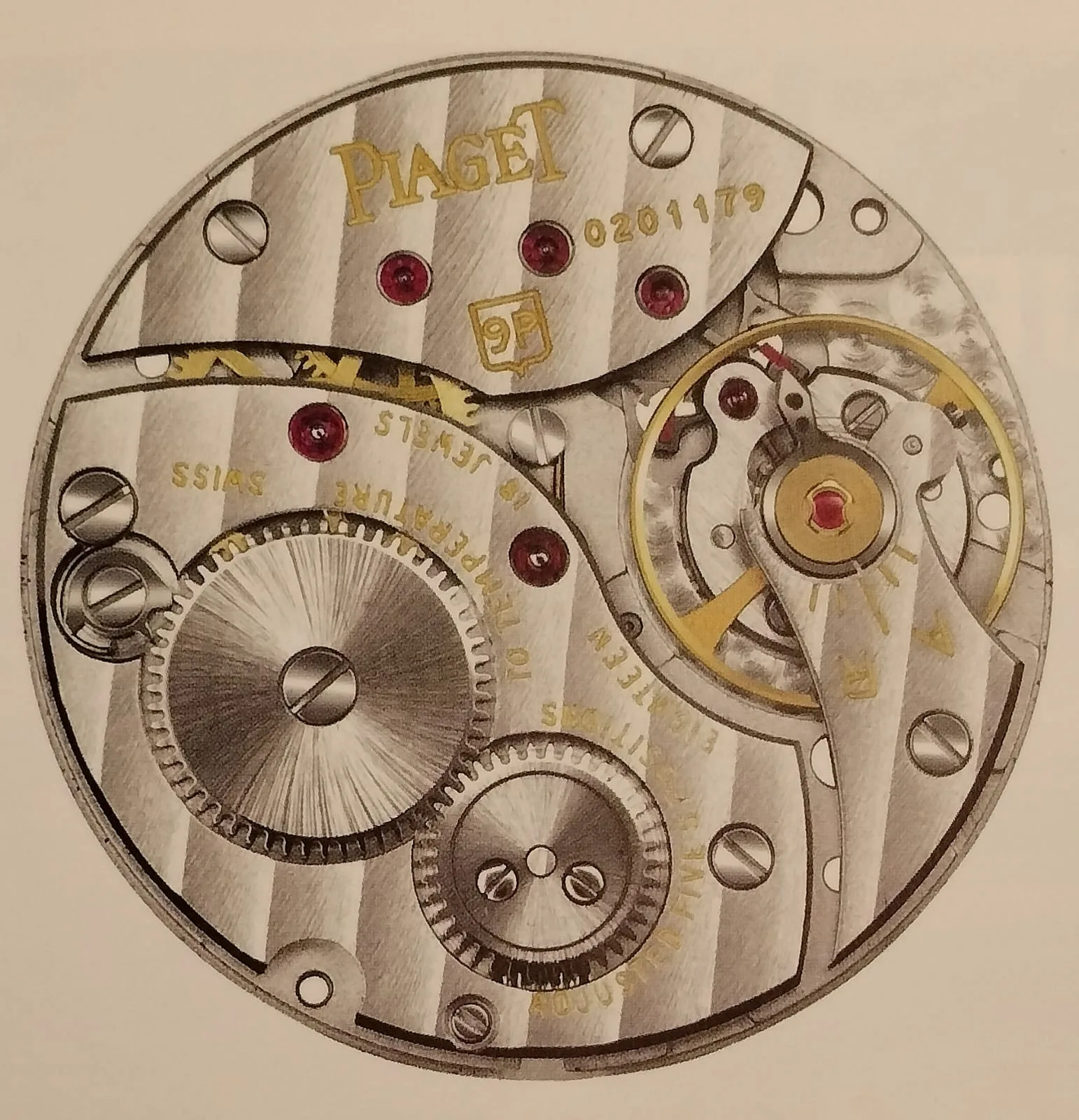
The 9P is why a stone can be the face. Two millimeters of movement, ruby jewels in the bridges, and suddenly the dial can be thick — opal, coral, lapis, turquoise, tiger’s eye — without the cuff becoming a brick. Color as the first contact. The movement makes the jewelry possible.
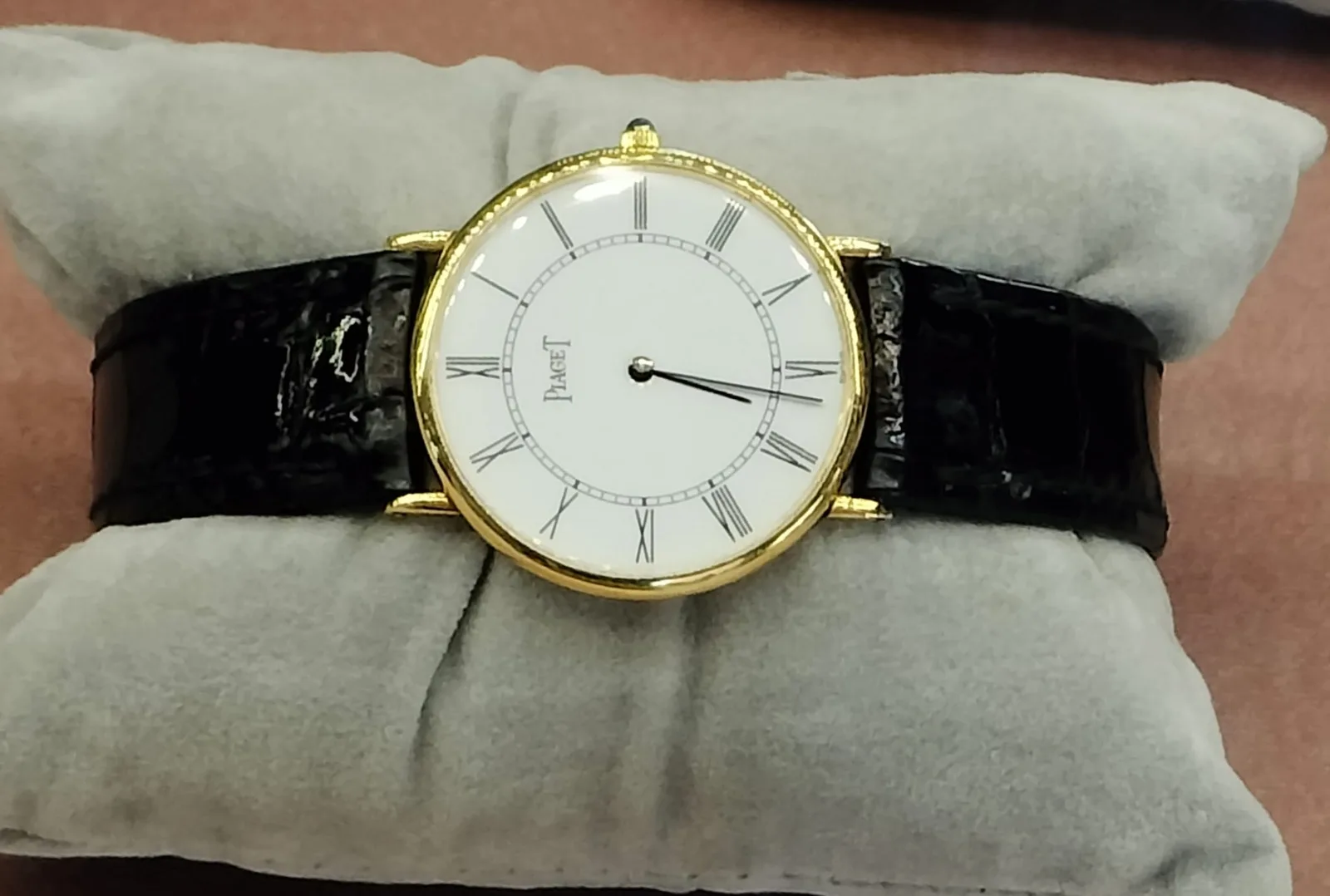
An Altiplano is that canvas left quiet: gold, a white field, almost no height. The same case that can take a hardstone instead. You would feel the slimness against the bone — a plaque, not a drum. This year’s color chapter — opal, Paraíba, a tiger’s-eye sautoir that remembers 1969 — is only the latest way the house lets a material be the thing you meet first. On the cuff: a hard face, sitting as jewelry.
Educational only · Not jewelry, insurance, or legal advice