Niello is a black line
Niello is a black line. A sulfide of metal — silver, copper, lead, in the old recipes — is ground, laid into lines a graver has opened in silver or in gold, and heated until it fuses. Then the surface is taken down, so the high metal comes bright and the black stays in the cuts. What you read is a drawing in black. Enamel is a glass, painted or filled and fired, a skin of color. Oxidized silver is the silver itself darkened at the surface, a film the metal grew. Cloisonné builds a cell of wire and fills it with enamel. Filigree draws a lace in wire and leaves the air. Granulation sets spheres. Milgrain is a row of beads along an edge. An intaglio is a cut whose picture lives in the depth. Guilloché is an engine-turned field. Niello is none of those. It is a black alloy that has agreed to become a line.
A drawing the silver kept
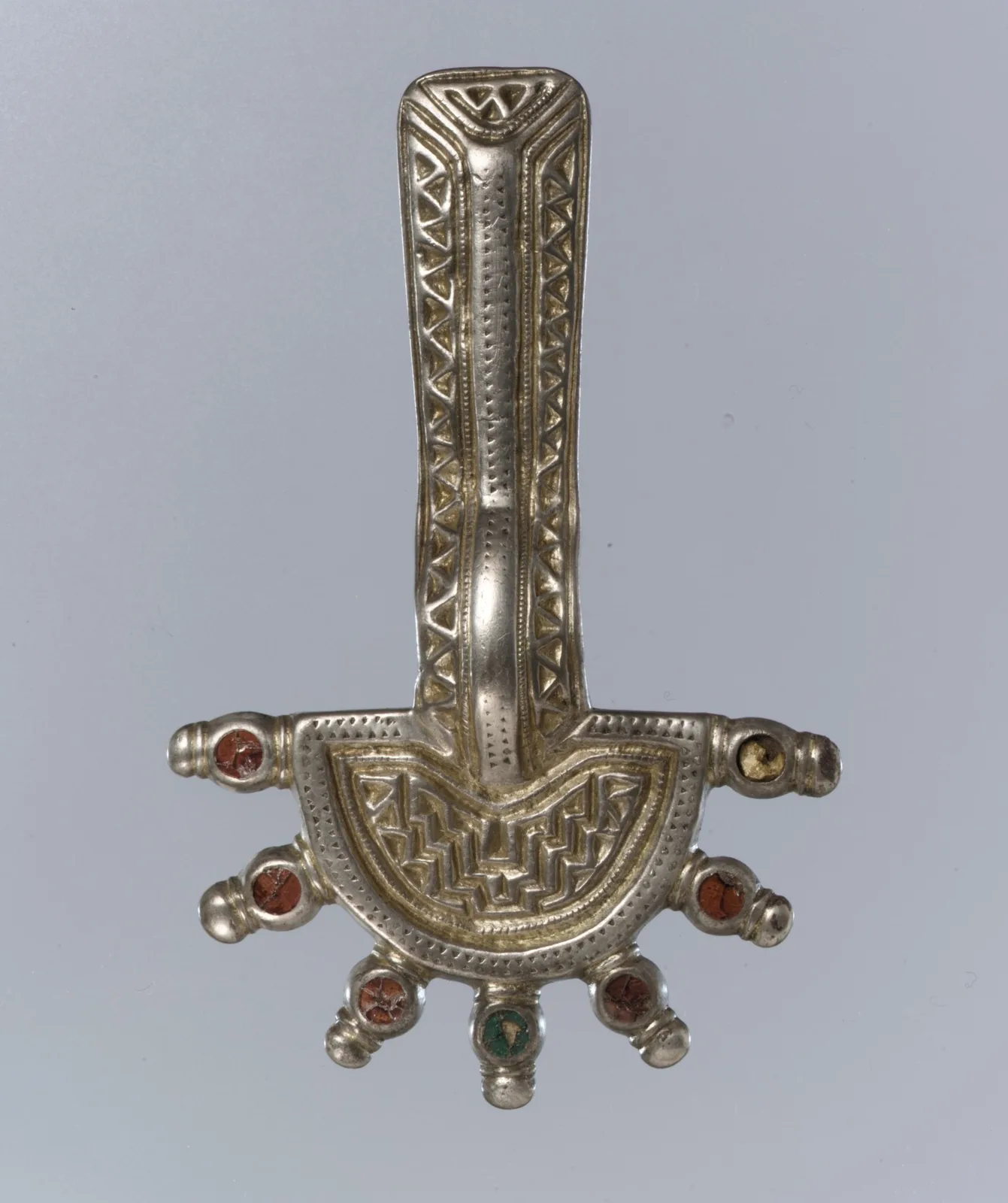
A Frankish bow brooch in the Metropolitan Museum, made between 500 and 550, keeps the line at the scale of a jewel you could pin. Silver-gilt, the head a round plate, the bow a ridge, the foot a long panel. Garnets and glass sit in the raised work. Between them the black is niello: borders, hatchings, a geometry drawn in the metal and left dark when the bright silver was brought back. You meet the black before you name the sulfide. The lines are even. They turn corners. They are not a shadow the silver cast. They are a second metal, fused where the graver went.
A painted enamel on this brooch would have laid a glass over a picture, color as a skin. These lines have no skin. The black is in the cut, level enough with the silver that a fingertip reads a drawing and a shine together. An oxidized surface would have darkened the silver itself, a weather on the high points as well as the low. Here the high points are bright on purpose. The black is only where a line was opened and filled. That separation is the whole literacy. Niello does not color the metal. It occupies a line the metal gave it.
The brooch is also where the line shows its manners. It can be a border, a hatching, a small panel of pattern, and it stays black in all of them. Garnet does the work of a red. Glass does the work of a glint. Niello does the work of the drawing that organizes both. You do not have to know the recipe to use the word. You have to see that the black is a line, fused, and that the silver around it was meant to stay light. Rogers Fund, 1949, number 49.56.5. One brooch. The lesson is already complete, and the next objects only show that the lesson travels.
The same black, in gold
A Byzantine bracelet at the Met, fifth or sixth century, spends the line in gold. A curved band of gold, the borders filled with black niello in repeating leaves and geometric runs. You meet the contrast before you ask the century. Gold is the ground. Black is the drawing. Nothing about the black has changed its nature because the ground changed from silver to gold. The alloy is still a sulfide, still fused into a cut, still left behind when the high metal is polished bright.
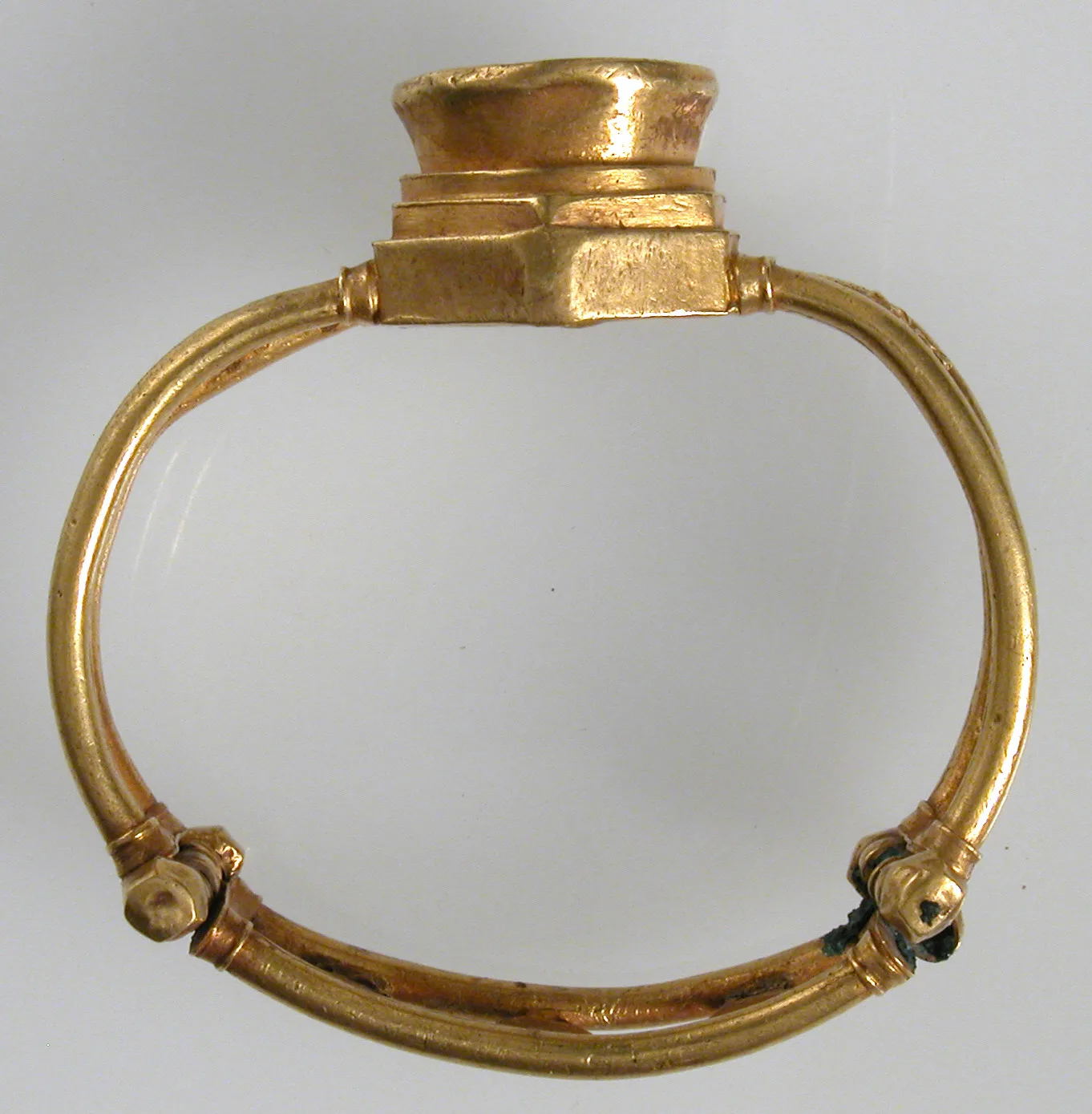
The gold makes the literacy easier, which is a kindness. On silver, black can be mistaken for a tarnish in a crease. On this gold, tarnish is not the story. The black sits in the borders as a material of its own, crisp against the yellow, the same height as the gold around it so the surface reads as one skin with a drawing in it. A cloisonné of this appetite would have raised a wire and flooded a cell with glass. A filigree would have left the gold as threads and the black as air. This black is solid. It replaced the gold the graver removed. That replacement is the fact to learn: niello is added, and it stays.
Hold the bracelet beside the brooch. One is silver-gilt and Frankish, a pin. One is gold and Byzantine, a hoop. The line is the shared sentence. Leaves on the bracelet, hatchings on the brooch, both of them black because a sulfide was fused into a cut and the high metal was brought back to a shine. The word covers both. Gift of J. Pierpont Morgan, 1917, number 17.190.2054. The accession is a way to keep this hoop distinct from the brooch. The eye already knew they were two objects. The black is what makes them one note.
A second brooch, the same line
Another Frankish bow brooch, also at the Met, also 500 to 550, shows the line as a habit rather than a single famous drawing. Silver-gilt again, niello again, garnets set in the head, the bow plain and rounded, the black in the borders of the headplate and down the foot. This one came as a gift of J. Pierpont Morgan, number 17.191.173. It is a second jewel, its own headplate, its own foot. The niello does the same work: it draws.
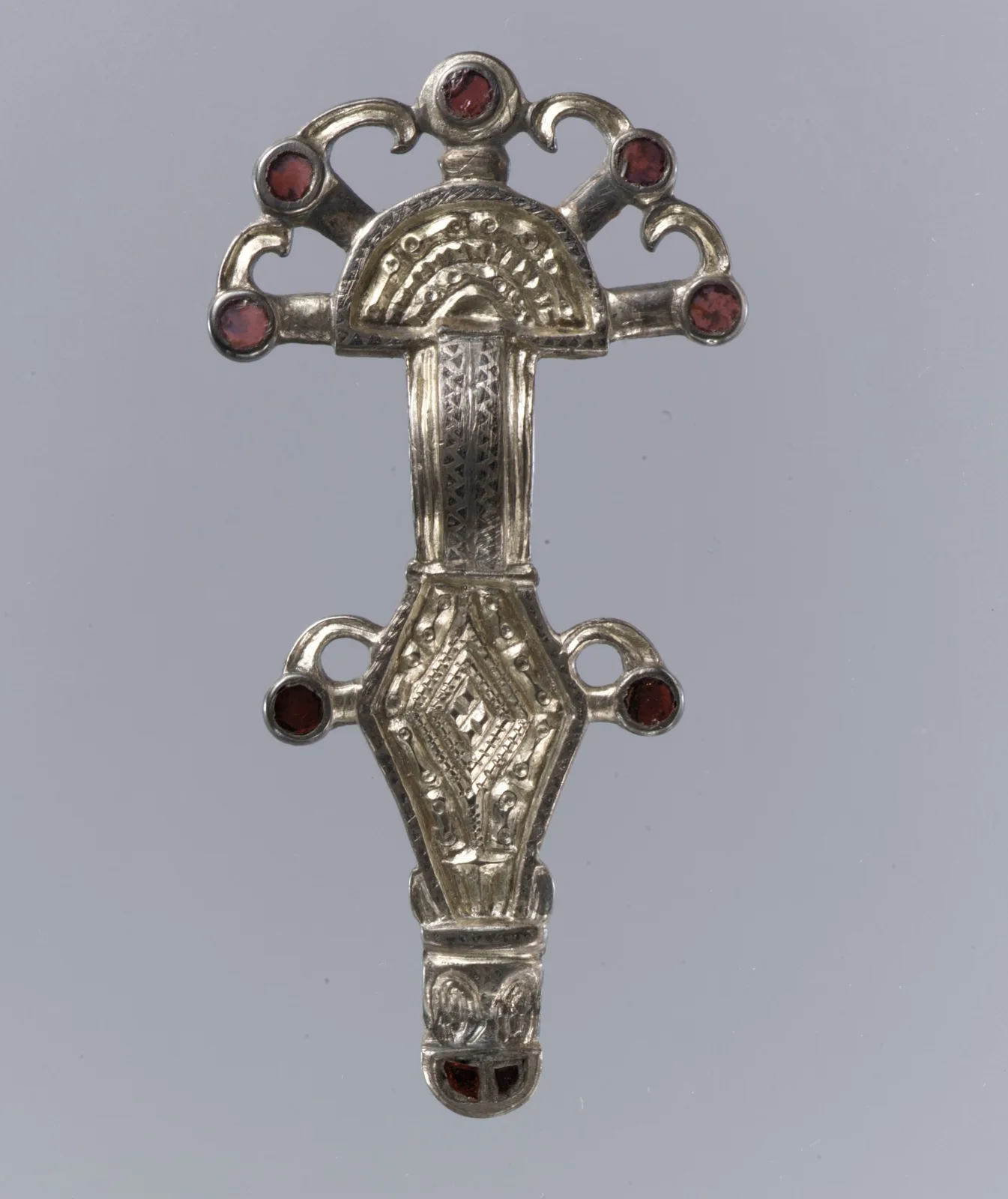
The habit is worth learning because the technique is easy to confuse with a darkening. Two brooches, both bright on the high ridges, both black only in the lines, are a demonstration that the black was placed. An oxidation would have settled wherever the silver was exposed, a film, thicker in the creases, willing to be polished away as a stain. Niello, polished, stays. The polish is what reveals it. You take the surface down until the fused black and the bright metal are one plane, and the drawing appears because the black was never the silver. It was the guest in the cut.
The care follows from that plane. The black lives level with the high points, and an abrasive polish does not know the difference. It cuts the silver and the niello together, and a line that was shallow can be worn out of its cut, the drawing thinning where the cloth bore down. A soft cloth keeps the shine the maker wanted. A harsh rouge, a buff, a paste with bite, spends the line. Between wearings the brooch and the bracelet want the same gentleness any engraved metal wants, so the black remains a line and the high metal remains the light around it. Nothing in the care asks for a special rite. It asks that the plane the niello was finished to be left alone.
Three stills, one line. The Rogers Fund brooch lets the black be a drawing in silver-gilt, borders and hatchings around garnet and glass. The Byzantine bracelet lets the same black be a drawing in gold, leaves in a border, the contrast unmistakable. The Morgan brooch lets it be a habit, a second Frankish jewel, the line placed again. A glass remains enamel. A film on silver remains oxidation. A wire cell remains cloisonné. A lace remains filigree. A field of spheres remains granulation. A beaded edge remains milgrain. A cut picture remains an intaglio. An engine-turned ground remains guilloché. Niello is the black line: a metallic sulfide fused into the cut, the design read in black.
That is the note. A graver opens a line. Niello is what stays in it — a Frankish brooch, a Byzantine hoop, a second brooch — black, fused, and bright metal on either side.
Educational only · Not jewelry, insurance, or legal advice