Mystery set, a field without claws
Run a fingertip across a mystery-set leaf and the gold does not catch. What you meet is a tiled field of ruby — square next to square, a velvet of color, a single curved diamond vein. The mount is there. You cannot feel it.
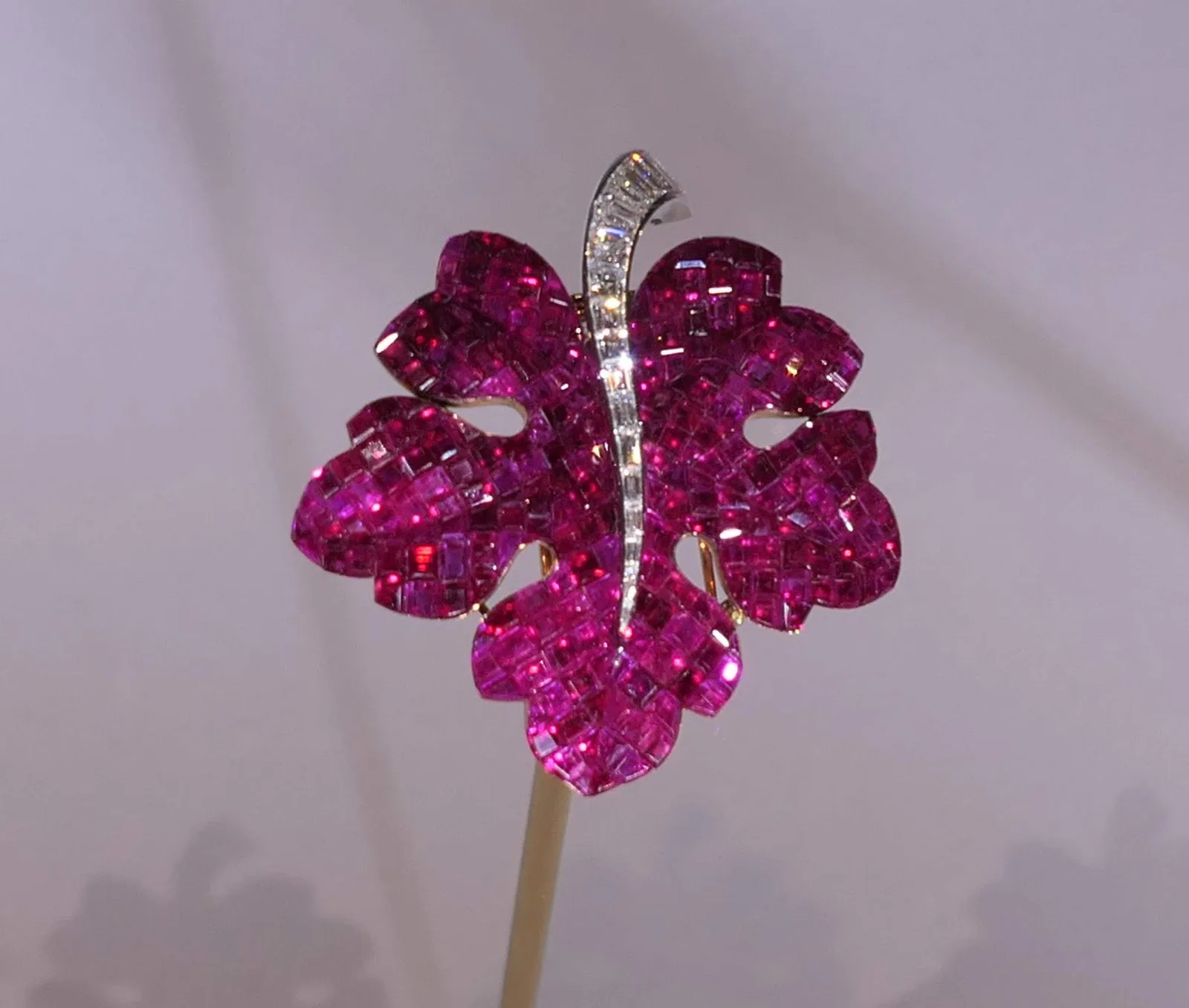
The trick, patented by the house in 1933, is a rail. Each stone is cut with a groove and slid onto a gold lattice so thin the metal disappears. No prong, no bead, no little claw at the corner. The surface you actually touch is stone, edge to edge. A clip takes hundreds of hours because every ruby has to fit the next one, and the rail has to vanish.
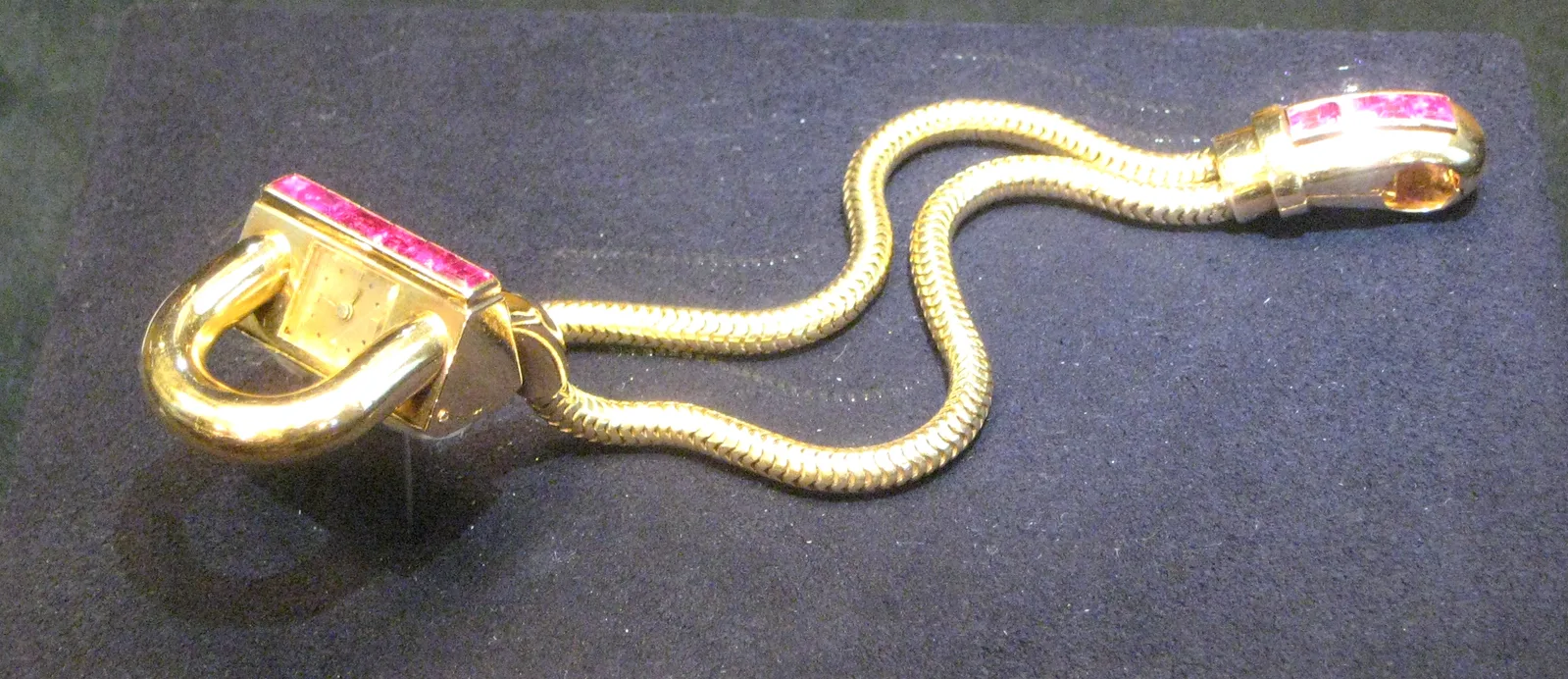
On a Cadenas the same sit becomes a ribbon. Six rubies flush on the padlock, three on the clasp, no metal between them. You would feel a warm red bar, then gold chain. Time is a small square on the side. The jewelry is the field.
A bracelet that reads as one color
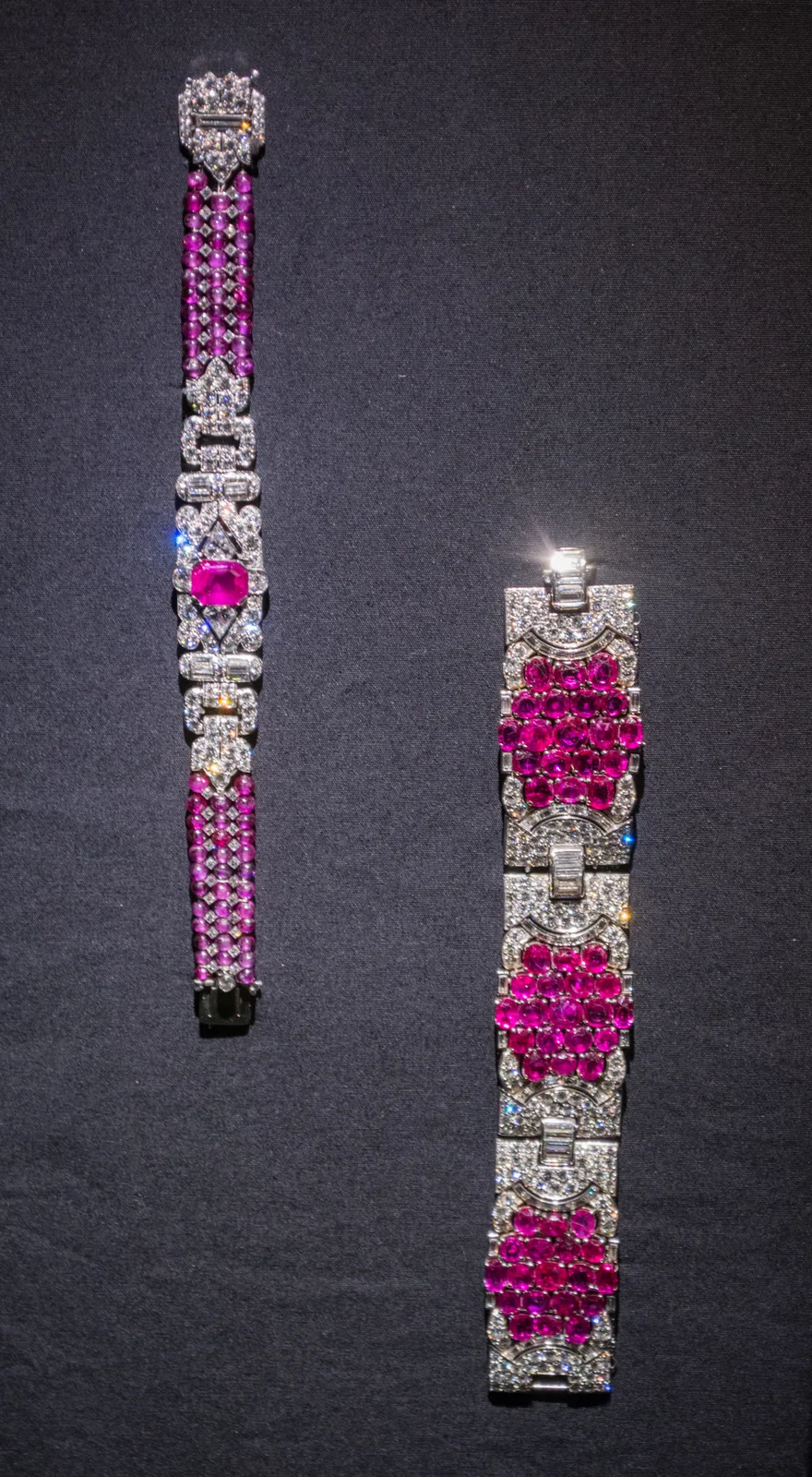
Other houses reached for a continuous ruby surface in the same decades. Calibré stones packed until the bracelet becomes a red architecture. The metal is still there. The eye is not invited to find it. You would feel a red ridge, then the diamond edge that frames it — one color, worn as a band. A scalloped red, no claw to count.
That is the literacy: a field, not a pavé you can count. Emerald is the harder version of the same sit — softer stone, same demand that the rail stay hidden. This year’s Fascinating Egypt clips put mystery-set rubies and emeralds back on the table. The lesson is older than the collection. What changes is only the motif. Hold the mystery-set leaf again. No claw. A continuous red, a hidden gold. That is the sit.
Educational only · Not jewelry, insurance, or legal advice