Labradorite as a cool flash
A cool flash. Labradorite is this season’s cool sit — a color that does not stay put, a blue that crosses the face when the stone turns, already the weather you meet before you name a mineral. Moonstone keeps a soft light, a milk that glows and stays quiet. An opal keeps weather of its own, a sky folded into the body. Lapis keeps a night field, one deep blue that has already decided. Labradorite keeps a flash. You meet the color moving first.
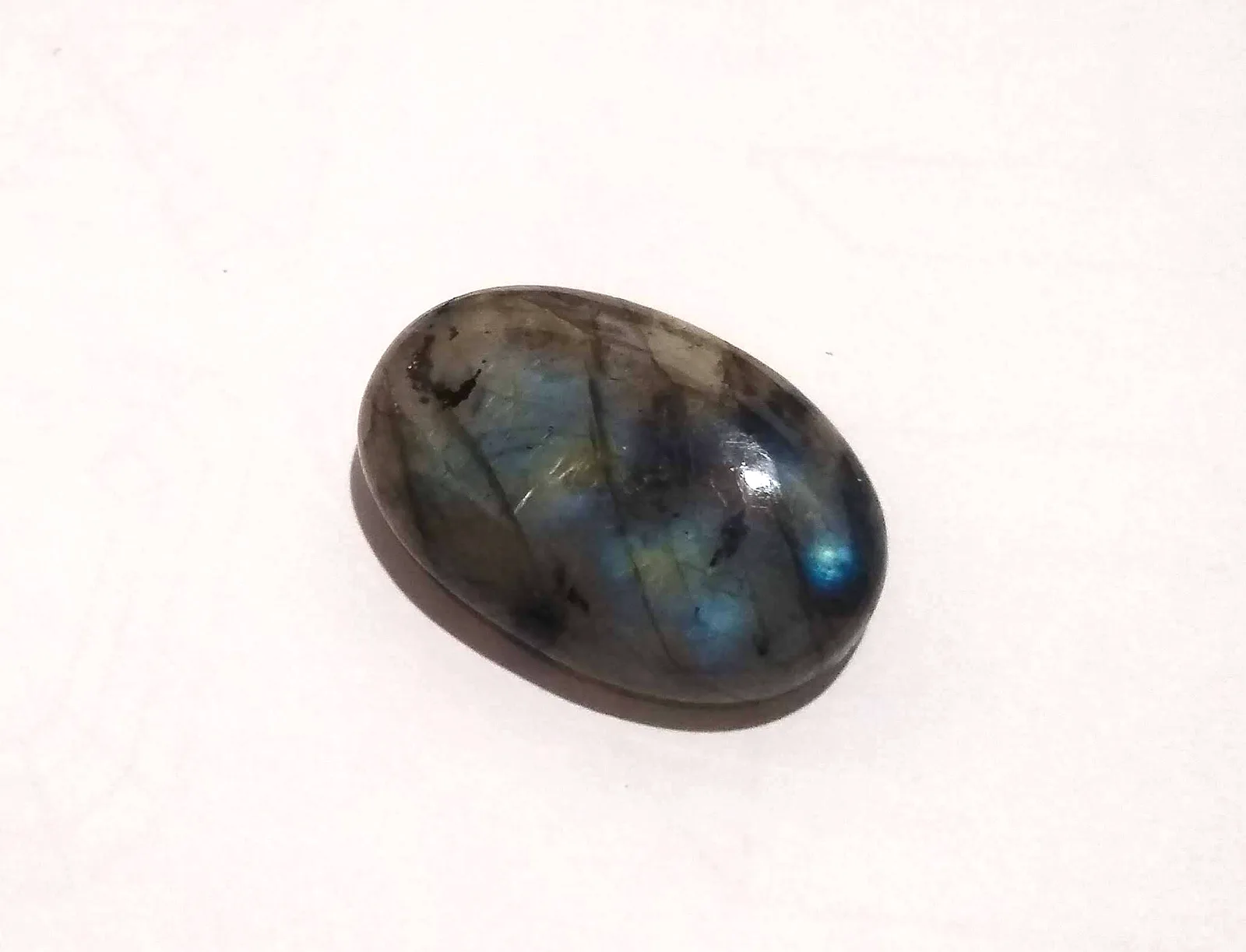
A Brazilian cabochon holds that flash in a polished dome. No facet is asked to break the stone into a spark. The surface is a skin the light can cross — gray until it turns, then a cool color that was already in the feldspar. You would see the flash before you named a cut. Moonstone would have asked for a soft sheen. An opal would have asked for a whole sky. This dome asks for one cool flash, worn as a field the metal has not yet been asked to frame.
What the season is wearing is a light that moves. A high, cool feldspar, metal only the chair when a chair arrives. Labradorite is the body. Labradorescence is the name of the moving color — a flash that lives in the layers, not a fire cut into them.
A flash the stone already keeps
A polished face keeps the lesson larger. Blue crosses a stone that has not been asked to become a gem yet — the weather already there, a cool field you could set a palm against. You would meet that blue before you asked for a mount.

A cabochon spends the flash as a dome. This specimen spends it as a pane. Lapis would have stayed one night. Moonstone would have stayed a milk. The chunk stays labradorite — a cool flash the stone already knows how to keep.
You would turn that piece and the blue would travel. The gray is only the chair. The season sit is the color that crosses it. Nothing in the polish invents the hue. The layers were already written that way, and the light only agrees to read them.
The same flash, set in silver
A silver brooch from 1910 finishes the thought as jewelry. Gustav Gaudernack set labradorite where a center stone is asked to be the weather — silver as the line, the flash as the face. You would meet that cool light before you named a year. The metal can write a sentence around it. The first fact is still the flash.
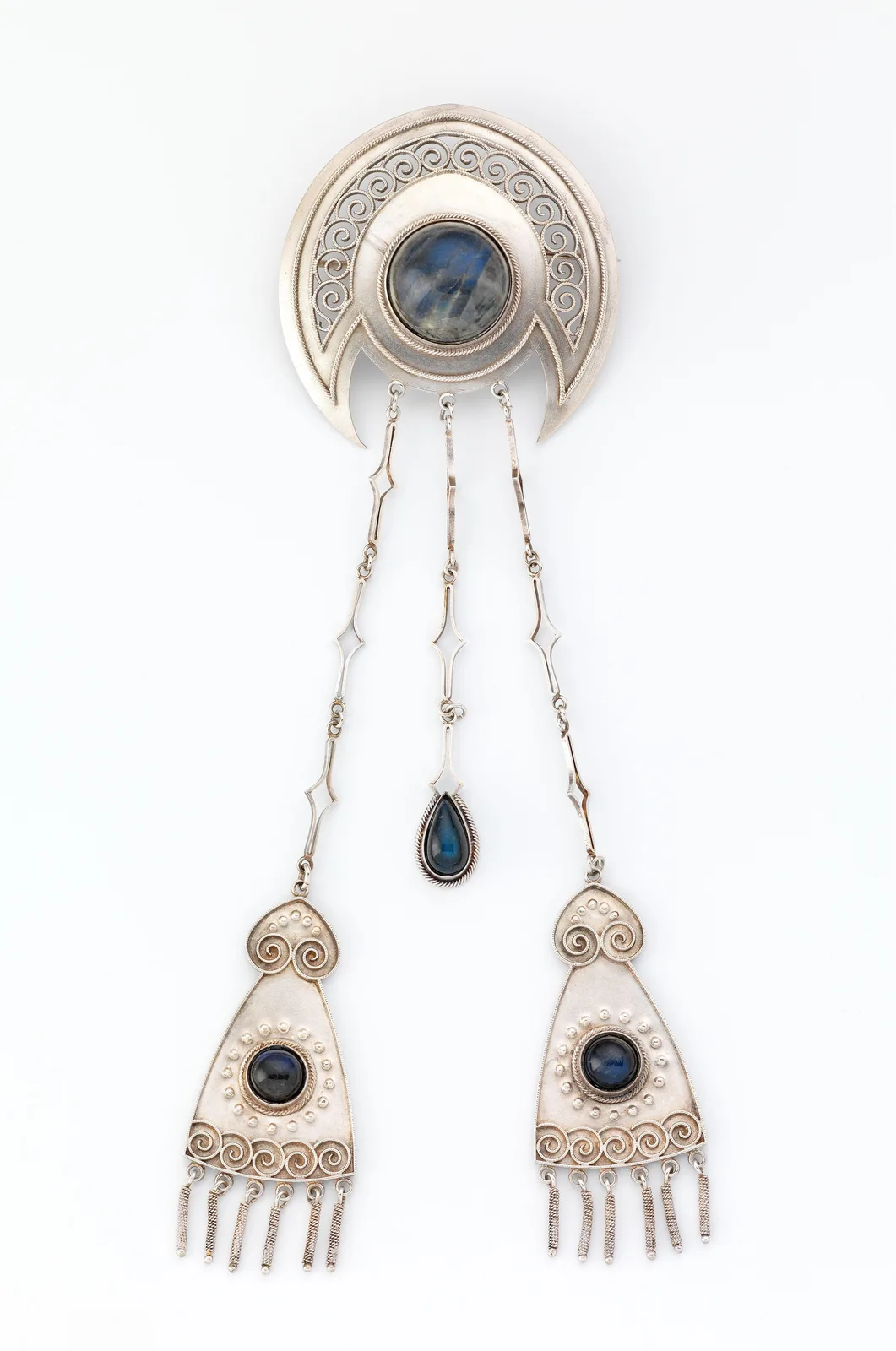
A cool light the silver agrees to hold
The brooch does not change the stone’s job. A dome on a cord would have been enough light. A museum brooch spends the same flash at the throat, a cool climate the silver has agreed to carry. You would feel that moving color before you followed the line of the metal.
Moonstone would have glowed and stayed. An opal would have held a sky. Lapis would have held the night. This one holds a flash, and lets it move when the brooch turns. The silver is the chair. The season is the color that crosses the stone.
That is the season sit. Labradorite as a cool flash. A cabochon whose dome is already the color. A specimen whose face is the same weather. A brooch that spends the light in silver — a feldspar you wear.
Educational only · Not jewelry, insurance, or legal advice