Kunzite as a soft pink pane
A lilac-pink window, cut large. Kunzite is this season’s soft pink pane — a spodumene the color of a pale petal, transparent enough to read across, and often left big because the hue is quiet. Morganite keeps a peach rose, a beryl content to be a smaller light. A pink tourmaline keeps a hotter fire in a tighter stone. Rose quartz keeps a blush that does not open into a window. Kunzite keeps a lilac pane. You meet the pink, and you meet how much of it the cutter was willing to leave.
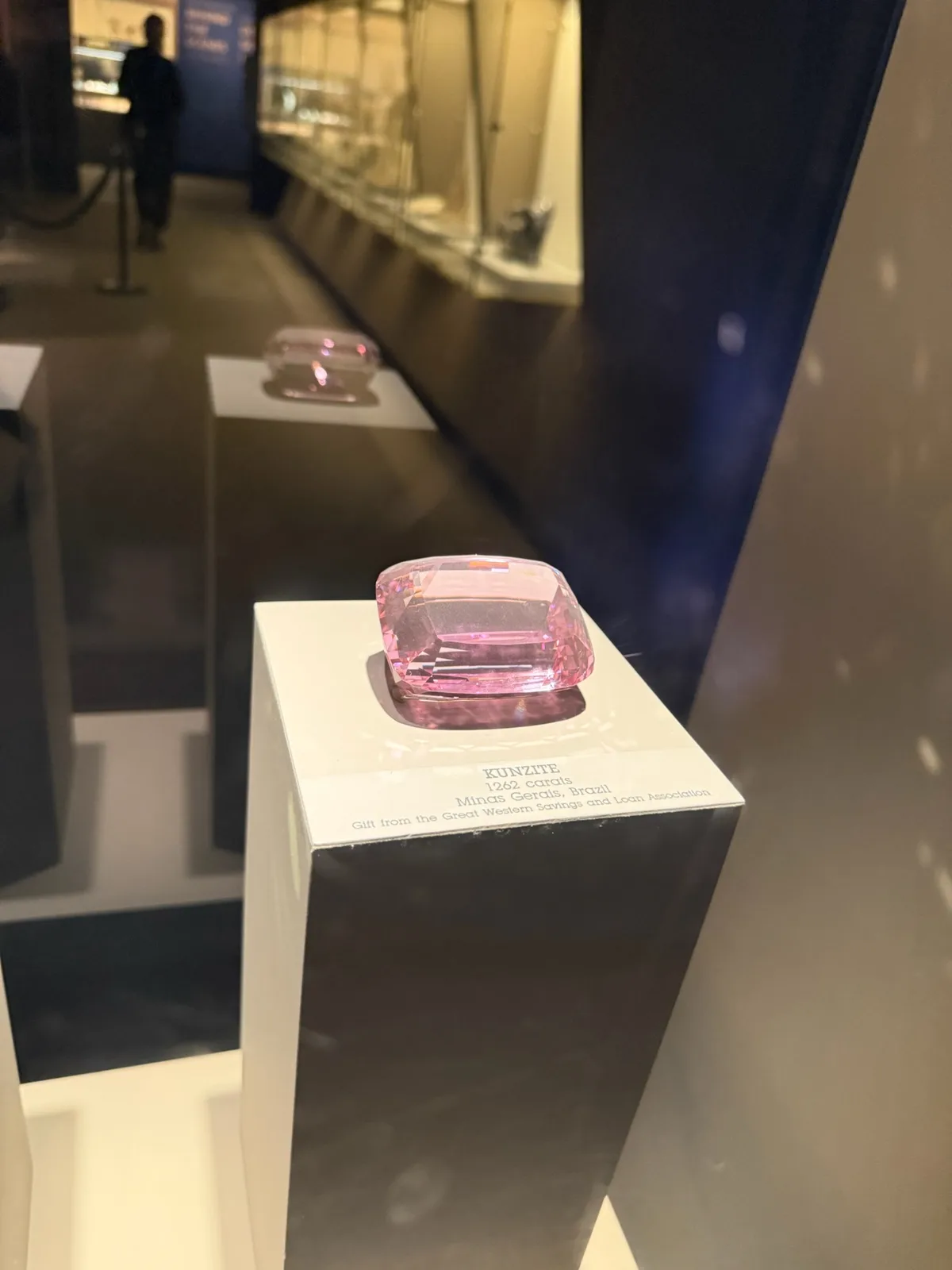
The pane, before a mount
One brilliant on a white ground is the sit in a single face. Lilac through the middle, a pink that stays cool, a window that does not ask a warm metal to explain it. You would name that hue before you asked for a claw. A morganite of a similar size would have given a peachier rose. A tourmaline would have spent the pink as a hotter center. This stone is already the season’s temperature, and the temperature is a pane.
The planes are only how the light gets in. The appetite is the lilac. A mount can come later. Turn the stone and the color can go paler — spodumene keeps that second weather — and a jeweler still sets the pink the chair receives. The pane is the fact. The angle is only the weather around it.
A window cut large
A marquise of more than five hundred carats spends the same appetite as size. Brazil, a museum case, a boat of lilac long enough to be a field. You would meet the length before you asked for a count. A small rose would have been a point of color. This is a pane you can read across. The cut is a boat. The color is the water in it.
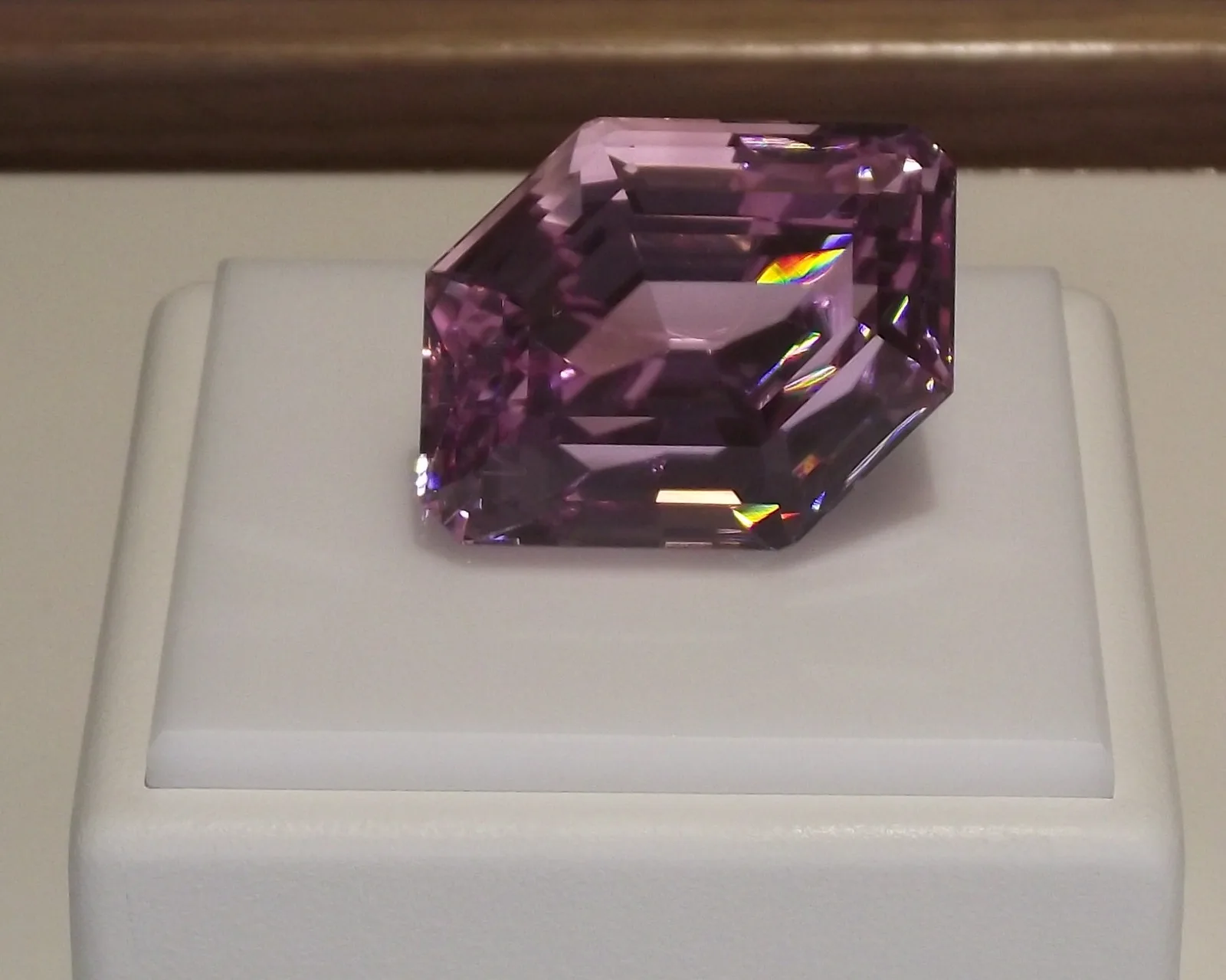
The museum light sits on the table and stays. No claw in the frame. No chain. The stone is the jewel. Morganite can be pale and still be a modest center. Kunzite is often asked to be the whole climate — a soft pink that has room. You would feel the size before you named a house. The season is that room.
The other spodumene
Hiddenite is the green the same mineral can keep. Set beside a cut kunzite, the green is a different mind and the pink is the one the season is wearing. Same family. Two panes. You would meet the lilac before you took in the green, and both would still be spodumene.
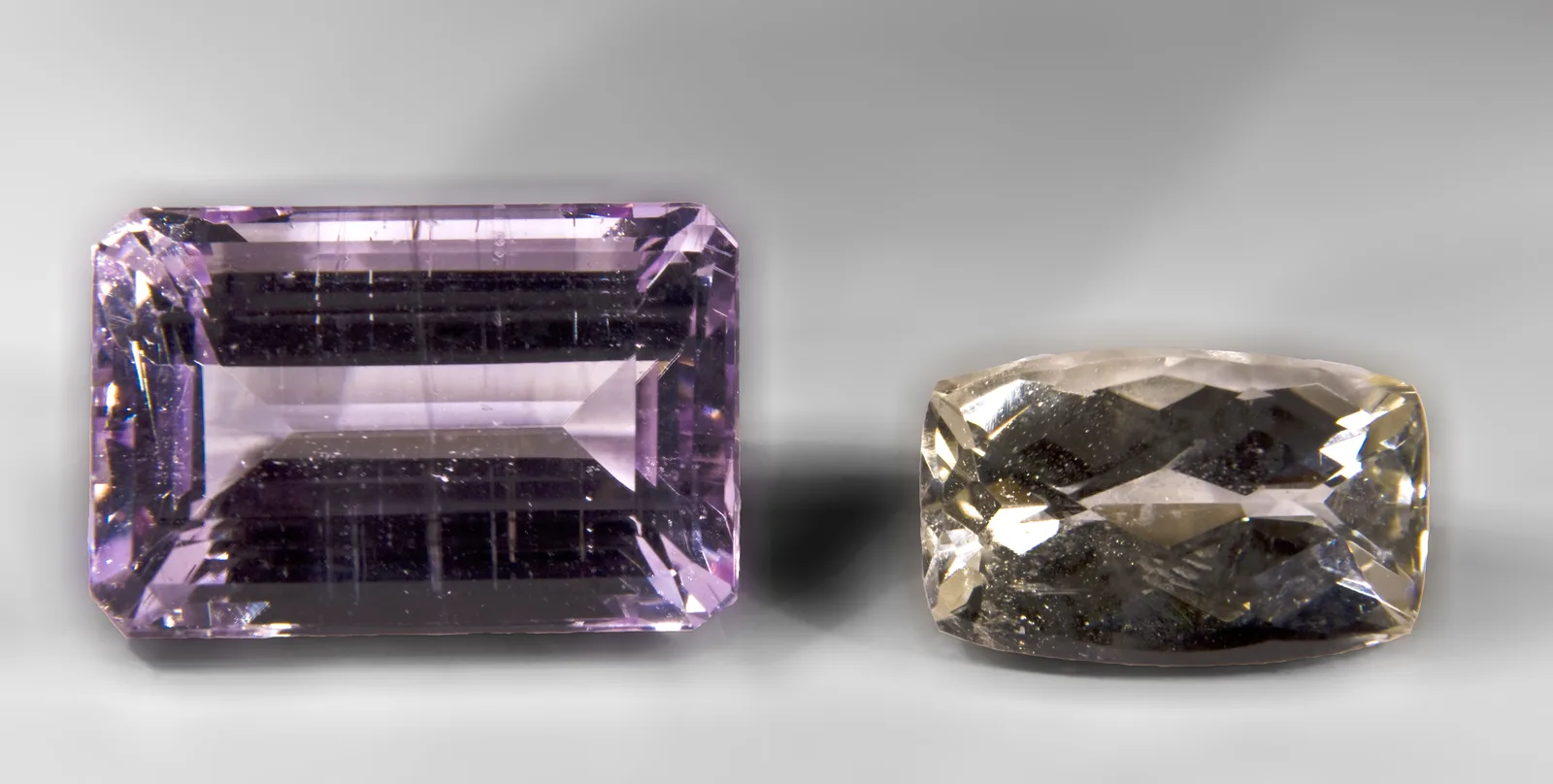
A jeweler chooses the pink and lets the green stay a cousin. A saturated tourmaline would have refused this quiet. An opaque rose quartz would have had no window to offer. The pair is the season in one comparison — a soft pink pane, and the green the mineral also knows how to be.
The claw, when it comes, only agrees to hold the direction a cutter chose. The lilac stays in the stone. That is the season. A peach that has already decided to be morganite is a different sit. This one is a soft pink pane, large enough to be the light.
That is the season sit. Kunzite as a soft pink pane. A brilliant that wears the hue. A marquise that gives the hue a length. A pink set beside its green cousin — a stone you wear as a window.
Educational only · Not jewelry, insurance, or legal advice