Imperial topaz as a warm peach
The months have gone toward peach and a deeper gold, and the topaz that answers them is not the cool blue. Imperial topaz is the warm one: golden, a yellow-orange, a peach the crystal grew and a cutter only opened. Blue topaz keeps a light that reads cold, a brightness with the temperature of sky. Citrine keeps a honey of quartz. Heliodor keeps a golden beryl. Hessonite keeps a cinnamon in the garnet. Spessartine keeps a mandarin fire. Padparadscha keeps a pink-orange that belongs to sapphire. This topaz holds one warm body of color, and the holding is the jewel.
A pane that spends the peach
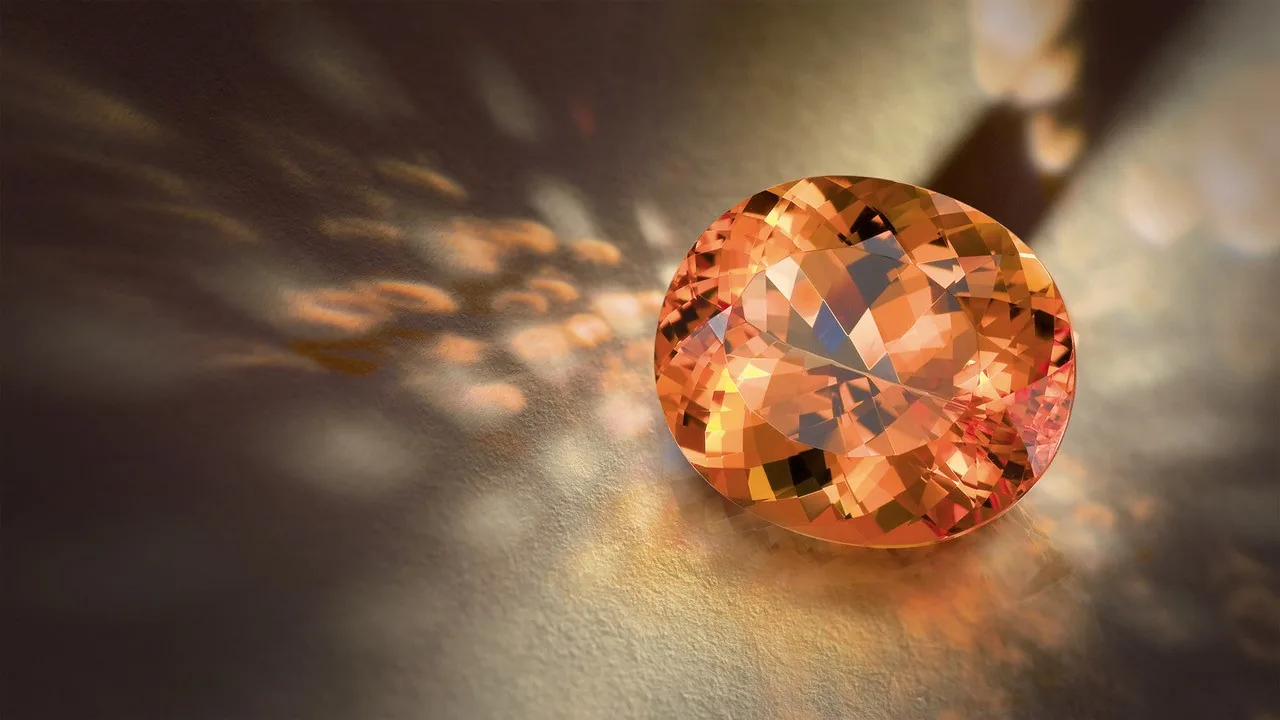
An oval of imperial topaz sits on a dark ground and spends the color as a single window. The hue arrives before any story about a mine. Golden through the center, a pink riding the edge where the facets turn, the whole stone warm enough that the dark only makes it clearer. A cool blue of this outline would have been the other topaz, a light aimed at sky. A honey would have been citrine. A cinnamon would have been hessonite. This oval is topaz asked to be worn as a peach: transparent, the pavilion returning one warmth, the table a small room the color can stand in.
What stays with you is how little the stone has to borrow. The orange was not painted on. It is the mineral, opened. Daylight is enough. A darker cloth this season does not have to argue with it. It gives the peach a chair. You would pick the stone out of a tray by the warmth alone, before you asked which blue had been set aside. That is the manners of this gem when the months want a fruit color that is still a crystal: one hue, clear, willing to be the warm thing on the table.
The oval is the worn end. Topaz takes a polish that lets the peach stay clear, which is why a wheel can turn the mineral into a pane without clouding it. Ouro Preto, in Minas Gerais, is where that color often shows while the mineral is still a crystal. The cut stone is the promise kept. The prisms are the promise in its first chair. A facet here is only a wall the yellow-orange can stand against, so the peach reads as a body and not as a flash that leaves.
A prism that keeps the gold inside
A crystal from Ouro Preto, 3.9 by 0.8 by 0.5 centimeters, 17.55 carats, spends the peach before any facet. Long, striated, glassy, a golden-orange you can see into, complete along its length. The transparency is the first meeting. Light enters faces the mineral grew. The color deepens where the prism is thicker and stays a lighter gold where it thins. No table has been cut. The brightness is already the species.
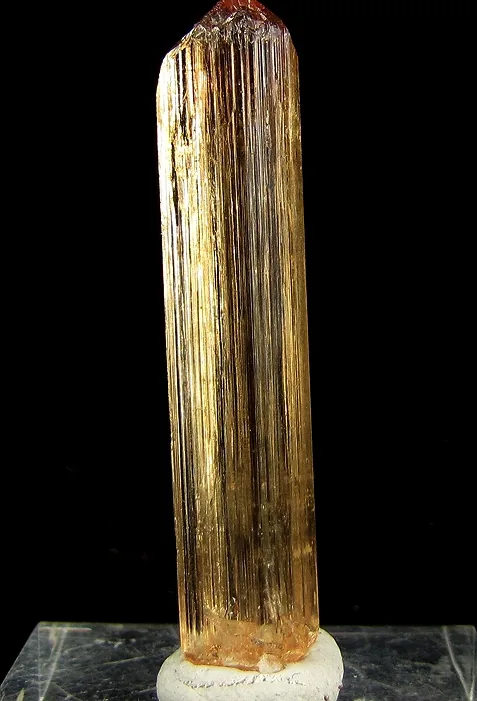
Many warm stones of this appetite arrive as a grain, the color a skin. This one is a prism, so the yellow-orange has a length. A citrine point of this gold would have been quartz’s honey. A heliodor would have been beryl. A spessartine would have been a garnet’s mandarin, rounder in the habit. This body is topaz, the same mineral the oval was cut toward, caught while the color is still a depth in a crystal. Set the faceted stone beside it and you are still in one gem. The oval spent the peach as a pane. This spends it as a line you can look through.
The striations are the crystal’s own drawing, fine lines the mineral laid down as it grew, not a wheel’s bright cut. They catch and let the gold travel. A blue topaz of this length would have asked for a cool that this crystal never grew. The gold is not a coat. It is the mineral, transparent, already the color the cut stone only makes easier to wear. You would cover the carats with a look and still have the hue left over: a prism, golden, willing.
Ouro Preto keeps giving the season this chair. The prism is the stone before jewelry finishes it. Bright, striated, complete. Nothing in the still asks the color to change when a lamp comes on. The peach is finished in one light, which is why a darker month can use it. The warmth does not wait.
A shorter body of the same warmth
A second crystal from Ouro Preto, squat, 1.2 by 1.0 by 0.7 centimeters, spends the habit the long prism set aside. Fat, complete, a golden-orange block on a white ground, the faces the mineral grew rather than a wheel. The outline is the first meeting. Where the prism was a line, this is a small room: more width, the same warmth, a body you meet all at once.
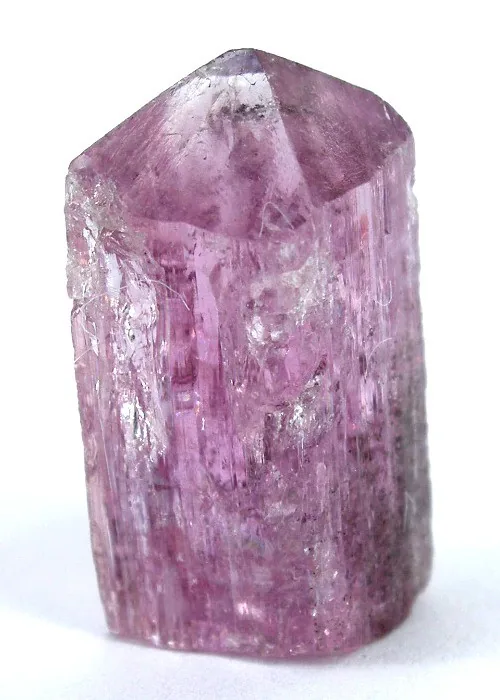
The oval was one window. The prism was one length. This squat crystal is the species in its shorter chair, the color packed into a thickness, glassy, the peach not depending on a long path to be seen. Nothing in the still is a blue. Nothing asks the color to be a sapphire’s pink-orange. The brightness is structural: fewer centimeters, the same yellow-orange, a crystal you read as imperial topaz before you read it as a specimen. A scatter of hessonites would have needed a cinnamon to multiply a warmth. Here one short body is enough.
You would turn it and the faces would keep agreeing. Each plane is a small window the mineral grew, and the color does not step aside when the plane changes. That is the difference from a stone whose hue is a treatment or a coat. This gold is in the body. A thinner prism spends it as a line. This one spends it as a room. The oval, later, spends it as a pane you can set. Three chairs, one peach.
Three stills, one warmth. The oval lets imperial topaz be a jewel, a peach spent as a pane. The prism lets the same color be a length you can see into, 17.55 carats of golden-orange, striated and complete. The squat crystal lets the mineral sit as a small room and keep the hue in a thicker body. A cool light can still be blue topaz. A honey can still be citrine. A golden beryl can still be heliodor. A cinnamon can still be hessonite. A mandarin can still be spessartine. A pink-orange sapphire can still be padparadscha. This season’s stone is the one that stays a warm peach topaz grew: imperial, transparent, already the color.
That is the sit. Imperial topaz as a warm peach. A cut oval, a long prism, a shorter crystal — the warmth, worn when the months want a fruit color that is still a gem.
Educational only · Not jewelry, insurance, or legal advice