Hessonite as a cinnamon light
Hessonite is this season’s cinnamon light. The stone is grossular, and the variety is the one in which orange has taken up a brown. Garnet, elsewhere in this palette, can be a warm red. Spessartine can be a mandarin fire, orange and bright. Carnelian can be an orange skin, chalcedony closed and warm. Citrine can be a quartz honey. Heliodor can be a golden beryl. Amber can be a resin. Sunstone can be a spark in a feldspar. Rubellite can be a saturated pink. Rhodochrosite can be a rose that manganese made. Hessonite arrives already cinnamon: a brown-orange the crystal grew, ready to be a pane, a cluster, or a group in a case.
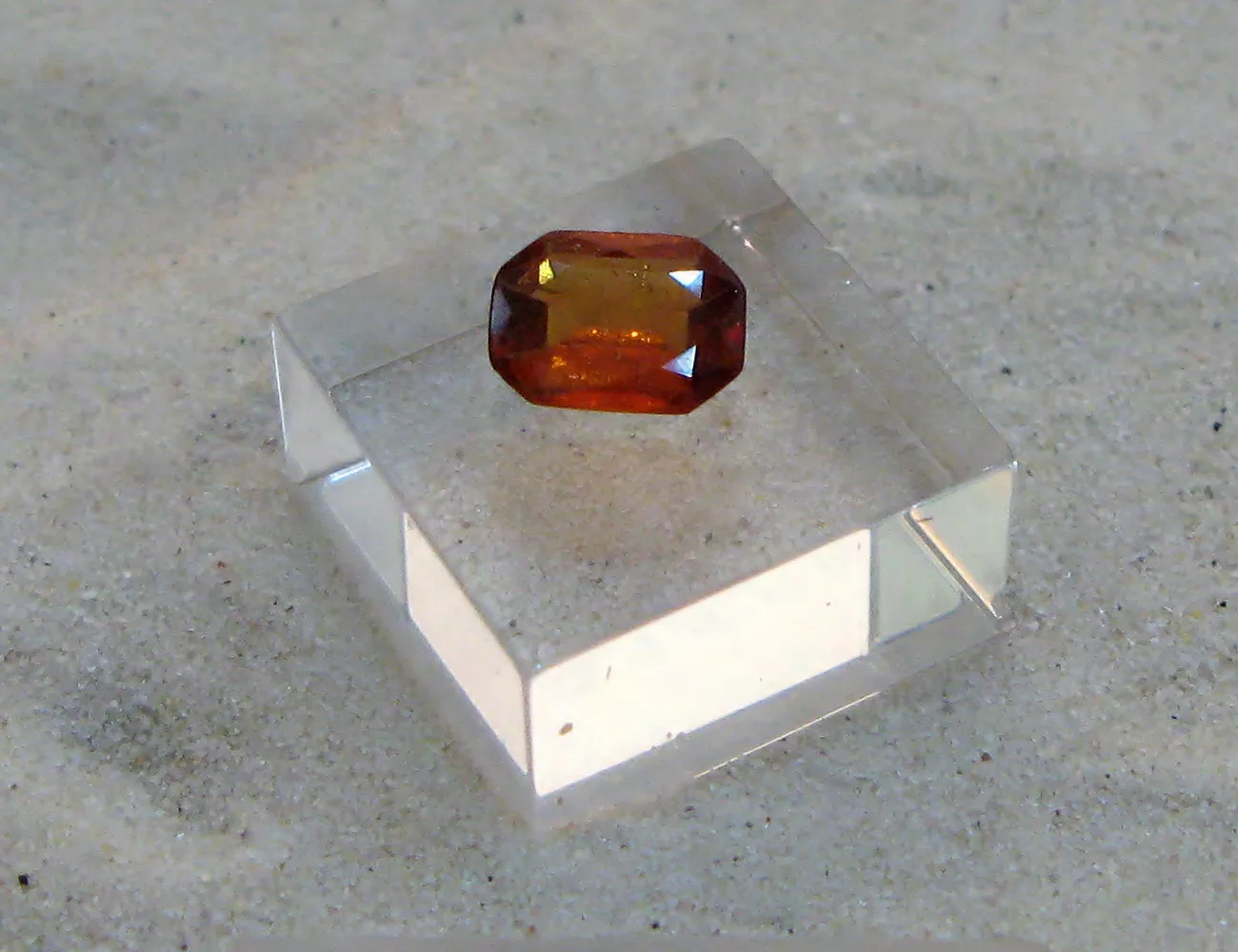
A pane of cinnamon
A table-cut stone from Ceylon, in the Mineralogical Museum at Bonn, spends the color as a jewel. The outline is a soft rectangle with the corners eased, the table a wide window, the pavilion a quiet depth under it. You meet the cinnamon before you ask the carat. Orange, and inside the orange a brown, so the pane reads as spice. The light sits in the body of the grossular. A sunstone would have glittered from inside a feldspar. A carnelian would have stayed a closed skin. This table stays open, and it stays brown-orange.
A mandarin of this appetite would have been a brighter fire, spessartine’s orange with the brown left out. A golden beryl would have stayed yellow, heliodor’s gold, another mineral’s pane. A wine-red garnet would have spent the same family as scarlet. This window is grossular of the cinnamon kind. Autumn already knows the brighter orange, the honey, and the resin. Hessonite sits beside them as the grossular that kept the brown, a cinnamon for months that already own a brighter orange.
The cut keeps the color company. The table is wide enough that the cinnamon reads as a field, a small window of grossular you could set and still meet as a color before you meet it as a cut. That is the wear. The light is already organized, already a pane, and a mount only has to hold it.
Crystals the garnet grew
A group from the Valle della Gava, at Voltri in Liguria, spends the same grossular as crystals, about five to eight millimeters, on a white ground. The faces are the garnet’s own, the little planes a garnet agrees to grow, the color a warm cinnamon across the cluster. You meet the habit before you ask the valley. Bonn gave the color a pane. This gives it a crowd of crystals, each one already a geometry.
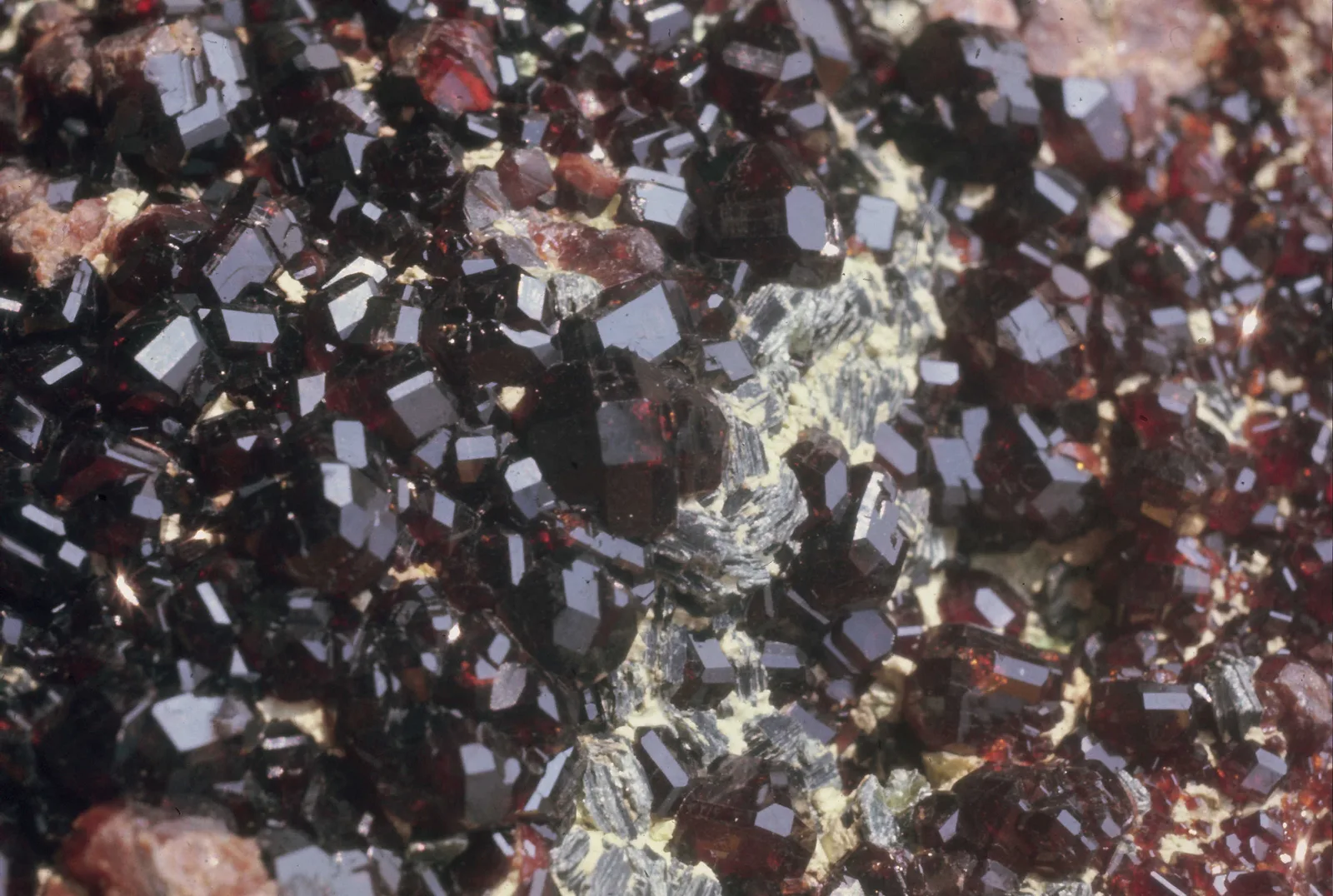
The pleasure is the brown in the orange at a size you can read across a table. Light enters a face and the cinnamon deepens toward the center of the crystal, so the color is a depth and not a wash on the surface. A red garnet of this habit would have gone toward wine. A spessartine of this habit would have gone toward citrus. These stay in the spice. The season’s jewel is that agreement: the color and the habit arriving together, before a wheel is invited.
Hold the scale. Five to eight millimeters is a crystal’s size, large enough that the faces are a drawing, small enough that a cutter can imagine a pane taken from a clear one. The Ceylon table is that imagination already carried out, in another stone, from another ground. Liguria keeps the rough of the idea, a cluster of cinnamon chairs.
The same light, in a case
Terra mineralia at Freiberg holds a hessonite from Vápenná, in Moravia, as a museum group. The crystals here let the brown come forward: a deeper cinnamon, reddish-brown on a pale matrix, a label beside them, the case a quiet room. You meet the dusk in the variety before you read the card. The orange is still in the stone. The brown is simply louder, which is the same fact the Bonn pane kept softer.
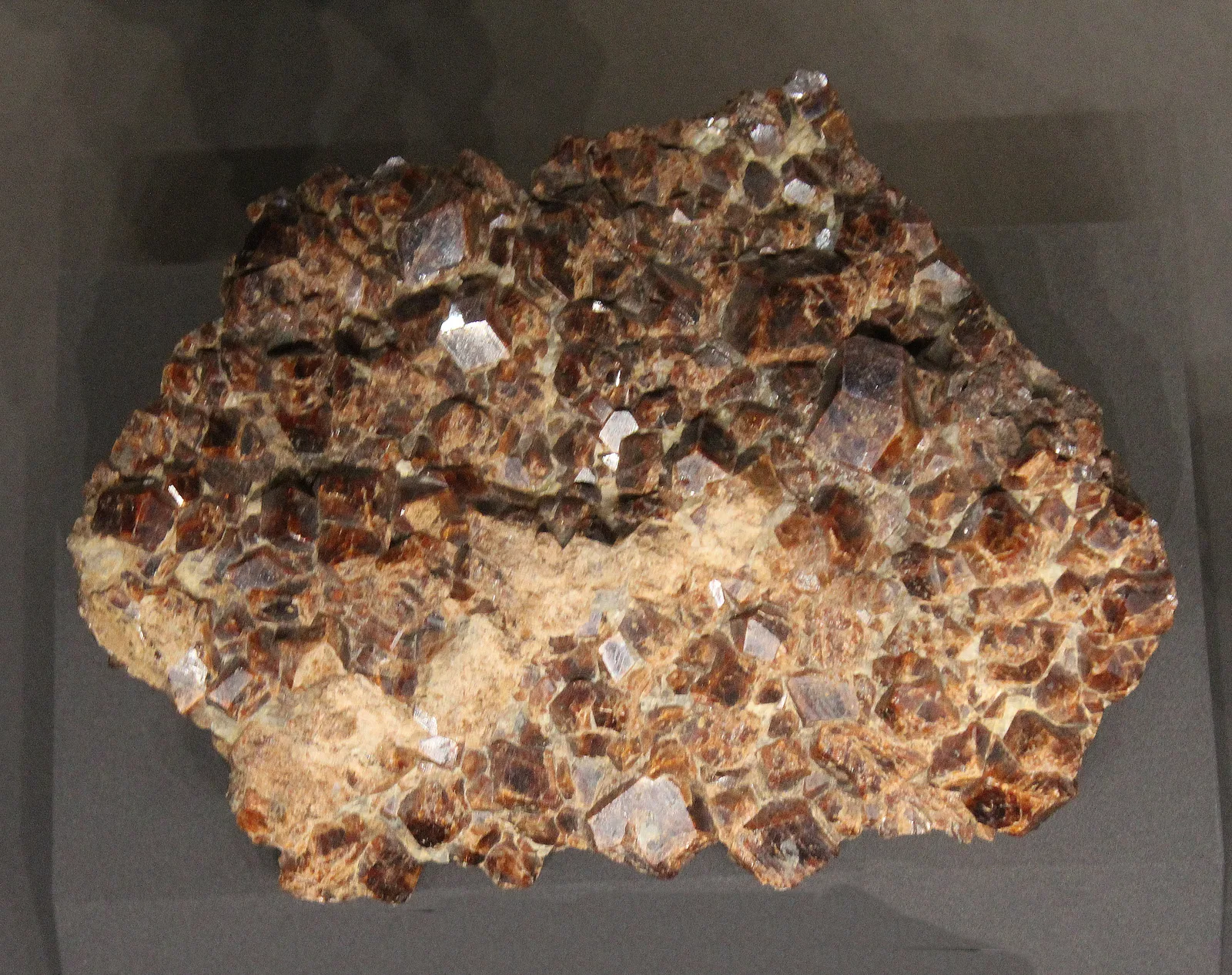
A resin in that case would have stayed closed, amber’s warm skin. A rose carbonate would have gone pink, rhodochrosite’s manganese light. A pink tourmaline would have left the brown behind and arrived as rubellite. This group stays grossular. The museum gives the deeper end of the cinnamon a room. The light was already in the crystals: Bonn let the orange lead, Liguria let the faces glitter, Freiberg lets the brown have its say.
Three stills, one cinnamon. Bonn lets it be a table-cut pane, a jewel of orange-brown. Liguria lets it be the crystals the garnet grew, faces and all. Freiberg lets it be a museum group, the same light in a case. A warm red can still be worn as garnet. A citrus orange can still be worn as spessartine. A skin can still be worn as carnelian. A honey can still be worn as citrine. A golden crystal can still be worn as heliodor. A resin, a spark, a pink, a rose, each keeps its own chair. This season’s warm stone is the one that arrives as cinnamon grossular.
That is the sit. Hessonite as a cinnamon light. An orange-brown body, cut as a pane or grown as crystals or kept in a case, worn when the months want a garnet with brown in the orange.
Educational only · Not jewelry, insurance, or legal advice