Grand Seiko, a dial with a skin
Before a logo, a surface. Grand Seiko lets the dial be something you could almost touch with your eye: a skin, a field, a finish that holds the hour. An Accutron opens on a fork you can hear, the works left in the room. A Milgauss puts a lightning hand on the seconds and lets the bolt be the first fact. A Tangente opens on a Bauhaus face that sits, almost no voice, a diagram. An Explorer opens on a black that climbs. A Calatrava opens on a circle dressed and plain. Grand Seiko opens on a surface. The hour is still told. The skin is what you remember.
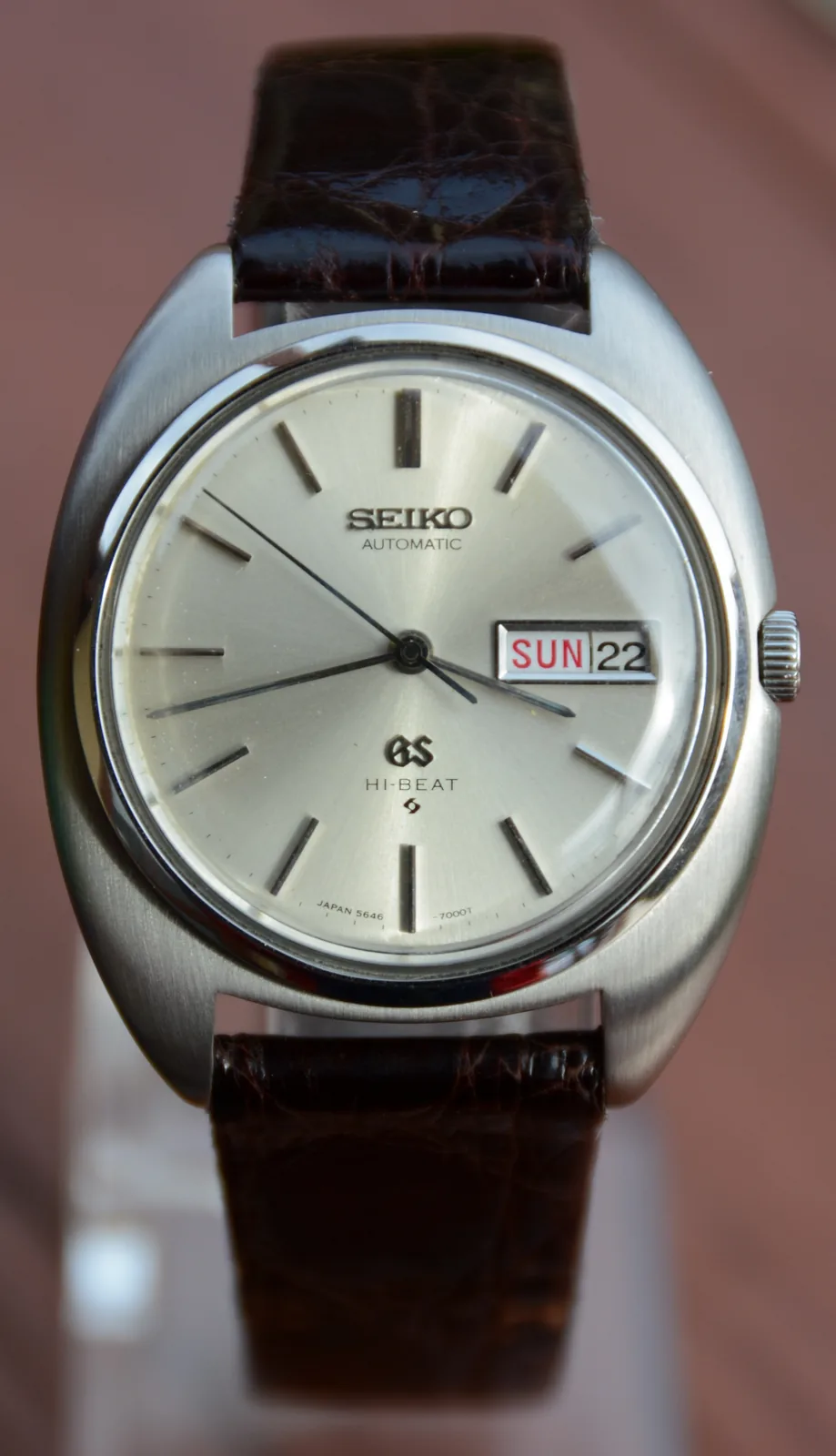
A field that names its beat
An automatic Hi-Beat, off the wrist. The dial is a field. Applied indexes, a date, the words for the house and for the automatic, and a line that names the beat, the hour still readable and the surface left quiet enough to be the jewel. The field is the first meeting. Nothing in the plate is a wrist. Take the name away and the watch still says the same thing: the face was finished as a material, not as a sketch.
The quiet is the manners. Another house might have laid a bolt or a counter across this and let the drawing be the jewel. Here the jewel is the decision to let a field hold the hour, and to let the beat be a line of type rather than a trick of the hand. Markers hold the hours. The date keeps its little aperture. The rest is a surface, brushed and lit, asked to stay beautiful while it works. You would name the watch from the field and from the way the indexes sit, before you counted a jewel. The case does the work of a mount. The dial does the work of a stone: a plane with a finish attached, the fact the eye returns to.
The scale of that decision stays a jewel’s scale. The watch is still a round on a bracelet, still a thing arranged to be fastened, and the field does not turn it into a tool laid out for a bench. Off the wrist, the picture is complete. You are looking at a surface that has agreed to tell the time, and the time is what the surface was willing to carry. A fork would have asked to be seen. A lightning hand would have asked to be the drawing. This dial asks to be met, the way a cloth asks to be met, and then it gives you the hour.
The indexes catch. The hands cross a plane that has already decided to be calm. Hi-Beat, here, is not a noise. It is a fineness the dial is willing to admit in a line, while the surface stays the thing you came for. A fluted ring would have made the bezel the first fact. This bezel stays a thin frame, and the color of the watch is the color of its own face: a silver field, a dark stroke of hands, the beat written small enough that the field can remain a field.
The same idea, with a weather
An SBGA011, the Snowflake, spends the surface as a texture. Off the wrist, a black ground, the dial a pale field that is not a blank: a fine grain, a weather, something between snow and a silk, and the indexes applied on top of it as if the texture were already a ground. A power reserve keeps a small place on the face. The hour is told. The skin is the fact. You meet the grain before you meet the hands.

The Hi-Beat gave the surface as a quieter field, a plane that could almost be one color. The Snowflake gives the surface as a weather you can see has been made. Two watches, and the skin is the icon’s constant. A sunburst would have made the dial a flash. A blank diagram would have made it a face with nothing to touch. This grain gives the hour a cloth. On a black ground, with no wrist in the picture, the watch is simply a dial you are allowed to study, and the study ends at the texture. The shape is enough. The weather is the memory the shape keeps.
Set the Hi-Beat beside this Snowflake and you are still reading one sentence. The face has a surface. On one, the surface is a field that names its beat. On the other, the surface is a grain the indexes agree to stand on. The bracelet is a line of links. Attention goes to the dial, and the dial does not send you inward yet. It keeps you on the skin. A date on the Hi-Beat, a reserve on the Snowflake: each is a small honesty, and neither is the reason you stayed. You stayed for the finish.
Under the skin, another surface
Caliber 9S65, the automatic that belongs with reference SBGR051, spends the idea one layer down. The movement is shown on its own, a round of bridges and stripes and a small architecture of metal, the house mark still in the picture so the finish has a name. This is not the Hi-Beat and not the Snowflake. It is a third piece, met by the surface it keeps inside. The stripes are the first meeting. They are not a dial. They are the same appetite: a plane finished until it can be looked at.
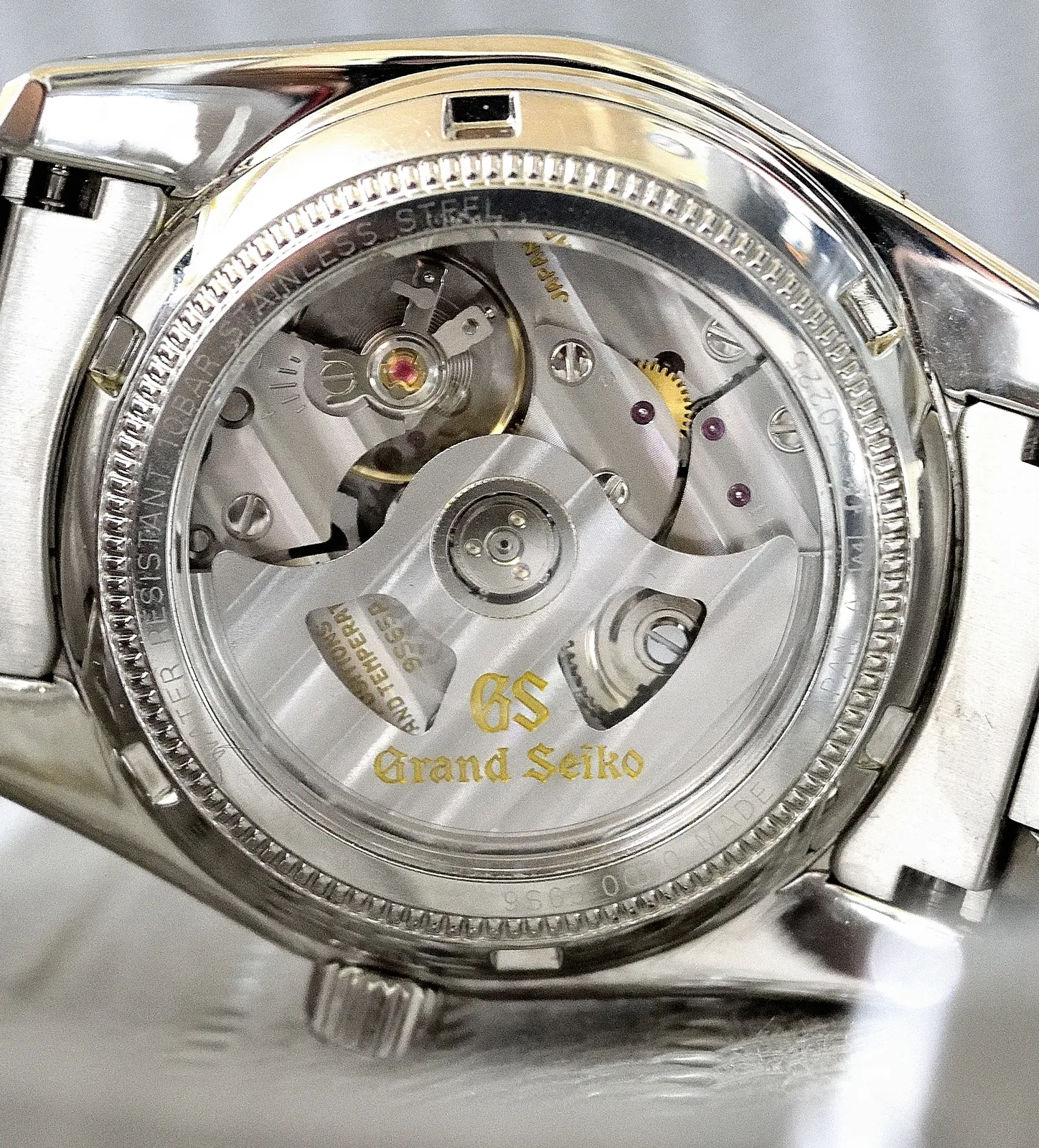
The closed dials let you wear the surface as a face. This one lets you see that the appetite continues under the hands. A fork left open would have made the mechanism the jewel by leaving it bare. Here the mechanism has been dressed: stripes, a polish, a bridge asked to be calm. You would know the finishing before you counted a wheel. The rotor does its work at the edge. The stripes do the work of a skin. Nothing in the still is a wrist. The movement is simply a round you are allowed to study, and the study ends at the finish.
That dressing is why the dials above it can be so quiet. A field can stay a field, a grain can stay a grain, because the fineness did not all have to happen on the front. Some of it was saved for the bridges. You meet the skin first, which is the icon’s order. Then, if the case is opened in a photograph, you meet the skin again, smaller, striped, still a surface. The hour was never the only thing being finished.
Three stills, one surface. The Hi-Beat lets the dial be a field, the beat a line the field is willing to carry. The Snowflake lets the same idea become a grain, a weather the indexes stand on. The 9S65 lets the surface go under the dial and stay a finish, stripes on a movement from another reference. A fork can still hum in an Accutron. A bolt can still cross a Milgauss. A diagram can still sit. A black can still climb. A circle can still dress. On a Grand Seiko, you meet a skin.
That is the icon. Grand Seiko, a dial with a skin. A Hi-Beat field, a Snowflake grain, a caliber finished in stripes — the surface, already the thing you meet.
Educational only · Not jewelry, insurance, or legal advice