Girandole, a chandelier at the ear
A girandole is read downward. The ear holds the top. Everything else is hung, and the hanging is the jewel. A cluster can sit in one mass and be finished when the mass is full. A single pear can drop and stop, one line, one end. A girandole keeps a joint, and then three drops, so the bottom of the earring is a small chandelier rather than a point. You count before you name the stone. One at the lobe. A flower or a bow in the middle, the piece that agrees to carry weight. Three below, each on its own small hinge, each allowed to move. Cover one of the three and the word fails. The count is the icon.
From the lobe to three
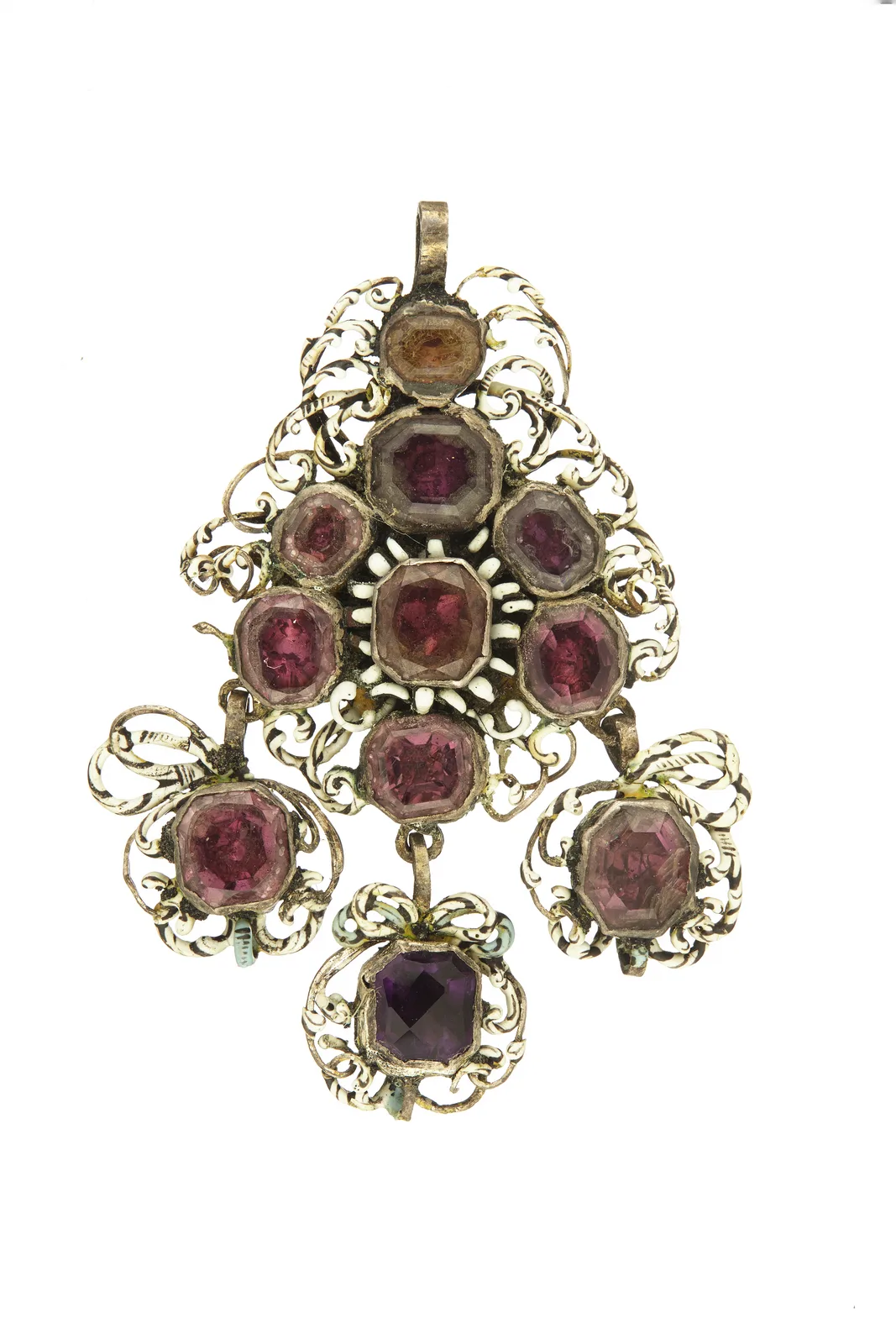
One earring, late seventeenth century, at the Livrustkammaren. Silver, table-cut amethysts, enamel on the leaves. A single stone at the top, where the ear would take it. Under that a flower of stones, one in the middle and six around, the purple repeating until it reads as a bloom. Under the flower, three pear drops, each its own amethyst, each hung so it can move when the head turns. The three are the word. Cover the top stone in your mind and the chandelier is still there. Cover one drop and the count fails. That is the form before it is a style: not a richness of stones in general, a decision to end in three.
The table cut is a kindness to that lesson. A brilliant would have thrown a fire and asked you to watch the fire. These amethysts sit as panes, octagonal, quiet, so the structure can be the first meeting. White enamel leaves with small dark details give the silver a second handwriting, a garden around the stones, and they do not replace the count. You would name the earring from the three pears and from the stone at the top, before you asked which decade had set the enamel. The back of a piece like this often carries another enamel, a private flower the wearer feels and a room does not see. The face is the chandelier. The face is what the icon keeps.
The scale is an ear’s scale and still a little more than an ear expects. A girandole of this century was willing to be looked at across a room. The movement is the rest of the manners. Each drop is independent, so the earring is never quite still, and the unstillness is not a flaw in the mount. It is the point of hanging three things instead of fixing one plaque. A cluster that cannot move is a different jewel. This one is built to answer a turn of the head.
A bow that ties the drops
A pair from the same decades spends the joint as a ribbon. Silver, faceted garnets, white enamel leaves with dark veins, a bow at the center of each earring and three pear-shaped garnets hung beneath it. Livrustkammaren, the pair kept together. The bow is the first meeting after the red. It is the knot that agrees to hold the chandelier up. Without it the drops would be three loose pears. With it they are a set, aimed, a small architecture under the ear.
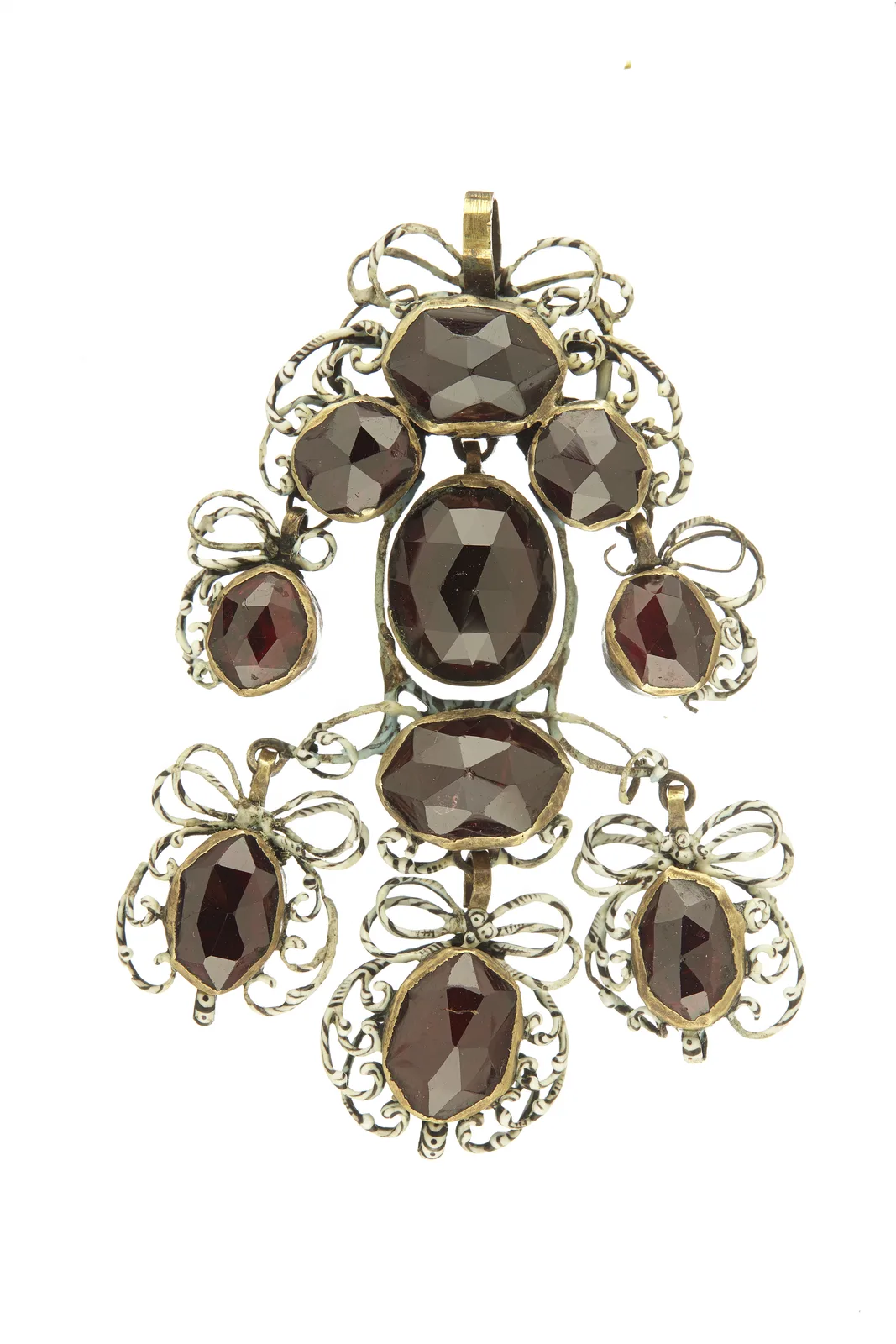
The amethyst let you read one earring as a diagram: top, flower, three. The garnets let you read the joint. A ribbon bow is a different sentence from a flower of seven stones, and the sentence still ends the same way. Three drops. Red this time, the garnet a warm body rather than a purple pane, the enamel still a leaf-language around the mounts. You would know the pair from across a cloth by the bows and by the count under them. Two earrings, and neither is a second angle of the amethyst. The form traveled. The stone was free to change.
Set them beside the single amethyst and the icon’s constant is the downward reading. Ear, joint, three. The garnet pair makes the joint obvious because a bow is a thing we already know how to see: a tie, a knot, a place where ribbons agree. On an earring the bow is doing structural work. It gathers the drops. It gives the eye a pause between the lobe and the lowest stones. A rivière is a line that does not need that pause. A solitaire is one stone and no pause at all. The girandole wants the pause, and then it wants the three.
The enamel on the reverse, turquoise and floral on pieces of this family, is a second room. You do not need it to know the chandelier. You need it if you are the person wearing the earring, a cool color against the ear, a finish the mirror keeps. The face remains the red and the bows and the three pears. Care follows the hinges. A girandole catches on a knit and on a careless chain. The drops want their own soft place, not a jumble that bends a jump ring. The bow is the jewel’s height as much as the stones are. Leave the ribbons their curve.
Pearls in the same descent
An eighteenth-century pair, at the Hallwylska museet, takes the descent into diamonds and Scottish pearls. Gold and silver, the middle of the eighteenth century. Each earring still begins where an ear can hold it, still passes through a clustered middle, and still finishes in pendants — a pearl among them, the brilliant-cut stones carrying the light the older table cuts had kept quiet. The count has not been retired. The materials have been allowed to brighten. A pearl is a different body from a garnet pear. It does not facet. It glows. Hung at the bottom of a girandole, it becomes the lowest lamp in the chandelier, the one that does not throw sparks and does not need to.
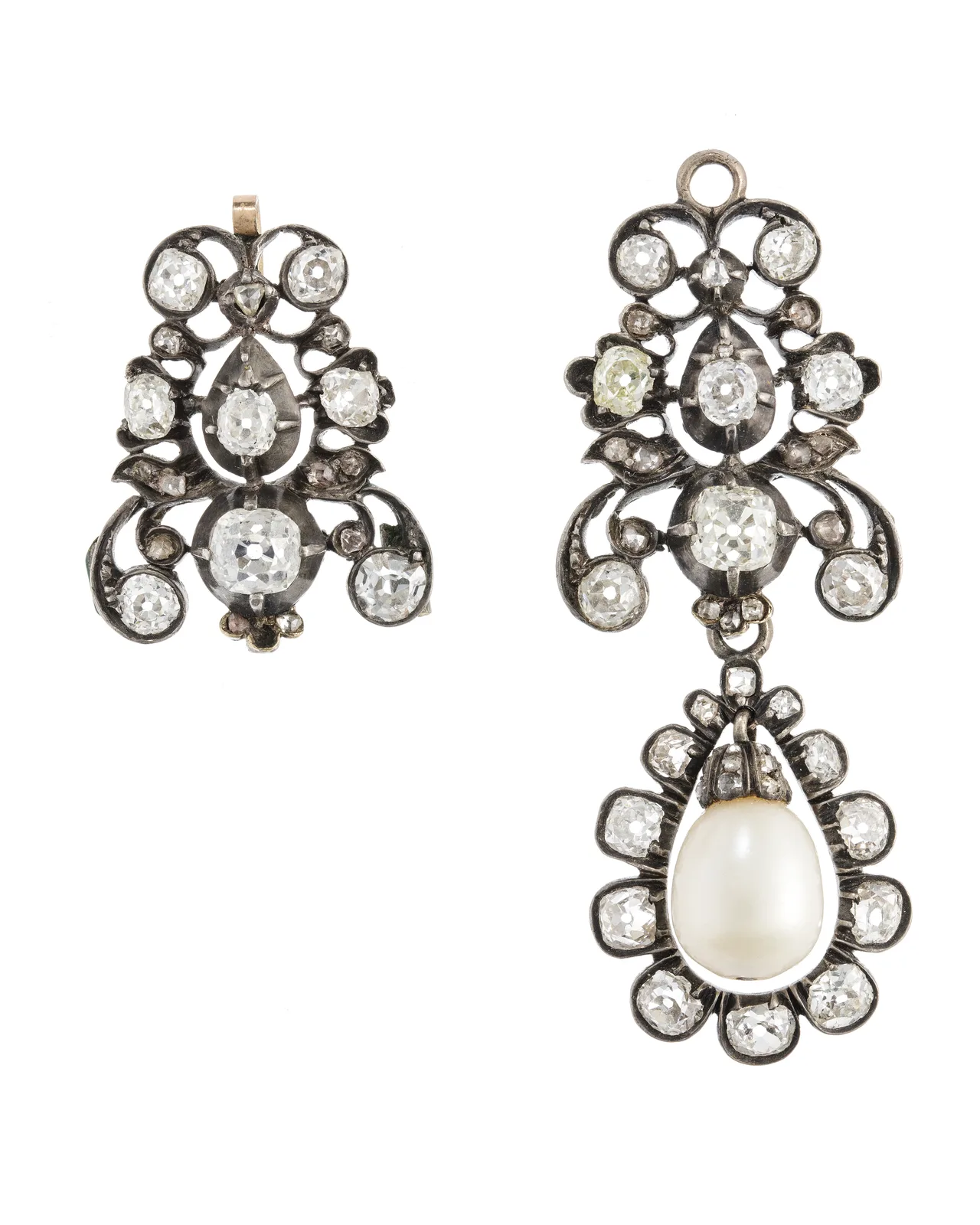
The amethyst was a diagram in purple panes. The garnets were a bow you could name. This pair lets the same downward order wear a brighter grammar: diamonds for the fire, a Scottish pearl for the soft light at the end of the drop, gold and silver sharing the mount the way an eighteenth-century ear liked them shared. You would still read it from the lobe downward. The top is what the ear accepts. The middle is the joint. The bottom is where the earring decides to be a chandelier and not a single line. Nothing in the still is a wearer. The pair is complete on the cloth. Off the ear, the picture is already the icon.
That brightness does not change the care. Diamond edges and a pearl want different kindnesses, and a girandole asks for both at once. A pearl wants skin and a soft cloth, and it does not want a perfume bottle. A diamond can take more, and the small hinges between the tiers cannot. Store the pair where the drops are not asked to bend. The movement you want is the movement the goldsmith hung there, a turn of the head, not a fold in a box.
Three earrings, one direction. The amethyst lets the girandole be a count you can point to: one stone, a flower, three pears. The garnets let the joint be a bow, the ribbon that ties the drops into a set. The Hallwylska pair lets the same descent wear diamonds and a Scottish pearl, the eighteenth century brightening a form the seventeenth had already finished. A cluster can still sit in one mass. A single pear can still drop and stop. On a girandole, you start at the ear and you are not finished until you have counted three.
That is the icon. Girandole, a chandelier at the ear. Top, joint, three drops — the earring, already read downward.
Educational only · Not jewelry, insurance, or legal advice