Filigree is a drawn lace
Filigree is a drawn lace. Openwork made of drawn or twisted wire — a mesh the gold has pulled, not a plate with windows cut through it. You do not meet a row of beads. You do not meet fused spheres. You do not meet openwork plate gold, a pavé weather, a claw, a wall, a dome, a foil glow, a mystery-set tile, or a cameo profile. You feel a lace the wire has written. The literacy is the thread.
Wire is drawn until it can be bent into a sentence. Twisted, it catches the day. Soldered into a mesh, it becomes the jewel. Filigree begins when the gold is no longer a sheet. It is a line that has learned to leave air.
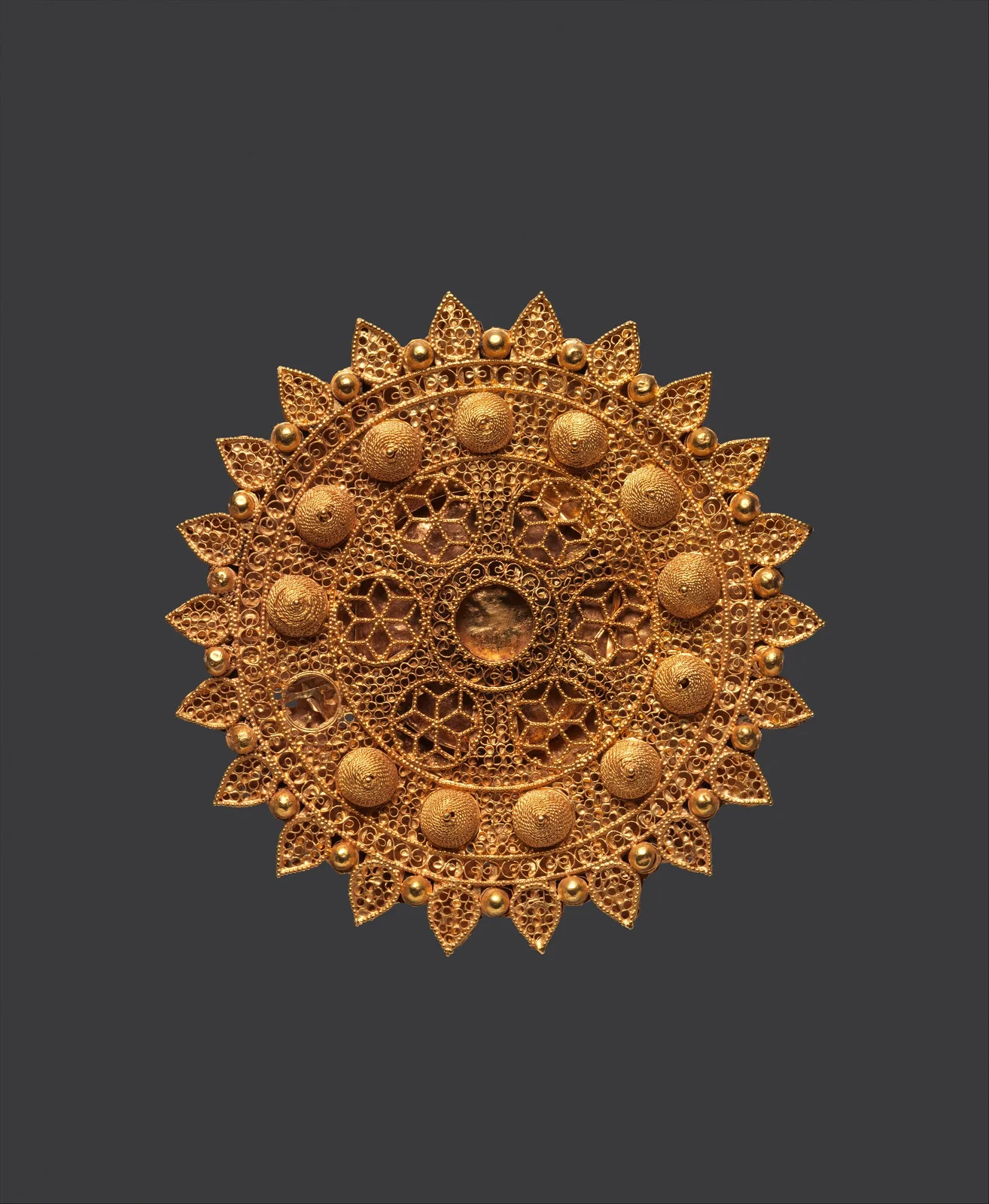
An Iranian gold roundel is the lesson in one object. Points of wire lace, domes of the same mesh, a star drawn as an open lattice. You would meet air and thread before you met a plaque. Granules sit as small pauses at the tips. They are not the work. The work is the lace: gold pulled into a screen, a disk you can almost see through. A milgrain rim would have been a dotted edge on a solid. Openwork plate gold would have been a window cut in sheet. This jewel is the thread itself.
The literacy is the pull. If the metal began as a plate, you are not yet in a lace. Filigree begins when the wire has already been drawn.
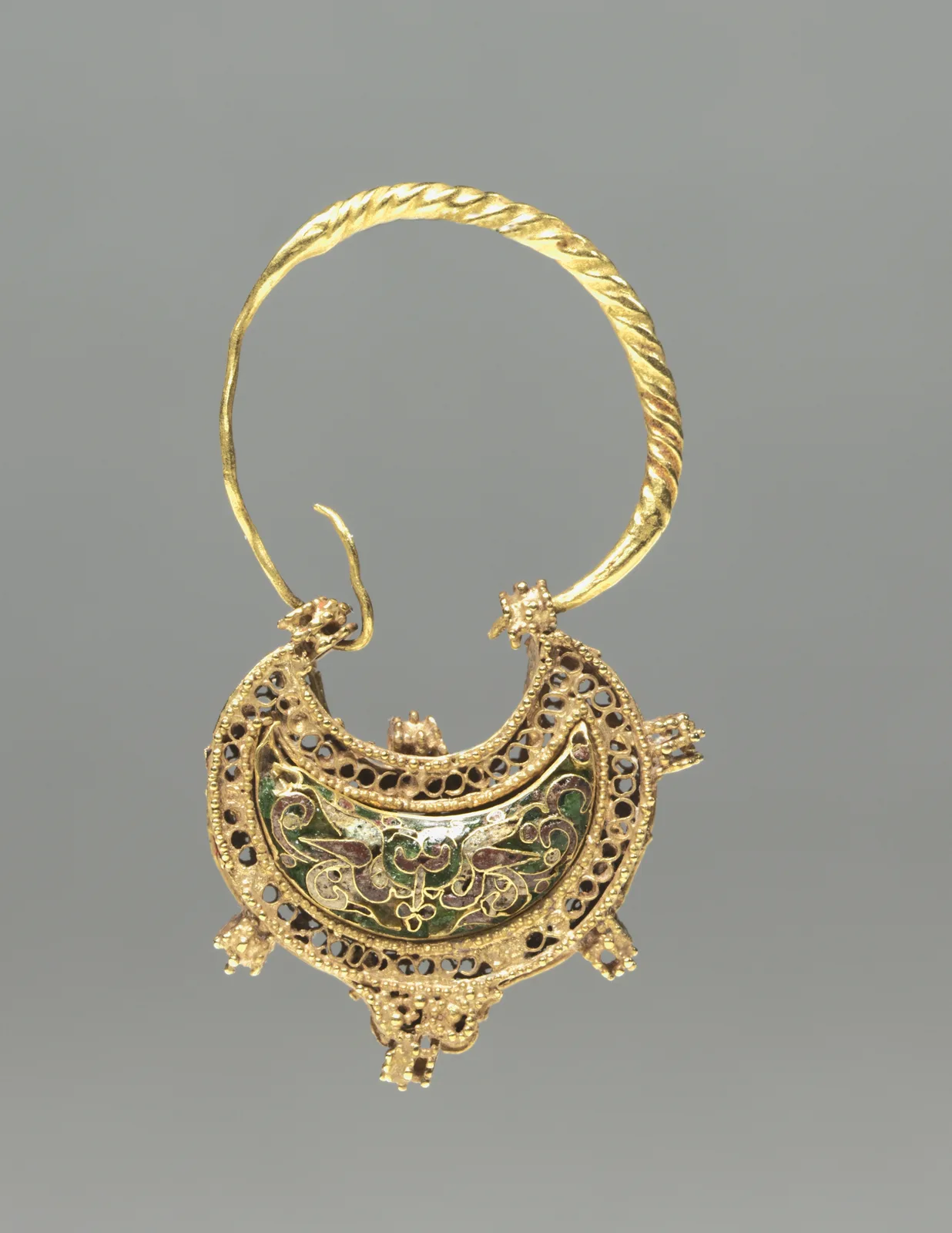
A crescent of wire, then beads that are lace
A Byzantine crescent hangs the same sit from a twisted hoop. Scrolls of gold thread, a green enamel heart, granules as tiny flowers at the edge. You would feel a boat of lace before you felt a wall. The enamel is a skin inside the drawing. The drawing is the filigree — wire pulled into rooms, air kept on purpose. A prong would have been a finger. A bezel would have been a rim. Pavé would have hidden the metal under sparks. This gold stays gold, and stays open.
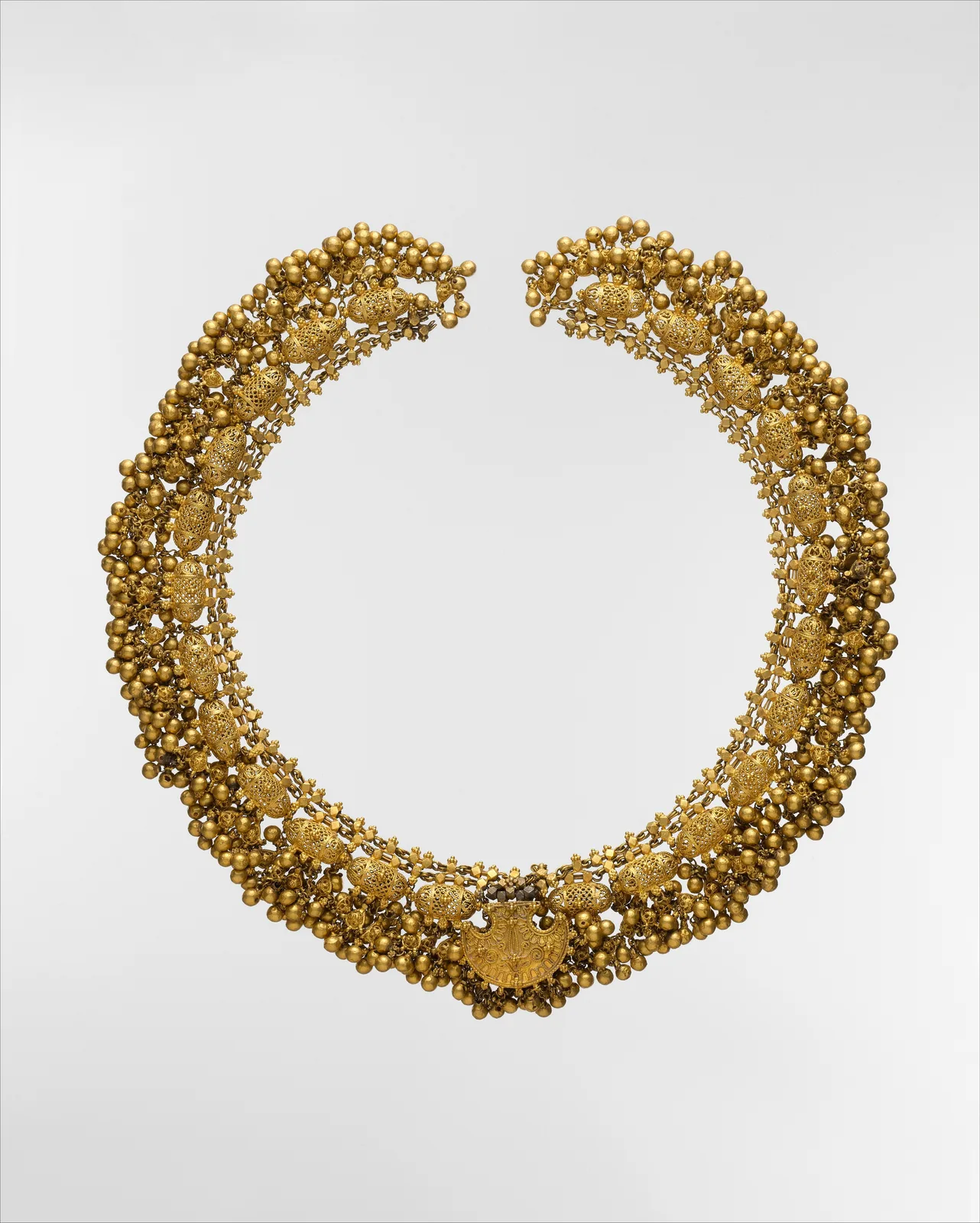
A Rajasthani necklace multiplies the lace into a line you can wear. Egg-shaped beads of gold filigree, each one a small cage of drawn wire, granules clustered between as a different thought. You would meet the mesh of a bead before you met a solid. Granulation is the fused sphere. Milgrain is a row of those thoughts along an edge. Filigree is the cage: a lace you can hold, a bead that is already air. A cabochon dome would have kept volume in a stone. A foil would have lit a gem from behind. A mystery set would have tiled a color without a claw. A cameo would have raised a profile. The filigree bead keeps the thread — drawn lace, worn as the jewel.
That is the note. A prong is a claw. A bezel is a wall. A cabochon is a dome. A foil is a mirror. Pavé is a field. Milgrain is a row of beads. Granulation is fused spheres. Openwork plate gold is a window cut in sheet. A mystery set is a tiled color. A cameo is a profile. Filigree is the drawn lace — wire pulled and twisted, a mesh the gold has written.
Educational only · Not jewelry, insurance, or legal advice