Enamel as a painted skin
Enamel is a painted skin. Color ground as glass, laid on gold, fired until it stays — grand feu, a glaze that has become the jewel. This season the houses put that skin back on metal. Chaumet’s Envol treats a wing as enamel, a painted flight already on the body — and the sit is the color, not a stone, not pavé weather. You meet a film of fired glass. The gold is the body. The enamel is the skin.
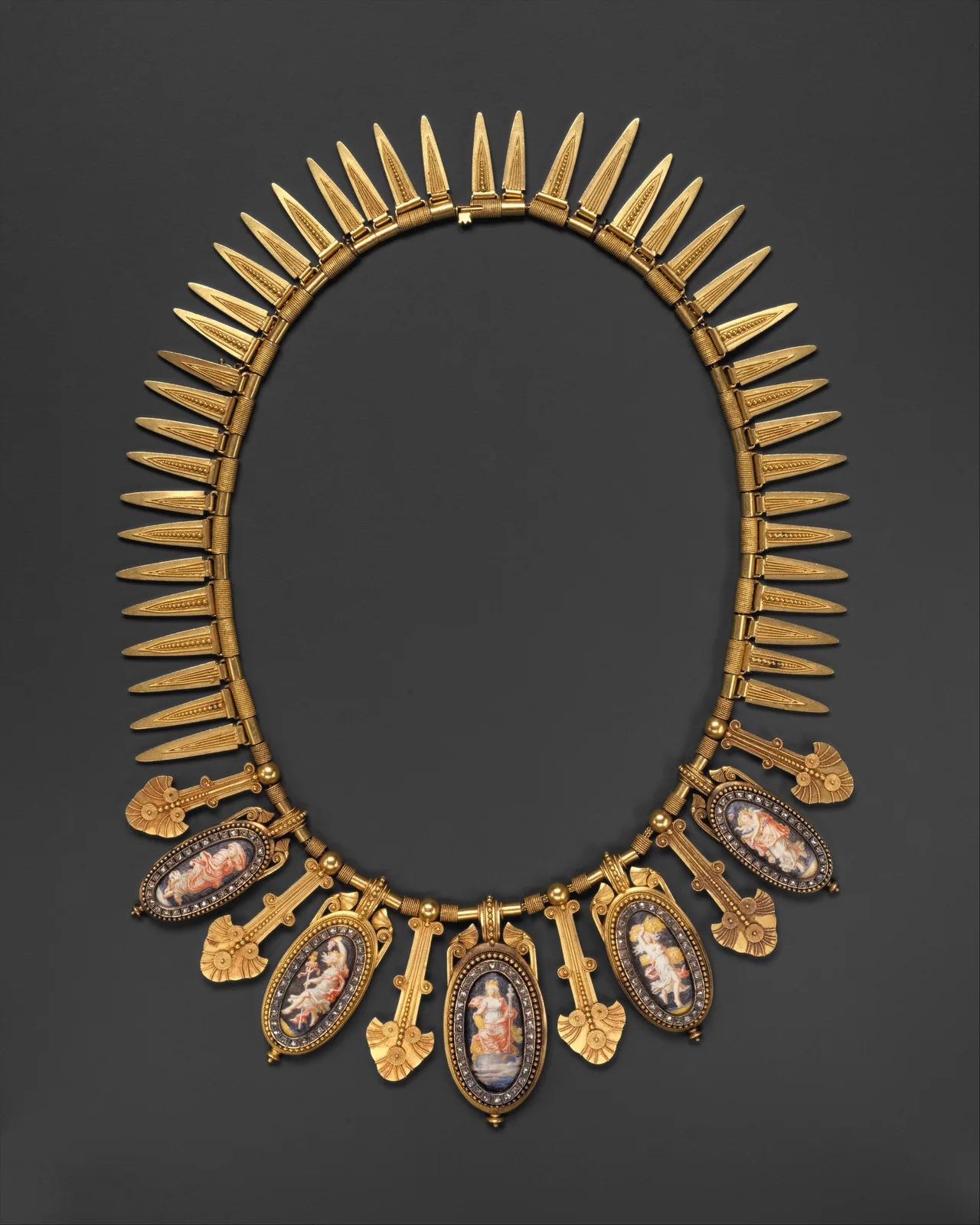
A Fontenay necklace is the sit in one object. Five ovals of painted enamel — figures in a night of fired blue, a skin of color the gold has been asked to hold — then palmettes, a fringe of gold points. You would meet the painted ground before you counted a diamond. The enamel is not a stone set in. It is the face of the jewel: glass fused to metal, a miniature that has already cooled. Grand feu is that decision. Color that stayed.
That is the enamel sit in play now. A wing, a plaque, a lock of gold wearing a painted temperature. Jewelry that has already been fired.
A lock of painted blue, then a field that keeps a cricket
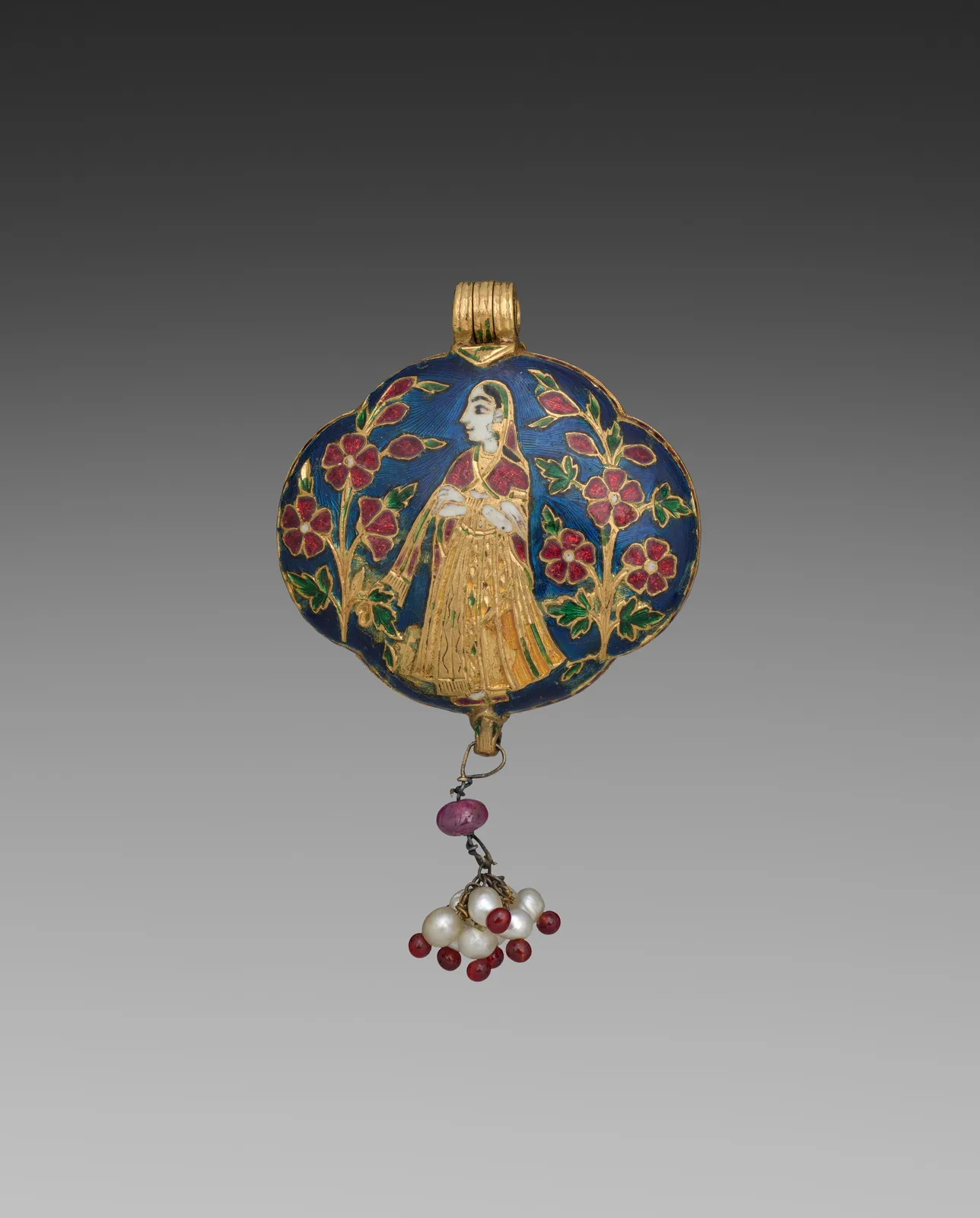
A Jaipur locket keeps the same appetite as a small painted room. Cobalt enamel as the weather, a figure in a yellow skirt, red blossoms the gold has drawn in the glaze. You would feel a warm skin of blue before you named a court. The metal is underneath. The color is what you meet. Not pavé weather. Not a stone asking for a claw. Enamel as a painted climate on gold — a lock that has already been fired.
A Falize locket finishes the thought as a field. Pale yellow enamel, a cricket in blue and brown, grass the gold wire has only been asked to name. You would meet a glazed meadow before you met a hinge. Cloisonné is the drawing. The enamel is still the skin: color fused across the gold, a creature already living in the glaze. Chaumet’s wing is later. The sit remains a painted temperature on metal — enamel as a skin, already on the body.
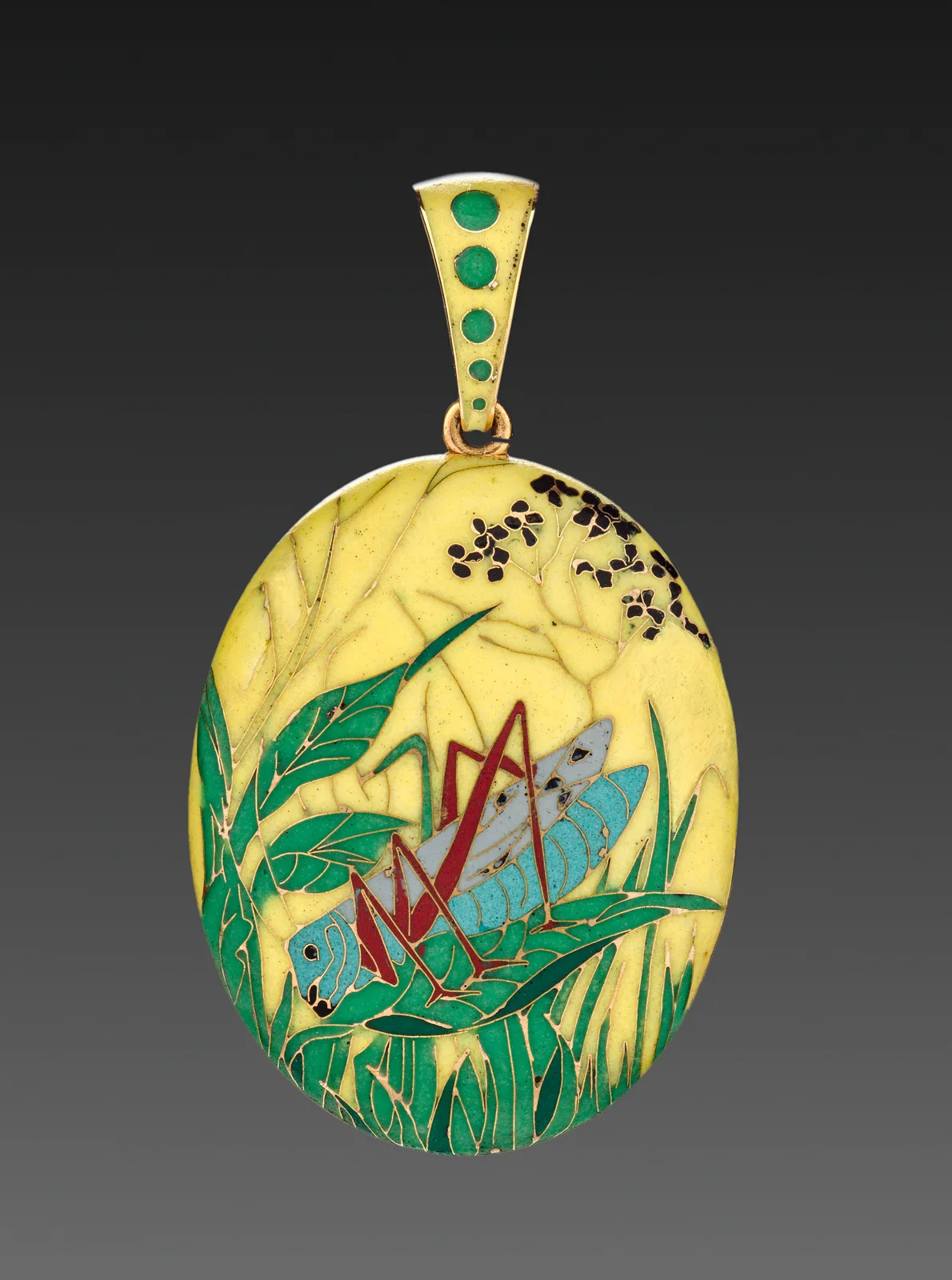
You would wear that cricket as a quiet field. The yellow has already agreed to stay. The house name on a modern enamel wing is later. The sit remains a skin of color on gold — fired, thin, already the jewel.
Educational only · Not jewelry, insurance, or legal advice