Emerald as a deep green pane
A deep green pane. Emerald is beryl that has already agreed to be a forest you can look into — transparent, saturated, a field the metal only holds. Jade keeps an opaque skin. Malachite arrives already banded. Tourmaline keeps a flash that is lit before you arrive. Chrysoprase keeps a cool apple light. Emerald keeps a green with depth. You meet the forest first. The step-cut that borrowed this name — clipped corners, parallel facets, a hall — is another literacy. Here the event is the hue.
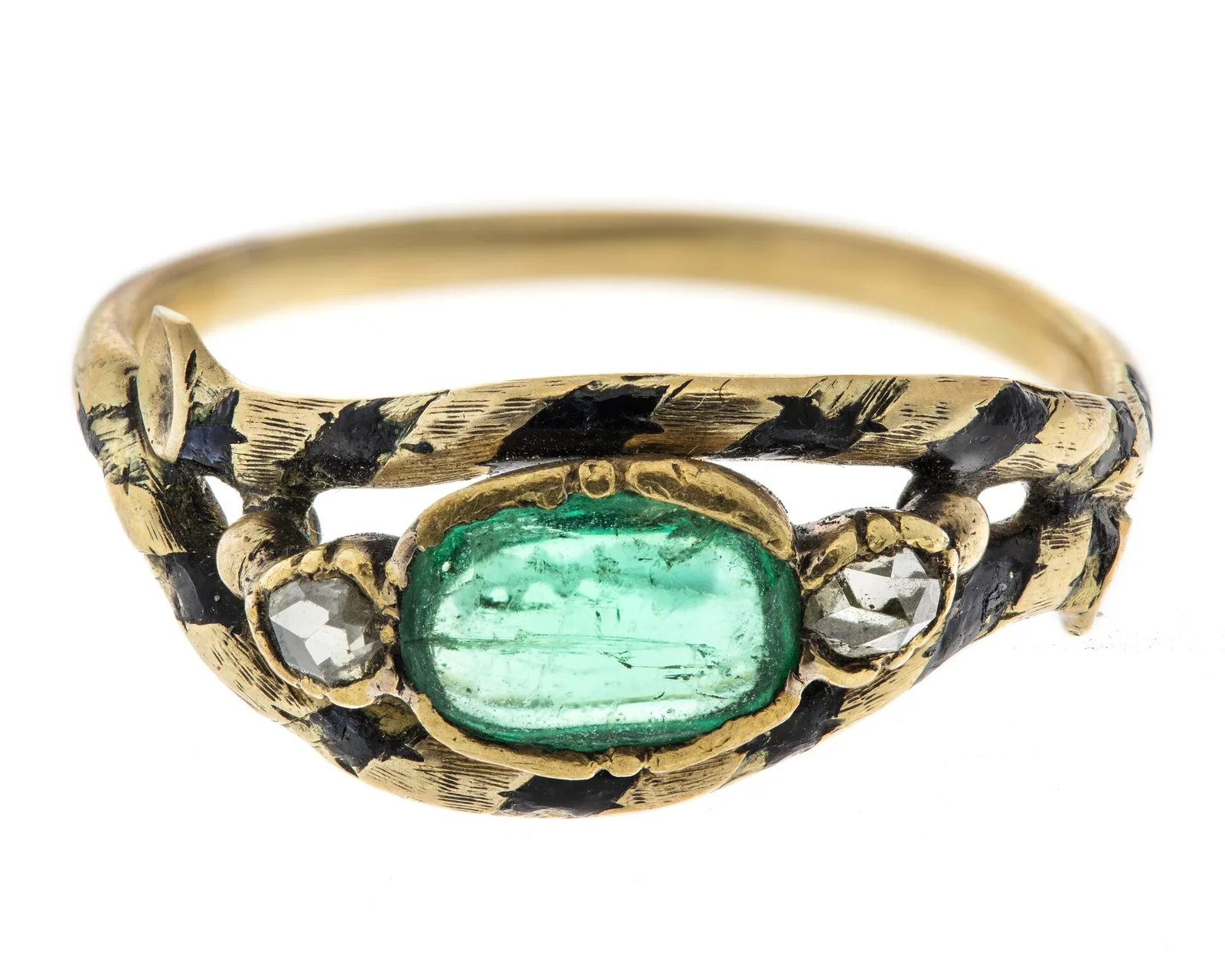
A nineteenth-century gold ring holds the season in one emerald. Rose-cut stones as a small weather beside the green, gold as the shank that has agreed to keep a forest. You would look into that pane before you named a workshop. The stone is not standing in for a skin of jade. It is already the temperature: a deep green you can see through, worn as a field.
Houses are sitting in that transparent green this season. The gem that carries it is emerald. Color as a pane. A stone worn as a forest, not as a banded rock, not as an apple, not as a neon.
A lotus in the green, then the forest in company
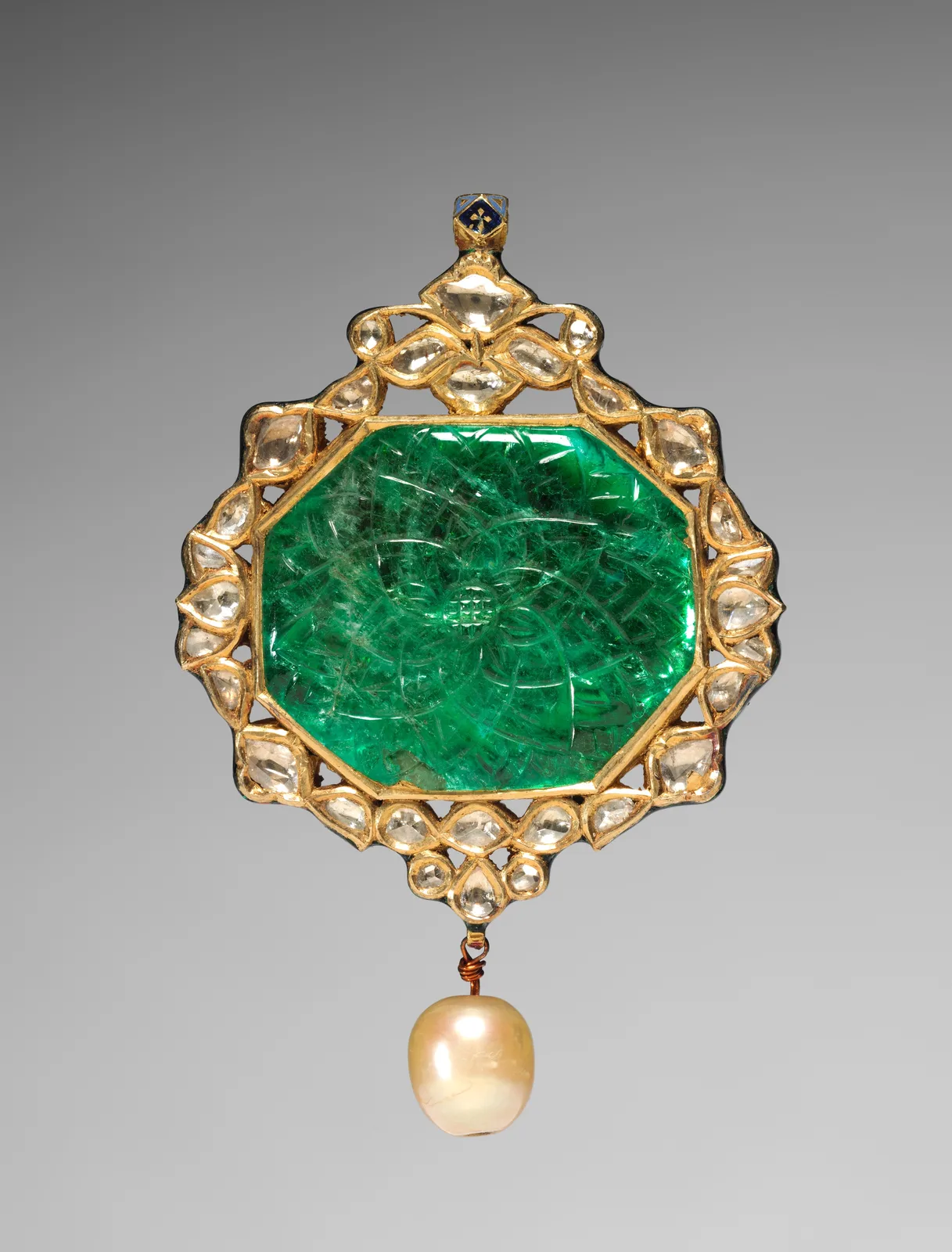
A Jaipur pendant keeps the same deep green as a face you can read. A large emerald, a lotus already incised in the stone, diamonds set as petals around that forest, a pearl as a small drop of weather at the end of the thought. You would meet the green before you named a court. The carving sits in the pane. It does not turn the emerald into a skin. You are still looking into a color. Jade would have stayed opaque. This one stays a forest with a flower drawn in it.
The step-cut can wait. A rectangle of parallel facets is a way of opening a stone, and it borrowed emerald’s name. This pendant is the other sentence: the green itself, deep enough to hold a lotus, diamonds only the frost at the edge.
A second gold ring spends that forest in company. Emeralds and brilliants, the deep green still the climate, the diamonds only the bright weather between the panes. You would feel the hue before you counted the stones. One emerald would have been a single hour. Several keep the same temperature. A modern center can wear a house name later. The sit is already written: transparent, deep, green.
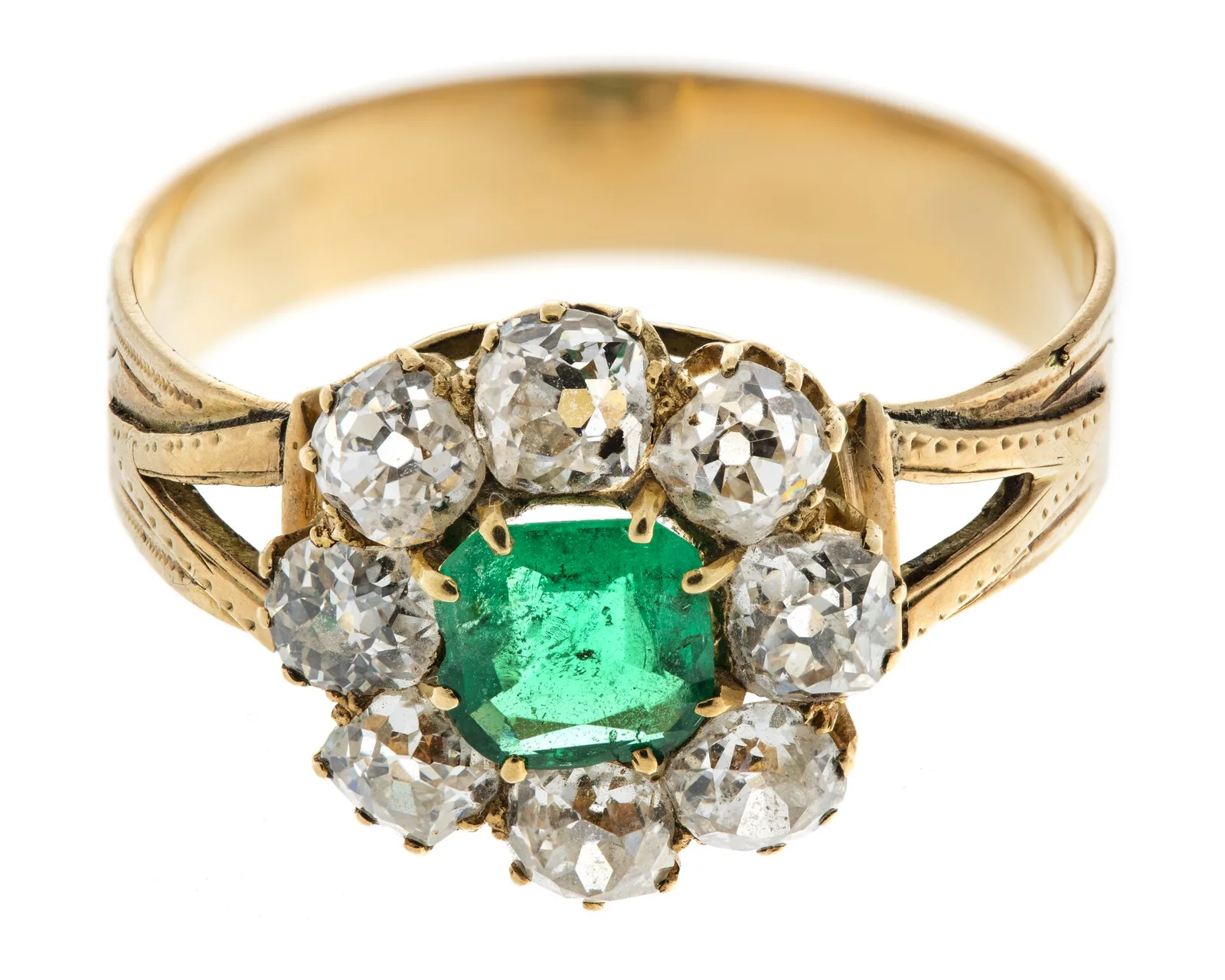
You would wear that green as a quiet forest. The gold has already agreed to hold it. Chrysoprase would still be the apple in the next room. Malachite would still be the bands. This one stays a pane you can look into.
That is the season sit. Emerald as a deep green pane. A ring whose stone is already the field. A pendant that keeps a lotus inside the same green. A ring that spends the hue in company — not a skin, not a stripe, not a flash, not an apple, and not the step-cut that only borrowed the name. A transparent field you wear.
Educational only · Not jewelry, insurance, or legal advice