Electrum is a pale gold
Electrum is a pale gold. Gold and silver already share the same body, and the pale is how you see the silver that never left. Vermeil is a coat: gold laid over sterling, a climate on a different heart. A karat is a number you declare, twenty-four parts, how much of a made alloy is gold. Sterling is silver with a little copper, asked to be strong and white. Electrum is the alloy as a color before it is a certificate. More silver, and the metal cools toward white. More gold, and it stays a warm pale, never the deep yellow of a metal that is almost only gold. You meet the hue first. The literacy is that the hue goes through.
A line of the pale
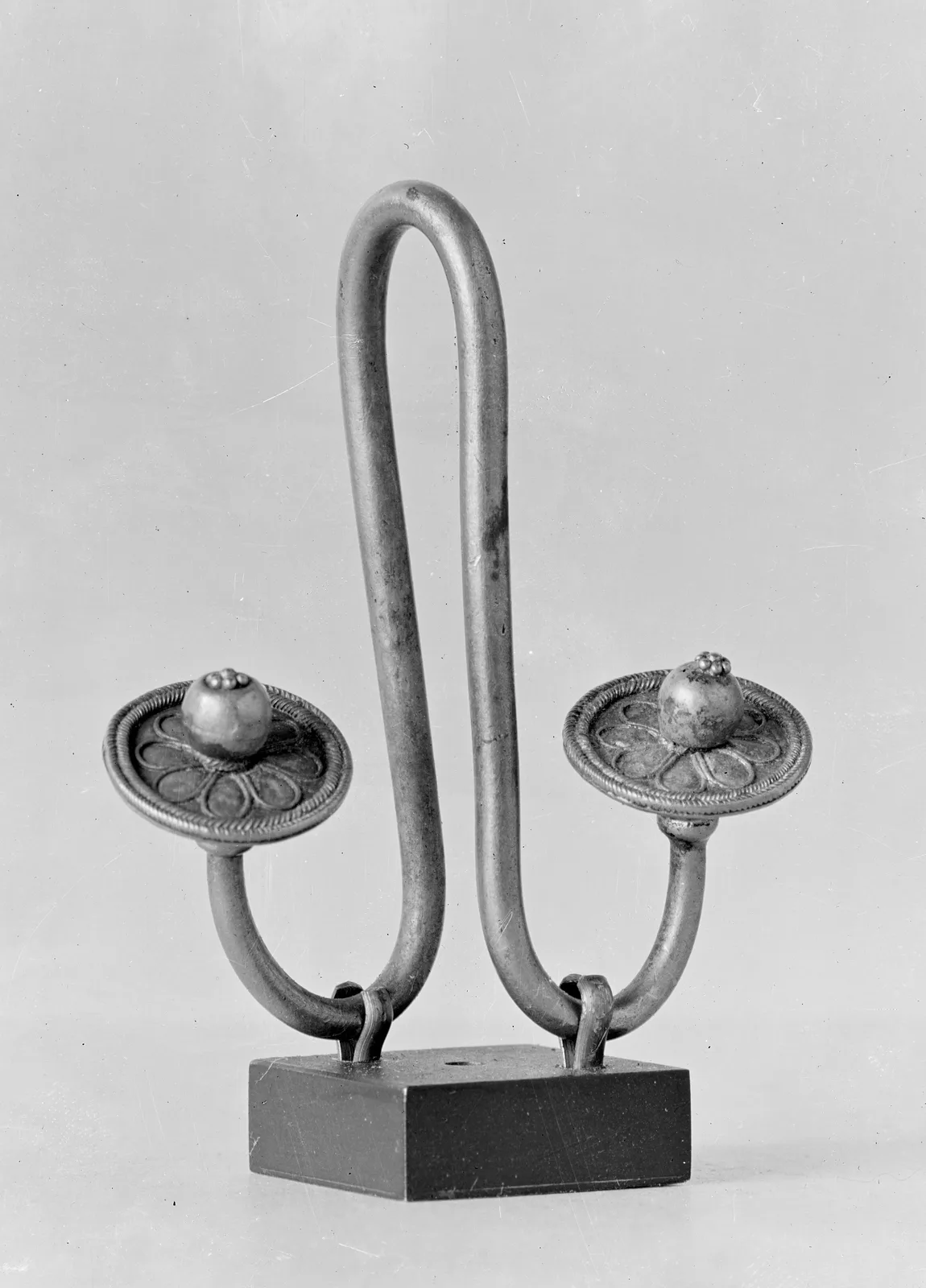
A Greek earring of the seventh to sixth century B.C. keeps the lesson as a line. Electrum, the Metropolitan Museum of Art, 06.1160. Two long hooks, a twist, a small sphere at the meeting, a short drop below. No colored stone to do the work of a hue. The metal is the whole argument. The color is a warm pale, softer than high-karat yellow, not the bright white of a rhodium coat and not the red of a copper alloy. You would know it from across a cloth by the temperature. It looks like gold that has been asked to remember silver.
The thinness is the other lesson, and it is practical. A hook of this length is the fastening and the jewel at once. It does not want to be bent back into a tighter curve to suit a newer ear. It does not want a dip that promises to “bring the yellow back,” because the yellow it has is already the alloy. A soft cloth, a pouch of its own, a finger that lifts it by the stronger twist and not by the last millimeter of wire. Electrum is closer to gold than to steel. The pale is not a finish sitting on a tougher core. What you see is what will scratch, and what will scratch is the color.
A vermeil hook of this outline would have been a gold skin. Wear through the skin and a whiter silver would show at the edge, a different metal announcing itself. This hook cannot show a different metal underneath, because there is no underneath of another kind. The share is the body. That is the test, before any number: the pale is continuous. A karat stamp can still be a useful sentence on a modern piece. An ancient electrum earring often has no stamp, and does not need one for the eye to do the first reading. The color is the share, worn.
The same pale, worked
A Cypriot earring of the sixth century B.C. spends the alloy as a surface. Electrum again, the Cesnola collection at the Metropolitan Museum, 74.51.3251. A boat of metal, lobes along the hull, rosettes and granules, a crescent turned into a small ship. The color is not only on a polished face. It is in the grains and in the wire, because the metal was pale before anyone raised a rosette out of it. Work did not paint the hue on. Work arranged a hue that was already there.
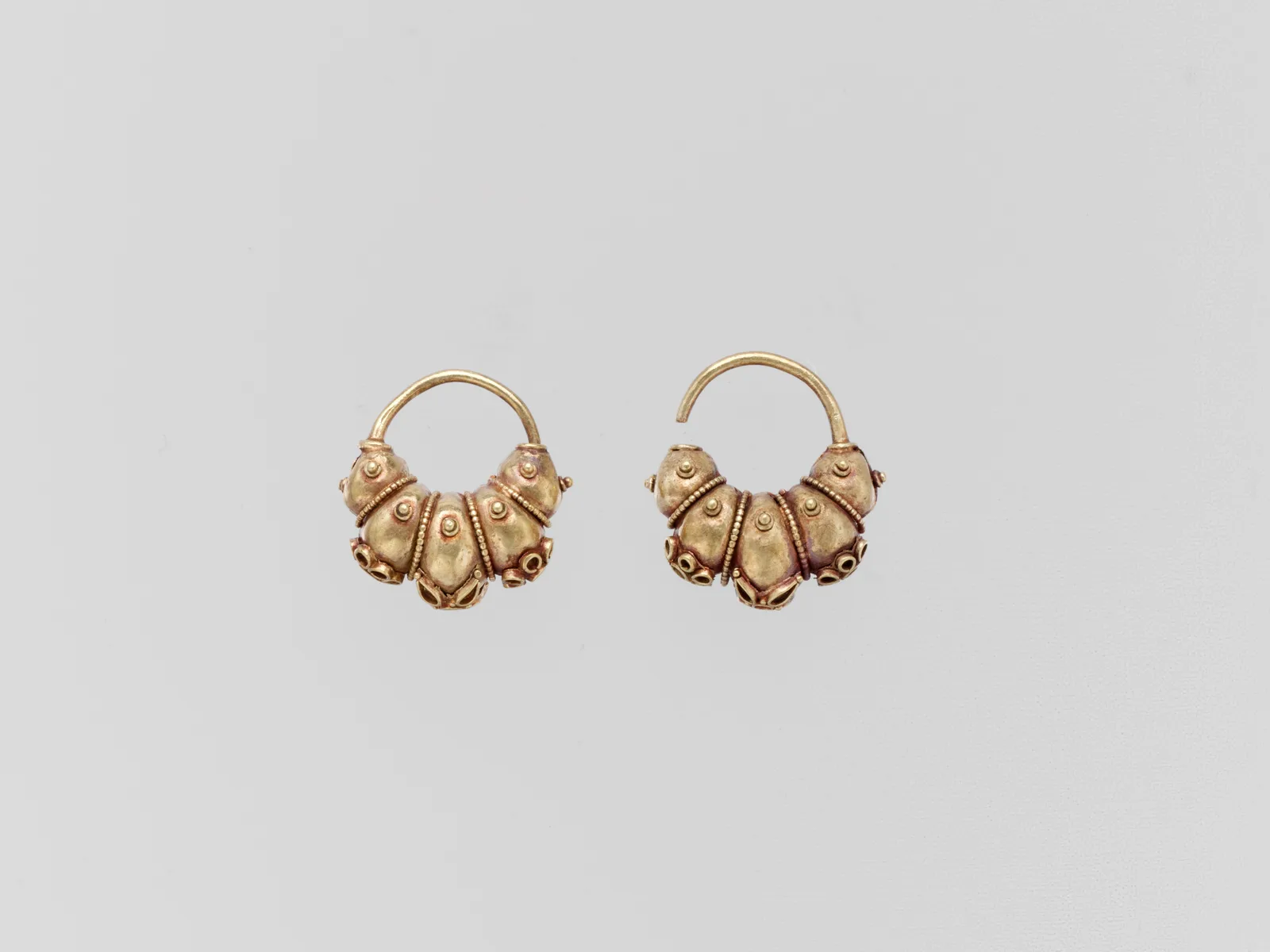
The Greek hook let the pale be a line you could follow. This boat lets the pale be a texture. Granules catch a softer light than a flat sheet, and the softness suits the alloy: nothing in the still is trying to look like a mirror of pure gold. A vermeil boat would have depended on the coat remaining even over every grain. Here a grain knocked loose would still be the same substance as the hull. That is worth knowing if you are the person who cleans it. A brush that is kind to granules, a cloth, no paste that wants a screaming yellow. The rosettes are the height. Level them and you have a smoother pale with a memory of flowers, which is a different object.
You would still name it from the color and from the boat, in that order. The ship is the drawing. The electrum is why the drawing looks like dawn rather than like noon. A sterling piece with a gold wash can imitate the hour for a while. It cannot imitate it in the broken edge of a granule. The Cypriot earring is useful because the surface is busy and the color never changes its mind. Busy, and still one metal.
Later, and still not a coat
A Viking earring, ninth to tenth century, keeps the same test after a long gap. Electrum, the Metropolitan Museum of Art, 51.125.2. A crescent, or a lunula, the curve ribbed, a hook above it and a small loop below, the metal cooler than the Greek hook, more silver in the mix, closer to a white gold that nature mixed before white gold was a recipe. Centuries apart from the boat, and the question is unchanged. You do not meet a plating. You meet a color the alloy agreed to.
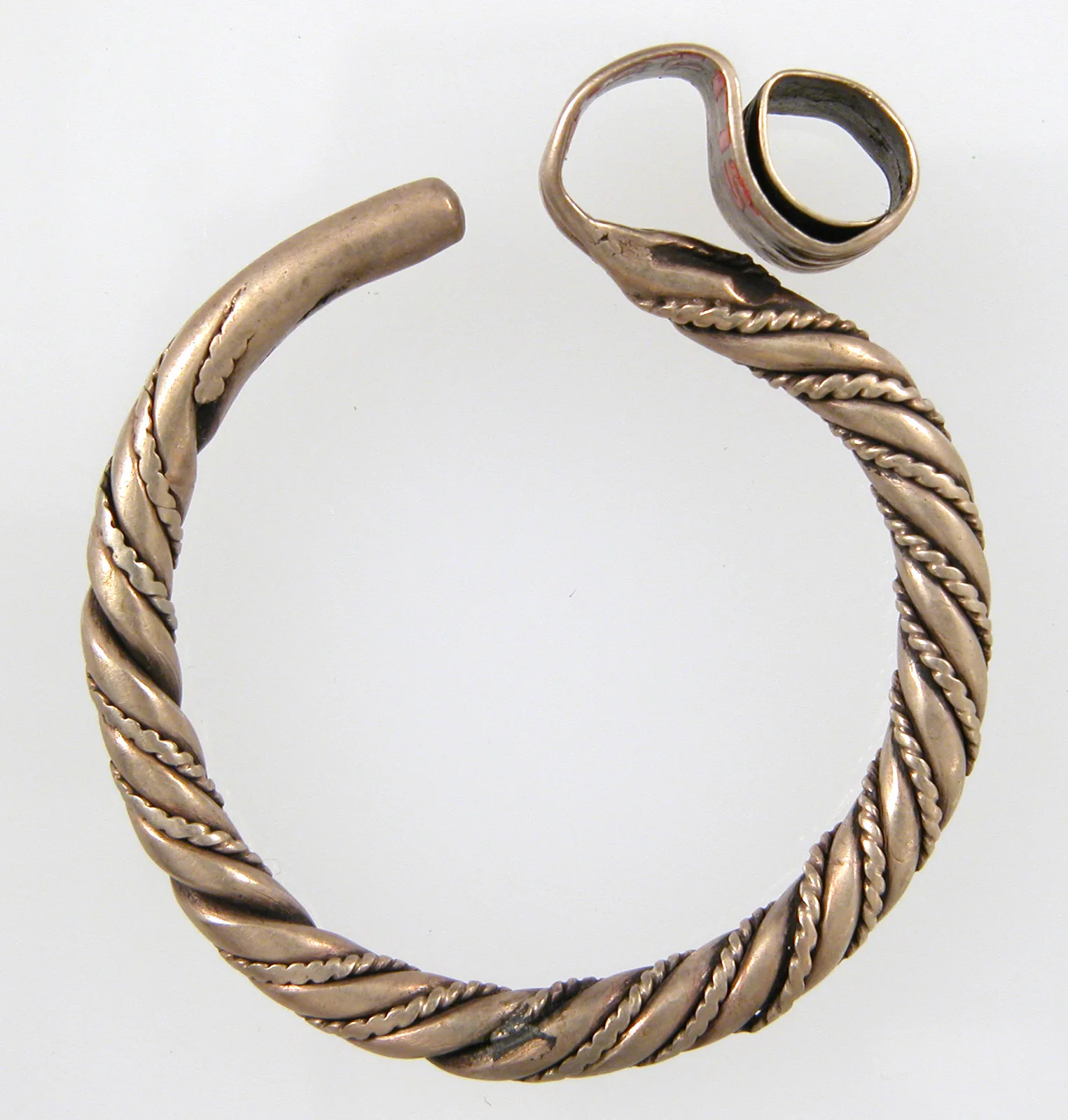
The cooler pale is not a defect and not dirt. Electrum has a range. The Greek piece sits warmer. The Viking crescent sits nearer silver, and both of them are the alloy telling the truth about their shares. A polish that drags the crescent toward a bright yellow is asking it to become a gold it is not. A tarnish, if it comes, is a surface film, and a gentle cloth is the first answer, not a bath that strips character along with the film. The ribbing on the crescent is easy to trap a paste in. Leave the ribs their shadow. The hook, again, is thin. Lift the earring by the crescent if you can. The wire is a fastening, and fastenings of this age are not spare parts.
Store it alone. Electrum against a diamond, or against a harder gold, takes the scratch on the pale. A separate pouch is the whole of the modern care, plus the refusal to recolor it. The Greek hook, the Cypriot boat, and this crescent can sit in one sentence without sitting in one box. Each wants its own cloth. Each is already finished. The finishing was the alloy.
Three objects, one test. The hook lets electrum be a line of warm pale, no stone to help it. The boat lets the same pale survive granules and rosettes, the color identical in a grain and in the hull. The crescent lets a later century wear a cooler share and still be one metal, not a coat on another. Vermeil remains a gold skin on silver. A karat remains a number in twenty-four parts. Sterling remains a silver made stronger with copper. Electrum is the pale that was already both — gold that holds its silver, all the way through.
That is the note. A vermeil is a coat. A karat is a declared share. An electrum is a pale gold — hook, boat, or crescent — the color already the body when the jewel begins.
Educational only · Not jewelry, insurance, or legal advice