El Primero, a count in three colors
El Primero wears the count as a palette. Three registers, and on the faces that define the line they do not share a single tone: a blue, a charcoal, a silver. A Speedmaster keeps a chronograph and lets it moon, the registers quiet under a bezel that remembers a flight. A Daytona keeps a chronograph and lets it sit, three rings inside one metal language. A Navitimer wraps the hour in a slide rule. A Monaco makes a square and lets the square race. Zenith opens where the subdials have already chosen three temperatures, and the hour lives among them.
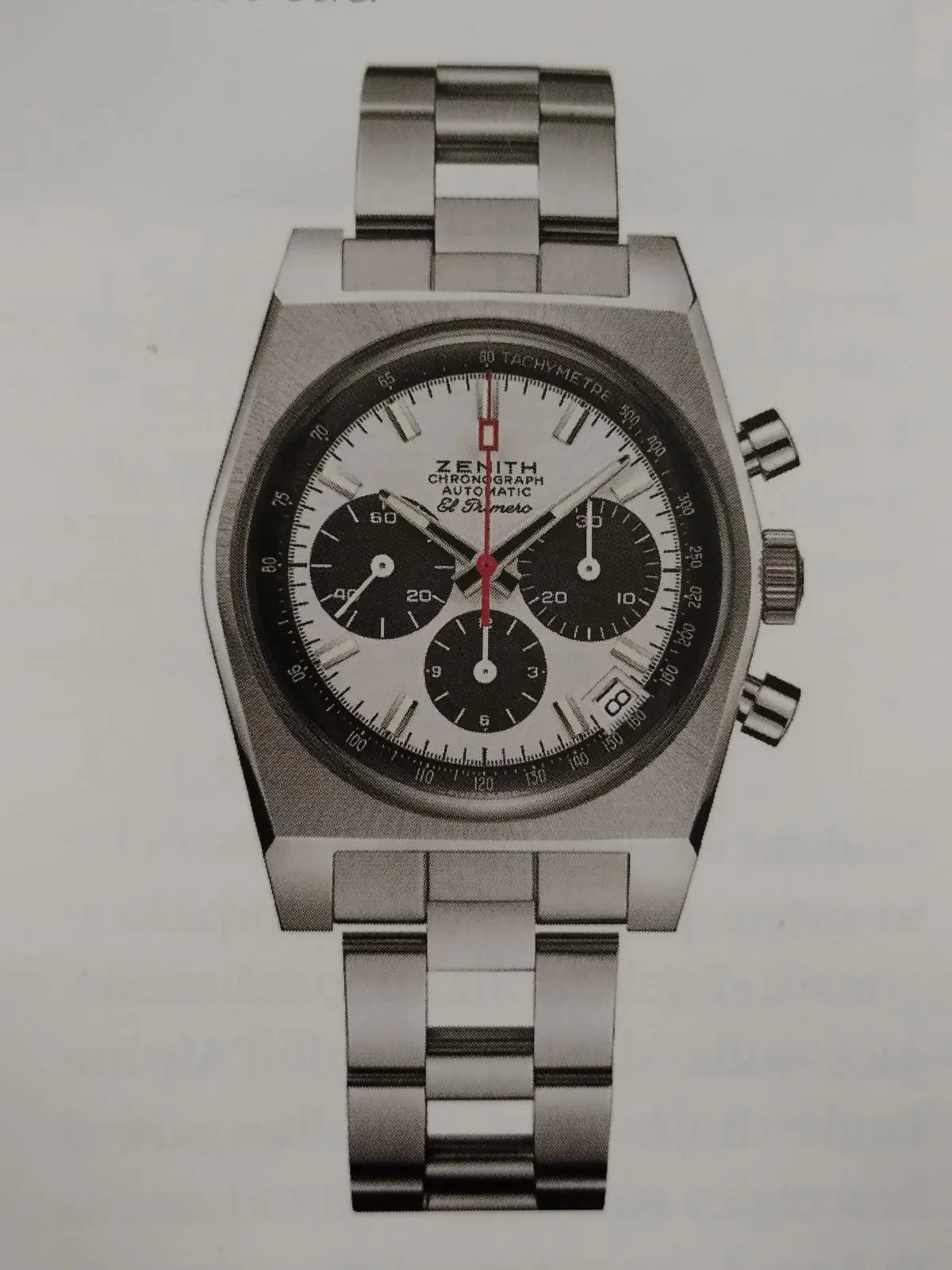
A ladder under the palette
An A384 Revival keeps the meeting as a catalog still on a white ground. A round case, a black bezel with a tachymeter, a silver dial, and three registers that refuse one color: a pale blue, a charcoal, a light silver. Applied bars, a date, and a ladder bracelet whose links read as rungs. Off the wrist, the watch is a jewel because the face is already a small composition. The bracelet is the chain. The palette is the picture.
The ladder is the open-rung pattern the early line made famous, kept here as a rhythm down from the lugs. Cover the hands and the three colors still sort the dial. That is the icon’s scale. A chronograph you meet as a palette, then as a time. The black bezel is a frame. The registers are what the frame was built to hold.
A square that races would have asked the whole case to become the fact. A slide rule would have written scales around the hour until the hour was a calculation. Here the case stays round, the bezel stays a dark ring, and the fact is the disagreement of the three tones. The date is a small window. It can wait. The colors have already introduced the watch. Steel, silver, and those three notes: a jewel you could hang, if a bracelet were a chain, and still read from across a table.
The same count, in a cushion
A Zenith El Primero from the 1970s, reference 01-0200-415, the case called a TV, spends the palette in a softer outline. The flanks have moved toward a cushion, a screen more than a strict circle. Silver dial, the same three temperatures in the registers, applied markers, a date, a steel bracelet of a tighter link. Off the wrist, on a white ground, the family is immediate. The case changed its manners. The count did not.
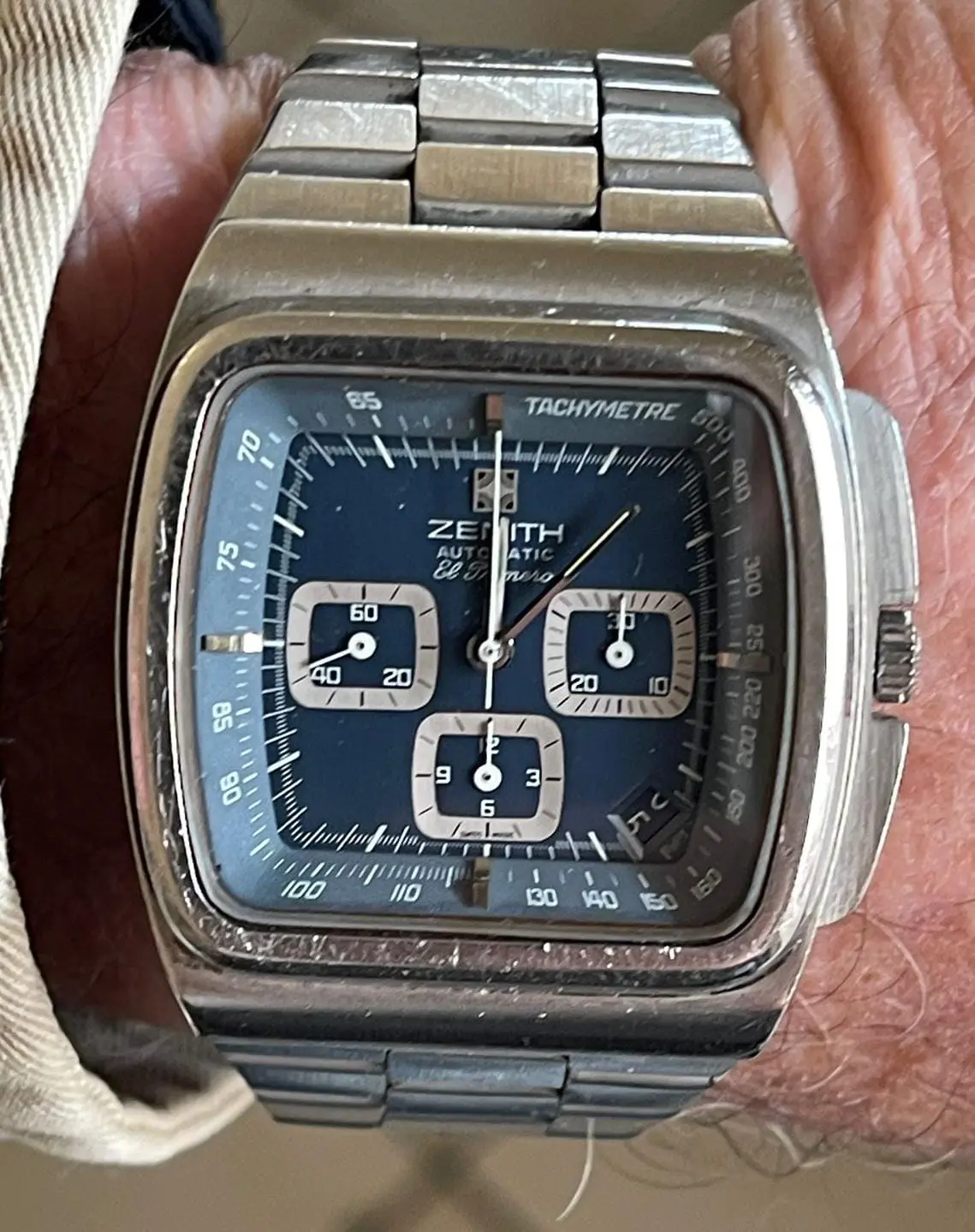
The cushion lets the dial sit a little wider than the Revival’s circle, and the colors use the room. Blue, charcoal, silver, arranged again as three moods inside one hour. A dress circle would have left this face plain and let the outline do the jewel’s work. A porthole would have rounded the bezel into a window and called that the ornament. This one keeps a chronograph’s hardware, crown and pushers along the flank, and still reads first as a palette set in steel.
Two cases, one count. The Revival gives the colors a ladder and a black bezel. The TV gives them a cushion and a quieter bracelet. Turn from one white ground to the other and the registers still sort themselves. That sorting is the piece worth revisiting. The decade can change the lugs. The three tones stay, and the hour agrees to be worn as a composition rather than as a tool you have to explain.
A star over the hour
A Tribute to Charles Vermot spends the chronograph under a star. El Primero, marked 36,000 VpH, off the wrist: a star at twelve, applied markers, a date window down toward half-past four, three registers, a tachymeter on the bezel. The name on the dial remembers a watchmaker. The object in the photograph is simpler than the remembrance. A star signs the top. The count continues underneath. The figure 36,000 is the beat this movement is willing to show, printed as part of the face.
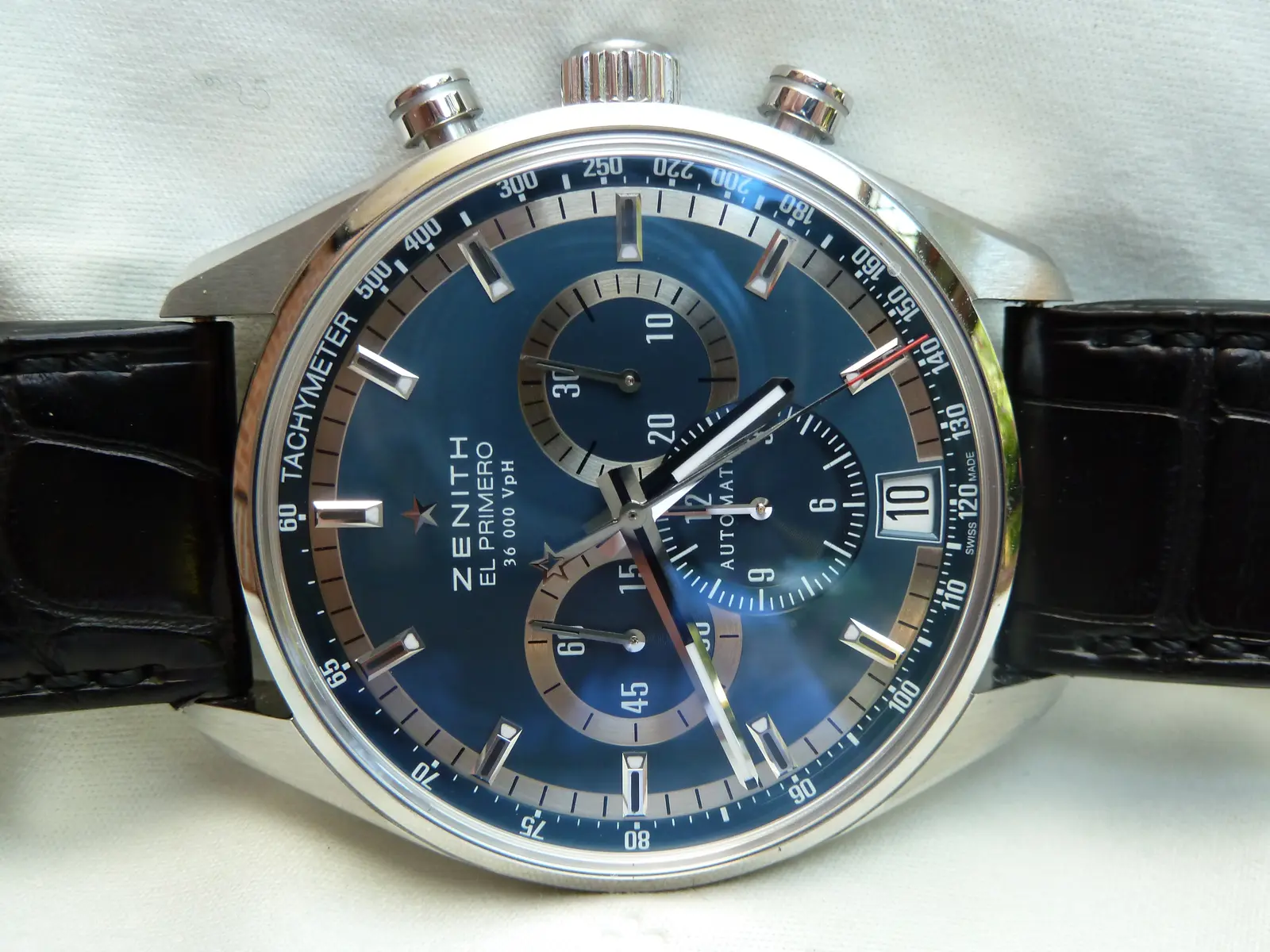
The registers here keep a quieter kinship with one another than the blue-and-charcoal faces. The jewel shifts up. Twelve is a star, the way another house puts a shield or a crown, and the chronograph agrees to live beneath the signing. A Constellation wears its star out on the case, held by claws. This star stays on the dial, small, and the registers do the rest of the work. You meet a Zenith first as that star and that date, and then as the count the star is timing.
The bracelet lies flat, a steel link, the whole watch a catalog object. Nothing about it asks for a wrist to explain the composition. Circle, star, date, three smaller circles. The palette can be louder on the other faces. This one shows the chronograph willing to be signed, and willing to print its beat where a logo might have stood alone. The star is the ornament. The number is the temperament. Together they are still a jewel of the hour.
An opening in the count
A Chronomaster Open keeps the three colors and lets the dial break. An aperture near the center shows the movement, wheels and bridges in a small well, and the registers stay blue, charcoal, and silver around that opening. Applied markers, a date, a tachymeter, a steel bracelet, off the wrist on white. The heart is visible. The palette is still the introduction.
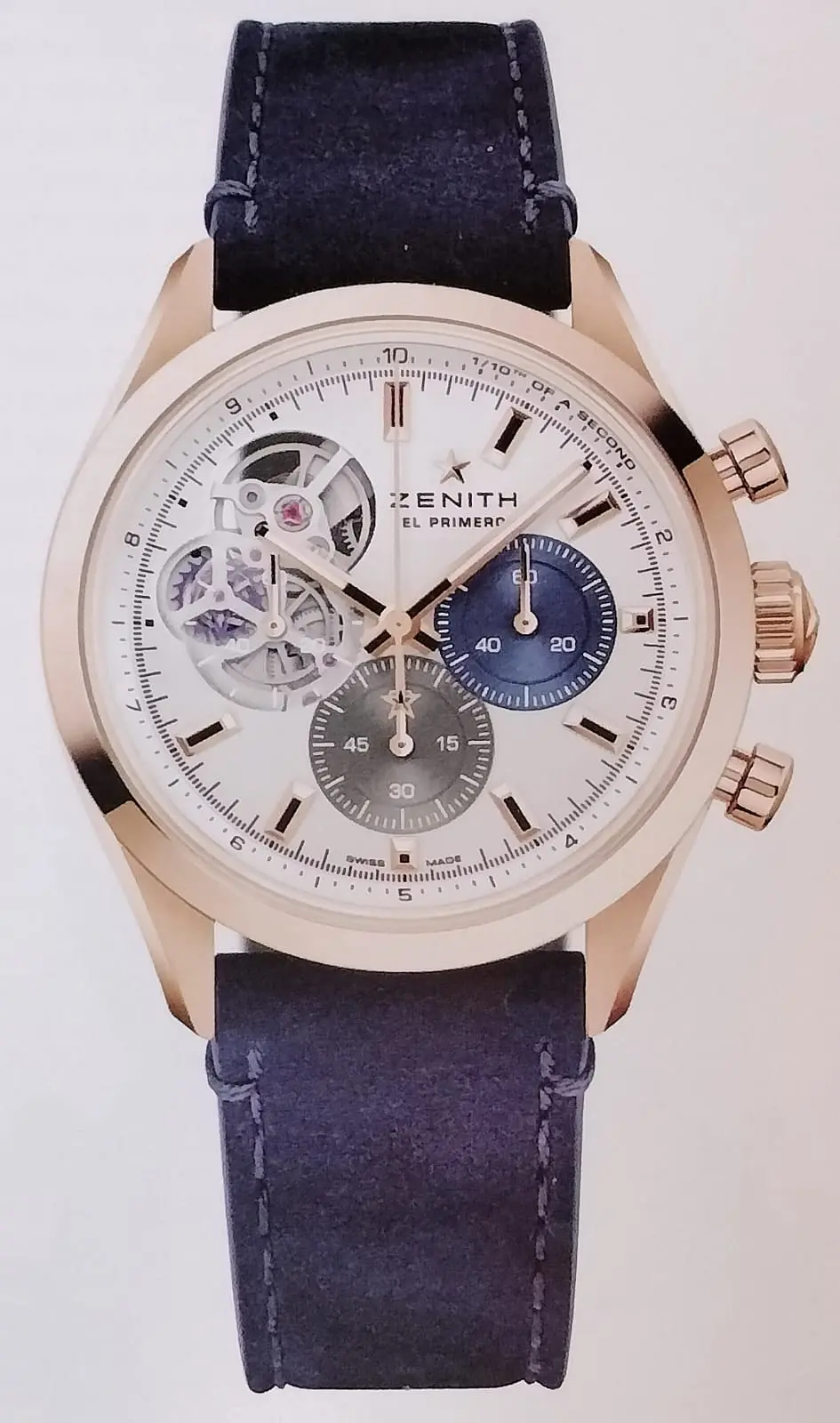
An open dial can become a lesson in parts. This one stays a jewel because the colors hold their places while the center tells on itself. The blue, the charcoal, and the silver frame the wheels. The count has not been sacrificed to the view. It frames the view. A moon chronograph would have kept the dial whole and pointed the story outward. This one points inward for a moment and still looks like a palette with a window cut in it.
Four watches, one family. The A384 Revival gives the three colors a ladder. The TV gives them a cushion. The tribute gives the chronograph a star, a date, and a quieter set of registers. The Open gives the palette a hole through which the beat can be seen. The case can be round or soft. The bracelet can be rungs or links. The count, on an El Primero, is a small composition in more than one tone.
That is the icon. El Primero, a count in three colors. A ladder under a palette. A cushion that keeps the same three tones. A star over a signed hour. An opening that lets the movement show, and lets the colors stay.
Educational only · Not jewelry, insurance, or legal advice