Daytona, a chronograph that sits
Rolex Daytona is a chronograph that learned to sit on the cuff like jewelry. Three registers, a tachymeter written on the rim, pushers that belong to the flank as if they had always been part of the case. You meet that layout first. The house name arrives after the geometry. A Datejust is a round that begins at the fluted bezel and the window for the day. A Nautilus is a porthole, a rounded octagon that reads as a window. A Ballon Bleu is a circle and a cabochon crown. The Daytona begins at the chronograph.
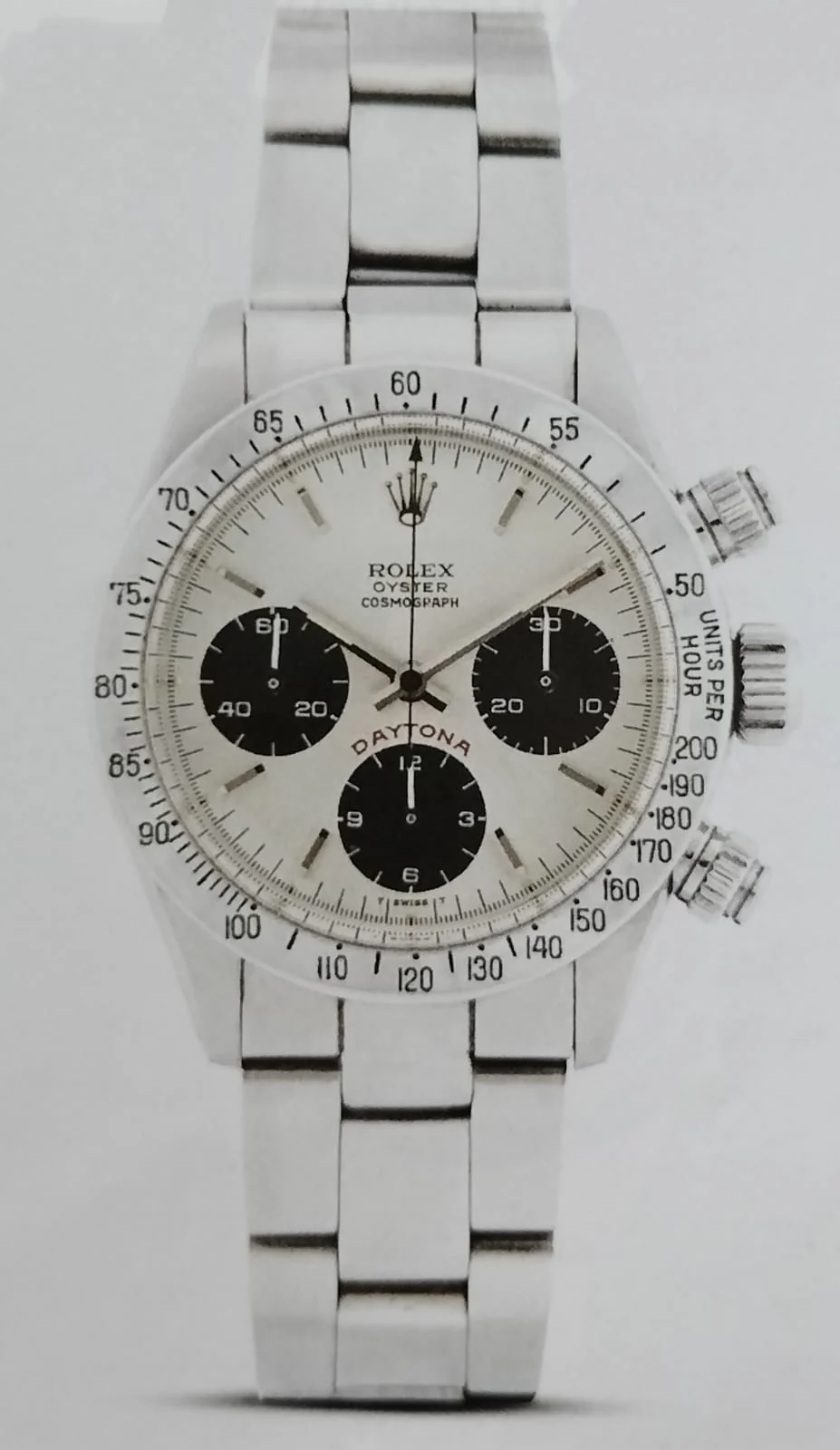
A steel Daytona, the so-called Big Red, reference 6265, is the meeting in one face. A pale dial, three black registers, the name arched in a red curve above the six, a tachymeter cut into the steel rim, screw-down pushers already part of the right flank. You would feel that chronograph before you named a year. The registers do not decorate the dial. They are the dial’s grammar — hours of elapsed time, a continuous seconds, a minute total the pushers know how to start. A Datejust would have asked you to begin at a fluted edge. This one asks you to take the three circles, then the rim that can count a speed.
The pleasure is the sit. A chronograph can look busy. This one looks settled. The case has already decided where the pushers live. The bezel has already decided what a lap means. You meet a jewelry of function before you meet a reference.
The same chronograph in gold, then in light
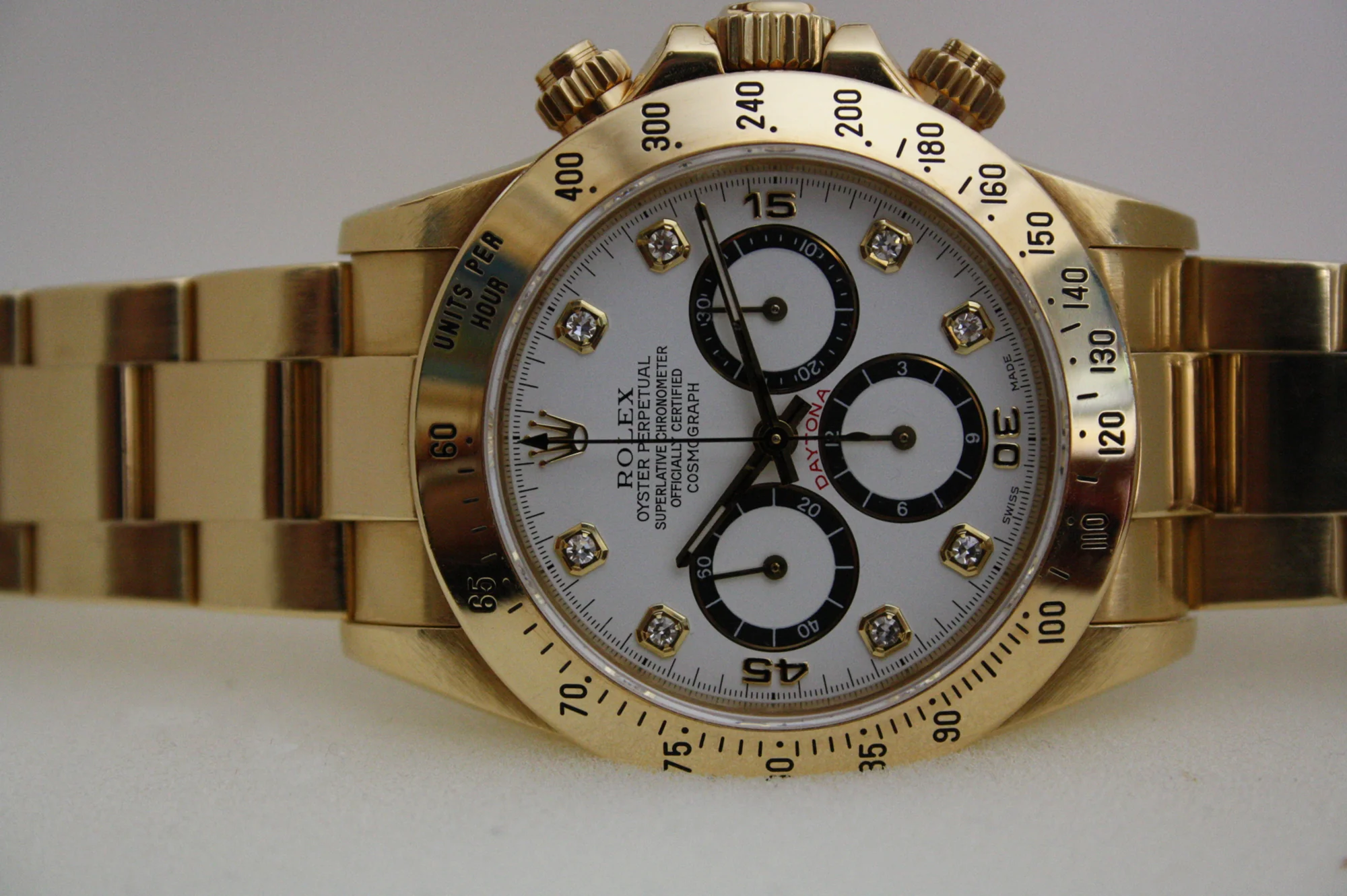
A yellow-gold Daytona, reference 16528, keeps the same appetite with a warmer metal. A white dial, black registers, diamond hour markers in square seats, the tachymeter still the sentence on the rim, the Oyster bracelet already continuing the case. You would meet those three circles before you read a carat on a marker. Gold is only a richer chair for the same layout. A porthole would have begun the introduction at a soft octagon. Here it begins at the chronograph — pushers, registers, a rim that can measure.
You would hold that case and understand the sit before you understood a serial. A bracelet or a strap can change. The three registers do not. The Daytona does that work in steel, in gold, in a diamond face the wrist already knows as jewelry. The first fact stays the layout.
A high-jewelry Daytona finishes the thought as the same chronograph written in light. A pavé dial, baguette diamonds on the bezel with sapphire hour seats, a dark strap, the three registers still clear in the glitter. You would see the chronograph before you counted a stone. A circle without registers would have read as a field of light. This one still reads as a Daytona — three counters the pavé has agreed to keep.
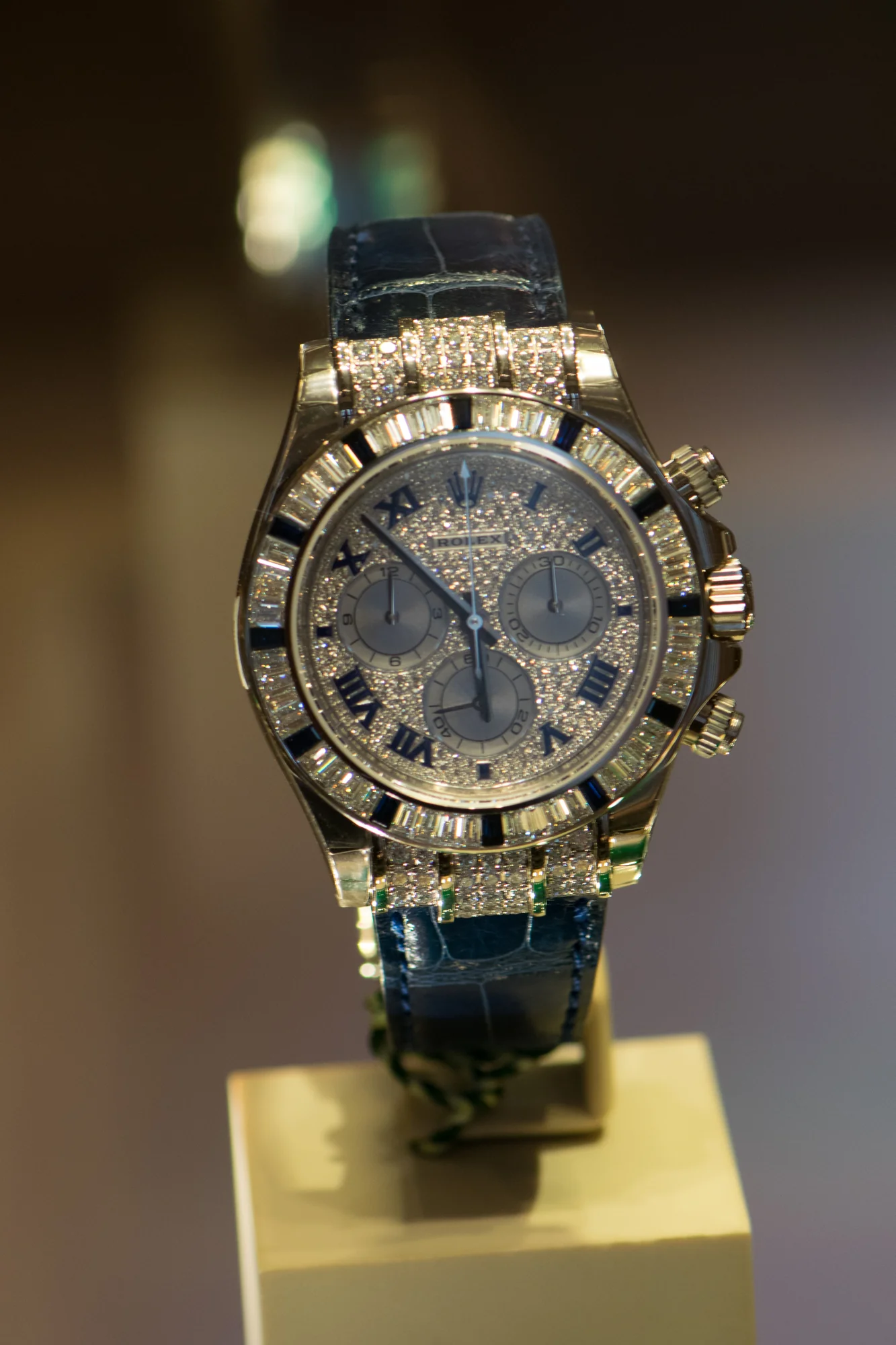
That is the icon. The house gave a chronograph a name that still sounds like a track. The sit remains the layout you meet first — three registers, a tachymeter on the rim, pushers that belong to the case.
Educational only · Not jewelry, insurance, or legal advice