Cut steel is a facet in the metal
Cut steel is a facet in the metal. A small stud of steel is cut into faces, the way a gem is cut into faces, and then riveted to a plate so the sparkle and the ground are the same substance. Pavé is a field of stones, the metal almost hidden under them. The jewelry called marcasite is usually a pyrite, cut and set into silver, a stone in a different heart. Niello is a black line laid in a trough. Cut steel is none of those. Turn it, and the light breaks on steel. Turn it over, and a rivet tells you the stud was fixed through, not foiled and not clawed. You meet the sparkle first. The literacy is that the sparkle was cut, and that it is metal all the way through.
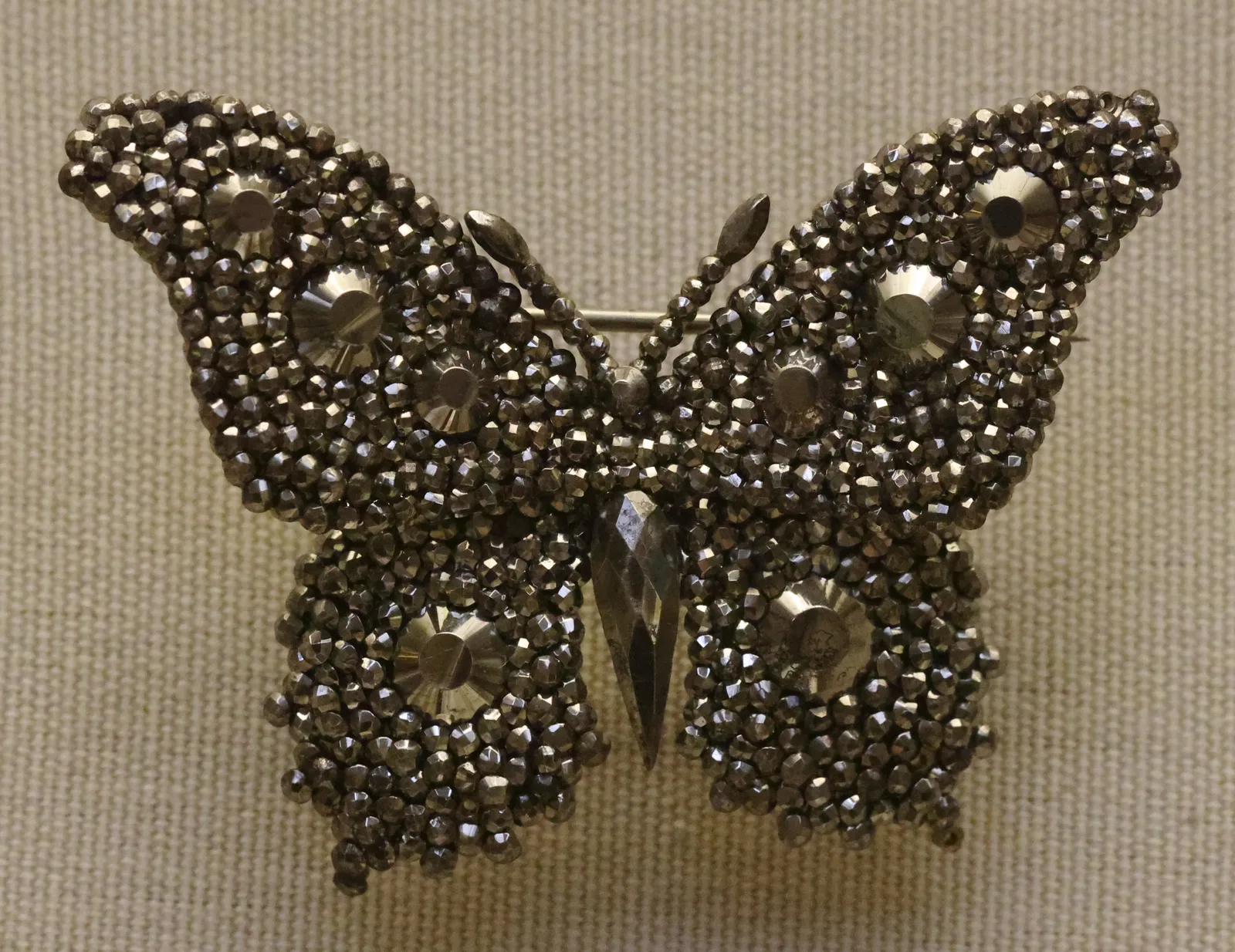
A butterfly of faces
One hairpin, a butterfly, on a white ground. The wings are a pavement of faceted steel studs, each one a tiny mirror with a plan, the body and the antennae drawn in the same metal. Nothing in the still is a gem. A diamond wing of this outline would have been pavé, a weather of stones. These wings are the steel itself, cut until a butterfly reads. You would know the pin from across a cloth by the insect, and then, closer, by the fact that each glitter has a flat you can find.
The thinness of the work is the practical half. Studs of this scale are the drawing and the risk at once. They stand proud of the plate. A jumble with a harder jewel will knock a face flat, and a flat stud is a mirror that has lost its grammar. A soft dry cloth is the cleaning. Steel does not want a soak, and it does not want a polish that rounds the faces into a shine without a plan. The faces are the jewel. Round them and you have a smoother insect, which is a different object. Store the pin where a chain cannot rake the wings. The antennae are the height as much as the wings are. Leave them their wire.
A facet, on a gem, is a plane a cutter left in a stone. Here the plane was left in the metal, and the metal is doing the stone’s old job. That is the whole distinction, before any romance about a butterfly. The wing is steel. The sparkle is the cut. If a stud leaves its place, the hole that remains is the exam: something was riveted through, and the something was not a gem with a pavilion underneath.
The back, where the rivet shows
A button, turned over, spends the idea as a fact you can count. The face of a cut-steel button is a field of studs. The back, on a white ground, is rings of small rivets, each one the tail of a stud that came through the plate, with a shank in the middle so the button can take a coat. Nothing here is trying to sparkle. The sparkle is on the other side. What you are meeting is the fastening. A marcasite button would show you the cups or the claws that hold a stone. This back shows you steel punched through steel. You would know the object from the circle of rivets, and you would know the technique because a rivet is not a setting. It is the stud itself, clinched.
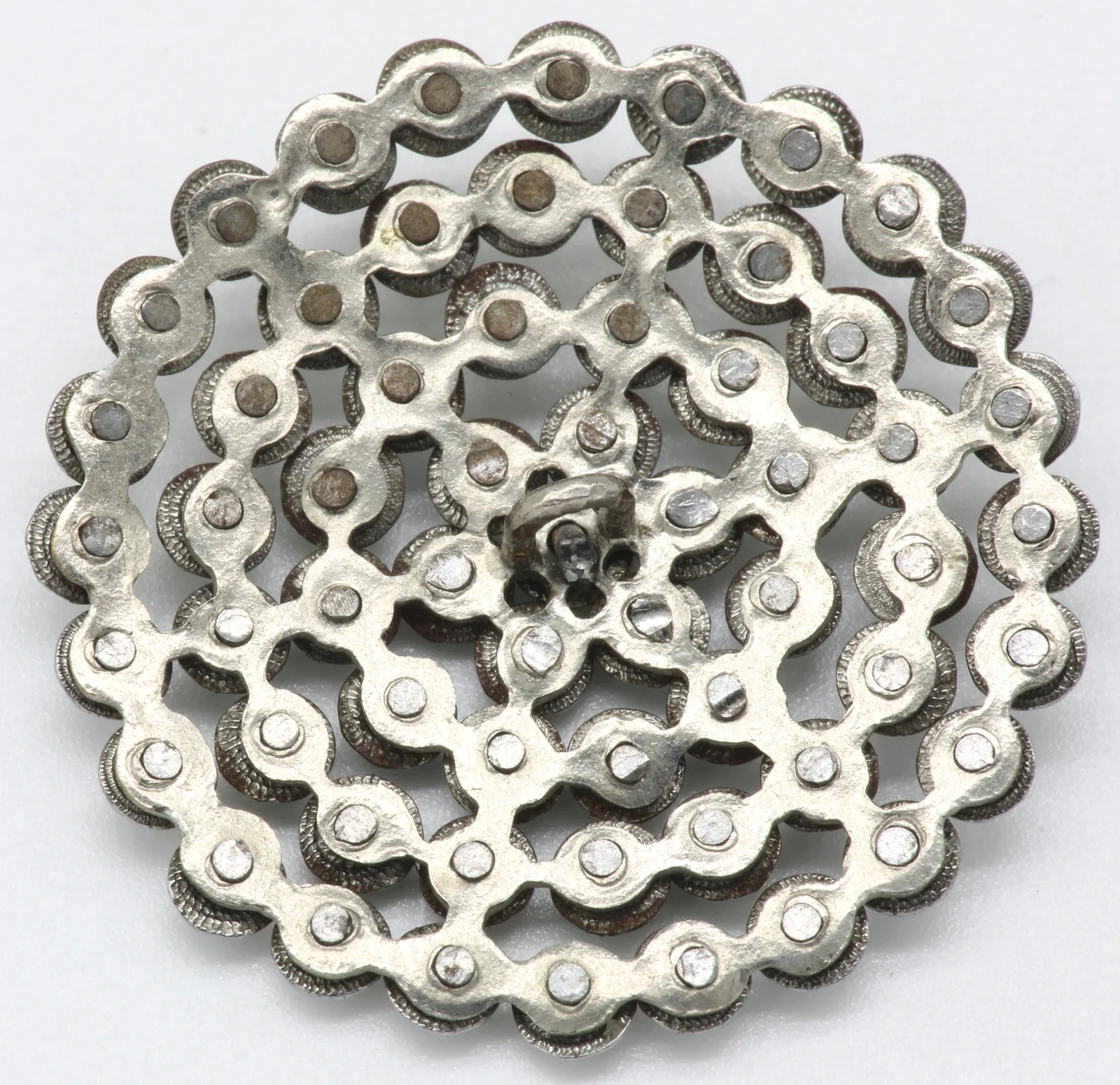
The hairpin let the studs agree to depict a butterfly, all face, no confession. This button lets the confession be the picture. Turn a hairpin over in your mind and you should find the same grammar: a tail of metal, flattened, one tail per face. If you found a paste sitting in a cup, you would be holding a different technique that had borrowed the sparkle. The rivet is how you decline to be fooled.
Care follows that honesty. The faces, on the side you cannot see in this still, are the jewel, and a bath that promises to wake them will also soften the rivets and spot the steel. Dry cloth on the face. The back wants even less: no polish grinding across the rivet heads, no soak that sits in the shank. Store the button where the shank is not asked to bend. The shank is a finding. The rivets are the picture. Level either one and the button becomes a disk with a memory of studs, which is a different object.
It is a different object from the hairpin. The motif traveled away. The unit stayed, and for once you are allowed to see the unit from behind. That is worth knowing if you are the person who dusts these things. You are dusting metal that was asked to behave like a gem, and the back is there to remind you that the gem was never invited.
Buckles that dress a frame
A pair of buckles keeps the studs at the scale of dress. Openwork frames, each one set with rows of faceted steel, a bow of metal at the top, the whole thing light enough to read as jewelry and structured enough to be a buckle. The late eighteenth century, and Birmingham in particular, made a fashion of this: steel cut by the stud, the studs riveted to a plate, a sparkle that did not have to be a diamond. These two are that grammar in the hand. You would know them from across a cloth by the pair of frames and by the bows.
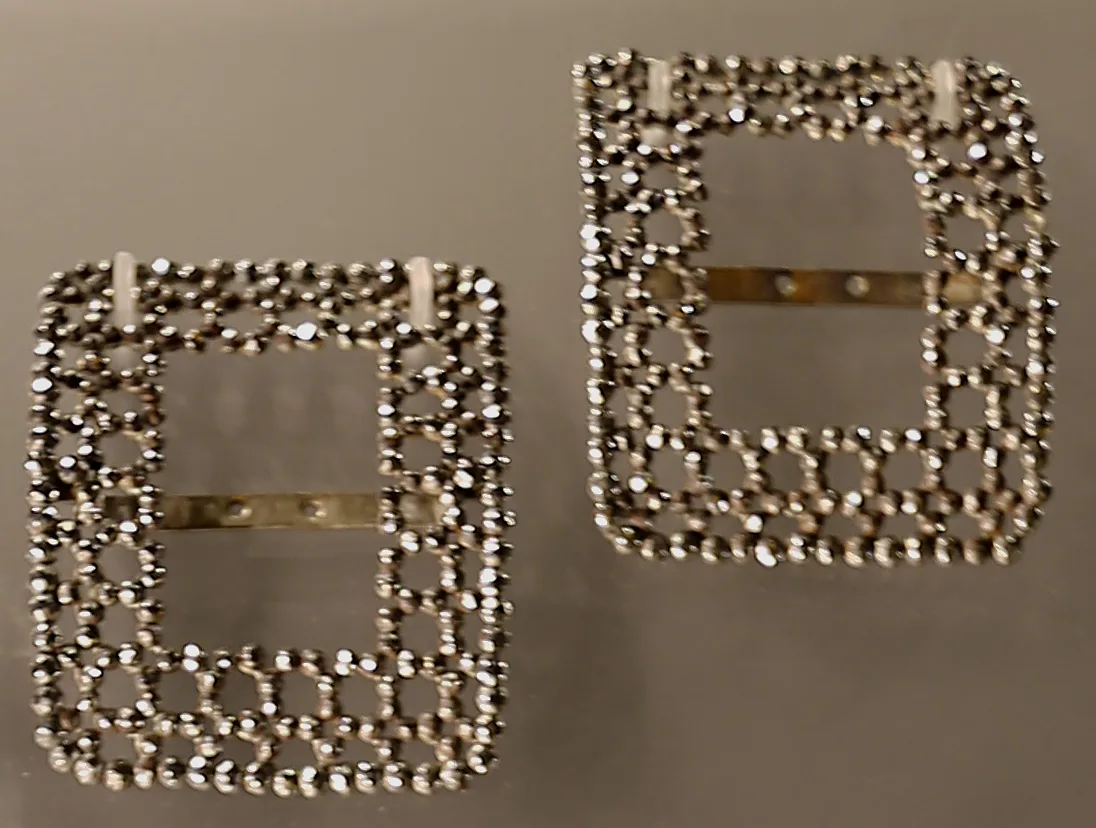
The hairpin was a picture. The button was the unit, seen from behind. The buckles let the unit cover a frame until the frame reads as a small architecture of light, a bow included, the sort of object a shoe could carry and still be dressed. You would know they were cut steel when a single stud is clearly a piece of metal with faces, not a gem with a culet hiding under a rim. The back, if you ever turn one, is the exam again. A rivet, or the seat a rivet left, means the sparkle was fastened through. A paste dropped into a cup would fail that exam by showing you the cup. These do not owe you a cup. They owe you a stud.
The bows are the height as much as the fields are. A polish that levels the bow also levels the story of the frame. Leave the ribbon its curve. The openwork wants not to be crushed under a heavier buckle in the same drawer. One pair, one cloth. Steel spots where water sits, so the cloth is dry before it is soft, and then it leaves.
Three objects, one test. The hairpin lets cut steel be a butterfly, the wing a field of faces. The button lets you turn the field over and count the rivets, one tail for each stud. The buckles let the same faces dress a frame, a bow included, the sparkle doing a diamond’s old job and doing it as steel. Pavé remains a field of stones. Marcasite remains, in the usual jewelry, a pyrite set in something else. Niello remains a black line. Cut steel is a facet in the metal — the plane already the jewel when the rivet is set.
That is the note. A stone can be set. A coat can be plated. A cut-steel stud is the metal, faceted, and the face you have to keep dry, and sharp.
Educational only · Not jewelry, insurance, or legal advice