Constellation, a star that sits
Omega Constellation is a star that sits, worn as jewelry. Claws grip the bezel. A pie-pan dial rises toward the glass. A small star can sit in the face, and a medallion on the case can keep the observatory the name promised. You meet that grip first. The house name arrives after the claws. A Speedmaster opens on pushers and a scale — a chronograph that counts. A Submariner opens on a circle, a bezel that dives. An Explorer opens on a black field and three numerals. The Constellation opens where a star agrees to sit: claws, a shaped dial, a case willing to be jewelry.
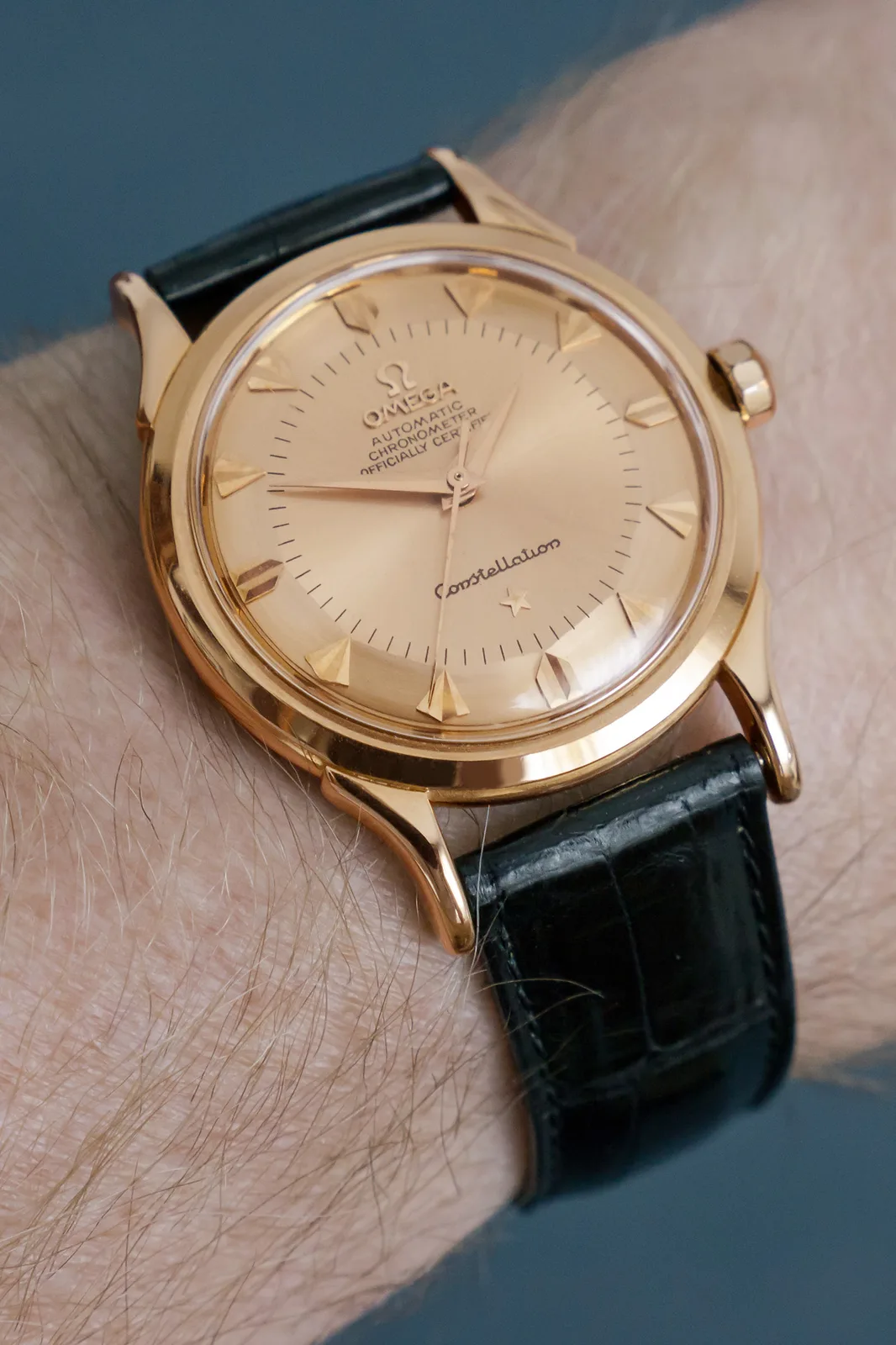
Claws, and a pie-pan
A rose-gold Constellation of 1958 is the meeting in one case. A warm bezel held by claws, a dial that rises as a pie-pan, a small star already low in the face, applied markers, no diver’s ring, no chronograph pusher. You would feel that grip before you named an observatory. Off the wrist, the watch still reads as a jewel. The claws are the architecture the cuff can recognize. The gold continues it. A fluted edge would have begun a different sentence. A minute ring graded for a depth would have begun a diver’s. This face begins as a held star.
The hands only agree to live in that dish. The fact is the bezel they sit inside. You meet a jewelry of claws and a shaped dial, and the year can wait.
The case learned to be worn as a jewel and kept the lesson on the outside. You would see the claws before you asked which decade set the type. The star is already in the grip, and again as a small mark in the dial.
The same grip, a later gold
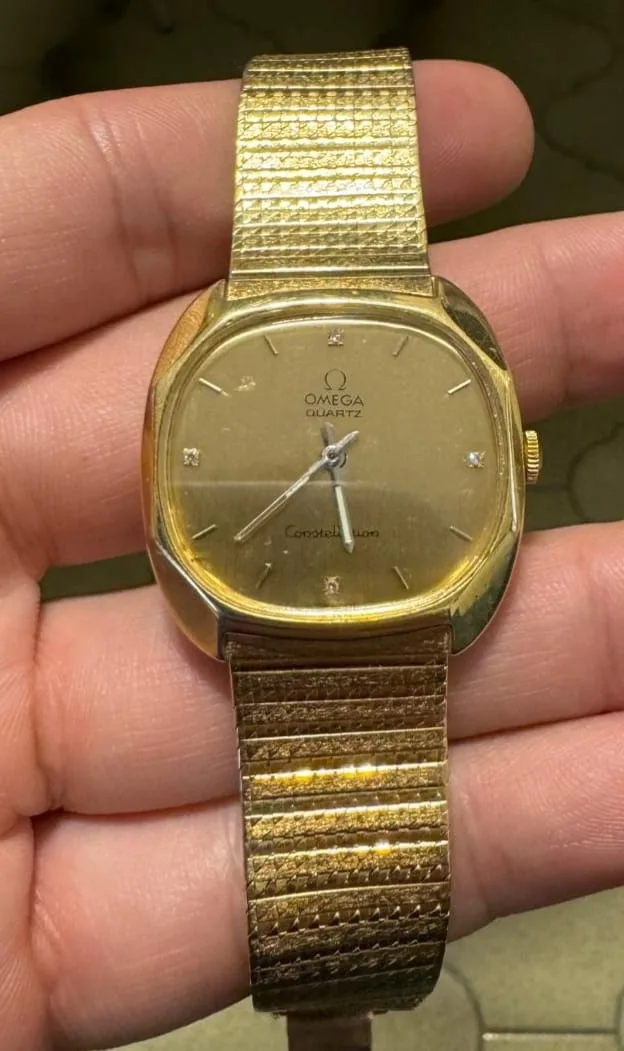
A gold Constellation of the early 1980s keeps the appetite in a later generation. An integrated bracelet, a day and a date, the claws still on the bezel — the grip still the sentence you meet first. You would see those claws before you asked which movement sits inside. A rotating bezel would have opened on a circle. A black field with three numerals would have opened on a night. This face opens on the hold.
A star that does not borrow a scale
A chronograph, when a Speedmaster wears one, is written in pushers. The Constellation does not borrow that tool to be read. You would see the claws before you looked for a scale and found the dial quiet, a jewelry of one grip. The bracelet can be gold. The claws are the jewel. The star is the fact the case has agreed to hold.
Glass can put a shine on the crystal. It does not rewrite the grip. Off the wrist, on a pale ground, the face is already jewelry: claws, a gold bezel, a day and a date that do not need a dive ring to be a jewel. You would turn the watch and the claws would stay the first fact. The hands only agree to cross the dial.
The Manhattan keeps the medallion
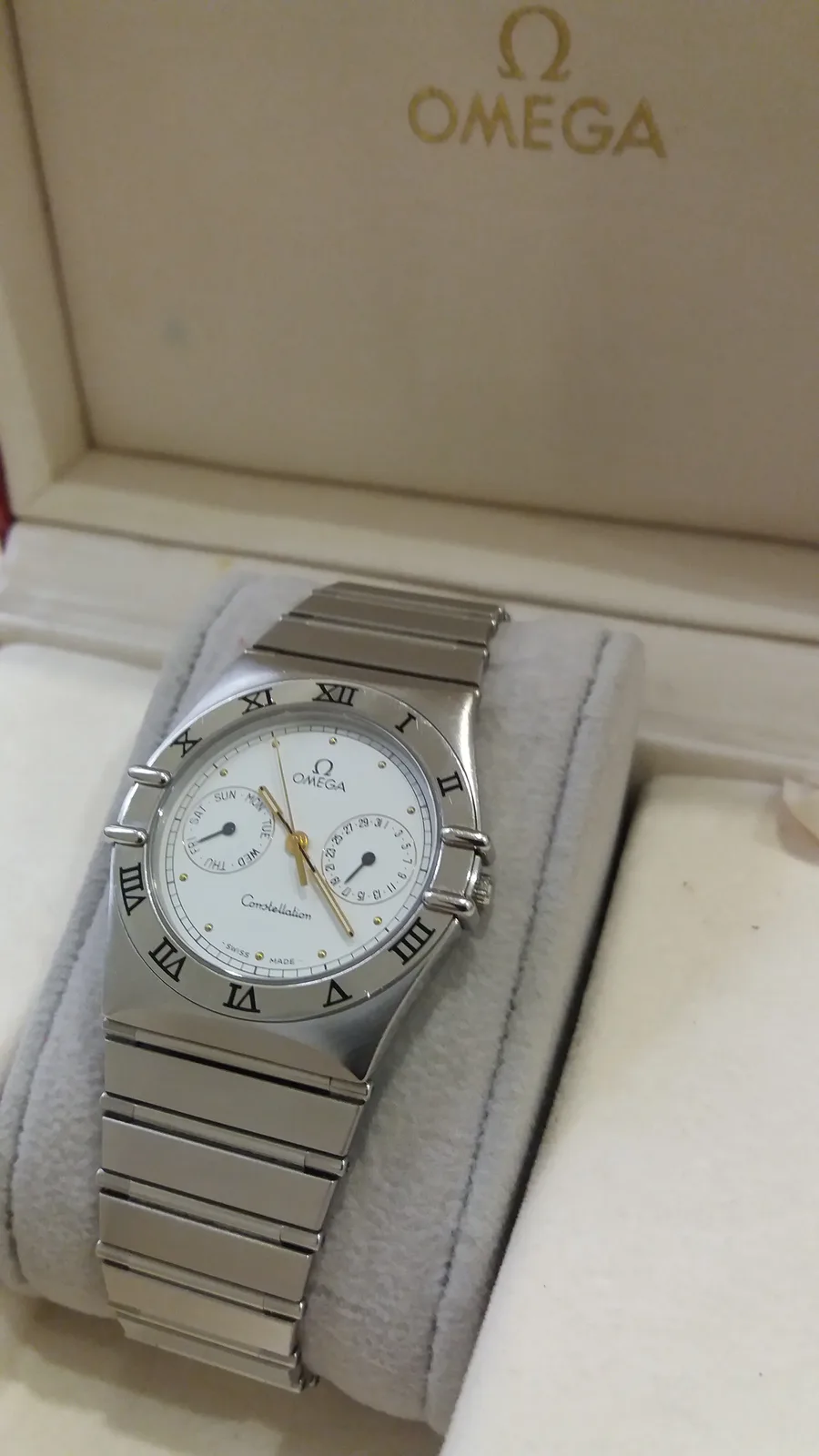
A Constellation Manhattan spends the same star in a quartz case — claws still at the bezel, an integrated bracelet, Roman numerals, and the case turned so the observatory medallion is part of the meeting. The star the name promised is on the back and still the reason the front is held. You would see the claws before you read a calibre. A Submariner would still be a circle that dives. An Explorer would still be a black that climbs. This case leads with the grip, and lets the medallion be the star the house already set.
A star you can read off the wrist
A white ground does not turn the Constellation into another watch. It keeps the claws and changes the weather around them. A Speedmaster would still be a chronograph that counts. A Submariner would still be a bezel that dives. An Explorer would still be a night and three numerals. This case offers one grip — a bezel held by claws, a dial willing to be a dish or a day window, a star you meet before the name.
Off the wrist, nothing has to be worn for the face to read. A set of claws. A case. A star that learned to sit and kept the lesson as jewelry.
That is the icon. Constellation, a star that sits. The rose-gold pie-pan with its claws and its small star. The later gold that kept the same grip. The Manhattan that still shows the medallion — a star you meet on the cuff.
Educational only · Not jewelry, insurance, or legal advice