Chrysoberyl as a neon light
Autumn has been dressing in deeper colors, and the stone that answers them is a yellow-green that looks switched on. Transparent chrysoberyl, the yellow and yellow-green gem of the species, runs from a lemon into a chartreuse, and the brighter stones are being called neon for the way the color seems to arrive already lit. Alexandrite is the same mineral agreeing to shift between daylight and a lamp. A cat’s-eye is the same mineral agreeing to draw a moving line across a dome. Peridot can be a lime that stays a lime. Heliodor can be a golden beryl. Citrine can be a honey of quartz. Sphene can break a yellow-green into a spectrum. This chrysoberyl holds one electric yellow-green, and the holding is the jewel.
A pane that spends the neon
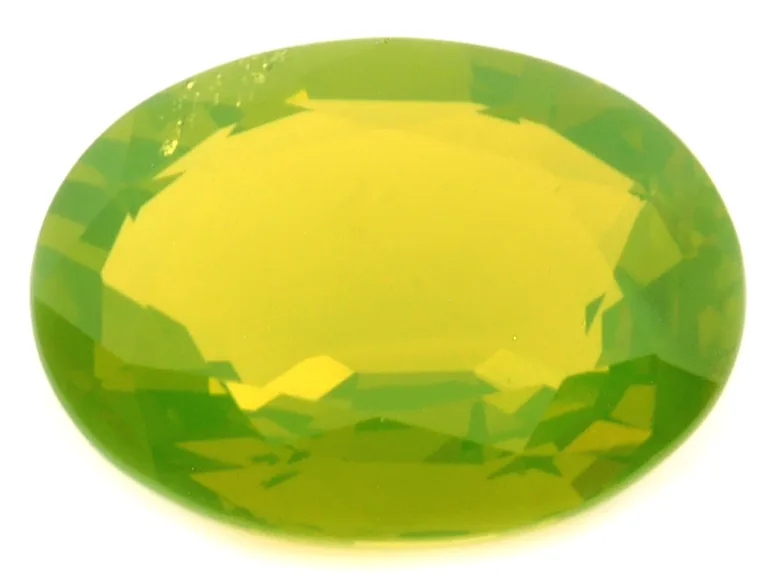
An oval of yellow chrysoberyl, 2.47 carats, sits on a white ground and spends the color as a single window. The hue arrives before the carat does. The outline is a soft egg, the table open, the pavilion returning the color as one field. A lime of this size would have been peridot, acid and botanical. A honey would have been citrine, warm and quiet. A golden beryl would have been heliodor, another mineral’s gold. This oval is chrysoberyl asked to be worn as light: lemon through the center, a green riding the edge where the facets turn, the whole stone bright enough that a darker cloth would only make it louder.
What stays with you is how little the stone has to explain. No eye crosses it. No shift from green to red is waiting on a lamp. The color is the fact, and daylight is already enough to finish it. The deeper reds and browns of the season do not have to argue with it. They give it a room. A facet here is a wall the yellow-green can stand against, so the neon reads as a body and not as a flash that leaves. You would pick the stone out of a tray by the hue alone. That is the manners of this gem in a darker month: one color, transparent, willing to be the brightest thing on the table.
The oval is the worn end of the species. Chrysoberyl is hard, and it takes a polish that lets the yellow-green stay clear, which is why a wheel can turn the mineral into a pane without clouding the neon. Santa Teresa, in Espírito Santo, is where that color often shows while the mineral is still a crystal. The cut stone is the promise kept. The crystals are the promise in its first chair.
A twin that keeps the green inside
A twinned chrysoberyl from Santa Teresa spends the neon before any facet. One crystal, glassy, a yellow-green you can see into, the form sharp and single rather than a crowd of flanges. The transparency is the first meeting. Light enters faces the mineral grew, and the color deepens toward olive where the crystal is thicker, and stays a lemon where it thins. No table has been cut. The brightness is already the species.
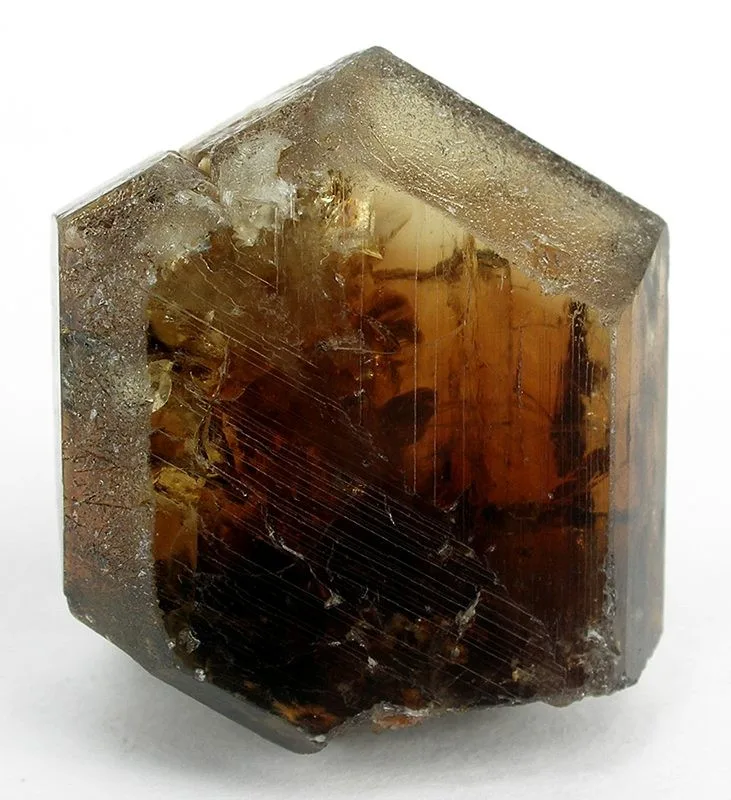
Many chrysoberyl twins arrive as sixlings, a star of crystals, several terminations at once. This one is the other habit: an ingrown twin whose outline stays a single sharp body, so the yellow-green has a room of its own. A peridot crystal of this green would have been a lime already known. A tourmaline would have been a saturated block. A heliodor would have been beryl’s gold. This body is chrysoberyl, the same mineral the oval was cut from, caught while the color is still a depth in a crystal. Set the faceted stone beside it and you are still in one gem. The oval spent the neon as a pane. This spends it as a body you can look through.
The twin is the season’s stone before jewelry finishes it. Bright, glassy, willing. A cat’s-eye would have needed a dome and a silk of light to make its event. An alexandrite would have waited for a second lamp to become itself. This crystal is complete in one light. The green is not a change and not a stripe. It is the mineral, transparent, already the color the cut stone only makes easier to wear.
The trilling, a star the mineral grows
A second crystal from Santa Teresa, a trilling, spends the habit the sharp twin set aside. Flat, cyclic, wedges of yellow-green meeting in a star the mineral grew, glassy on a white ground. The geometry is the first meeting. These are not facets a cutter laid out. They are the crystal’s own faces, and the neon repeats in each wedge, so the color is a rhythm rather than a single pane.
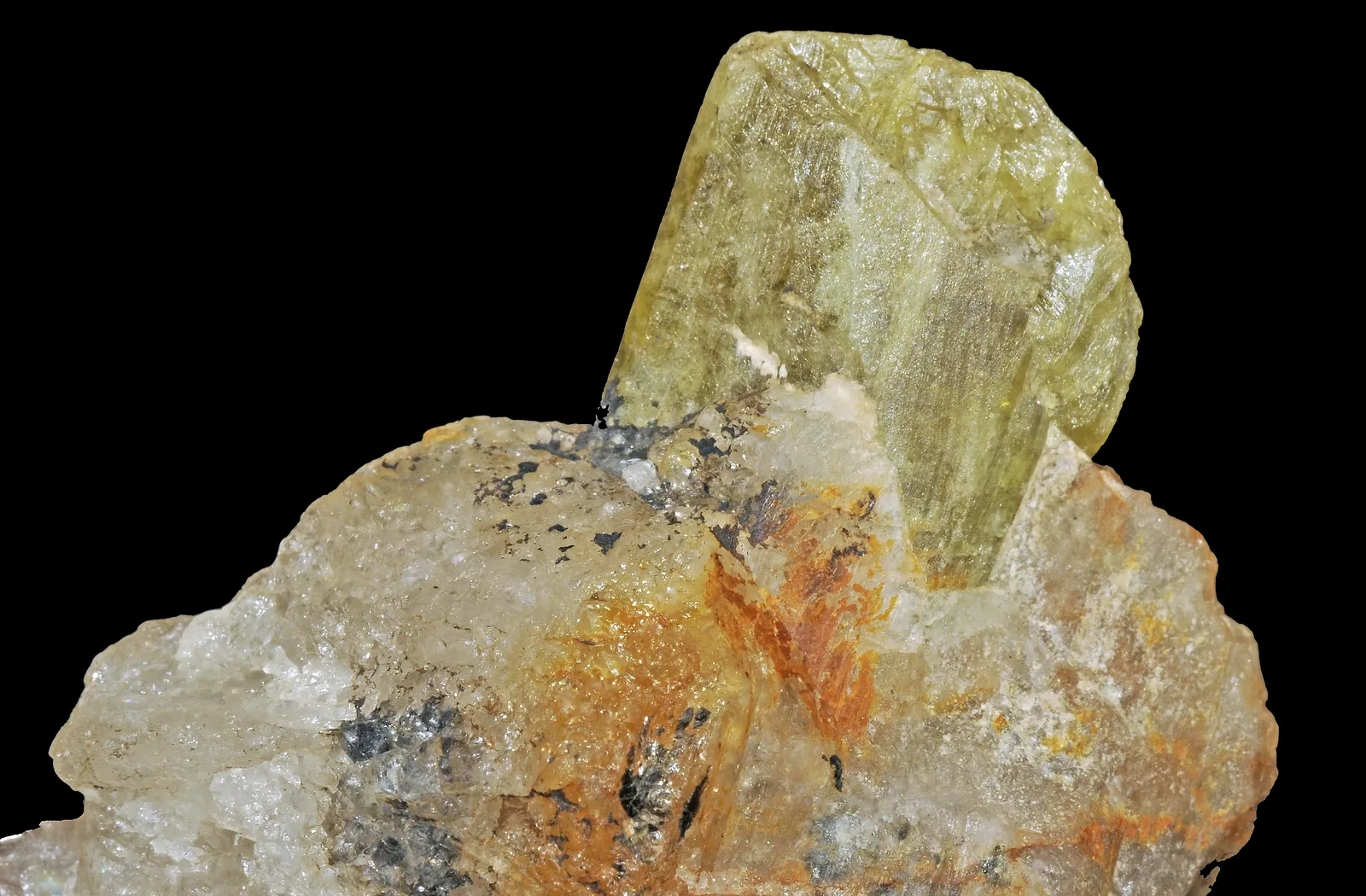
The oval was one window. The sharp twin was one body. This trilling is the species showing its frequent habit, a meeting of crystals, each wedge a small lamp of the same hue. Nothing in the still is a cabochon, and nothing asks the color to change. The brightness is structural: more faces, the same yellow-green, a star you read as chrysoberyl before you read it as a specimen. A scatter of garnets would have needed many stones to multiply a color. Here one crystal is enough.
Three stills, one light. The oval lets chrysoberyl be a jewel, 2.47 carats of yellow-green, the neon spent as a pane. Santa Teresa’s sharp twin lets the same color be a crystal you can see into, one body. The trilling lets the mineral grow its star and keep the hue in every wedge. An alexandrite can still shift with the lamp. A cat’s-eye can still draw its line. A lime can still be peridot. A golden beryl can still be heliodor. A honey can still be citrine. A spectrum can still leave a sphene. This season’s stone is the one that stays a single bright yellow-green: chrysoberyl, transparent, already lit.
That is the sit. Chrysoberyl as a neon light. A cut oval, a sharp twin, a trilling — the color, worn when the months go darker and want a lamp.
Educational only · Not jewelry, insurance, or legal advice