Champlevé is a trough
Run a fingertip across a gilt plaque and the color does not sit on top. It sits in. The metal has given up a hollow, and a glass has been fired into that hollow until the color and the wall are one plane. That is champlevé before it is a word. Cloisonné builds the wall out of wire, a fence set on, and fills the little room the wire made. Plique-à-jour keeps a cell and gives away the back, so the color is a window. Painted enamel lays a picture on a ground. Niello fuses a black line into a cut and leaves the black as the drawing. An intaglio cuts a figure and leaves the cut empty, a hollow you read as a shape. Champlevé takes the hollow from the metal and then fills it. The wall was the plaque. The color is the guest that came level with the wall.
A figure the metal holds
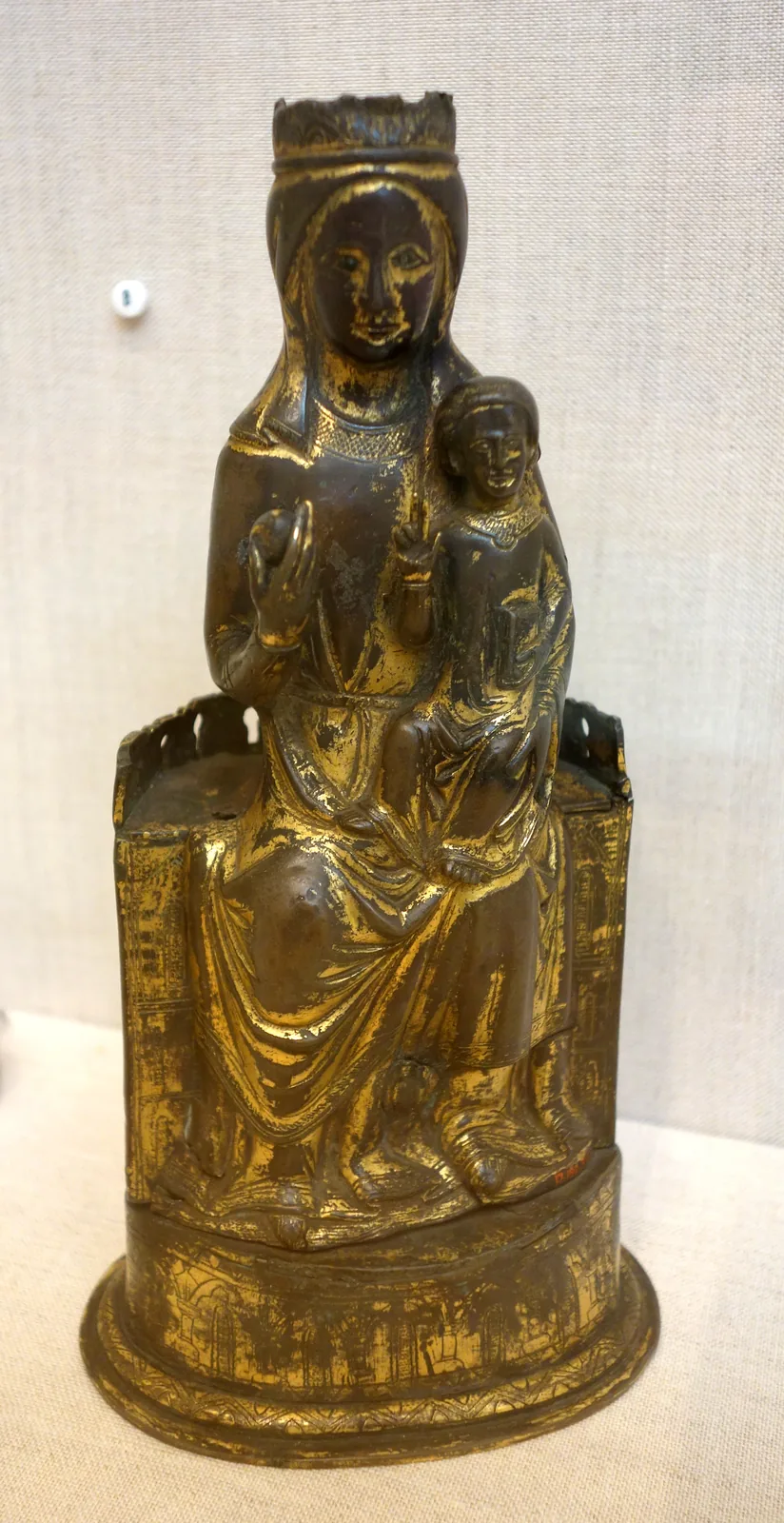
A Virgin and Child from Limoges, about 1300, spends the trough at the scale of a figure you could stand on a cloth. Gilt copper, champlevé enamel, a glass bead, the body a small architecture of metal and color. The Chazen Museum of Art shows it, lent by the Metropolitan Museum of Art. The figure is the first meeting. The robe is not a paint laid over a plaque. It is color sitting in cells the copper gave up, a blue and a gold, each hollow a trough. The metal between the colors is the wall. It was not a wire added after. It is what remained when the hollows were made.
A cloisonné of this appetite would have given the same colors and a fence of wire, the wall a thing attached. These walls are the plaque itself, continuous with the body, the color a glass that has come up to meet them. What you see at the edge of a blue is not a thread. It is copper that was always the figure, left standing so the enamel would have a shore. A fingertip learns a plane. The cell is a trough, not a cup with a picture painted on its floor, and not a window with the floor removed.
The figure is also where the trough shows its manners. It can be a small pane in a robe, repeated, and it stays a skin in every cell. The glass bead does the work of a point. Champlevé does the work of the color that sits in. The firing can stay a mystery. The eye only has to learn that the hollow was taken out of the metal, and that the gilt around the color was meant as a wall rather than as a ground the paint covers. One figure. The lesson is already whole, and the next objects show that it travels.
The standing body is a kindness to the word. A plaque seen only as a rectangle can be misread as a painting, color as a picture on copper. A figure, the robe broken into cells, is harder to mistake. Each trough is a shallow room. The enamel filled it. The copper kept the walls. You could cover one cell with a look and still have the method left over: a hollow, a glass, a wall that was already there.
The same trough, around a box
A chasse with angel medallions, Limoges, thirteenth century, spends the cell as a repeat. Gilt copper, champlevé enamel, a house-shaped box, medallions of angels along the face, the ground a field of color held by copper walls. The Chazen shows this one too, lent by the Metropolitan Museum of Art. The medallions are the first meeting. Each angel sits in a round the metal kept. The color around them is not a wash. It is enamel in troughs, a blue and a gold, the copper the line that separates one hollow from the next.
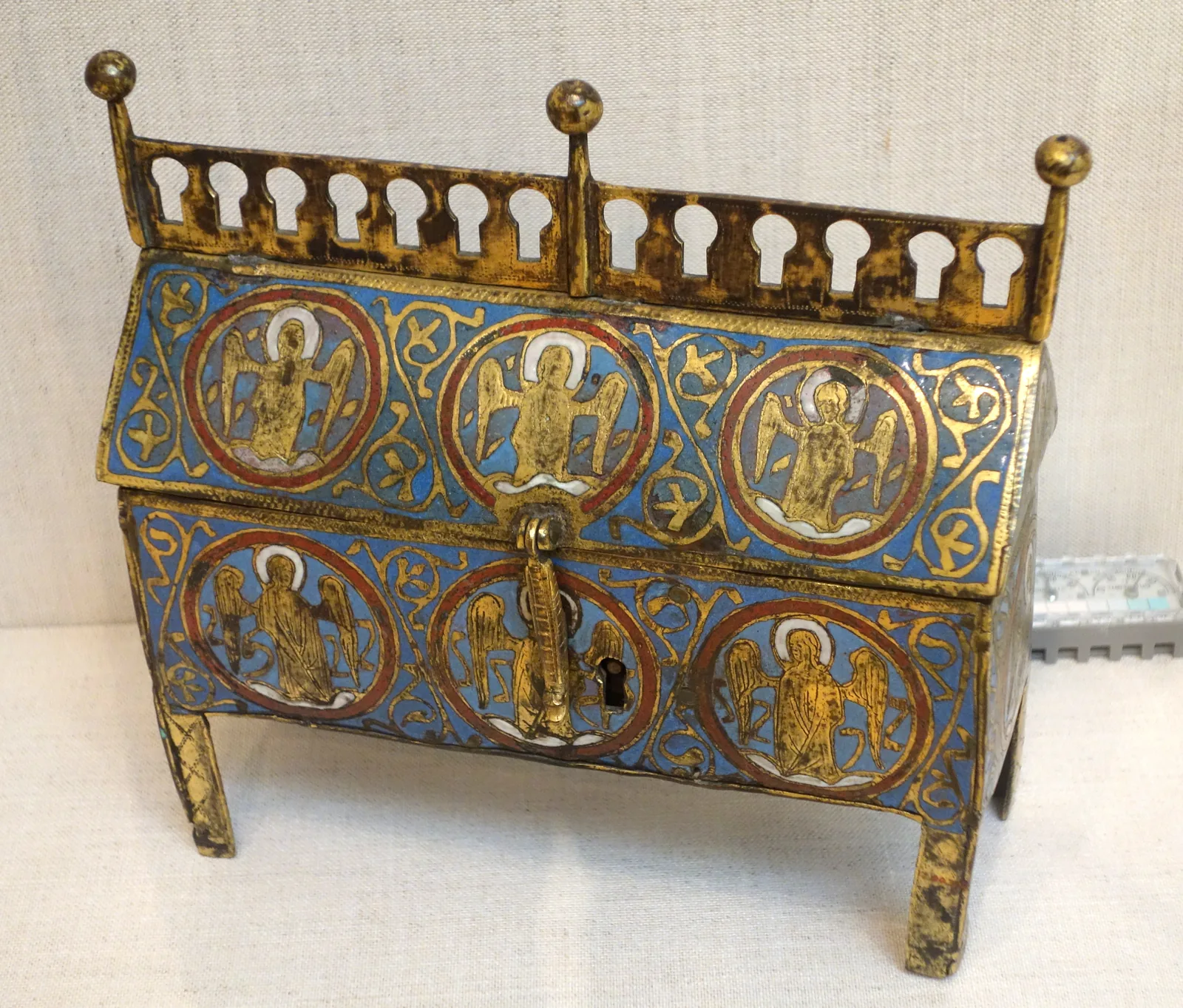
A box is a kindness of another kind. A figure can be loved as a figure, the technique hiding in the robe. A chasse asks you to read a surface: many cells, one plane, the angels a rhythm of rounds. A plique-à-jour of this drawing would have let the day through the color, and no day is coming through these panes. They are backed. The copper is behind them and between them. The back is the reason the color can be a skin you look at, and the trough is the reason the skin has walls you can feel. An empty lace would have left the openings bare. These openings were filled, and the fill came level with the gilt.
The Virgin and the chasse are two objects and one sentence. A standing figure, a box of medallions. Limoges in both, a different drawing in each, the trough unchanged. You could think either one down to the high metal and the color would remain in its hollows, because the color was never the copper. It was the guest in the cut. The gilt is the light around it. The roof of the chasse, the hem of the robe: both are metal that agreed to be a wall and then agreed to stop, so the glass could have a shore.
What the plane asks of you
A plaque of the martyrdom of Saint Stephen, Limoges, about 1200, shows the trough as a picture rather than a figure or a repeat of rounds. Gilded copper, champlevé enamel, the scene held in cells across a rectangle. The Princeton University Art Museum keeps it. It is a third object, its own drawing, its own blue. The enamel does the same work. It sits in hollows the metal provided, level with the walls, the story readable because the copper stayed and the glass filled what the copper gave up.
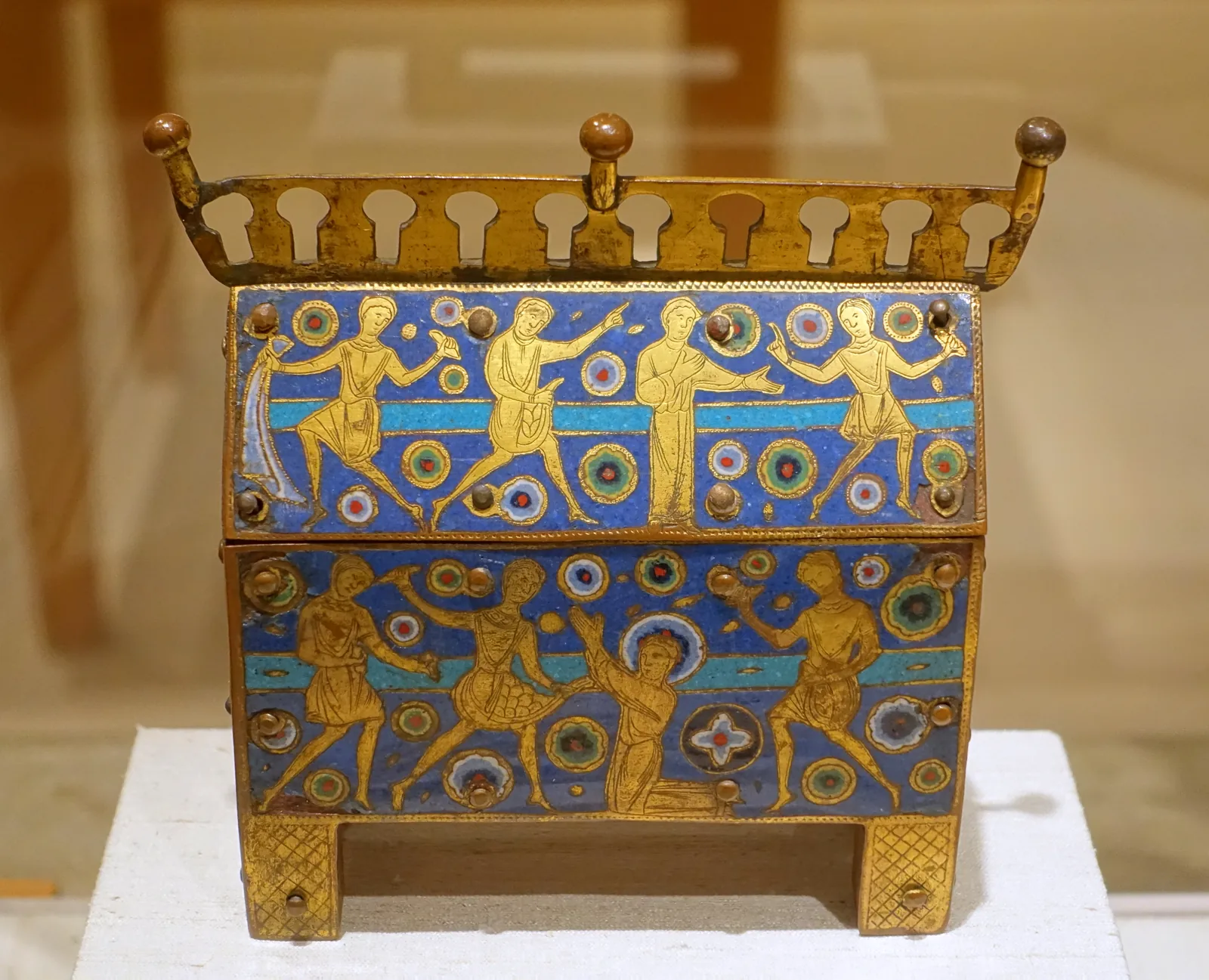
Three objects, bright in the metal and colored in the cells, are enough to see that the color was placed as glass in a trough and then finished to one plane. An enamel with wires would have shown you the fence. A window enamel would have changed its brightness when a light moved behind it. These cells stay a skin. The light falls on them. It does not come through. A figure, a box, and a martyrdom are one technique. The word is what keeps them from being three unrelated blues.
The care follows from that plane. The enamel and the gilt are finished level, and an abrasive polish does not know the difference. It cuts the copper and the glass together, and a trough that was shallow can lose its color where the cloth bore down, the wall lowering until the drawing thins. A bend is the other risk. The plaque is a skin of copper with glass in it, and a flex that would only spring a plain sheet can crack a cell that has been fired hard. A soft cloth keeps the gilt and the glass. Between keepings, the figure and the chasse and the plaque want a box with a soft nest, and no stacking of metal against the enamel. The care is only that the trough remain a trough: the glass unbroken, the wall still the metal, the two of them still one plane.
Three stills, one trough. The Virgin lets the enamel be a robe, color in cells the copper kept. The chasse lets the same glass be a rhythm of medallions, a box you read as a surface. The Saint Stephen plaque lets it be a picture, a third object, the hollow filled again until a scene appears. A wire wall remains cloisonné. A missing back remains plique-à-jour. A painted ground remains enamel as a skin. A fused black line remains niello. An empty cut remains an intaglio. Champlevé is the trough: a hollow taken from the metal, a glass fired into it, the wall and the color finished level.
That is the note. A cell is taken from the plaque. The glass is fired in. Champlevé is what sits in the hollow — a Virgin, a chasse of angels, a martyrdom — color, walled by the metal itself, and brought up to one plane.
Educational only · Not jewelry, insurance, or legal advice