Cellini, a gold hour in dress
Cellini keeps the hour in gold, and keeps it as dress. A Calatrava is a circle that dresses by becoming almost nothing: a round, a quiet dial, the outline as the jewel. A Datejust opens on a fluted bezel and a date, the day-to-day Oyster still in the room. A Day-Date opens on a day you can read. A Submariner is a circle that dives. An Explorer is a black that climbs. Cellini steps into another room. The case is gold. The bezel is already an ornament. The hour agrees to be worn as jewelry.
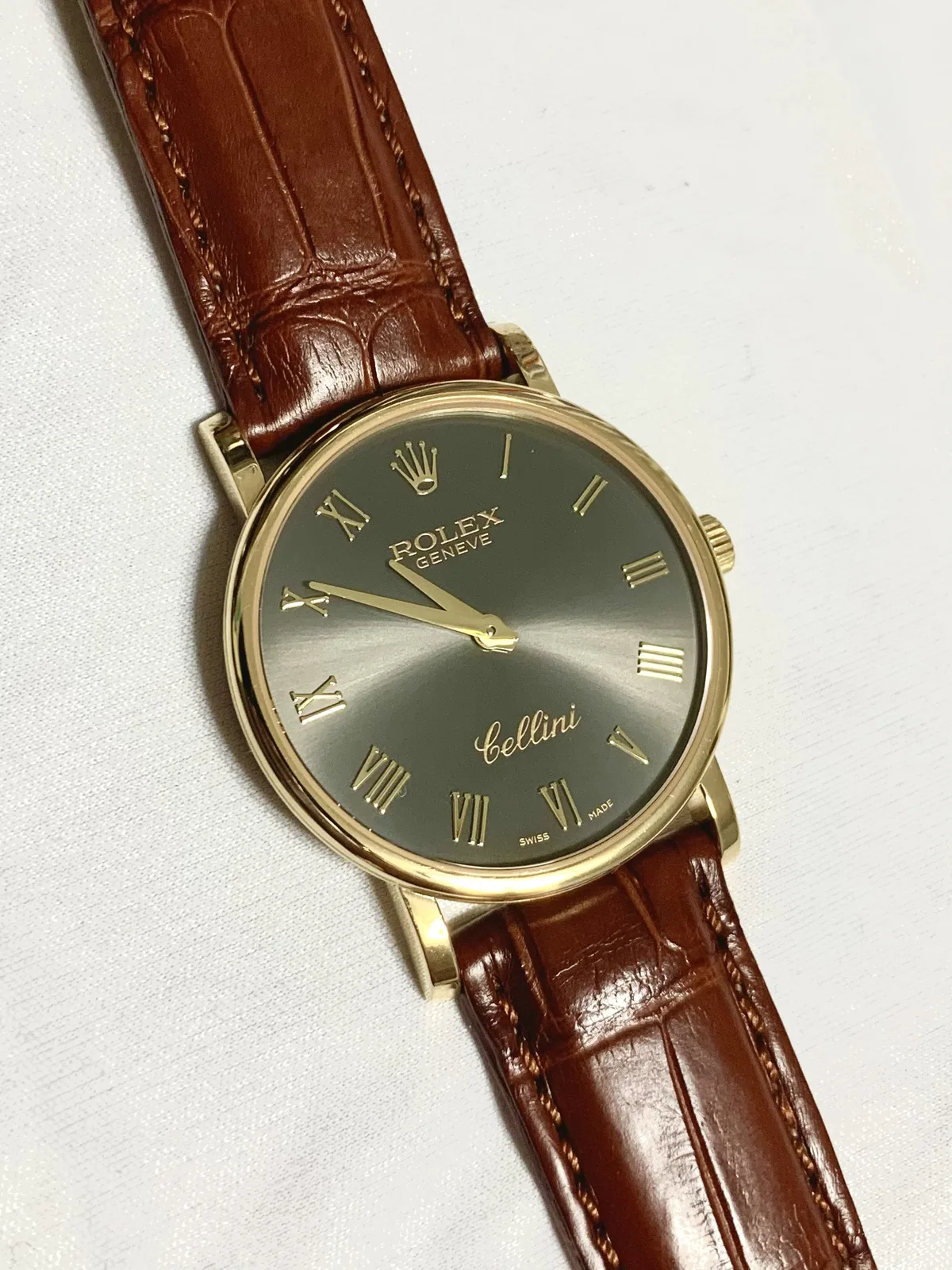
A round of plain gold
A Cellini reference 5115/8 keeps the meeting as a catalog still on a white ground. Yellow gold, off the wrist. A smooth bezel, a warm dial close to the color of the case, applied bars, hands that taper. No fluting. No date. No stone. The crown is small. The jewel is the gold itself, a round that has already decided to be dress, the hour sitting inside a color it nearly matches.
Cover the hands and the case is still a jewel: one circle of gold, one soft dial, a bezel that does not ask to be gripped. That is the icon’s scale. A dress watch you meet as a metal, then as a time. A plain Calatrava would have thinned this thought until the circle was almost a drawing. Here the gold has weight, and the weight is the ornament. The hour lives in a piece of metal that has chosen to be looked at before it is used.
A fluted Datejust cuts gold into grooves and then lets a date explain the watch. This one has no date window and no groove. The dial stays a soft metal color, close to the case, so the whole object reads as one gold. Steel would have cooled it into a tool. The 5115 stays warm, and the warmth is the introduction. The line does not have to stop at plain. It can, and the plain is already enough.
A moon in the gold
A Cellini Moonphase, reference 50535, spends the dress hour with a sky. Off the wrist, on a white ground: a white dial, Roman numerals, a moonphase down at six, a bezel set with diamonds. A moon among small stars. A gold case. An hour that has agreed to wear a night scene as jewelry.
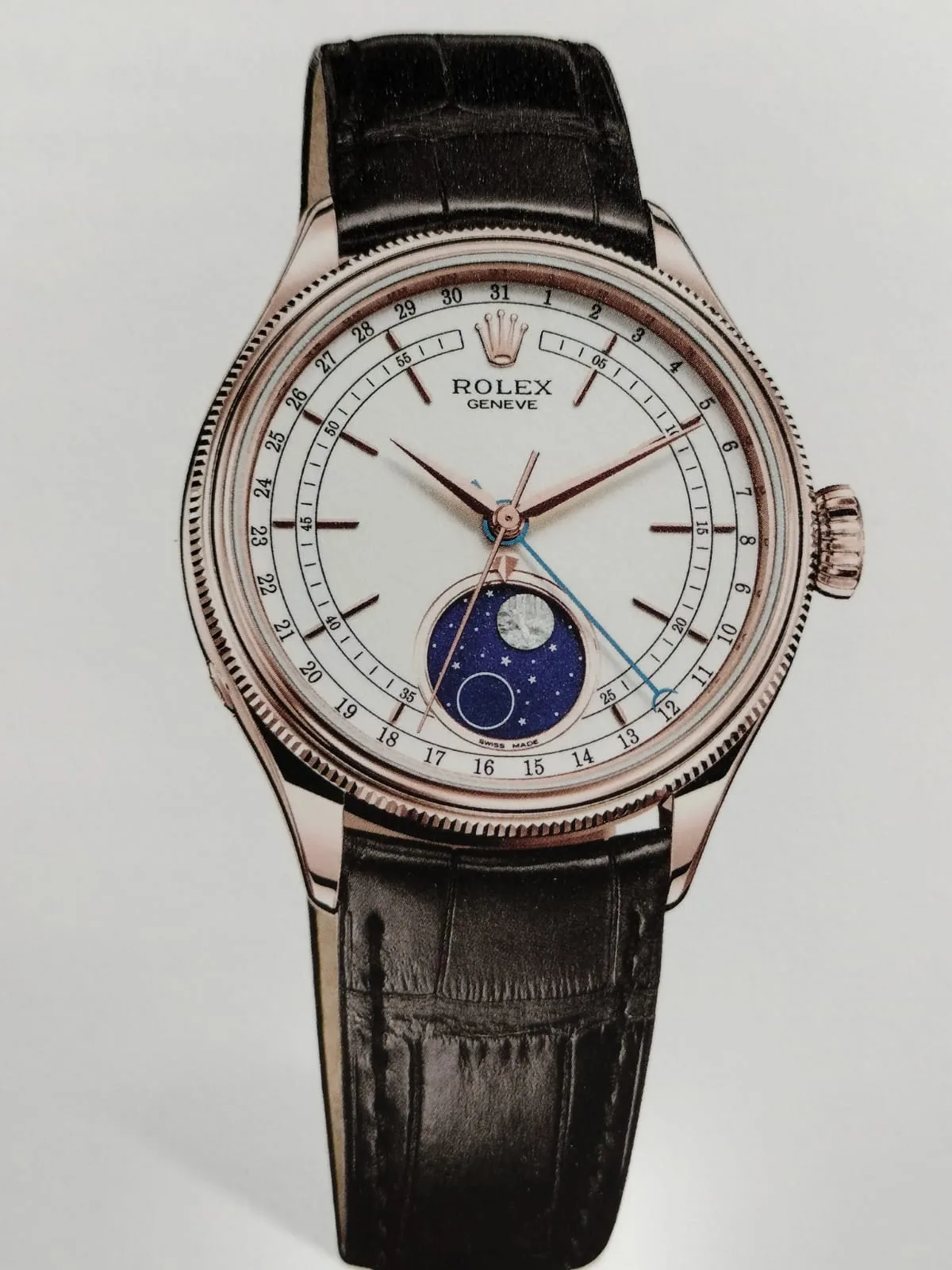
The moon is the picture. Six o’clock is no longer only a marker. It is a small sky, a disc that will turn, stars caught in it. You meet that disc before you count the Romans. A Daytona would have put three registers in the lower half and called them a count. A Day-Date would have put a day and a date in windows and called them the news. This one puts a moon, and the moon is enough ornament for the whole lower dial.
The diamond bezel takes the plain gold of the 5115 and gives it a bright rim. Both are bezels that have left the sports ring. One is smooth metal. One is a line of stones. Both expect to be looked at as a jewel first. The dark strap under this case stays quiet. The case does not need it to explain itself. Circle, moon, a rim of diamonds. The hour is the guest of the gold.
A fluted black
A gold Cellini of the late 1980s keeps the dress case and changes the dial’s weather. Yellow gold, a fluted bezel, a black dial, stick hands, applied markers, off the wrist. The fluting is an old gold ring, here without a date to accompany it: the grooves exist as light on gold. The black gives the gold an edge. The hour sits in a dark field the way a stone sits in a bright setting.
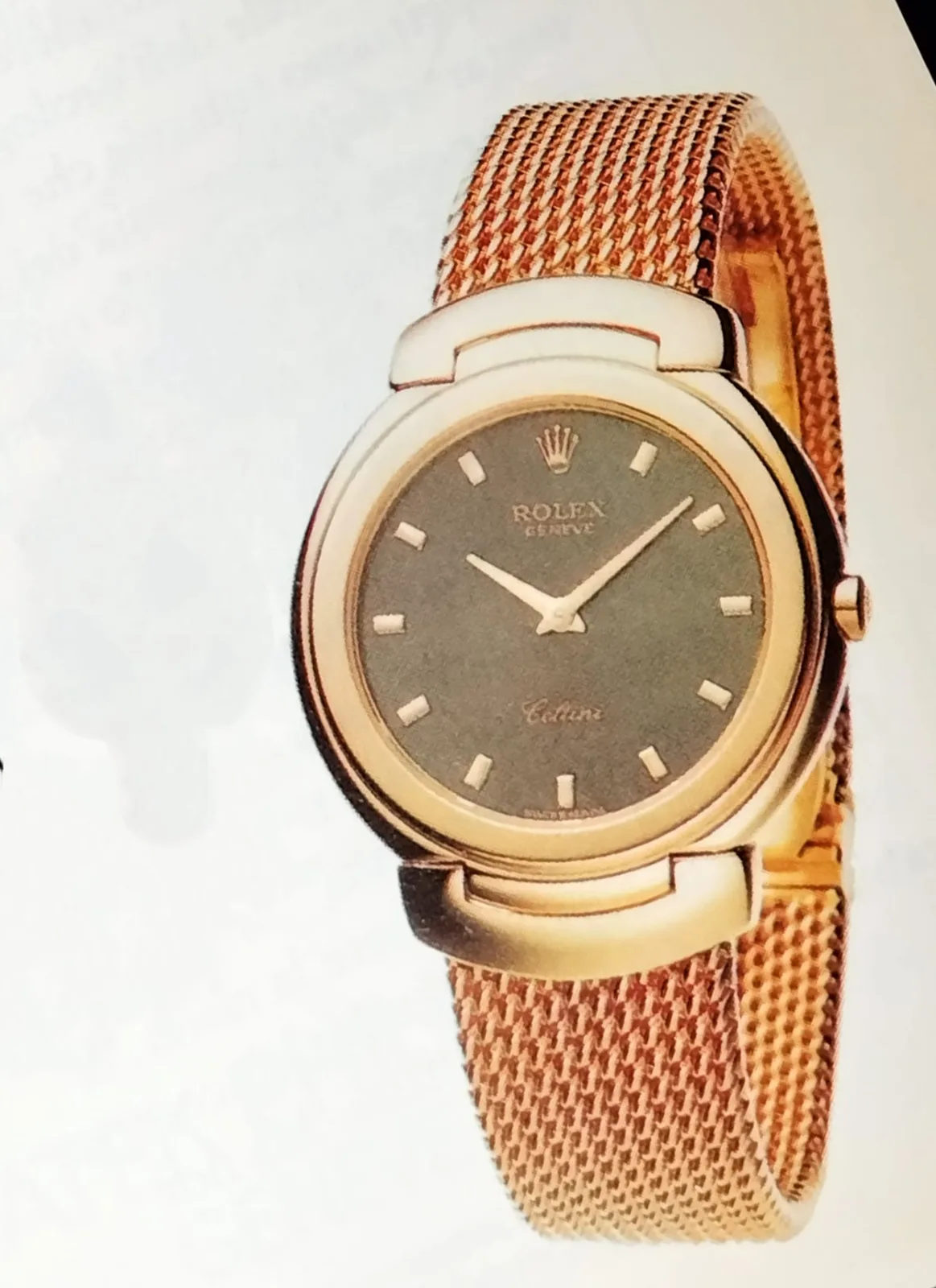
Fluting on a sports watch is a grip and a signature. Fluting here is jewelry. Run a look around the ring and the gold breaks into lines of light, a cousin of milgrain done in grooves rather than beads. The dial does not compete. It is black, and the gold does the talking, and the hands are there when you are ready for them. A Submariner’s black is a black that dives, a bezel that turns, a circle with a purpose written on it. This black is a ground for gold. The watch is dressed.
Three cases so far, one family. The 5115 gives the gold nothing but itself, smooth and warm. The moonphase gives it a sky and a diamond bezel. The late-1980s piece gives it fluting and a black field. The metal stays yellow. The hour stays inside an ornament. From one white ground to the next, the meeting is still a jewel that keeps an hour.
A black dial on a stand
Reference 6623, the late 1990s, keeps the fluted gold and sets the watch up as a catalog object on a small stand. Black dial, applied markers, baton hands, off the wrist. The stand is a quiet theater. Nothing about the photograph asks for a cuff to finish the sentence. The case is the sentence. Gold, fluted, round, a dark face, an hour.
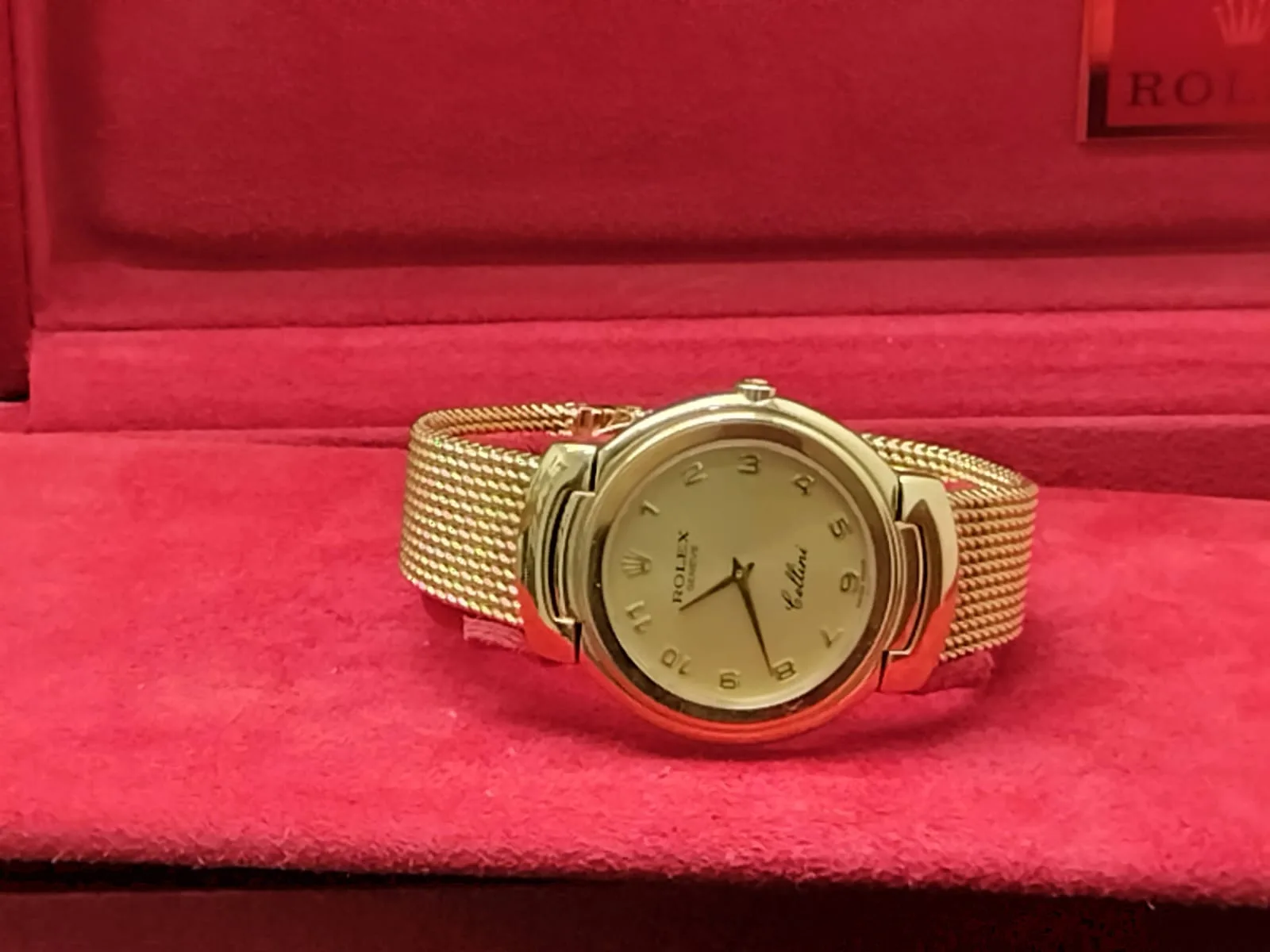
A dress circle from another house would have thinned the lugs and cleared the dial until the watch was almost a drawing. This one stays recognizably itself in the hands and the crown and the weight of the gold, and still reads first as a jewel on a stand. The fluting catches along the top of the bezel. The black holds steady. You could set it among brooches and the eye would know where to rest: on the gold ring, then on the dark, then on the time.
Four watches, one dress gold. The 5115 lets the case be plain and warm. The moonphase sets a moon at six and a line of diamonds around the hour. The late 1980s lets fluting and a black dial be enough. The 6623 puts that same black-and-gold thought on a stand and lets it be looked at as an object. The bezel can be smooth, stone-set, or fluted. The dial can be warm, white, or black. On a Cellini, the hour is kept in dress gold.
That is the icon. Cellini, a gold hour in dress. A plain round of gold. A moon in a diamond bezel. A fluted black. A catalog stand, and the gold still the first thing you meet.
Educational only · Not jewelry, insurance, or legal advice