The Cartier Tank on the wrist
Turn the wrist and the Tank is already there: a small gold door, longer than it is wide, lying so flat that a cuff can close over it. Louis Cartier drew that rectangle in 1917. A century later the pleasure is still the sit — not the complication, the contact.
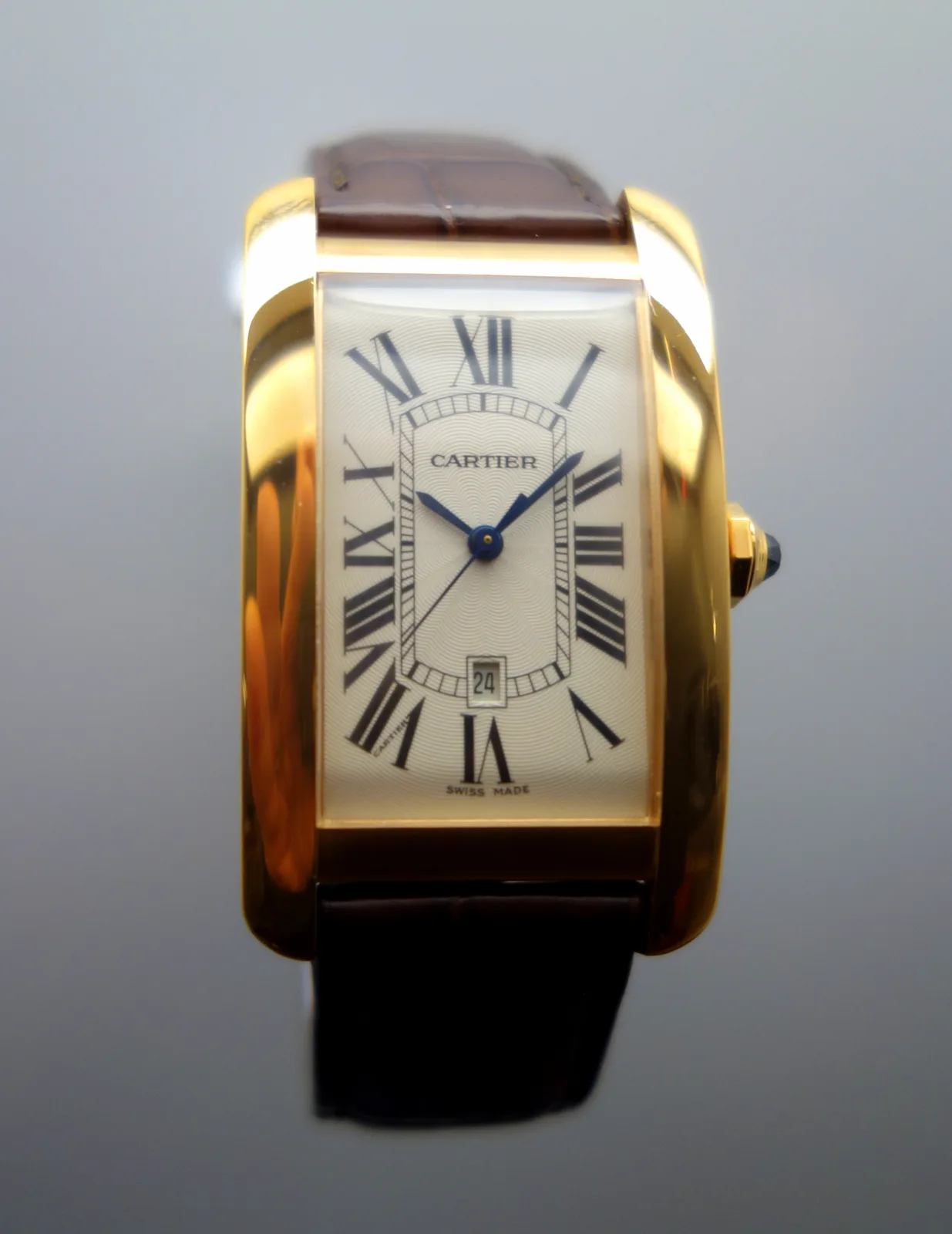
The brancards — those two vertical bars — do the jewelry work. They hold the cream dial like a picture in a frame. Roman numerals sit in the field; sword hands, often blued, travel a quiet square track. On the right, a sapphire cabochon crowns the winding stem. It is a jewel, not a tool knob.
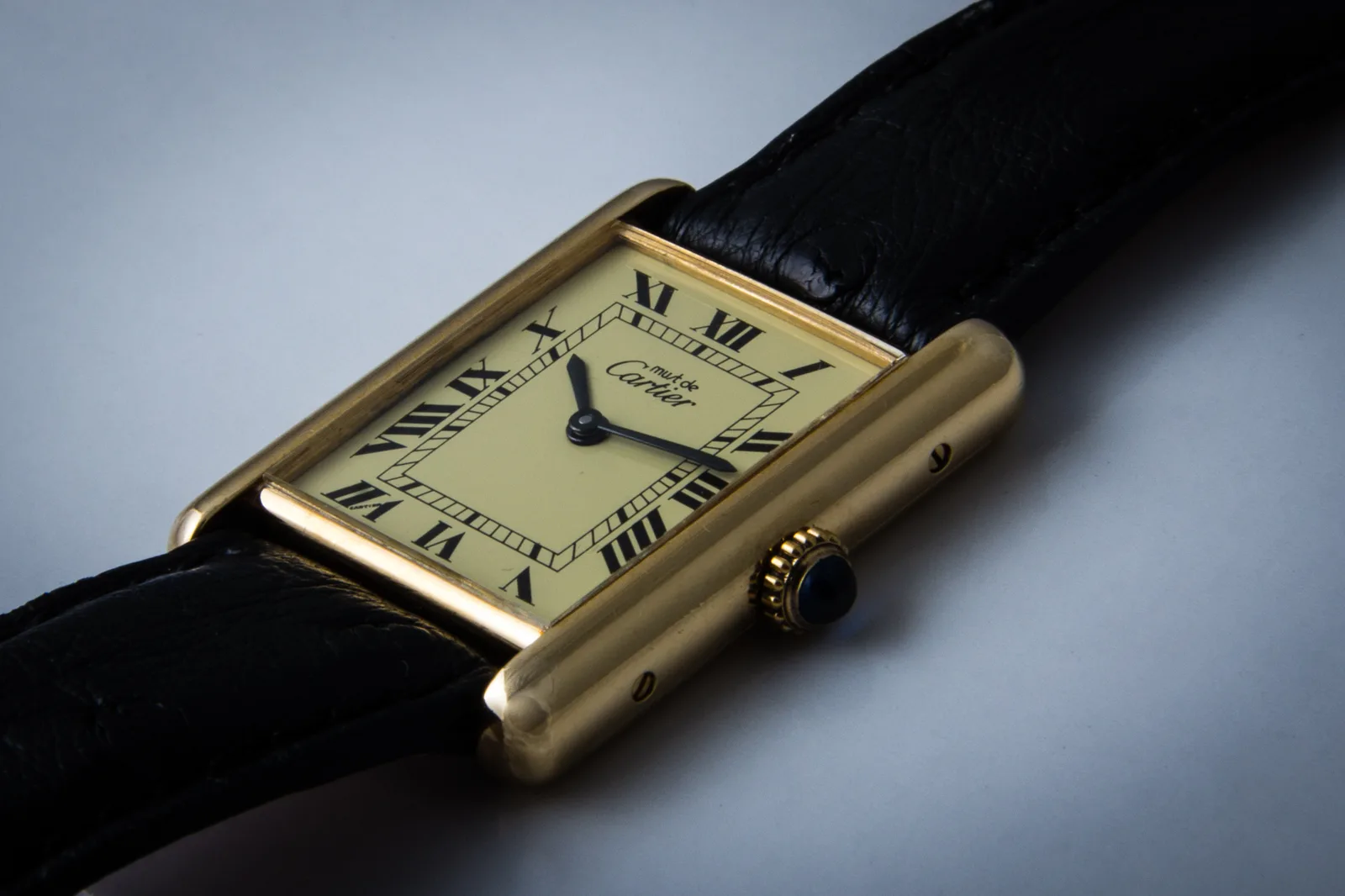
A Must de Cartier Tank from the vermeil years is the same drawing in a warmer metal. The case is thinner than a sports watch. On the wrist it behaves like a bracelet with a face: the leather runs under the case and vanishes, so the gold is what you see when the hand turns. You would feel the gold door before you felt the strap.
How the family meets the skin
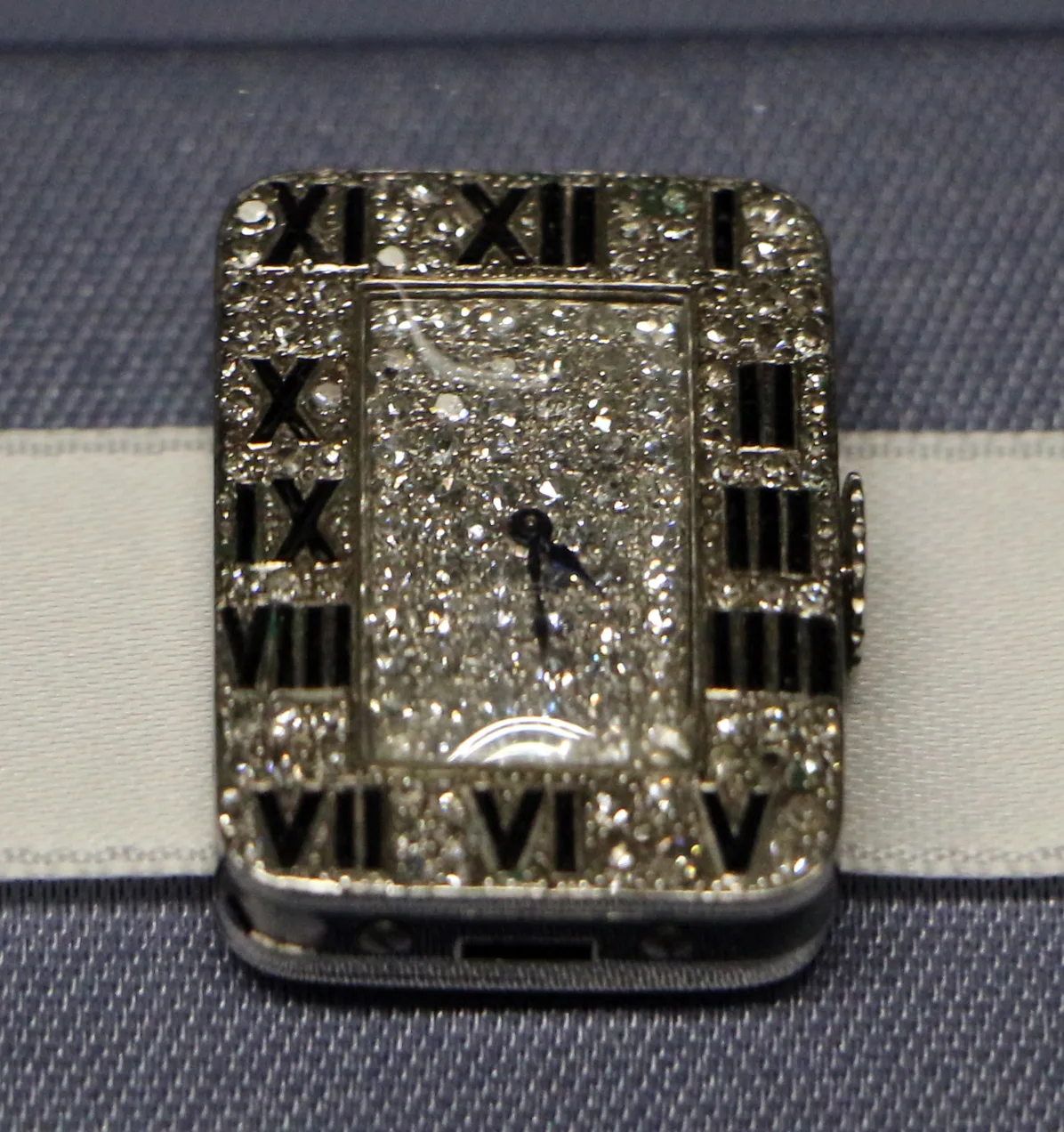
A diamond clip from Palazzo Pitti is the Tank as high jewelry. Roman numerals sit in a pavé frame; a cream ribbon holds the rectangle the way a strap would. You would feel stones before you felt leather.
The same house, a few years earlier, drew the jewel into a bracelet: platinum, a cream dial, emeralds along the rim, diamond links that are the jewelry. The watch is a door in a line of stone. The ribbon is the quiet part; stones do the talking, and the cream holds the rectangle the way leather would, without the bulk.

None of them asks to be read from across a room. They ask to be noticed when you set a glass down. That is the house’s gift in this line: a watch that sits the way a bracelet sits, and leaves the same quiet gold line when you look down.
Educational only · Not jewelry, insurance, or legal advice