Cartier bracelets, and the line they draw
A Cartier bracelet is a line drawn around the wrist, not a charm hanging from it. The house likes metal that follows the bone. You feel the clasp, then you forget it, and what remains is a continuous stroke of platinum, gold, or carved stone.
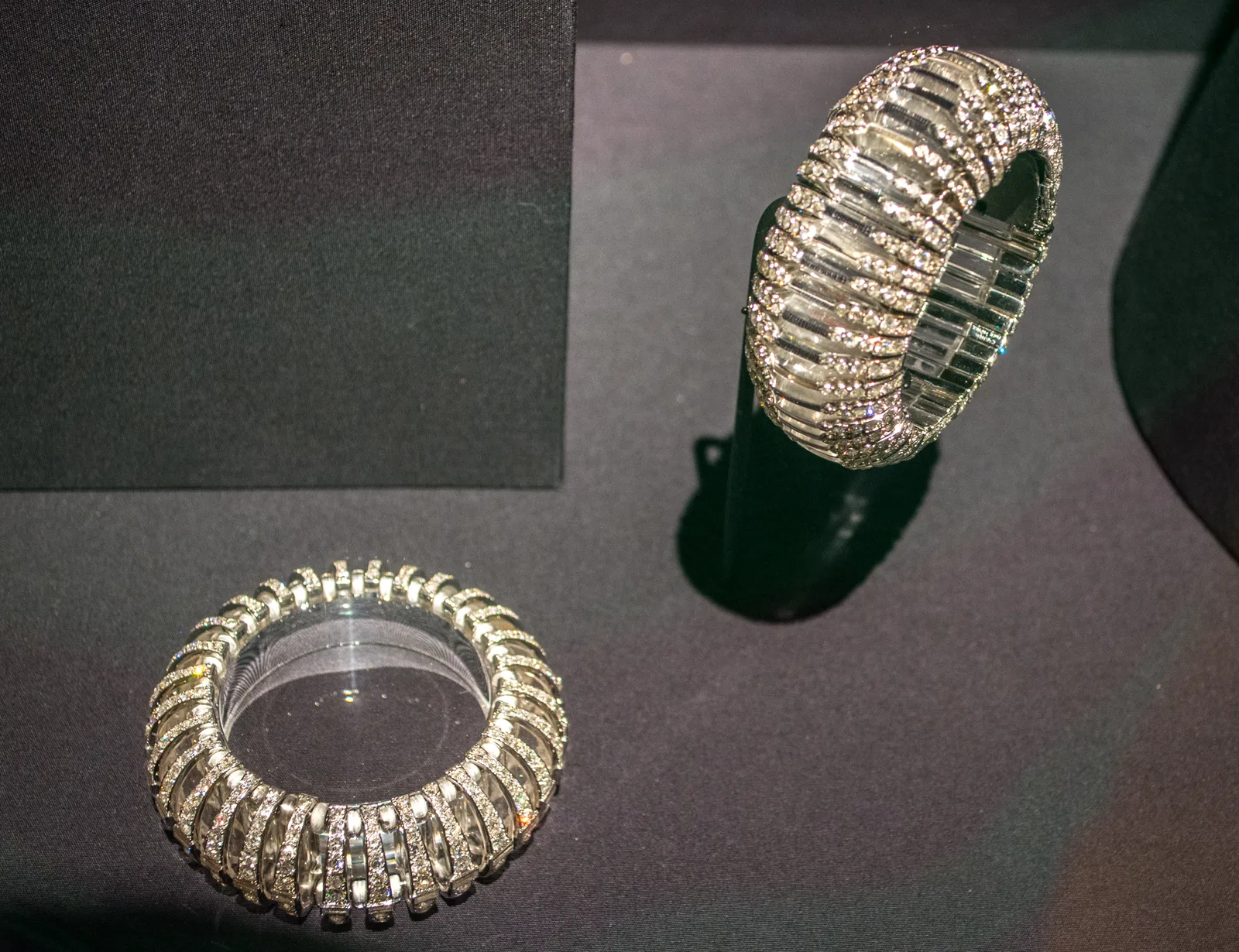
The Swanson bracelets are wide diamond cuffs, ribbed like a small architecture. On the wrist they would sit as a band of light, not a chain. One lies flat in the case; the other stands, and you see the thickness — enough to catch a sleeve, light enough to turn with the hand.
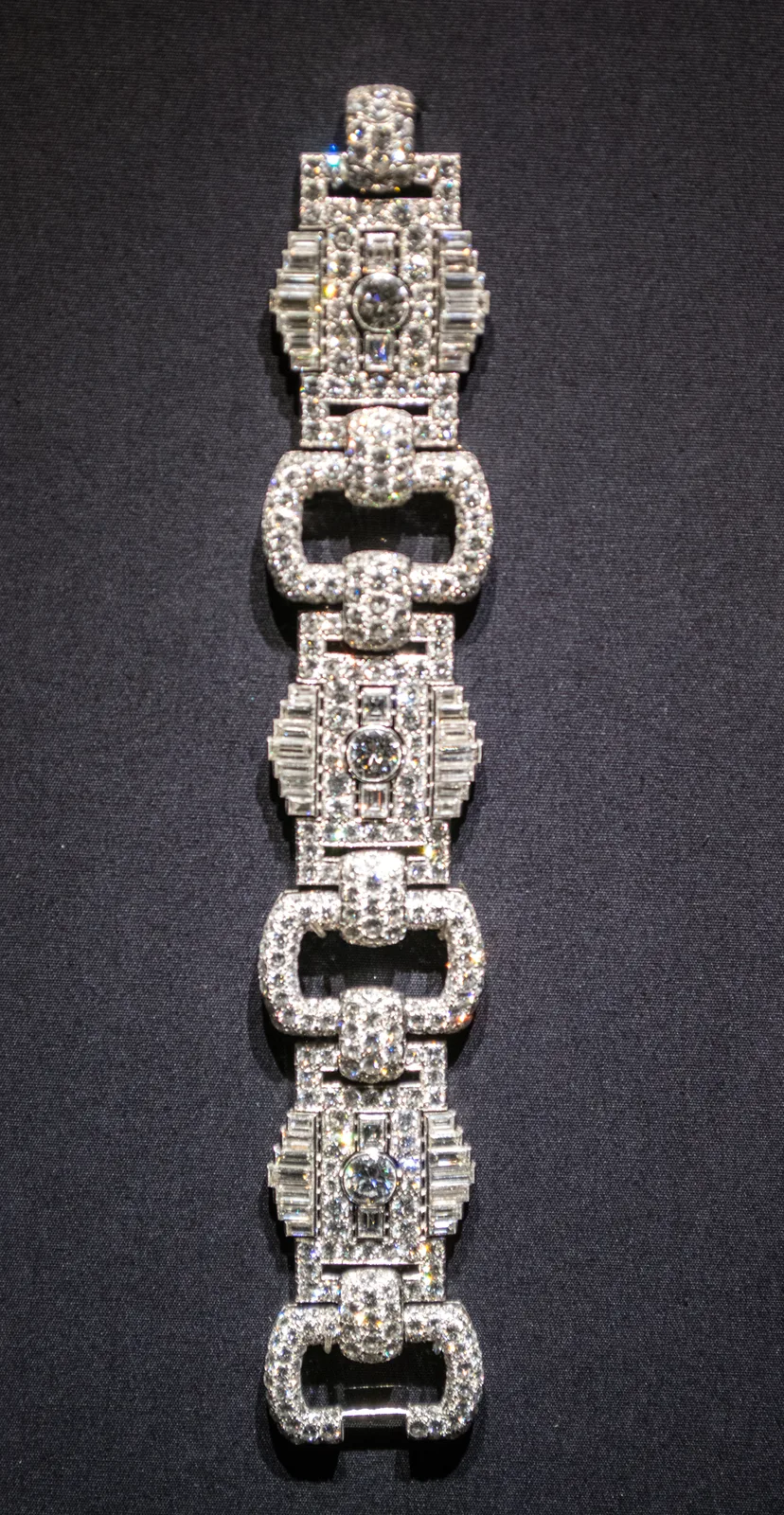
The linked bracelet is the same idea in chapters. Rectangular plaques, baguette fans, pavé loops — each link a room, the whole piece a corridor around the wrist. It would rest along the inner arm and flash only when the hand moves.
Stone that sits like fabric
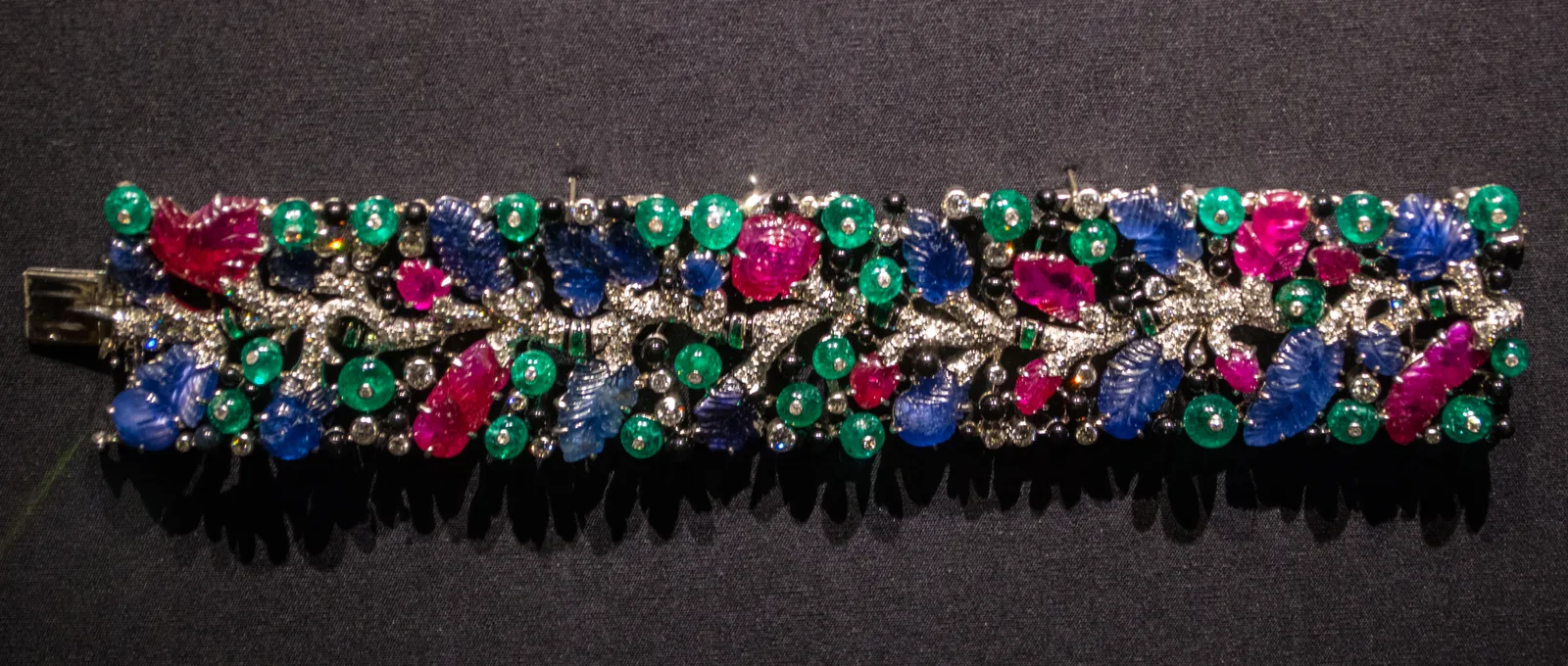
Tutti Frutti is the garden version. Carved leaves of emerald, ruby, and sapphire, diamond vines, a few dark beads for night. Laid out it looks busy. On the wrist it would read as a soft, colored cuff — fruit and foliage pressed close to the skin, Indian carved stone in a Paris line.
A sleeve would catch the carved leaves before it caught a clasp. Fruit and foliage as a surface, close enough that the wrist reads as one motif. Each plaque of the linked line is a little room you feel when the hand turns; the garden is the same sit in color.
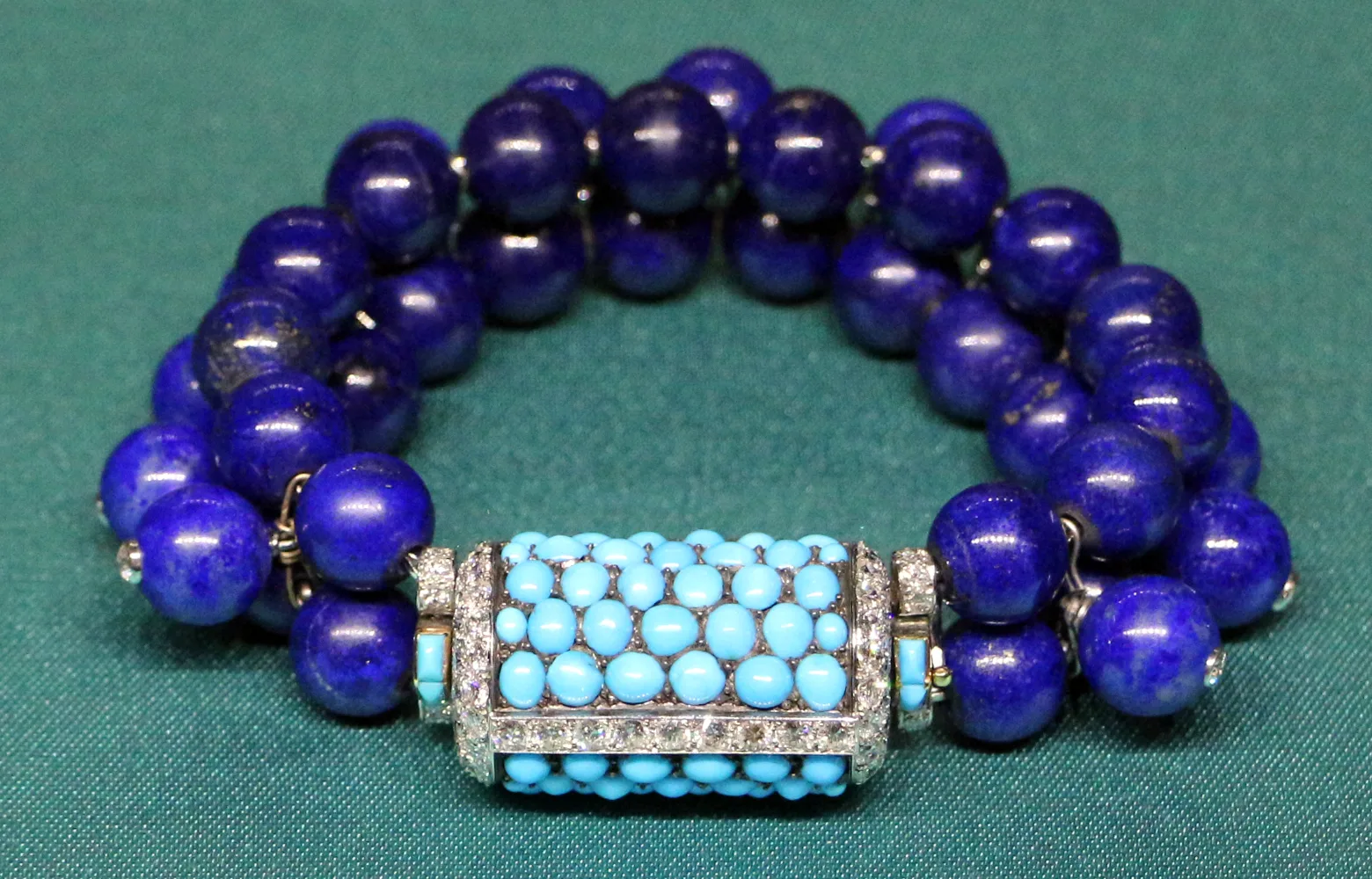
The 1937 bracelet cools the palette. Two strands of lapis, a drum of turquoise cabochons set with diamonds. The beads would knock once, then settle. Night blue against the pulse. Cartier’s Geneva collection kept this one as a study in how color can be as quiet as metal.
Cartier writes one continuous line around the bone, and the body is the page.
Educational only · Not jewelry, insurance, or legal advice