Carnelian as a warm orange light
A warm orange light. Carnelian is the chalcedony you meet before you name a mineral — a color that has already settled, translucent enough to hold a glow, the mount only a chair. Amber keeps a warm resin light, a honey that can sleep a fossil. Citrine keeps a warm gold light, a stone asked to be weather. Coral keeps a warm sea, opaque and marine. Carnelian keeps an orange. You meet the light first.

Four round cabochons hold that orange in clean domes. No facet asked to break the hue into a spark. The polish is a skin the light can enter and leave warm. You would see the orange before you named a cut. Amber would have asked for a resin. Citrine would have asked for a gold. These stones ask for a warm orange light, worn as a field the metal has not yet been asked to frame.
Color, this season, is being worn as an orange you can look into. Afternoon held until it keeps a shape. A high, clear chalcedony, with metal as the chair when one arrives. The material that carries it is carnelian.
A scarab of the same orange, then a strand
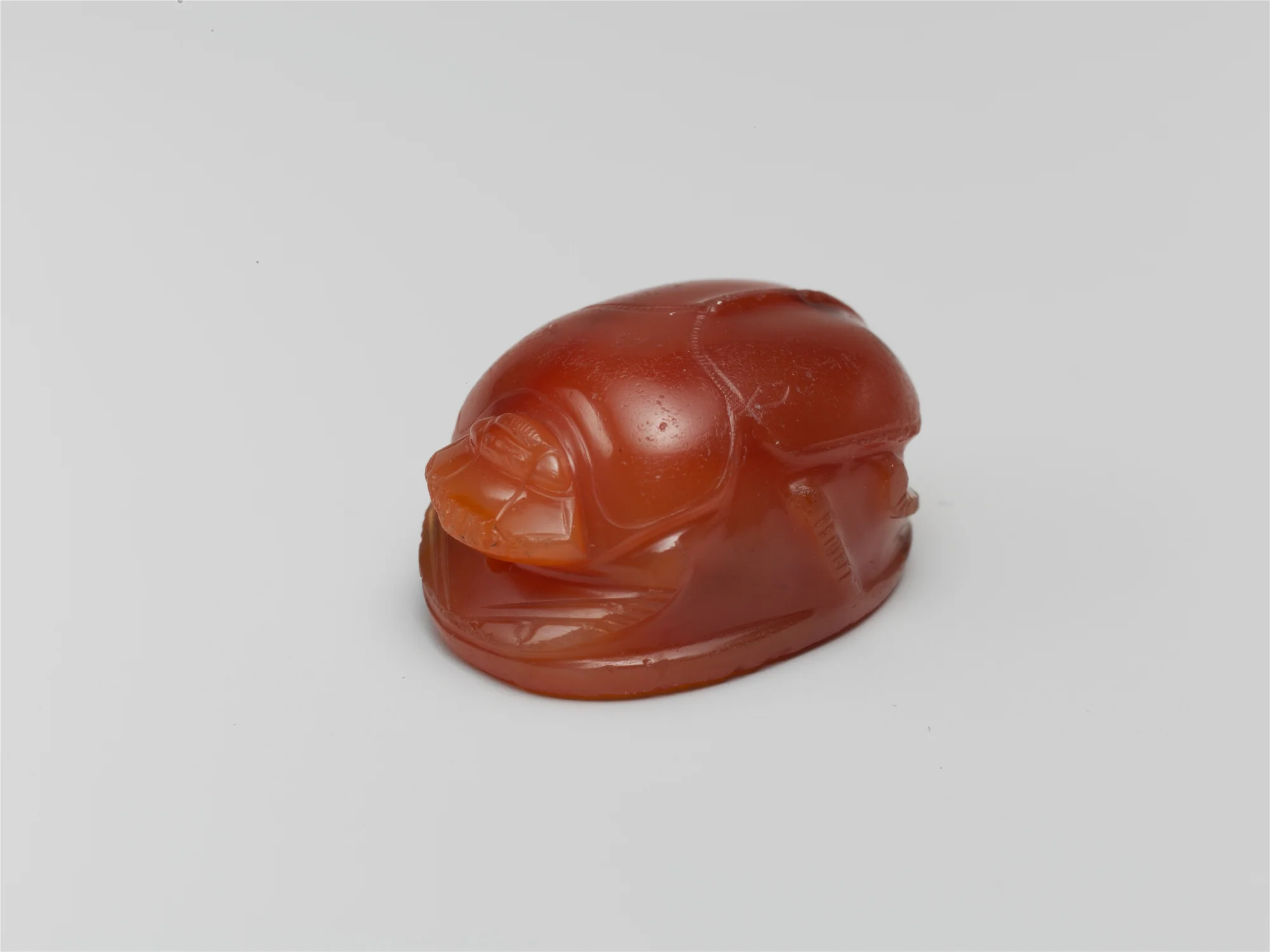
A Greek scarab of the late seventh or early sixth century keeps the orange as one small body. Carnelian, warm and clear, carved as a beetle that can sit in the palm, the dome of the back already the light. You would meet that glow before you named a century. The carving does not change the hue. Legs and wing cases are only sentences written into an orange that was already there. Amber would have stayed a resin pane. Coral would have stayed a sea. This scarab stays chalcedony — a warm orange light cut into a shape the hand already knows.
You would wear that orange as a quiet brightness. A ring, a pendant, a bead on a cord — the sit does not need a large stage. The first fact is the color. The beetle is a later sentence the stone knows how to keep.
A Roman necklace finishes the thought as a line of the same warmth. Carnelian beads, elongated and clear, gold links between them, a few cooler neighbors that do not steal the orange. You would feel that strand before you counted a pearl. One cabochon would have been enough light. A strand spends the hue along the neck, a warm orange climate the metal has agreed to carry.
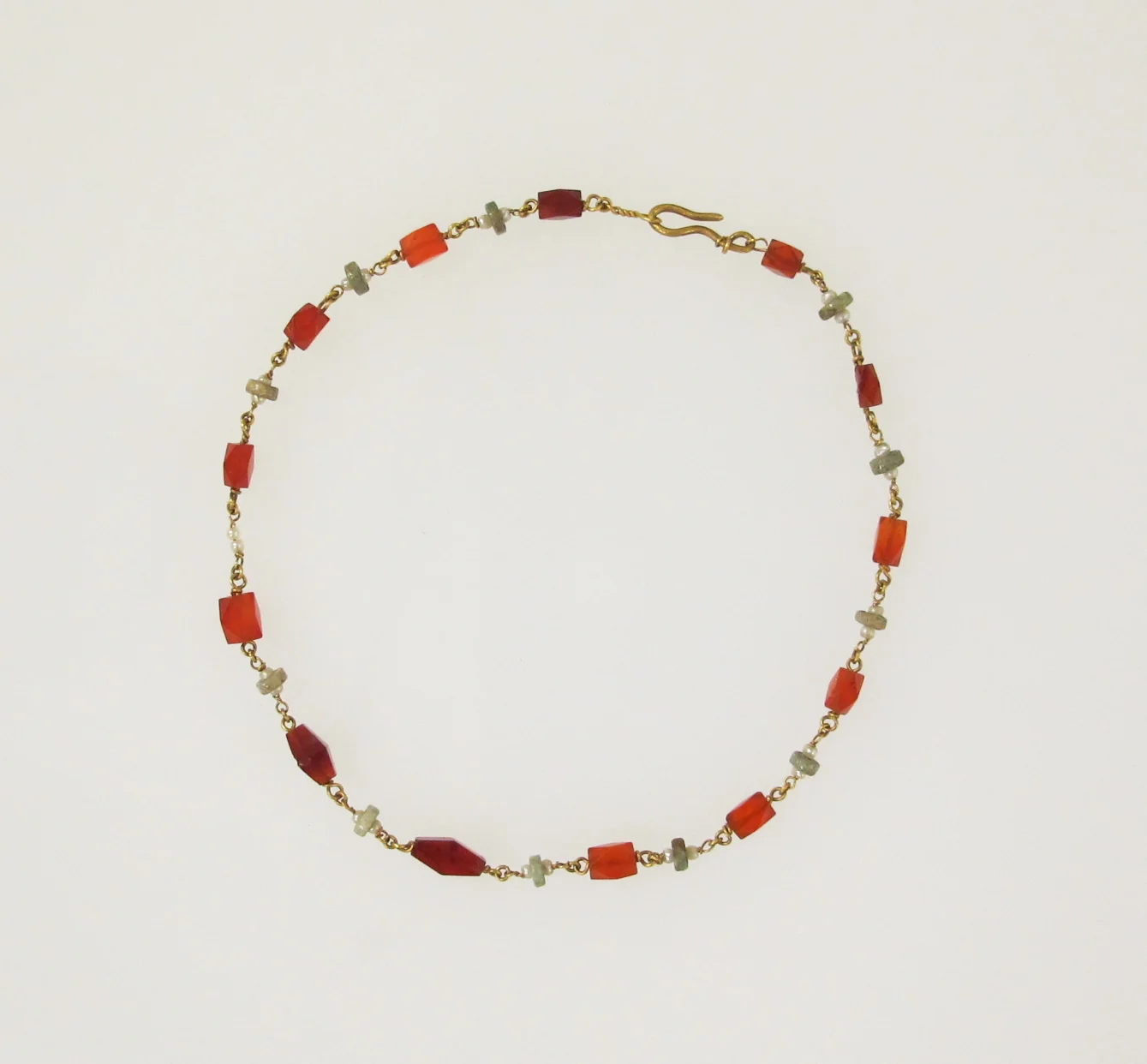
That is the season sit. Carnelian as a warm orange light. Cabochons whose domes are already the hue. A scarab whose body is the same orange. A strand that spends the light in beads — a chalcedony you wear.
Educational only · Not jewelry, insurance, or legal advice