Breguet, a hand that ends in a ring
Breguet keeps the hour with a hand that ends in a ring. The tip is hollow, a small circle of steel, often blued, the pomme the house has used as a signature. A Calatrava dresses by thinning the circle until the watch is almost a drawing. A Cellini dresses by making the case a gold jewel and letting the hour live inside it. A Day-Date opens on a day you can read. Breguet opens on the hand. A moon, a date, a reserve, a whole calendar: the dial may agree to any of them. The hand still ends in that ring, and the ring is how the hour stays dress.
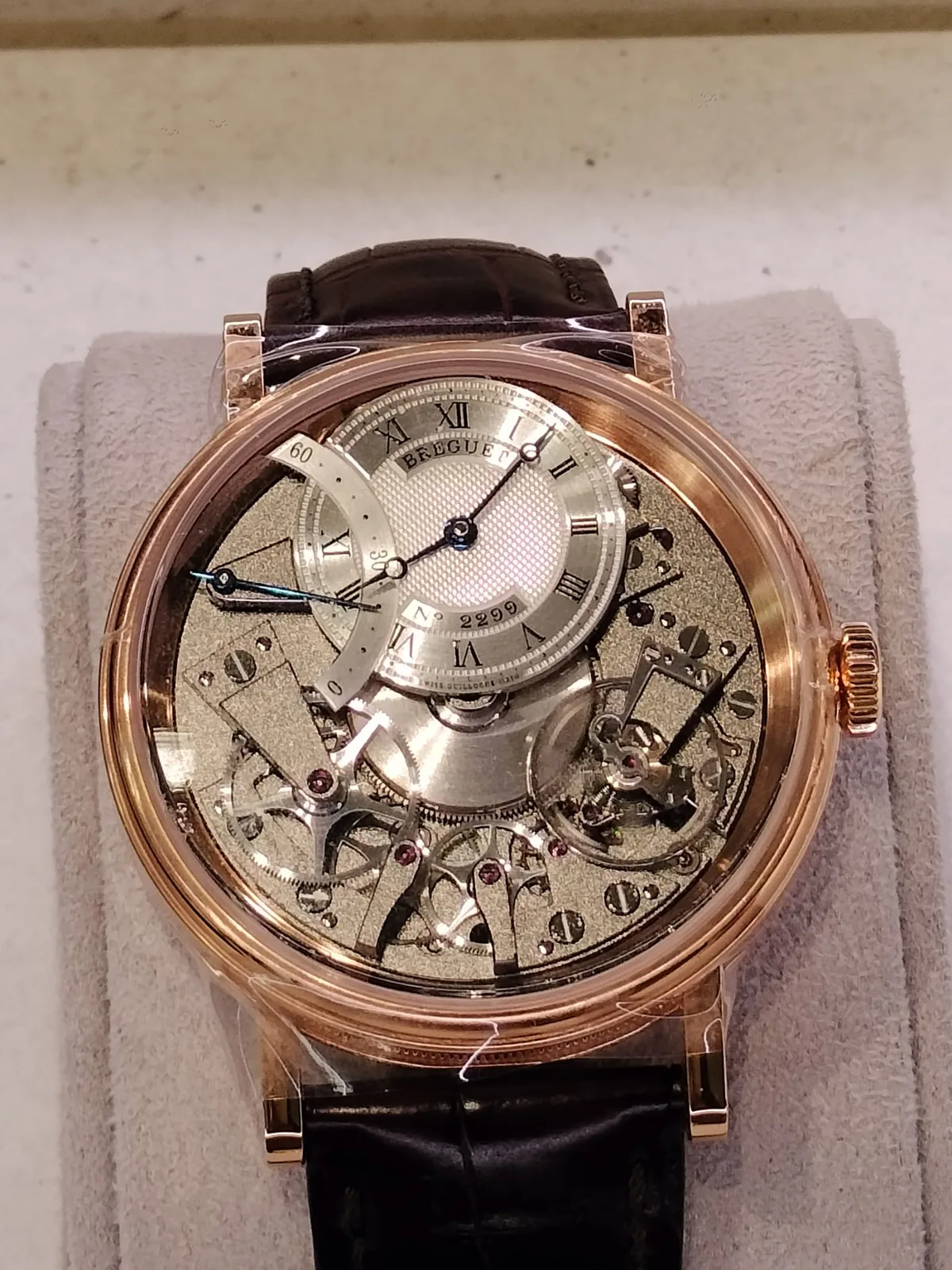
A hand over an open movement
A Tradition, reference 7097, keeps the meeting as a catalog still on a white ground. Rose gold, off the wrist. The dial is opened so the mechanism is the ground. A reserve sits above, a small seconds below, and the blued hands end in hollow rings. You meet the rings before you count the wheels. The Tradition’s pleasure is that the hand can cross a movement and still be the jewel. The gold is warm. The steel is blue. The ring at the end of the hand is the period.
Cover the bridges and the hands would still be the sentence: two blue lines, each ending in a circle you can see through. A filled hand is a baton, made to read at a glance against a dark field. This hand is a piece of drawing. The hollow is the manners. Light sits in the ring. The hour is told by a small jewel that happens to move.
The strap stays quiet under the case. Nothing in the still asks a cuff to finish the sentence. Circle of gold, open work, a blue hand with a hole at the tip. That is the scale of the icon. You would know the house from the tip alone.
A date, and the hand still first
Reference 5177 spends the same tip on a closed dial. Yellow gold, a fluted case, a silvered face with a fine turned grain, Roman numerals, a date, seconds from the center, off the wrist. The turning is the ground, a grain under the hour. The subject is the hand crossing it. Blued, hollow at the tip. The name Breguet is written where a name belongs. The hand is written where the time belongs.
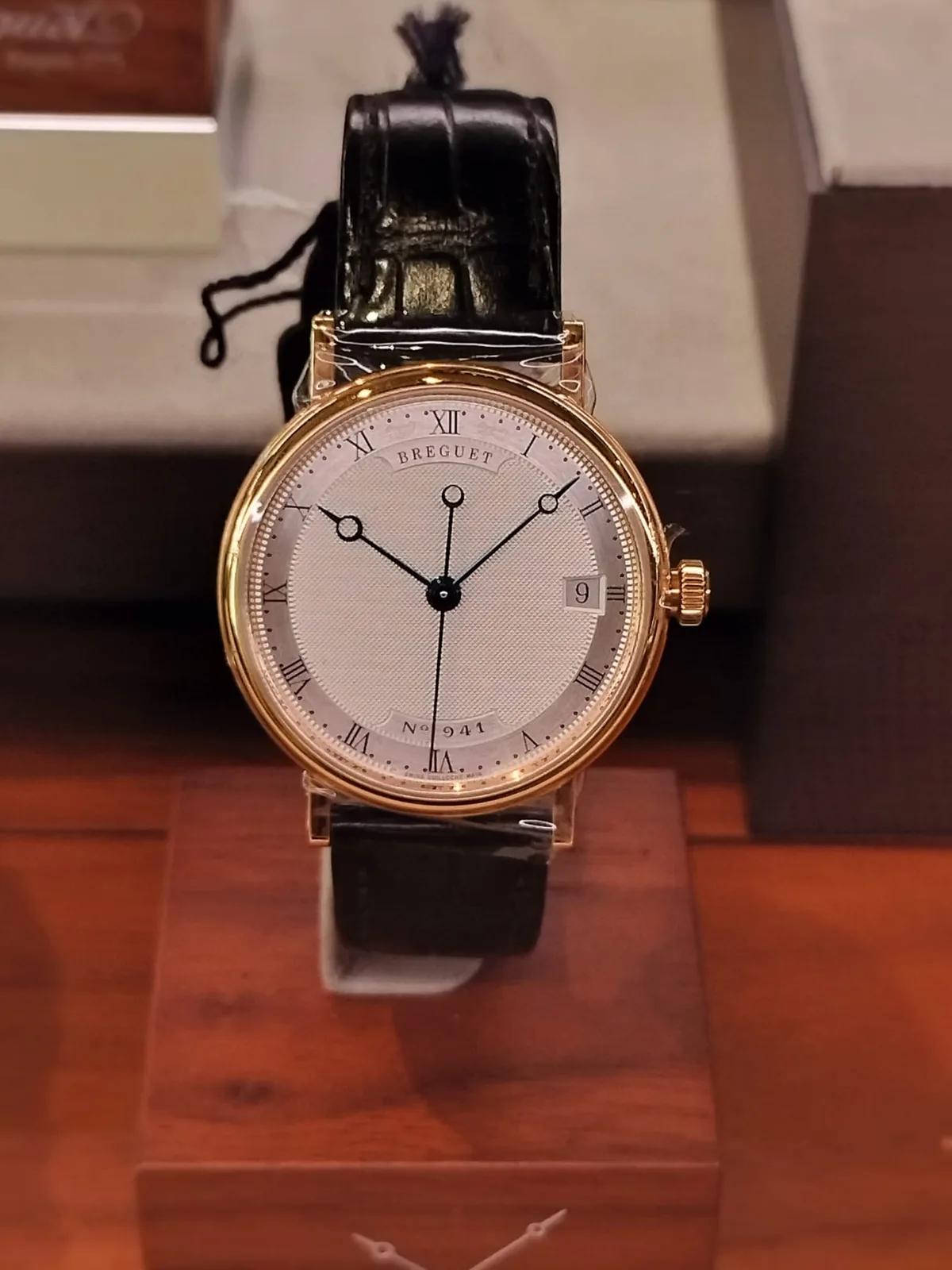
A fluted bezel on a Datejust cuts gold into a grip and then lets a date explain the day. Here the fluting is a ring of light on the case, and the date does not take the hand’s job. Center seconds share the post. The hour and the minute still end in rings. You would know the house by the name. You would know it by the tips, the name covered.
A numeral drawn in this script can travel, and sometimes does, onto another maker’s dial. On this watch the script stays home. The turned grain, the Romans, the blue hand, the hollow ring: they were finished as one sentence. The date is a guest in it. The hand is the host.
A moon, and a reserve
Reference 7787 gives the dress hour a moon and a count of what the watch still holds. Off the wrist, on a white ground: Breguet numerals, a moon, a power reserve, blued hands with hollow tips, a gold case. The moon is a small night. The reserve is an ornament a dress dial is willing to wear, a hand of its own for the hours still in the barrel. The hour and the minute cross both and still end in a ring.
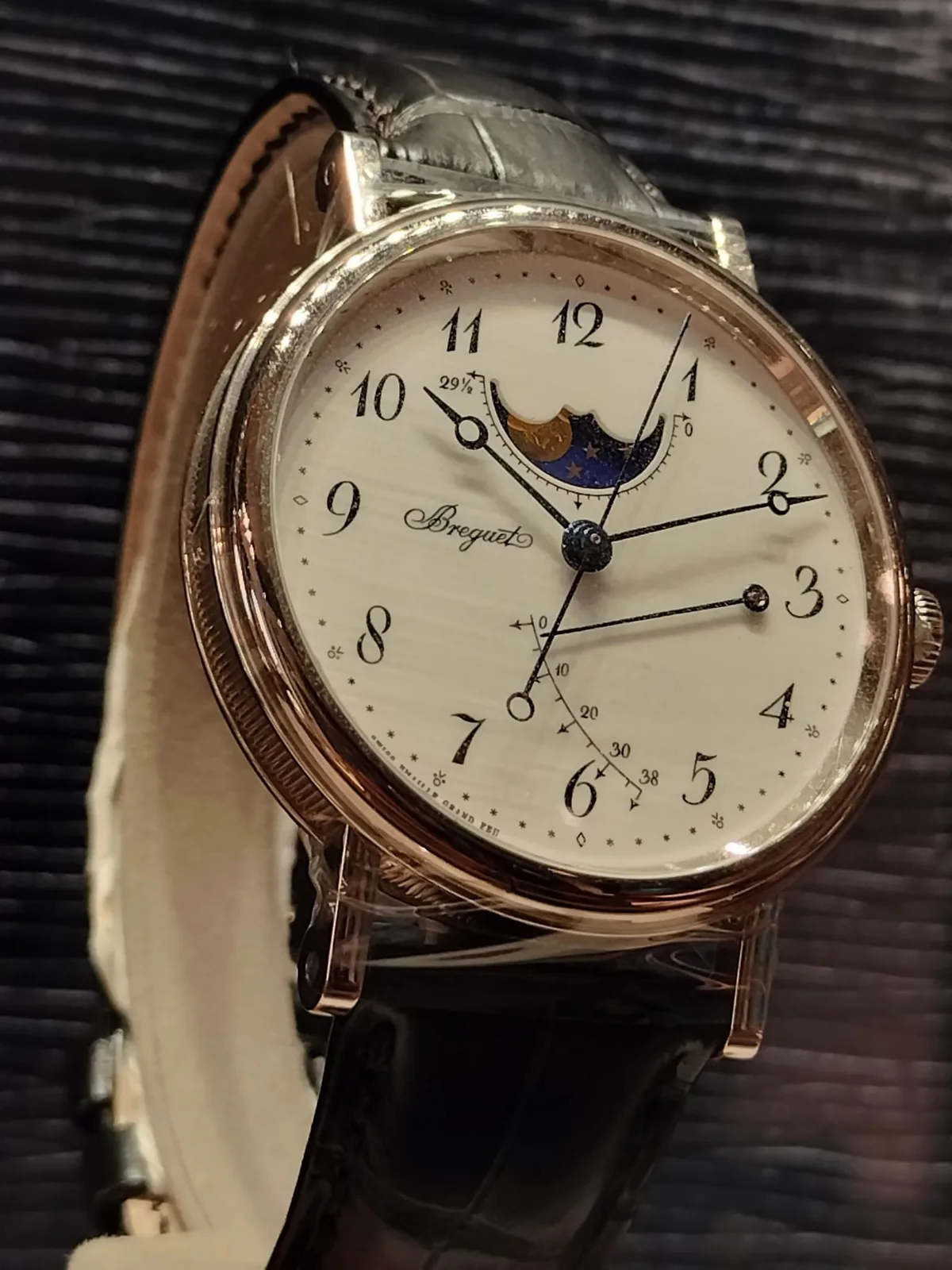
A moon on a Cellini is a moon in a gold dress case, the case the jewel. This moon is a moon under a Breguet hand. The case can be gold and still be the frame. The hand does the signing. Run a look from the tip to the moon and back. The tip is where the eye starts, a small open circle, blue, already a piece of jewelry before the night scene introduces itself.
The numerals are the house’s other script, a little calligraphic, content to be read slowly. They do not compete with the hand. They give it a page. Between the moon and the reserve, the hour remains a drawing that moves.
A calendar that leaves the hand its room
Reference 3744 keeps a Classique full of news and still lets the hand be first. A perpetual calendar and an equation of time, off the wrist, white ground. A moon, a date carried along a fan, the day and the month, the equation. A dial this occupied could have become a chart. It stays a Breguet because the hands are still those hands. Hollow tips, blue, crossing the complications the way a jewel crosses a landscape.
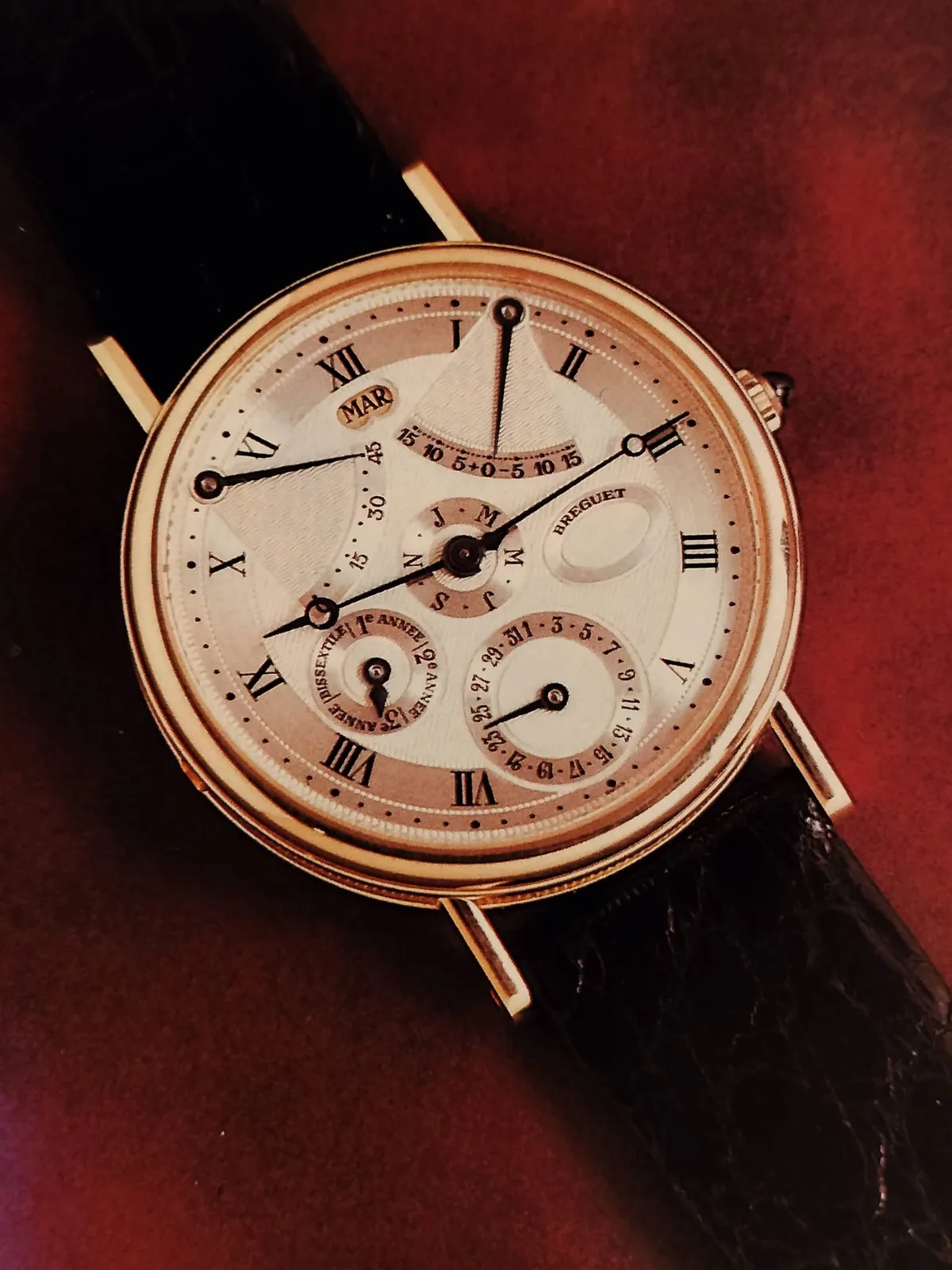
Four watches, one tip. The Tradition lets you see the mechanism the hand is crossing. The 5177 lets the hand cross a turned dial and a date. The 7787 lets it cross a moon and a reserve. The 3744 lets it cross a calendar and an equation of time and still arrive as a ring. A thin circle from another house can dress by becoming almost a drawing. A gold dress case can dress by being the metal. A day window can dress by being readable. On a Breguet, the hour is kept by a hand that ends in a ring.
That is the icon. Breguet, a hand that ends in a ring. An open movement. A date on a turned dial. A moon and a reserve. A calendar, and the hollow tip still the first thing you meet.
Educational only · Not jewelry, insurance, or legal advice