B.zero1, a coil that numbers
The B.zero1 is a coil that numbers. Bulgari made a spring of gold and wrote the count on the turns — digits as the architecture of the band, a spiral you can read. You feel the number first. The jewel is the coil. There is no free house still to set beside the name. The sit is older than the logo: a band that agrees to be counted.
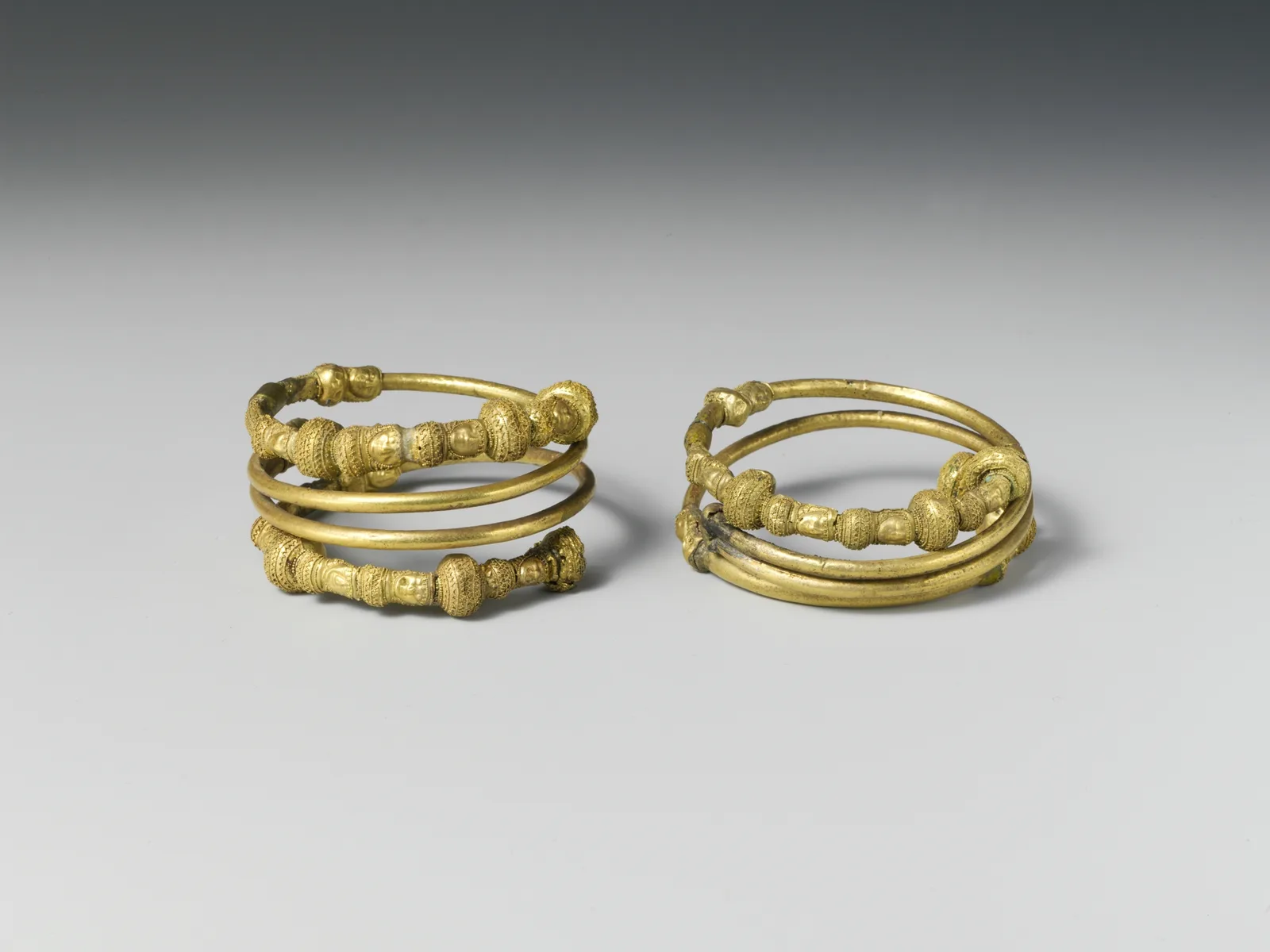
A pair of electrum spirals is the sit in two springs. Tight turns, beaded rims, a coil you could count with a fingertip. You would meet the number of revolutions before you named a tomb. Not a hoop that hides its decision. A band that writes the count as metal — one turn, then another, a spring worn as jewelry. That is what the B.zero1 still protects: a coil whose grammar is the number, hardware worn as the jewel, a count you can see.
The temperament is the counted edge. A smooth ring would have hidden the decision. The B.zero1 writes that decision as turns — a motif that is also the hold.
A twisted band that is the line, then a ring that is the count
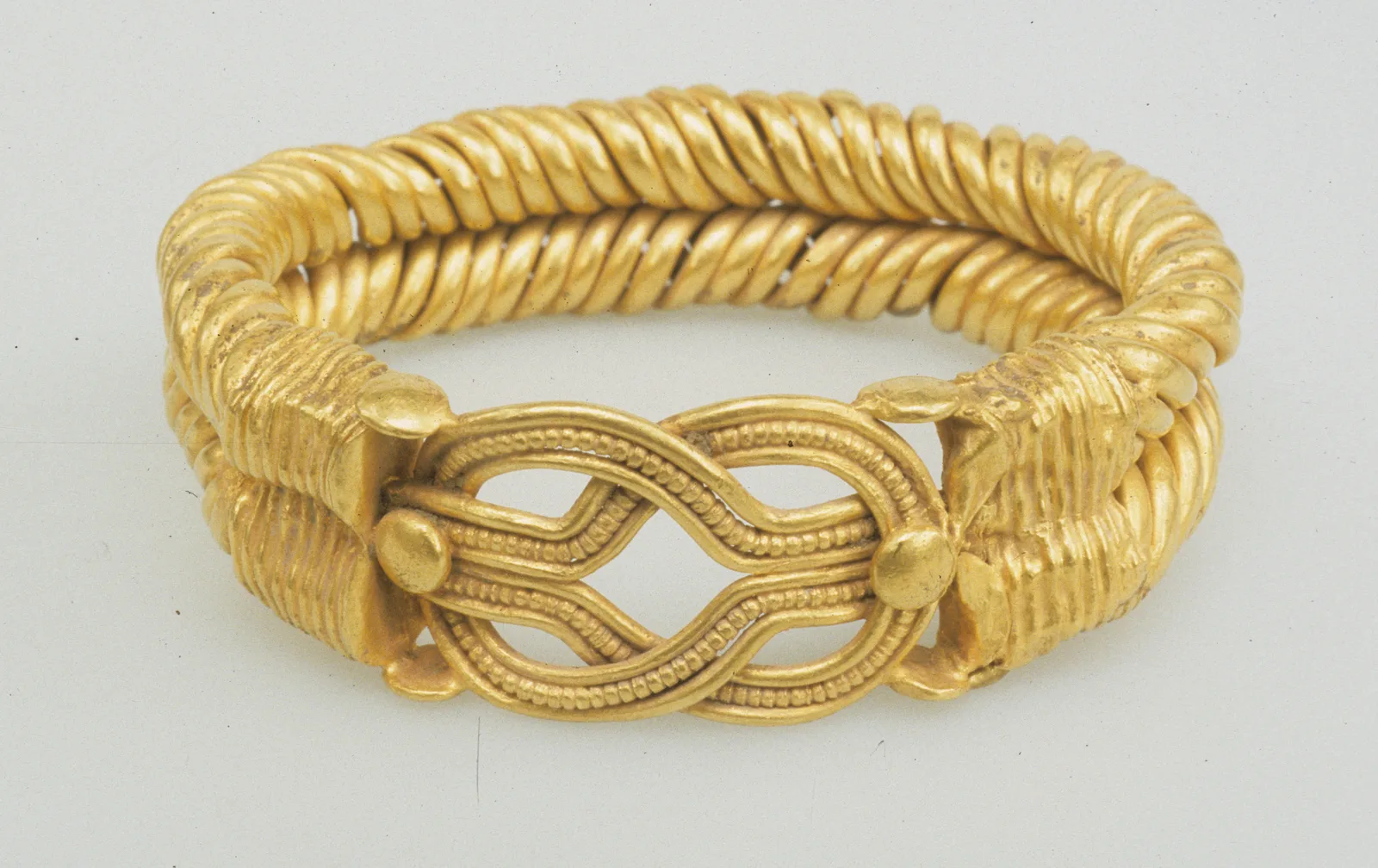
A Roman gold bracelet keeps the same sit as a line that has already been wound. Two spiral strands, a Herakles knot as the meeting, granulation as the weather on the join. You would feel a rope of counted gold before you met a clasp story. The bracelet is the twist. It opens around the wrist and lies as one decision. The B.zero1 does that work with digits: a spring whose turns are already the jewel, a line you can run a fingertip along and name.
A gold spiral ring finishes the thought as a count you can wear. Two and a half turns, terminals as small faces, a spring that has already chosen its number. You would meet the coil before you met a portrait. The figures are only the ends. The sit is the winding — a band that numbers itself, already on the finger. The house name is later. The sit remains a coil that numbers — a spring, a twist, a ring, already the count.
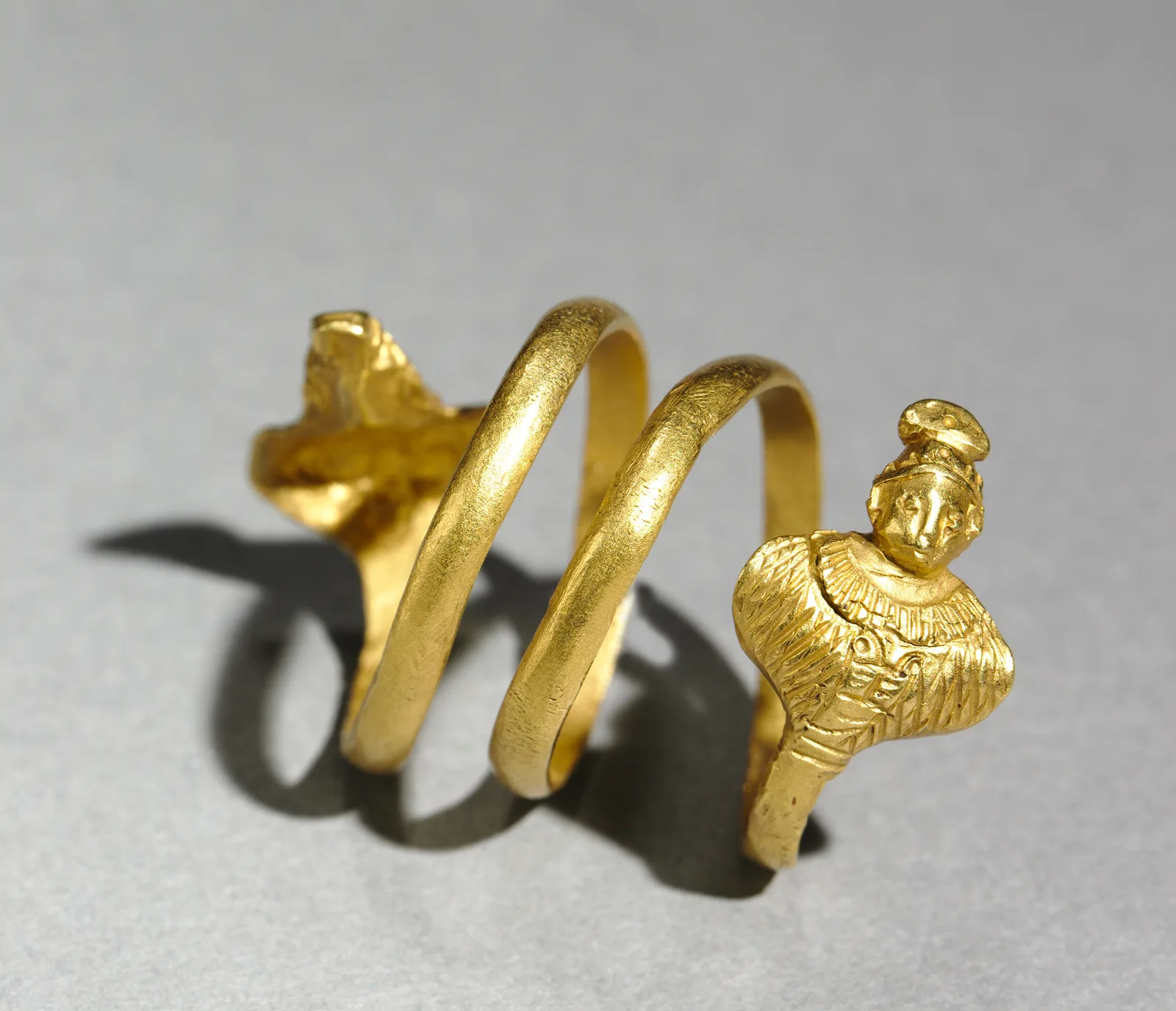
That is the icon. The house gave a numbered spring a Roman name and a date as folklore. The sit remains a coil that numbers — a turn you can count, a band that is already the number.
Educational only · Not jewelry, insurance, or legal advice