An opal that holds weather
An opal is a sky you wear. This season the high jewelry is gem-forward again — fire opals and boulder opals treated as precious eggs, saturated color as the story, not a spark at the rim — and the sit is already in the stone. You meet weather first. Not a diamond flash. Not a cabochon dome. Not a hard face of one hue. Play of color, already happening.
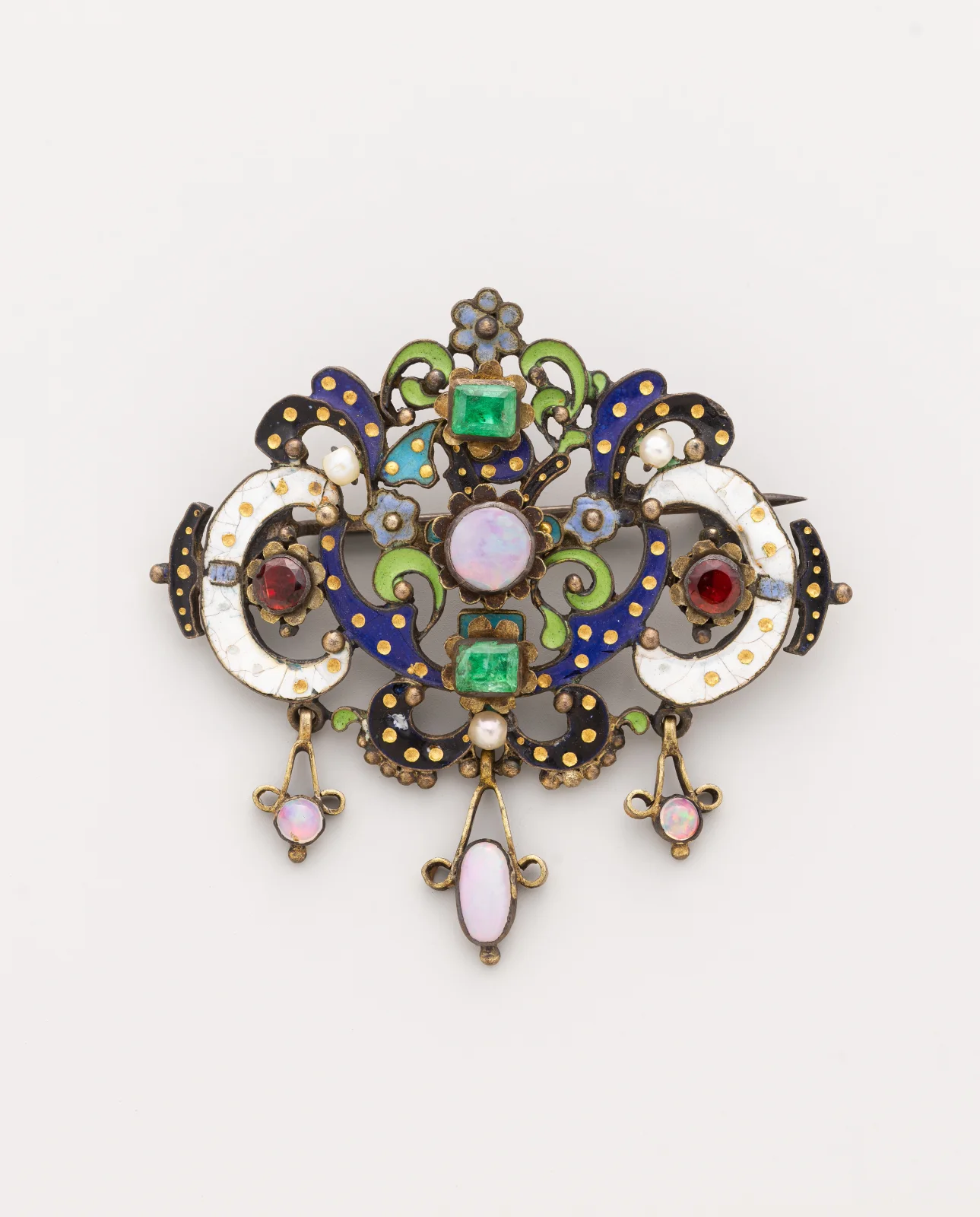
A nineteenth-century clasp is the sit made wearable. One milky opal at the heart, pink and violet moving under the surface, then three more hanging — two rounds, one oval drop — each a cooler sky. Blue enamel dotted with gold, lime-green leaves, white crescents holding garnets. You would feel the central stone first, then the swing of the drops. Turn the clasp and the milk shifts: a different cloud, the same weather. The enamel is the garden. The opals are the day passing through. A brilliant would have broken that sky into sparks. A quiet dome would have held one temperature. These stones keep a changing hour.
That is the gem sit in play now. Color that arrives already alive. A stone worn as climate, not as a point of light. You pin a sky and let it move. The drops keep their own weather; the center keeps another. One jewel, several hours.
Weather as the body of the jewel
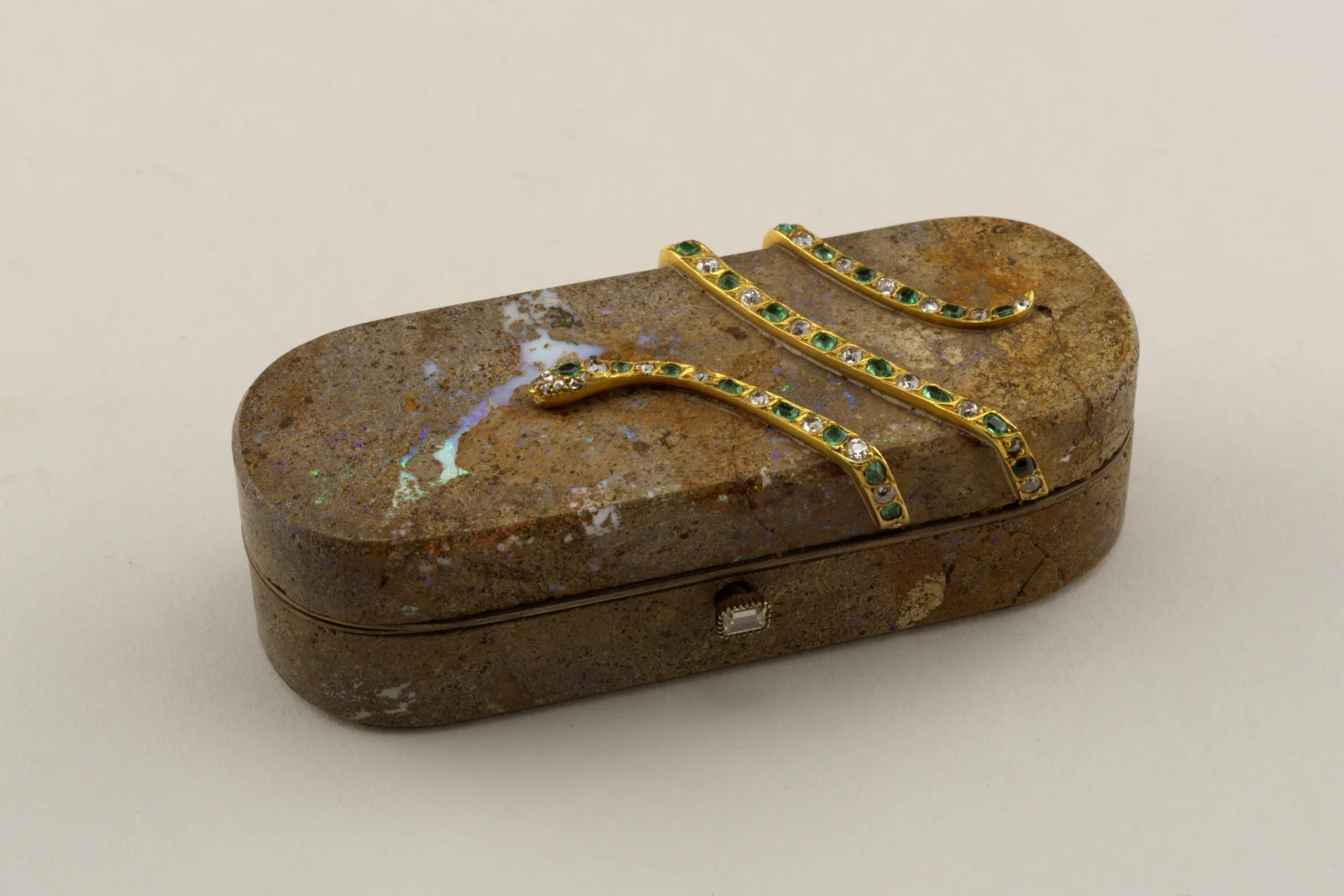
A box cut from opal matrix keeps the same sit at another scale. Dark ironstone, then sudden weather — streaks of blue, seafoam, milk — already inside the body of the piece. A gold serpent crosses the lid, emeralds and diamonds along its back, a diamond for a catch. You would meet the sky in the stone before you met the snake. The gold is a line. The opal is the climate the line was asked to travel. Close the lid and the weather stays: a pocket of sky, not a hard slab of one color, not a spark you can isolate.
That is the season sit. An opal that holds weather. Milk that hangs from a clasp. Matrix that already has a sky running through it. Color as the story — a climate you can pin, or close in the palm.
Educational only · Not jewelry, insurance, or legal advice