An intaglio is a cut-in
An intaglio is a cut-in. A face or figure hollowed into the stone — hardstone, a small engraving the gold has been asked to hold. You do not meet a profile that stands forward. You do not meet a dome, a foil glow, a wall, a claw, a pavé weather, a row of beads, a drawn lace, or a mystery-set tile. You feel a likeness the light falls into. The literacy is the hollow.
A cameo is carved so the light figure stands above the dark. An intaglio goes the other way. The image is a room cut in. You would read it as a seal, a small valley the fingertip can almost take.
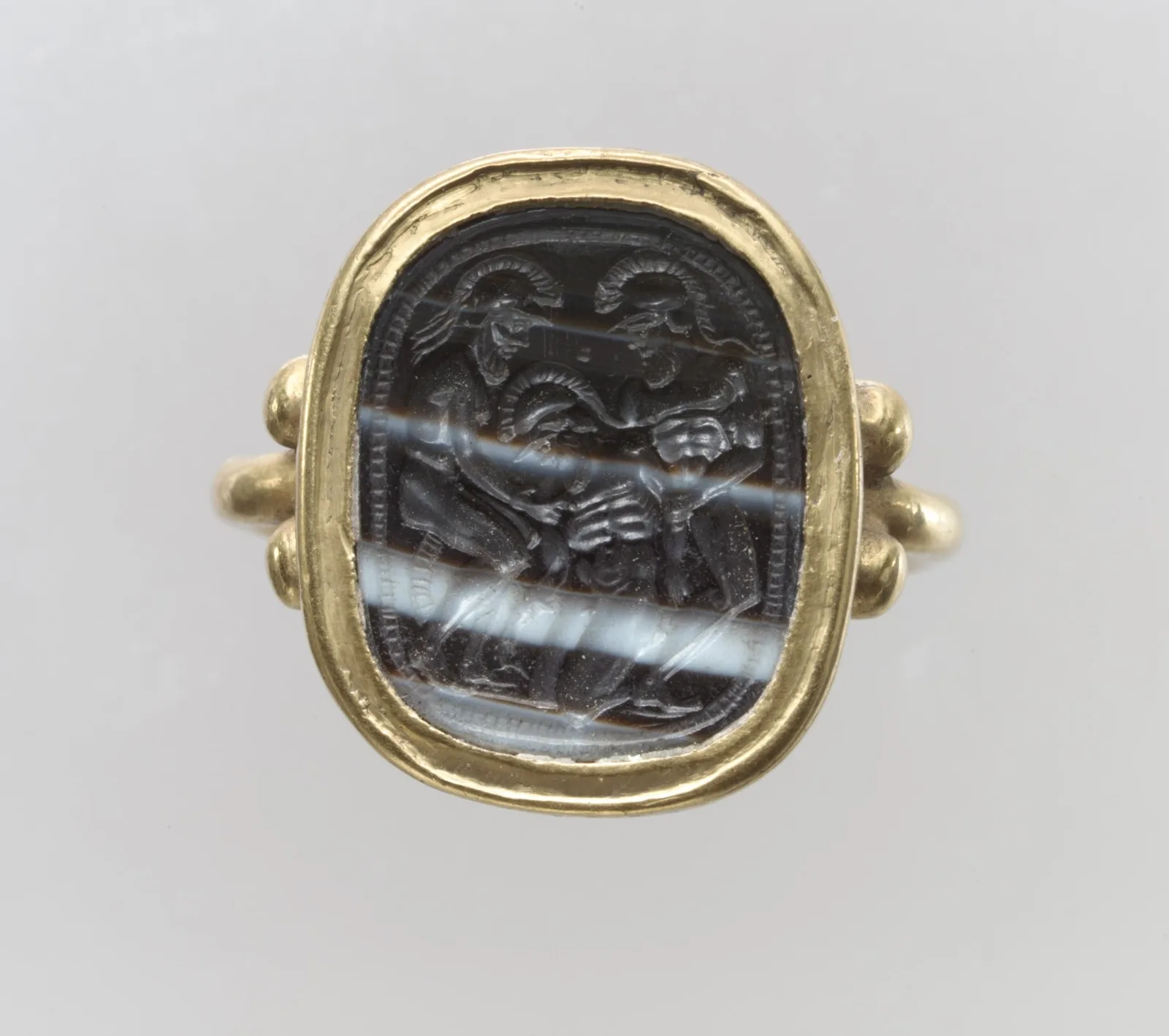
A Langobardic gold ring is the lesson in one object. An Etruscan agate at the heart — a figure cut into the banded stone, a hollow the later gold learned to keep. You would meet the recessed carving before you met the hoop. The intaglio is older than the mount. A cameo would have raised that body from its ground. A cabochon would have been a dome with no drawing. This jewel is the cut-in: a likeness that sits below the surface, a seal you could still press.
The literacy is the direction of the carving. If the face stands forward, you are in a cameo. An intaglio begins when the likeness has already gone in.
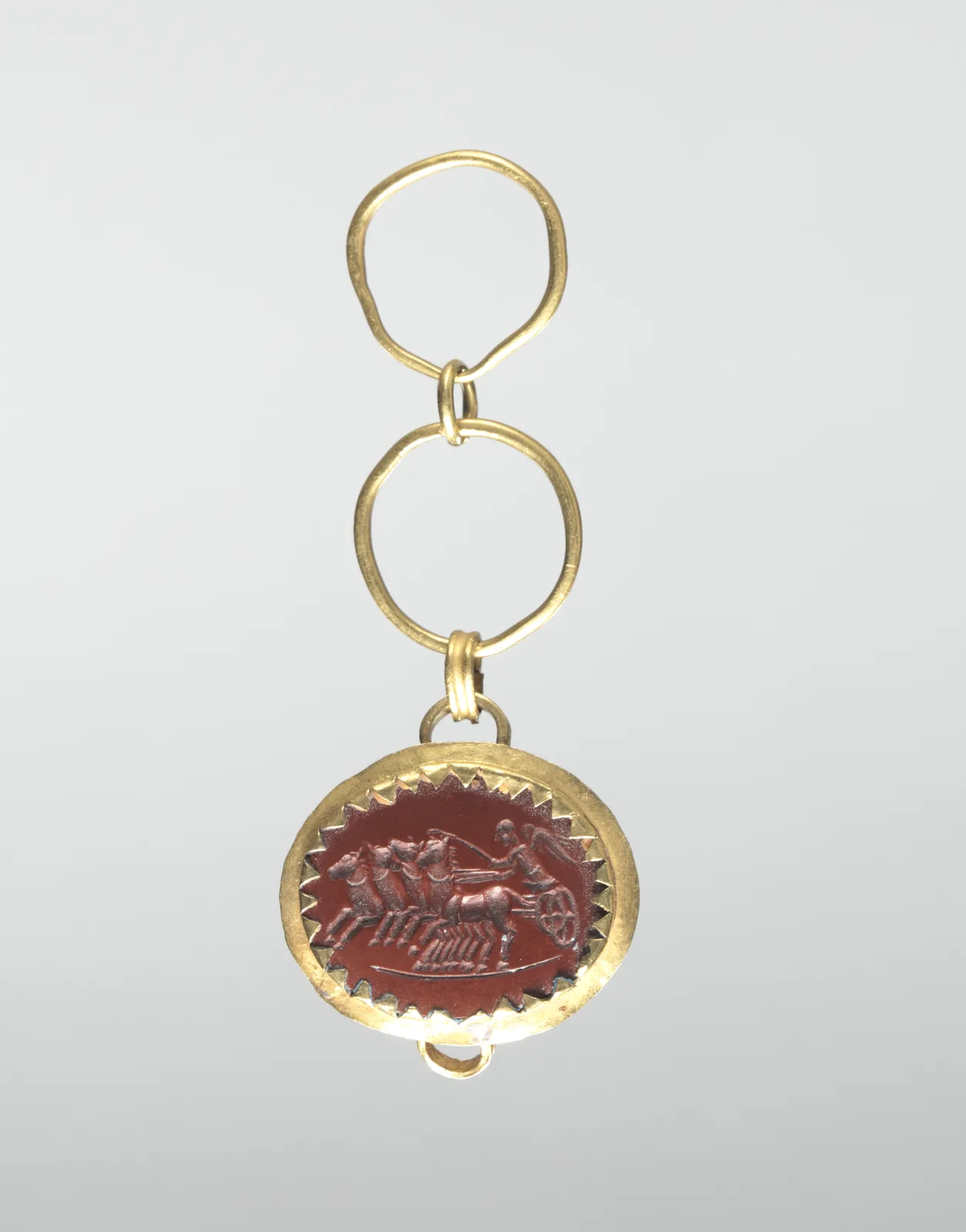
A victory cut in, then a portrait that is a hollow
A Roman jasper keeps the same sit as a scene you read with light. Victory in a chariot, four horses, the drawing incised — a red stone whose picture lives in the cut. You would feel a shallow room before you felt a spark. The gold mount is only a toothed rim. A bezel is that rim. A prong would have been a finger on a facet. Pavé would have hidden the metal under sparks. The intaglio is the valley: a narrative hollowed into hardstone, worn as the jewel.
A Byzantine garnet finishes the thought as a face that recedes. A portrait cut into the stone, gold filigree as the hold. You would meet a hollowed brow before you met a raised relief. Filigree is the lace around it. Milgrain would have been a row of beads along an edge. A foil would have lit a thin gem from behind. A mystery set would have tiled a color without a claw. The intaglio keeps the person as a cut-in — a likeness the light falls into, a profile worn as a seal.
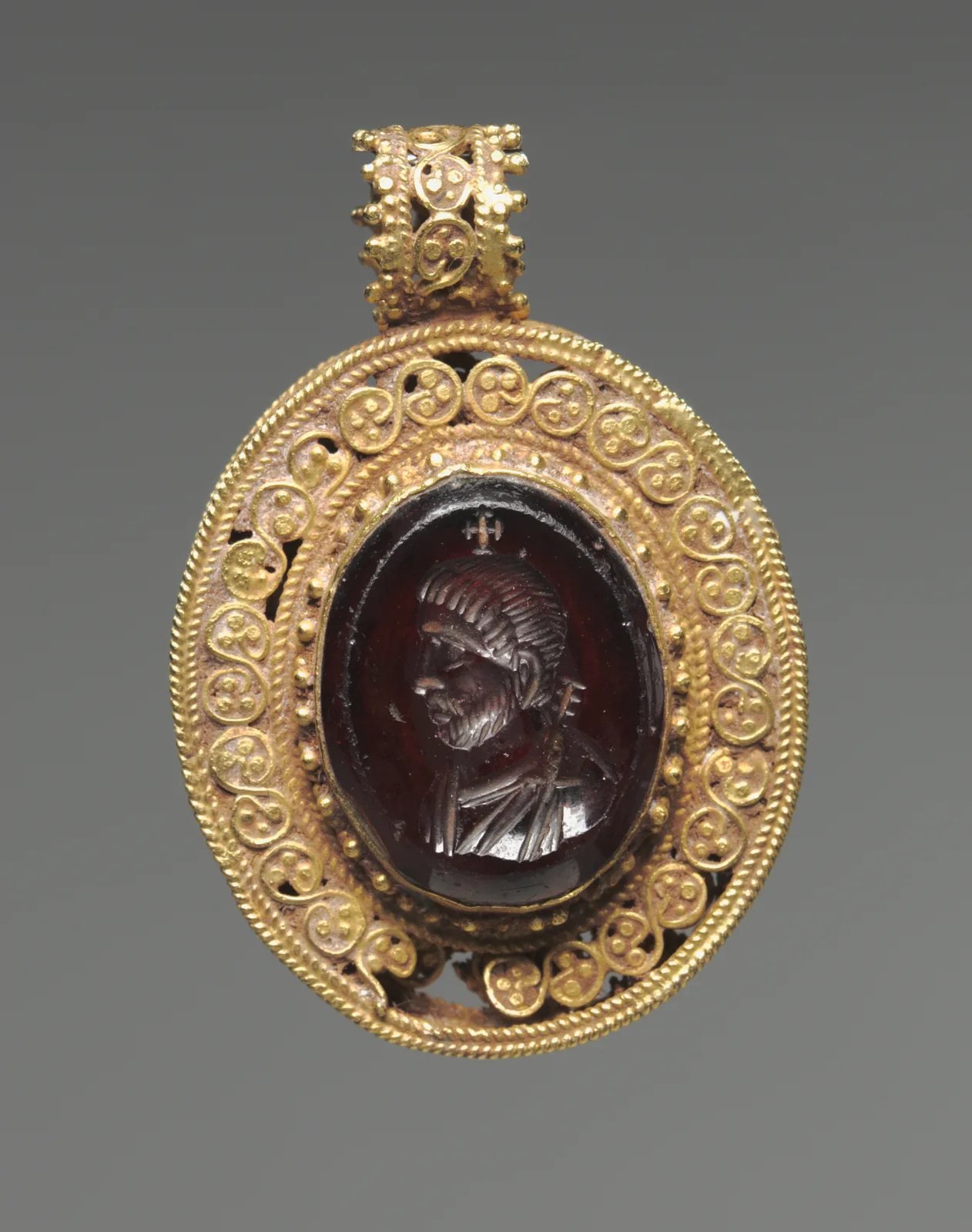
That is the note. A cameo is a profile that sits forward. A cabochon is a dome. A foil is a mirror. A bezel is a wall. A prong is a claw. Pavé is a field. Milgrain is a row of beads. Filigree is a drawn lace. A mystery set is a tiled color. An intaglio is the cut-in — a hollowed likeness, the inverse of relief, a face the stone still holds below its surface.
Educational only · Not jewelry, insurance, or legal advice