An inclusion is a guest
An inclusion is a guest. Something that formed inside the stone and stayed: a crystal, a needle, a feather of a break that opened within and never reached the surface. A facet is a plane cut on the outside, one flat the lapidary made. A table is the window on top. A pavilion is the underside. A girdle is the equator. A culet is the point. Those are the cut. An inclusion was already in the mineral when the cut arrived. A scratch is a mark on the surface, a line the world left after the stone was finished. A cavity is an opening, a hollow that meets the air. A guest is occupied space inside. The literacy is that interior: something else, at home in the stone.
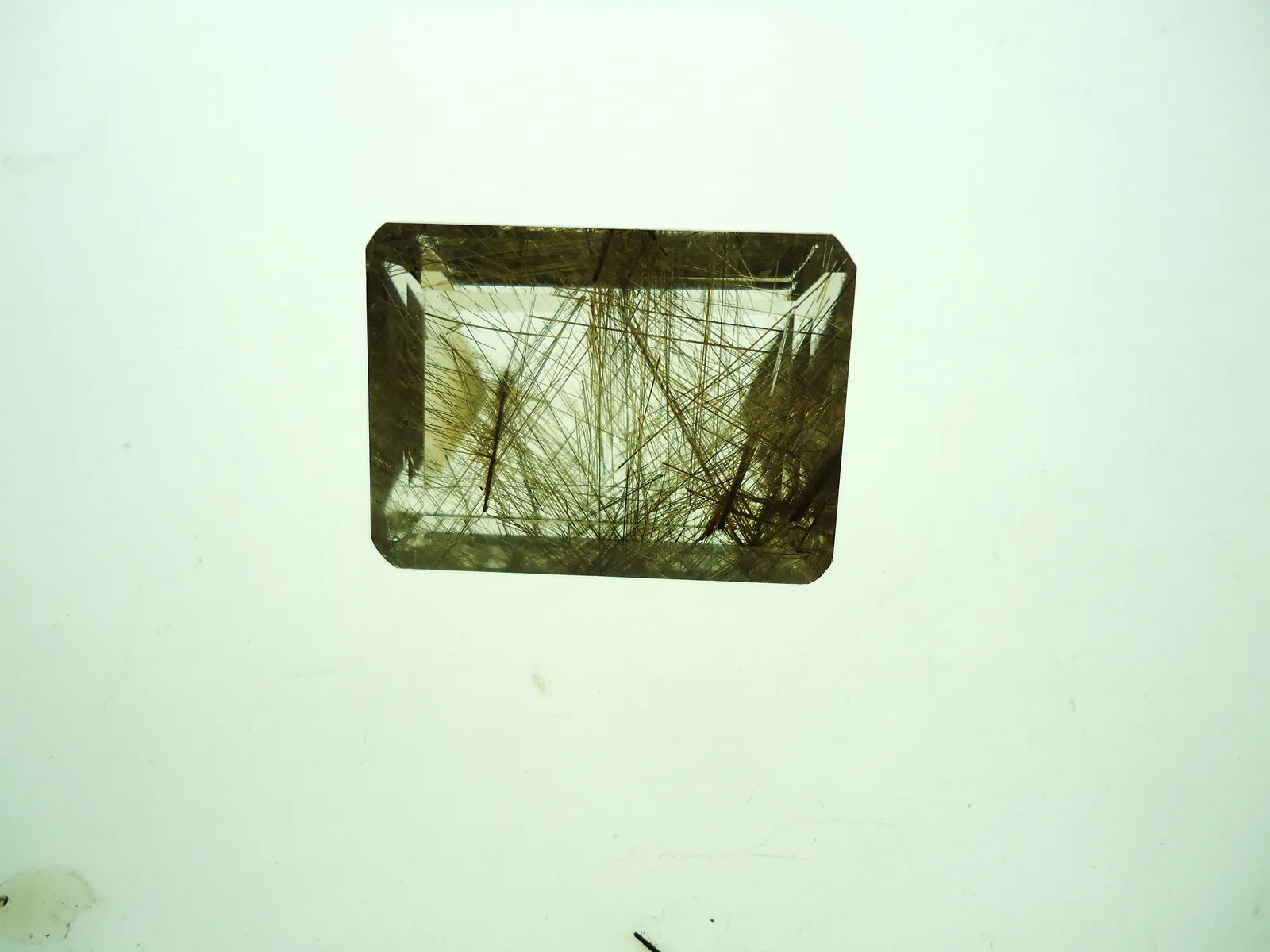
Needles that stayed
A quartz crystal keeps rutile as needles. Golden threads through a clear body, fine and straight, dense enough in places to veil the crystal and sparse enough in others to read one by one. You would meet those threads before you asked for a species. A scratch sits on the surface, where a cloth can find it. These run inside. Turn the crystal and they turn with it, still in the quartz, still guests. A cavity would be an absence, a hollow you could call empty. A needle is a presence, a mineral that grew in the host and kept its line.
The quartz is the room. The rutile is the company. A facet is a plane you can cut later, when a jewel wants a face. A needle was never asked. It arrived while the quartz was growing, and the stone closed around it. In a cut gem the same guest can remain after the lapidary has made a table and a pavilion. The planes are the cut. The threads are still inside, catching light the way a drawing catches it, a gold line in a clear room. That is a needle. A guest with a direction.
You can follow one thread from a thicker place to a finer one and stay inside the crystal the whole way. The point of the quartz is the host’s own ending. The needles do not have to reach it. They have a length of their own, and that length is the guest’s. Hold the piece to a window and the gold stays in the depth. The surface only lends you the view.
Crystals that took a seat
A quartz from the Zagi Mine keeps a different guest. Tourmaline, dark, in crystals that cross the clear mass — some as long as strokes, some with a little more body, a small architecture inside the host. You would meet those dark marks before you named the mine. They are crystals. A needle of rutile is a thread of another mineral, fine and golden. A crystal of tourmaline is a guest with a habit of its own, even when the habit is thin. Both live inside. The surface of this piece is the quartz. The tourmaline is the interior, and a fingertip on a polished face would meet the host, while the guest stayed in the depth.
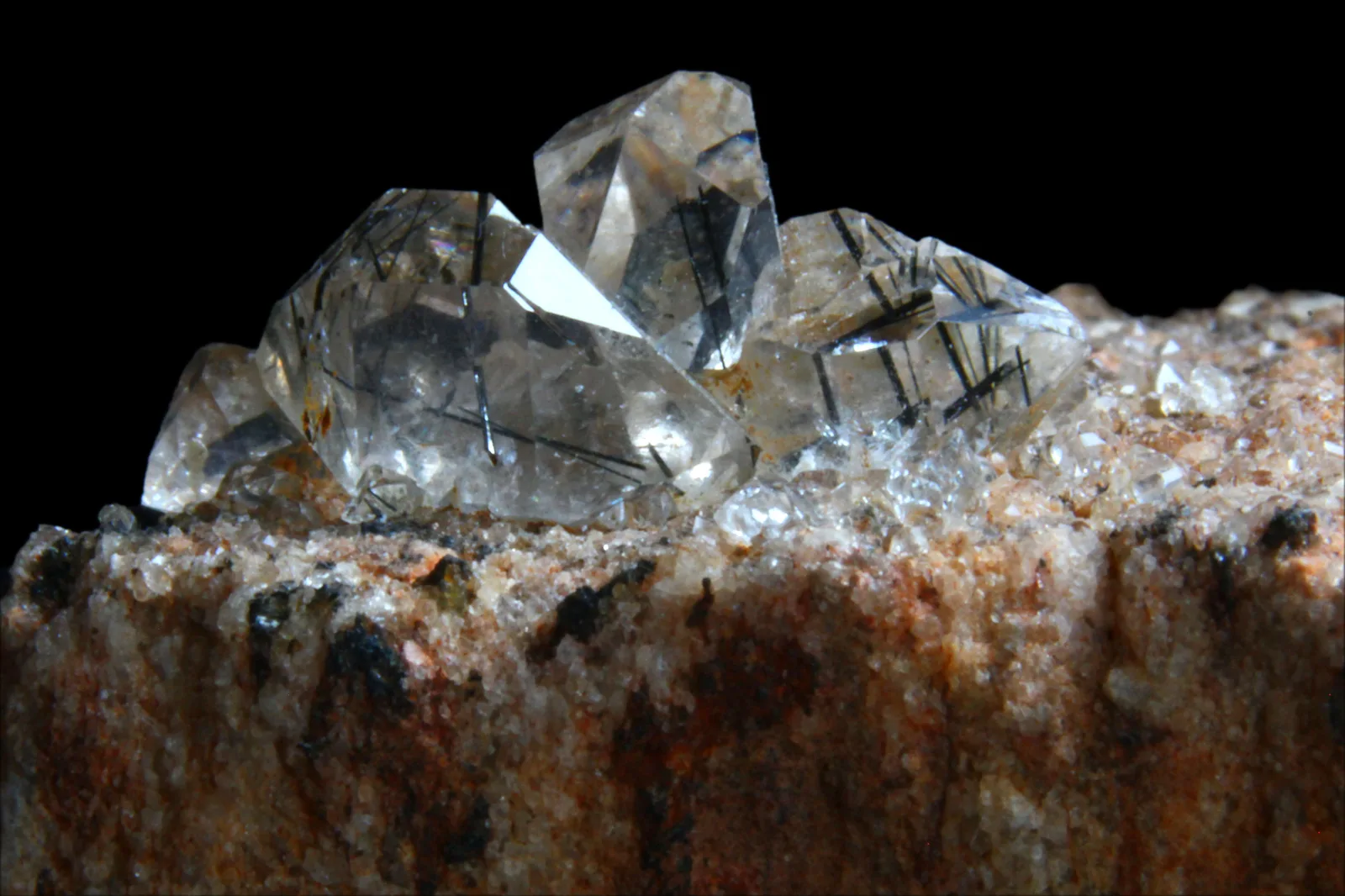
The distinction is the one a jeweler uses when a stone is held to the light. If the mark moves with the surface, it lives on the surface. If it stays in the depth while the surface turns, it is a guest. Feathers belong to the same interior. A feather is a break that opened inside the stone, often from a crystal or a stress, and spread in a soft shape — a guest made of a fissure rather than of a second mineral, still sealed in the body, a pale wing you can read through a facet. A cavity would have opened the stone to the air. A feather stays closed in. This quartz shows the other kind of guest: a crystal that took a seat and kept it.
You would look for the edge of the host and find the tourmaline stopping inside it, or running out where the quartz itself ends. The guest does not have to reach the girdle to be real. It has to be in the stone. A pavilion can be cut around it. A table can be cut above it. The planes change. The guest remains the thing that was already there, a dark stroke in a clear room, readable once the light is behind it. That is the know-how in the hand. Turn the piece. Watch what stays in the depth. The crystal that stays is the inclusion.
A guest, seen close
A gem spinel, seen close, keeps crystal guests as a small world. A spherical gathering of tiny crystals inside the stone, bright against a darker ground, the sort of interior a loupe is for. You would meet that cluster before you asked for a magnification. The facets, if this stone has been cut, are the outside. This picture is the inside. The gathering is occupied. Crystals, concentrated, at home in the spinel, a guest you would miss if you only admired the color from across the room.
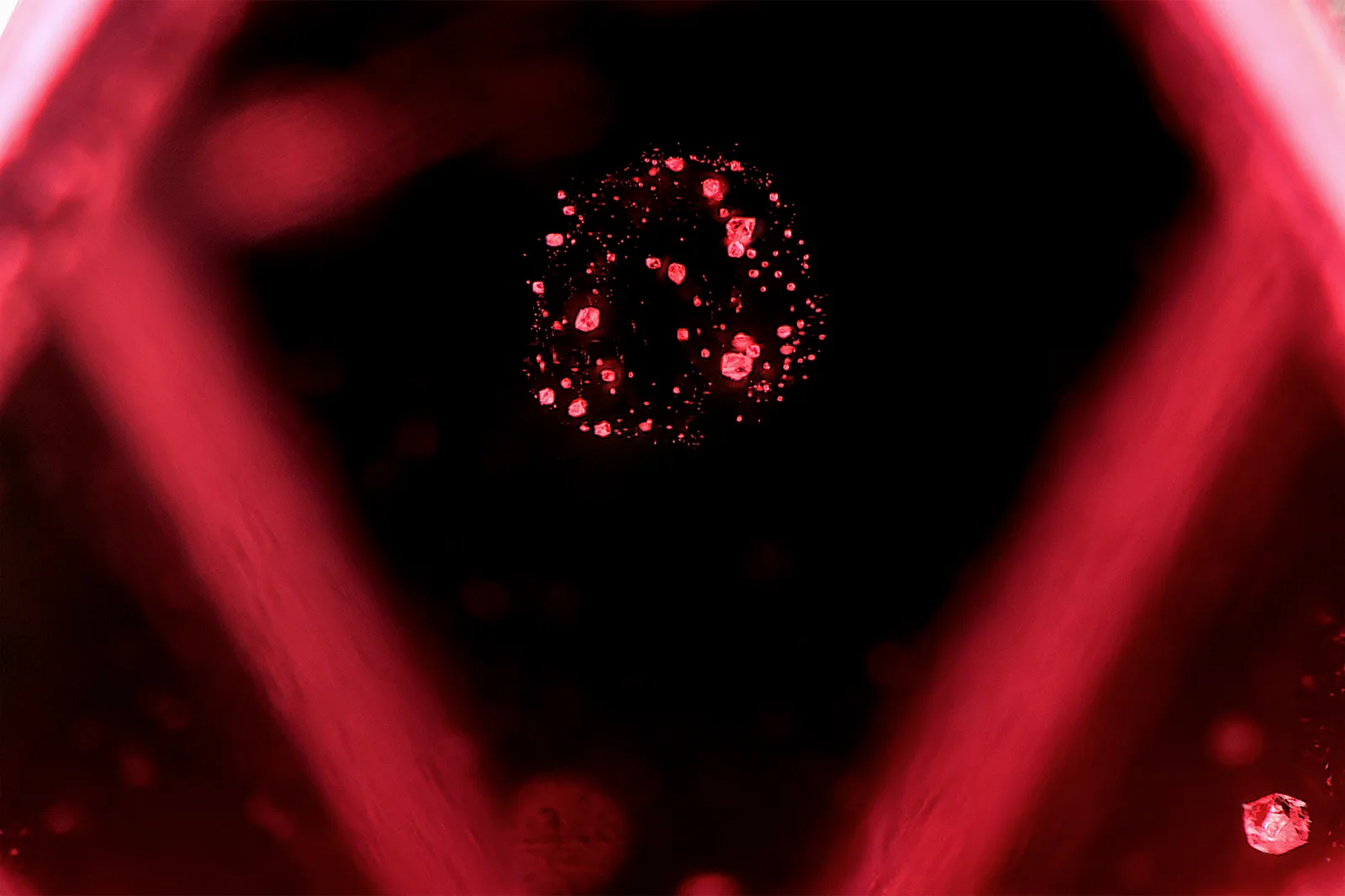
The close view is how the word finishes. At arm’s length an inclusion can be a silk, a veil, a tiny point of light or dark. Up close it is a guest with a shape: needles, crystals, a feather’s soft break. The spinel shows the crystals gathered. The quartz with rutile shows the needles. The Zagi quartz shows crystals that grew long enough to read as strokes. All three are the same literacy. Something inside. The plane is elsewhere. The scratch is elsewhere. The hollow is elsewhere.
A jeweler’s cloth keeps the surface clear so the guest can be seen. It does not remove what formed in the stone. The table lets you look in. The pavilion sends light back through the room where the guest is sitting. The girdle is only the equator you pass on the way around. The culet, when there is one, is a point at the bottom. The inclusion is the company those planes were cut around, or above, or simply in spite of having been there first.
That is the note. A facet is a plane. A table is a flat. A pavilion is an underside. A girdle is an equator. A culet is a point. A scratch is on the surface. A cavity is an opening. An inclusion is a guest — a needle, a crystal, a feather — already in the stone when the jewel begins.
Educational only · Not jewelry, insurance, or legal advice