An Asscher is a square step
An Asscher is a square step. A square, or a stone so near to square that the eye calls it one, with the corners clipped and the facets written as frames inside the frame. The pavilion reads deep. You look down a hall that has stayed square. An emerald cut is a step too, and the word there is the step drawn long — a rectangle you look into. A cushion is a square whose corners have already softened into a pillow. A radiant keeps a square outline and then cuts it as a brilliant, fire from many small planes. A table is one plane, the flat at the top of a stone that still has a body under it. The Asscher is the square whose steps are concentric, and whose underside looks deep. The literacy is that square: frames inside frames, a pavilion you can feel from the side.
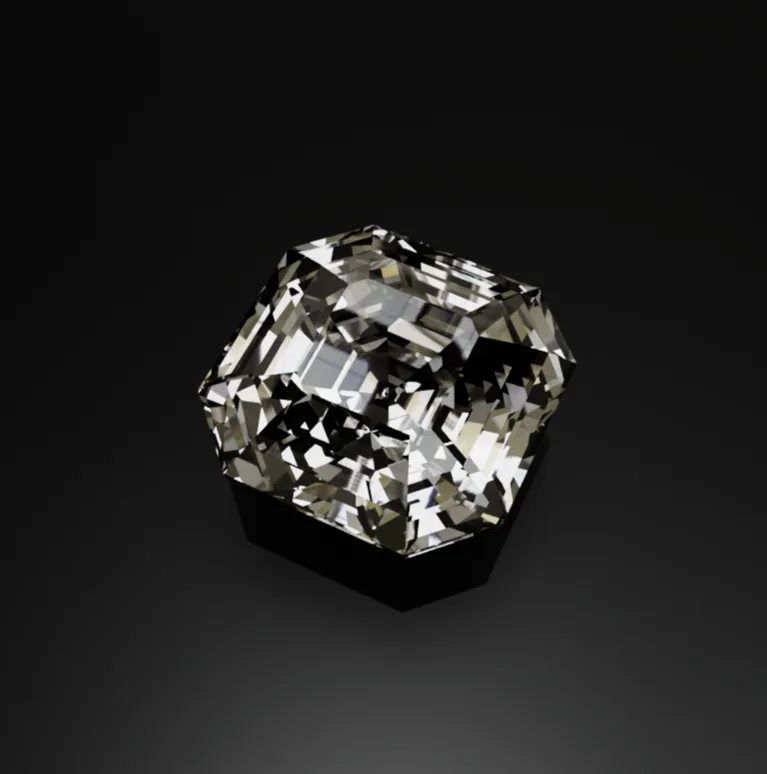
A square of steps
An Asscher-cut diamond, seen from the face, keeps the lesson as one square. Corners already clipped, a table in the middle, steps running around it as smaller squares, the outline quiet and even. You would feel that square before you named a color. An emerald cut would have asked the same steps to stretch into a longer room. A cushion would have rounded the corners until the square became a pillow. A radiant would have filled the square with brilliant facets and a busier fire. This stays an Asscher. The face is the frames.
The concentric step is how the word finishes on top. Each frame repeats the square at a smaller size, and the light moves in those ledges rather than in a round of triangles. You would cover the carat with a look and still have the cut left over: a square, clipped corners, steps that echo. If the rectangle has been drawn long, you are in an emerald cut. If the corners have softened, you are in a cushion. If the square throws a brilliant’s fire, you are in a radiant. If the word is a single flat plane, you are at a table. An Asscher begins when the square has already agreed to be a step, and the steps have already agreed to repeat.
A pavilion that reads deep
The side of an Asscher spends the word as depth. A crown of steps above the girdle, a pavilion that drops, the outline of a stone taller in the looking than a shallow brilliant wants to be. You would meet that depth before you asked for a diagram. The face told you the square. The side tells you the hall continues down. A table has no such underside to read as a room. This stone continues. The pavilion is part of the literacy.
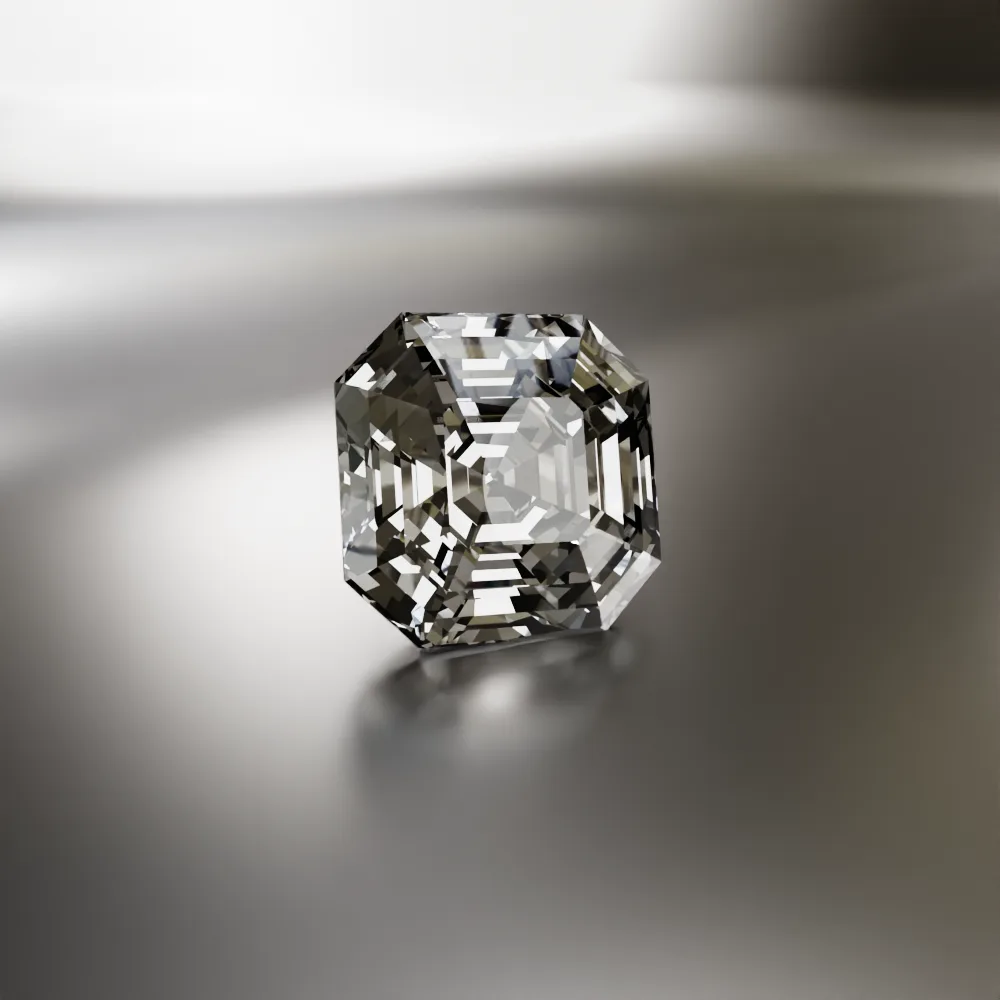
You would turn the stone and the square would still be the square. The steps on the crown match the idea of the steps on the face: ledges, not a scatter of triangles. A radiant’s pavilion is a brilliant’s underside, built to throw. An Asscher’s pavilion is a stepped room, built to be looked into, and it reads deep because the room was cut that way. The side view is the word the face was already saying.
The square, named
You would cover the diamond with another material and still have the Asscher left over. The outline is a square. The corners are clipped. The steps are concentric. The pavilion looks deep. An emerald cut is still the long step. A cushion is still a pillow. A radiant is still a square with a brilliant’s fire. A table is still one plane. This one continues as a square step.
The face shows the frames. The side shows the depth. The color can be a diamond’s white. The Asscher does not depend on it.
That is the note. An emerald cut is a step drawn long. A cushion is a soft square. A radiant is a square with fire. A table is one plane. An Asscher is a square step — concentric frames, clipped corners, a pavilion that reads deep.
Educational only · Not jewelry, insurance, or legal advice