Alexandrite as a color that changes
A color that changes. Alexandrite is this season’s sit — a chrysoberyl that keeps two weathers, bluish green or teal while the day is on it, raspberry and plum when a warm lamp takes the room. Emerald holds a green and stays in that green. Ruby holds a scarlet and stays in that scarlet. Spinel keeps a cool red that does not owe a second mind to the lamp. Alexandrite keeps both. You meet the change, and you meet that the stone was willing to be two colors without becoming two stones.
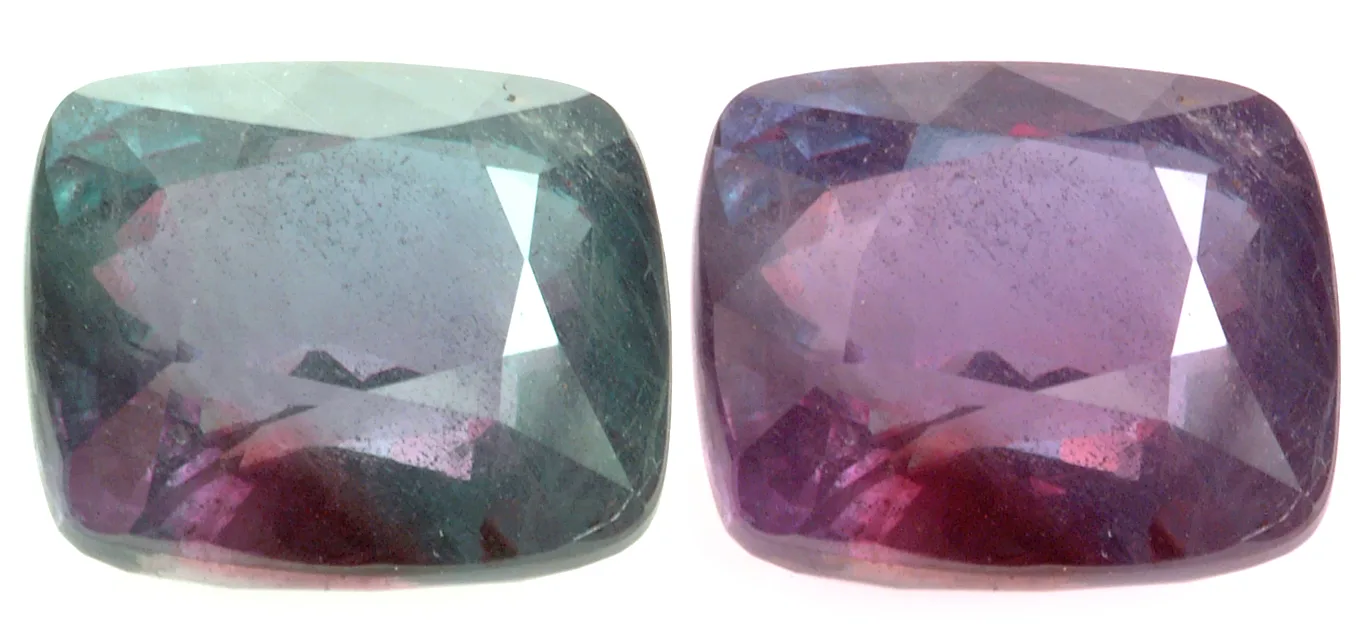
Two lights, one cushion
One cushion of 26.75 carats is the sit in a single plate. Daylight on one half, incandescent on the other — bluish green beside purple-red, the same stone asked to show both minds. You would name the change before you asked for a mount. An emerald of that size would have given one forest. A ruby would have given one scarlet. This stone is already the season’s fact, and the fact is a second weather.
The facets are only how each light gets in. The appetite is the shift. A jeweler can set either reading. The plate keeps both, so the chair can see what the lamp will do. Phenomenal stones are the appetite in the room this season, and alexandrite spends that appetite as two colors in one face. The cushion is one object. The color is two.
A daylight green, set
A gold ring from the Smithsonian American Art Museum spends the daylight mind as jewelry. A small green stone, an alexandrite inset beside a diamond, the metal only the hold. You would meet that green before you asked the lamp to change it. The photograph keeps one weather. The stone is still the chrysoberyl that knows another. Emerald would have been content to stay this green. The ring lets the day be the color you meet first.
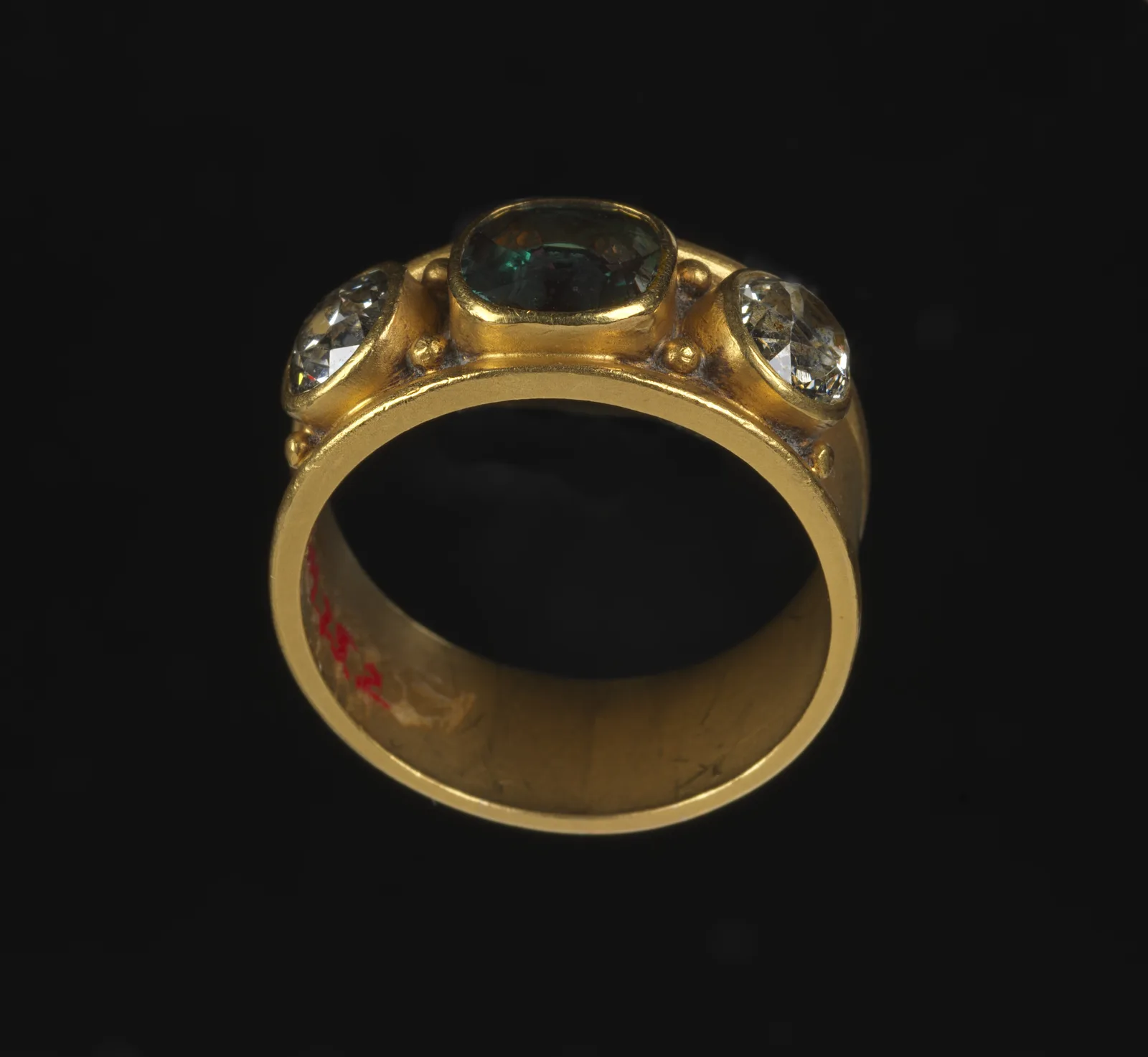
The inset is small. The size is not the fact. You would feel a colored point in gold before you asked which light the case was using. Daylight gives the teal. A warm room would ask the same inset for plum. The ring is the change worn small — a second weather that does not need a large window to be the point.
The mineral, before a cut
A crystal from Madagascar is the same appetite before a cutter. Chrysoberyl var. alexandrite, natural light, a spray of green on a pale ground. You would meet the mineral before you asked for a cushion. The color the day keeps is already in the rough. The lamp’s other mind is the reason a cutter bothers. The crystal is the origin. The change is what the season is wearing.
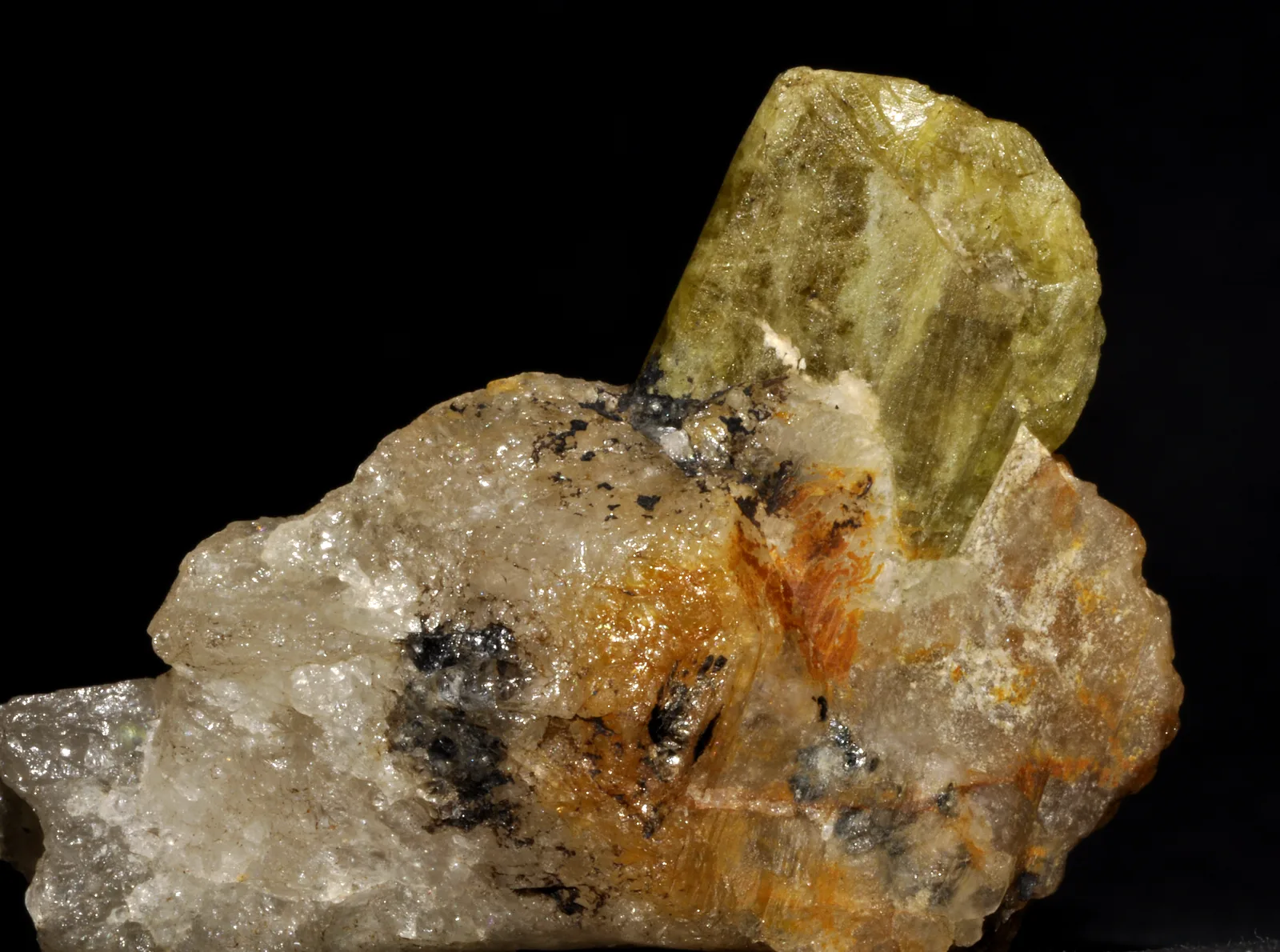
A saturated emerald would have kept one green in either room. A spinel would have kept its cool red under either lamp. Alexandrite agrees to both and remains one stone. The crystal shows the green the daylight already knows. The cushion shows what the lamp adds. The ring shows that daylight set in gold.
The mount, when it comes, only agrees to hold a direction the stone already has. The change stays in the chrysoberyl. That is the season. A green that has already decided to be emerald is a different sit. This one is a color that changes.
That is the season sit. Alexandrite as a color that changes. A cushion that wears both lights. A ring that keeps the day’s green. A crystal that is the mineral before the cut — a stone you wear as two weathers.
Educational only · Not jewelry, insurance, or legal advice